|
Highlights of IUCN's contribution to the Intergovernmental Science-Policy Platform on Biodiversity and Ecosystem Services (IPBES) - May 2012
|
|
|
MESSAGE FROM THE DIRECTOR GENERAL
|
Dear members of the IUCN network,
|
|
After years of international negotiations, the world has just seen the establishment of IPBES, a top global platform that is to regularly assess the state of biodiversity, our fragile ecosystems and the essential services they provide to all of us. I am delighted to see the commitment of the world’s governments, including IUCN State Members, to strengthening science-policy links on biodiversity and its benefits. I greatly congratulate all of those from the IUCN network and beyond who have been instrumental in this crucial step forward. > Read the full message
|
|
Top global platform on biodiversity and its benefits established
|
|
After several years of international negotiations, the final operational design of IPBES was agreed upon during the Second Plenary Session to build IPBES held in Panama City, Panama, from 16-21 April 2012. > Read more
|
|
Germany to host IPBES secretariat
|
|
The secretariat of IPBES will be located in Bonn, Germany. The German offer won the voting which took place during the Second Plenary Session to Build IPBES, in Panama City, Panama. > Read more
|
|
Establishment of IPBES: Implications for global, regional and national policy
|
|
Ibrahim Thiaw and Richard Munang from the United Nations Environment Programme (UNEP) have outlined a number of ways forward for the newly created IPBES. Those include finding innovative ways to combine existing knowledge systems, engaging civil society and integrating economic thinking into biodiversity and ecosystem protection. > Read more
|
|
Linking IUCN science to global action
|
|
IUCN is ready to participate actively and share its most prominent knowledge products with IPBES. Learn more on IUCN’s knowledge, tools and standards and discover how these can help IPBES linking science to action. > Read more
|
|
Hand in hand with IPBES
|
|
In Panama, at the core of the recent plenary session to establish IPBES, GBIF, IUCN and UNEP-WCMC showcased some examples of existing initiatives which the platform could build upon. More than 50 delegates attended the side event and gained an understanding of the data, information and knowledge already available to policy-makers. > Read more
|
|
Local knowledge for a global platform
|
|
Indigenous, traditional, local, scientific and other knowledge systems are different manifestations of valid and useful knowledge systems which can contribute to the sustainable management of ecosystems. IPBES represents an opportunity to establish a dialogue between knowledge systems with the full and effective participation of knowledge holders to debate, propose and plan ideas for moving forward. > Read more
|
|
IUCN Experts on IPBES benefits
|
|
Tune in to a series of interviews and find out what the role and benefits of IPBES are. The interviews include various biodiversity experts from international organizations, NGOs, academia and scientific bodies - among these IUCN and its Members. > Read more
|
|
|
IUCN CONTRIBUTION TO IPBES NEGOTIATIONS
|
|
|
|
|
IPBES intends to be a top global body akin to the Intergovernmental Panel on Climate Change (IPCC), providing scientifically sound and relevant information to support more informed policy and decisions on how biodiversity and ecosystem services are conserved and used around the world.
> IUCN position on IPBES
> IPBES official website
|
Framework for collaboration between IUCN and IPBES
|
|
An information paper on IUCN’s products and services which could support IPBES
> Read the full document
|
IUCN Knowledge Products
|
|
A brochure on IUCN's flagship knowledge products, existing or being development, as the basis for a partnership to support the functions and work programme of IPBES
> Read the publication
|
Stakeholder Forum on IPBES
|
|
Join the Forum to advance the involvement of scientific and civil society organisations in IPBES
> Visit online
> How to participate?
|
|
|
IUCN (The International Union for Conservation of Nature) © 2012
|
|
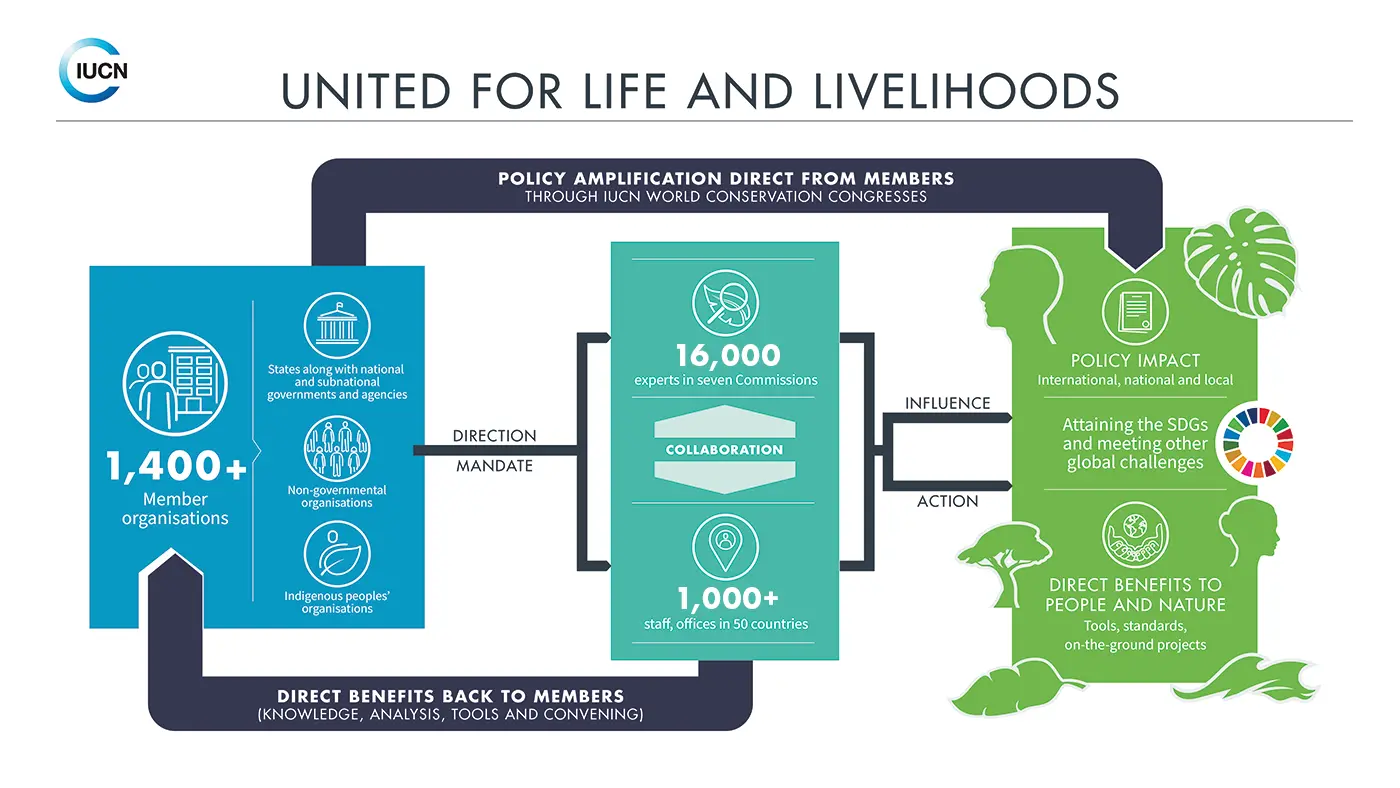
IUCN helps the world find pragmatic solutions to our most pressing environment and development challenges. It supports scientific research, manages field projects all over the world and brings governments, non-government organizations, United Nations agencies, companies and local communities together to develop and implement policy, laws and best practice.
|
About IPBES
|
|
IPBES stands for Intergovernmental Platform on Biodiversity and Ecosystem Services. IPBES will be an interface between the scientific community and policy makers that aims to build capacity for and strengthen the use of science in policy making. IPBES will respond to requests for scientific information related to biodiversity and ecosystem services from governments, relevant UN Conventions, bodies and other relevant stakeholders. Governments have agreed that the four main functions of IPBES will be knowledge generation, options for assessment, policy relevant tools and capacity building.
|
Photo credits: Top banner © IPBES; IUCN Director General Julia Marton-Lefèvre © Laurent Villeret/Dolce Vita; Top global platform © Steve Maier; Germany © David Mihalic/IUCN; IPBES establishment © IUCN Bangladesh; Linking IUCN science © Christophe Iaïchouchen; Hand in hand © Caroline Edgar; Local knowledge © Guiselle Rodriquez/IUCN-ORMA; IUCN experts © IPBES/Millenium Ecosystem Assessment, maweb.org; Publications © IUCN; Get involved © Corbis/photosearch.com; 29 May © EP Intergroup logo; 11 September © Logo of the IUCN World Conservation Congress 2012. |
|
|
|