Aligning nature restoration and sustainable livestock management in Europe: lessons from UNCCD COP17
At UNCCD COP17 in Ulaanbaatar, IUCN Europe brought together experts working across pastoralism, landscape and ecosystem restoration, sustainable land management, and agricultural policy from different corners of the world to explore a central question for the future of European landscapes: how can livestock and pastoralism become part of the solution to nature restoration?

Unveiled under the auspices of the International Year of Rangelands and Pastoralists 2026 (IYRP), the UNCCD COP17 umbrella theme Restoring Land. Restoring Hope opened a welcome space to align field actors and practices towards land restoration. This occasion resonated particularly well within the European context, coming in a decisive moment for its environmental policy. As the European Union moves towards the implementation of its Nature Restoration Regulation, discussions are also continuing on the future of the Common Agricultural Policy (CAP).
On this occasion, the side event “Implementing EU policies: aligning Nature Restoration and Sustainable Livestock” led by Elodie Champseix, Senior Officer for Natural Resources at IUCN EU Representative Office, looked beyond Europe, drawing lessons from pastoral systems and restoration initiatives in different regions of the world, from South America to Africa, Europe (Switzerland), and Asia (Uzbekistan). Participants explored how restoration objectives could mutually support and fit with the realities of farmers, pastoralists and land managers. Afterwards, the audience also provided their perspectives on the topic, sharing experiences from Bhutan, Spain, Austria, South Africa, China, and other countries.
The main lessons drawn from the exchange included:
- Livestock is not a homogeneous sector: its impacts on nature depend on how, where and at what scale animals are managed. Sustainable grazing can support biodiversity, soil health, landscape management and rural livelihoods.
- Restoration and livestock should be addressed at the landscape level: pastoral systems, ecological processes, and the needs related to water, biodiversity and food production often extend beyond individual farms and administrative boundaries. Mobility, collective governance and territorial approaches therefore matter.
- Farmers and pastoralists can be providers of ecosystem services: policy support should increasingly recognise and reward contributions such as biodiversity conservation, wildfire prevention, soil and water management, carbon storage and maintaining cultural landscapes.
- There is no one-size-fits-all restoration solution: effective approaches need to be locally adapted and co-designed with farmers, pastoralists and communities, combining scientific evidence with local and traditional knowledge.
- Policy coherence and long-term support are essential: implementing the Nature Restoration Regulation, developing the EU Livestock Strategy and shaping the future CAP provide an opportunity to better align agricultural, biodiversity, climate and restoration policies, backed by appropriate incentives, finance and governance. This could include better recognition of ecosystem services, support for extensive and locally adapted grazing systems, investment in landscape-scale restoration and more flexible approaches to land and/or ecosystem management.
From livestock production to multifunctional landscapes
Opening the discussion in a keynote speech, Willem Ferwerda, Founder of Commonland, set the scene by highlighting the importance of taking a landscape-scale perspective to restoration. Drawing from the recent example of fires and drought in Europe, he highlighted how our territorial security remains highly linked to the stability and complexity of our environmental and social infrastructure, while emphasising the need for co-creation for the management of these infrastructures.
As the restoration of our ecosystems cannot be addressed in isolation from food production, water, biodiversity, climate resilience and rural livelihoods, the panellists then discussed the need for transitioning towards multifunctional landscapes, where ecological restoration and economic activity reinforce each other over the long term. This discussion had been illustrated by concrete examples from the speakers' experiences.
Serena Ferrari, Economist at CIRAD and Member of the IYRP opened the panel by presenting the complexity of pastoralism’s socio-ecological system, whose contribution extends far beyond food production, supporting simultaneously livelihoods, local economies, biodiversity, soil health and landscape management. This multifunctionality is particularly important in rangelands and grasslands, as managed grazing can contribute to maintaining open habitats, limiting shrub encroachment, supporting nutrient cycling and soil fertility, and facilitating the dispersal of seeds across landscapes. Pastoral mobility can also allow livestock management to adapt to seasonal and changing environmental conditions. A key lesson presented by CIRAD was therefore the importance of looking at pastoral systems as an integrated whole, supporting territorial mobility, collective governance and multifunctional valorisation.
“Healthy rangelands require us to protect the entire pastoral system – its mobility, its communities, and its markets – because you cannot isolate livestock production from the environmental services that sustain it", summarised Serena.
For European policymakers, this raises important questions about how agricultural and restoration policies can better recognise pastoralists and livestock farmers as ecosystem managers. Drawing on West African principles of territorial mobility, collective land governance and multifunctional valorisation, she pushed for a shift in CAP support from strict parcel-based eligibility to funding transhumance corridors and seasonal grazing rights; further integration of common pasture management plans into NRPs (National Restoration Plans) to reverse scrub encroachment on common lands; and to compensate pastoralists for ecosystem services (wildfire prevention, carbon storage, biodiversity preservation) as core economic outputs.
Restoration requires locally adapted solutions
One of the strongest messages from the discussion was that there is no one-size-fits-all relationship between livestock and landscape and ecosystem restoration. Indeed, while it is widely recognised that livestock can contribute to land degradation when grazing pressure exceeds ecological limits, the permanent disappearance of grazing can also create environmental challenges, particularly in ecosystems that have developed through centuries of low-intensity agricultural management.
Drawing on IUCN's Nature-based Solutions approach, Alexandr Iscenco from IUCN Regional Office for Eastern Europe and Central Asia (IUCN ECARO) presented experiences from IUCN's work on implementing landscape and ecosystem restoration and piloting Nature-based Solutions in Uzbekistan, which demonstrates how restoration and sustainable land management can be integrated at the landscape level. This work is currently being done within the Food System, Land Use and Restoration Impact Program in Uzbekistan (FOLUR-Uzbekistan) – a project that is funded by the Global Environment Facility (GEF), led by the Food and Agriculture Organization of the United Nations (FAO) in Uzbekistan and implemented by the National Committee on Ecology and Climate Change of the Republic of Uzbekistan, the Ministry of Agriculture of the Republic of Uzbekistan, the International Center for Agricultural Research in the Dry Areas (ICARDA) and IUCN.
Through comprehensive restoration assessments together with local stakeholder consultations and planning processes conducted by using the Restoration Opportunities Assessment Methodology (ROAM), IUCN and other project partners have identified multiple opportunities for combining landscape and ecosystem restoration on both farmlands and pastures with sustainable land management practices and Nature-based Solutions. These opportunities and solutions include rotational grazing and seasonal pasture management, uncultivated or partially cultivated areas that are reserved for soil regeneration and biodiversity conservation, anti-erosion tree belts and vegetation strips, green fencing of pastures and restoration sites, farmer-managed natural regeneration, and among others. All these opportunities and solutions have been defined and agreed upon via active engagement of local pastoralists, farmers, and communities in the project target regions of Uzbekistan. Ultimately, this experience highlighted the importance of combining different sources of information and forms of knowledge, including academic and local, research-based and experience-based, coming from information technology and from fieldwork.
“Use both, trust in both: satellites and communities, scientific tools and local wisdom, analytical and tacit knowledge”, concluded Alexandr.
Farmers and pastoralists as providers of societal services
The discussion also challenged the way agricultural support is often framed. Henri Rueff, Director of the Climate Action Lever at the Alliance of Bioversity International and CIAT/CGIAR, argued that farmers should increasingly be recognised not only as food producers, but also as providers of services that benefit society. These services include, but are not limited to, biodiversity conservation, water regulation, soil health, carbon storage and the maintenance of cultural landscapes. Here, rather than primarily compensating farmers for constraints or income losses, public support could instead reward the environmental and societal benefits that sustainable land management provides.
Henri demonstrated how extensive pastoralism could be attractive to investors through examples from Switzerland, where landscape restoration had provided a positive return on investment in the tourism sector. With approximately CHF 3bn per year in direct payments to around 50,000 farms (roughly 30% of farm income) sustaining the cultivated Alpine landscape, foreign visitors could then spend CHF 19.6bn in 2024, attracted by the farmed scenery kept open by the mountain breeders.
In Colombia's Orinoquía region, through the Hacienda San José, a model combining improved forages, regenerative grazing, forest protection and restoration, improved animal management in genetics and welfare, monitoring and certification has sought to transform degraded pasture into a more productive and climate-positive system. The farm now emits GHG emissions 44% below regional reference cow-calf farms, giving a net-negative carbon footprint thanks to deep roots sequestering up to 3x ruminant emissions, and demonstrates more than 81% compliance on GANSO “responsible” certification; all while growing from 8,800 to 180,000 hectares over a decade.
Henri later emphasized how these solutions in land use would obviously need to be supported in the long term through holistic changes in our society, such as our diets and our narratives – from compensating income losses to paying for high-value services. These examples illustrated an important point for policymakers and investors: scaling sustainable livestock systems requires more than demonstrating ecological benefits – it also requires viable business models, appropriate finance, monitoring and incentives.
Policy coherence is essential
Before opening the floor to the international audience gathered at this UNCCD side event, Victoria Gutierrez, Head of Global Policy at Commonland and Co-lead of the IUCN Commission on Ecosystem Management (CEM) Ecosystem Restoration Thematic Group summarised the discussion and the key points addressed:
- The key strength of pastoralism relies on its multifunctionality and impact;
- The benefits of restoration and the conditions required for its success reinforce the need for common policy incentives, greater coherence and fewer silos;
- Pastoralism as solution implies working at the landscape level;
- To encourage a long-term vision from farmers and pastoralists towards environmental benefits, their continuous inclusion and active engagement in decision-making together with local communities is crucial;
- Adequate planning and financing are essential to ensure a long-term, sustainable and resilient positive impact and uptake of practices.
The final part of the session was enriched by various additional examples and cases from the audience itself. Bhutan brought forward its own payment scheme for ecosystem services already in place combined with an integrated approach with climate. China pointed to the issue of rural abandonment and importance of state-level actions to make countryside attractive again, mostly through tourism. Spanish actors also underlined the generational renewal issue in pastoralism, and how better inclusion in rural life could create more attractiveness, pointing the transhumance as a major visibility event. Austria raised the question of wildlife management, while South Africa shared its success story of including wildlife corridors into landscape planning to mitigate ongoing conflict with farming of permanent crops. This point translated into another discussion on the economic model of buffer zones. The case of genetic breeding and animal welfare also rose as a factor for successful adaptation to local conditions, especially in mountain areas.
The experiences shared at UNCCD COP17 demonstrated that solutions already exist. The next challenge will be to create the policy, governance and financial conditions needed to bring them to scale. IUCN would like to congratulate the speakers and the audience for the richness and quality of the exchanges. Through its Resolutions (WCC-2025-Res-008), tools and framework, IUCN will continue to support the IYRP, rangelands conservation and restoration, while recognising the role of pastoralists and land managers. As the current EU legal implementation unfolds with greater coherence opportunities at national and international levels, IUCN will continue to facilitate and strengthen dialogue between policymakers, scientists, land managers and practitioners to identify approaches that can deliver lasting benefits for both people and nature.
Learn more about IUCN at UNCCD COP17: IUCN closing statement – UN Convention to Combat Desertification (UNCCD) COP17


Facing environmental challenges head-on, Pacific Island nations are embracing a resilient approach…

Facing severe problems due to climate change and losing flora and fauna diversity, the Samoa…
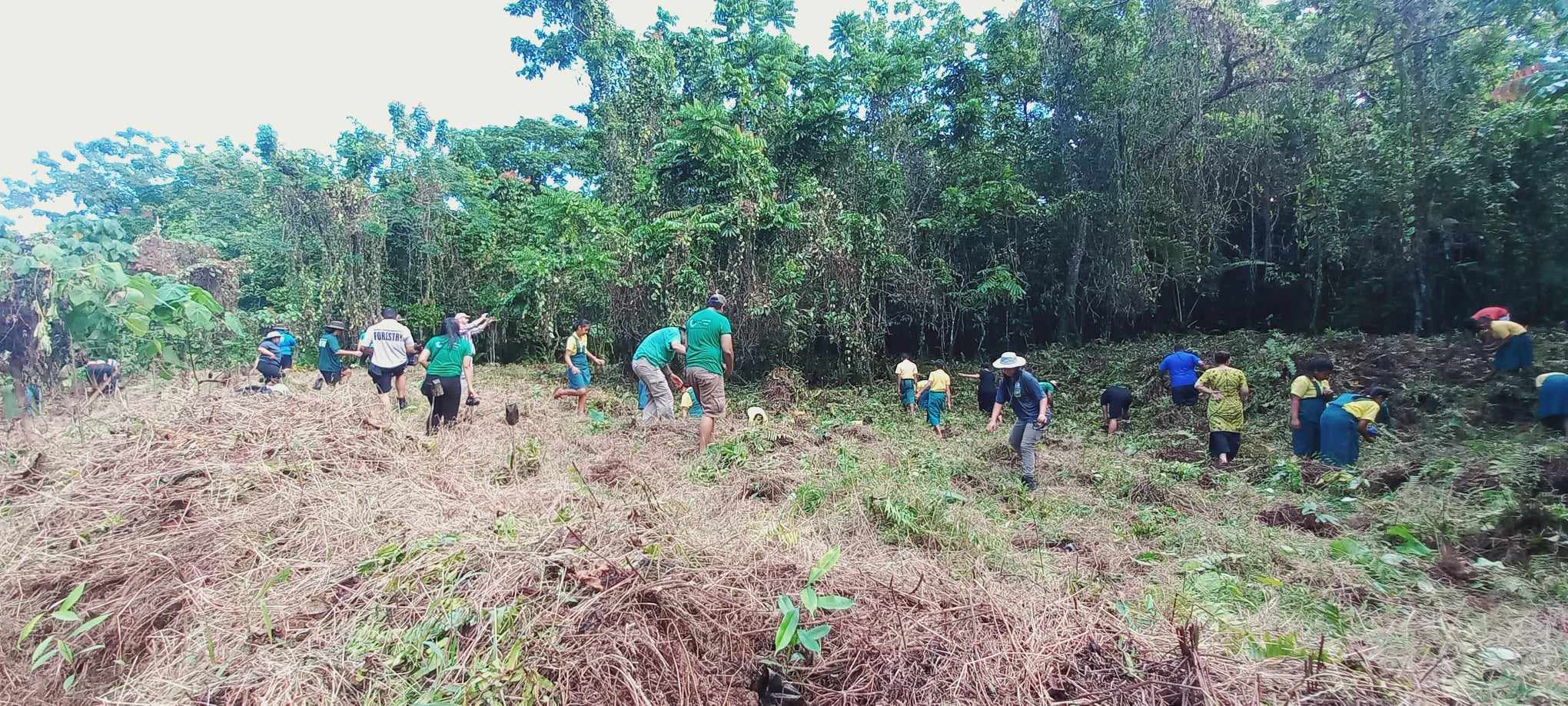
Embarking on a mission to adapt to climate change, the Samoa Conservation Society (SCS) unveiled…