About & How We Engage

CEESP members contribute to the mandate of the Commission by providing insights, expertise, and traditional knowledge as well as by promoting policies and actions that relate to the human dimensions of conservation.
CEESP contributes to the IUCN's Mission by generating and disseminating knowledge, mobilising influence, and promoting actions to harmonise the conservation of nature with the critical social, cultural, environmental, and economic justice concerns of human societies.
CEESP members contribute to the mandate of the Commission by providing insights, expertise, and traditional knowledge as well as by promoting policies and actions that relate to the human dimensions of conservation.
Our Vision
A world where sustainability, social justice, diversity and equity are valued in nature conservation and in development.
Our Mission
To contribute to the IUCN mission by generating and disseminating knowledge, mobilising influence, and promoting actions to harmonise the conservation of nature with the critical social, cultural, environmental, and economic justice concerns of human societies.
Our Structure
The work of the Commission is organised into Regions and Themes that focus on key directions to meet CEESP's mandate. Specialist Groups, Task Forces and Working Groups each operate under a related Theme.
We work closely with the IUCN Secretariat, IUCN’s Regional Offices, other Commissions, and IUCN members to realise the Union’s One Programme Charter. Our work is based on the CEESP Mandate 2026-2029.

Reimagine Conservation mobilizes the Union and beyond to transform our thinking, engagement, and practice to protect the planet, and contributes directly to 2021-2024 Programme and the 20-year vision of IUCN.

CEESP advances evidence-based dialogue and practice related to human rights and conservation to transform how conservation is done with people, while elevating the social impacts in order to protect the planet.

CEESP advances the dialogue around conservation finance and makes funding more inclusive for Indigenous peoples and local communities (IPLCs), youth, and women in order to achieve our climate and biodiversity goals.

CEESP advances dialogues and evidence-based research for what conservation leadership needs to look like in the future to support the protection of the planet.
CEESP is a unique network of approximately 1,500 volunteers representing perspectives and disciplines from biology and anthropology, economics and law, to culture and Indigenous peoples - among many others. Our work represents the crossroads of conservation and development. Our members offer resources and expertise to meet the challenges of conservation.
Membership in CEESP is open to any individual who has relevant experience and has skills determined important to the work of a Thematic Group, Specialist Group, Region or the Commission as a whole. Membership applications are reviewed by the Regional Vice Chairs.
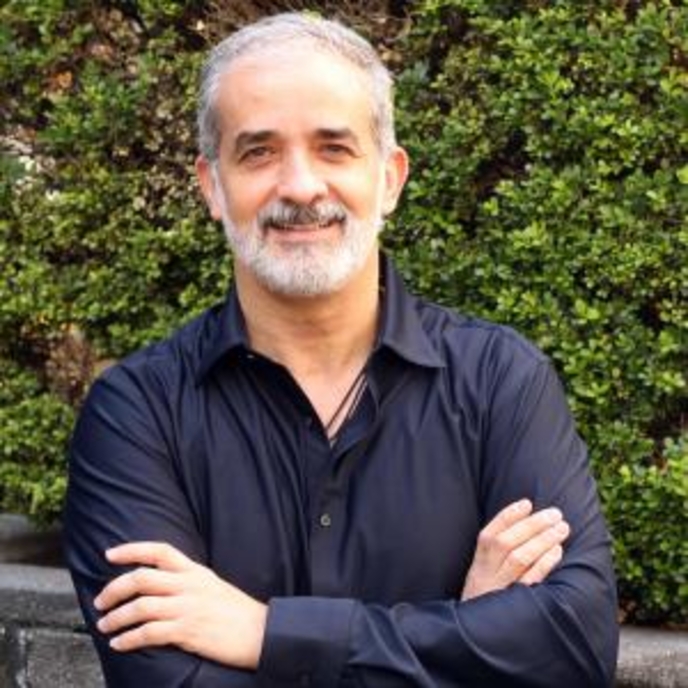
Ernesto Herrera is Chair of IUCN’s Commission on Environmental, Economic and Social Policy (CEESP) and a member of the IUCN Council. He previously led Reforestamos México (2002–2026) and chaired IUCN’s Mexican National Committee and Mesoamerican Regional Committee. With more than two decades of experience in conservation and sustainable development, his work focuses on connecting environmental, social and economic perspectives and fostering collaboration across governments, civil society, communities and the private sector. He holds a Master’s in Environmental Management from the University of Waikato and a degree in Industrial Engineering from Universidad Iberoamericana.
Ernesto Herrera is Chair of IUCN’s Commission on Environmental, Economic and Social Policy (CEESP) and a member of the IUCN Council. He previously led Reforestamos México (2002–2026) and chaired IUCN ...
Effective conservation can only occur with and through the cooperation of Indigenous peoples and local communities living in and around protected areas and elsewhere.

Deputy Chair
Dr. Melanie Zurba is an Associate Professor with the School for Resource and Environmental Studies (SRES) at Dalhousie University in Canada. She has been a member of CEESP since 2011 and was member of the Steering Committee and served as Chair of the CEESP Theme for Governance, Equity and Rights (TGER) during the last two terms. Dr. Zurba also led the InterGens Report, which was commissioned by the IUCN Secretariat to shape the IUCN 2022-2030 Youth Strategy. Dr. Zurba’s research and policy practice focuses on partnered work with Indigenous Peoples and other equity deserving communities, community-engagement best practices, environmental governance, culture, and the contributions of the arts in nature conservation.
Deputy Chair
Dr. Melanie Zurba is an Associate Professor with the School for Resource and Environmental Studies (SRES) at Dalhousie University in Canada. She has been a member of CEESP since 2011 and ...