TREPA midterm report shows strong progress, achieving 73% of restoration target as efforts continue through 2027
Rwanda is redefining what climate resilience looks like in Africa’s drylands. In the heart of the Eastern Province, once scarred by drought, erosion, and land degradation, a quiet transformation is taking root. Rolling hills that were once stripped of vegetation now gleam with green patches of agroforestry, newly restored forests, fruit trees, protected river buffers, roadsides, and revitalised pasturelands.
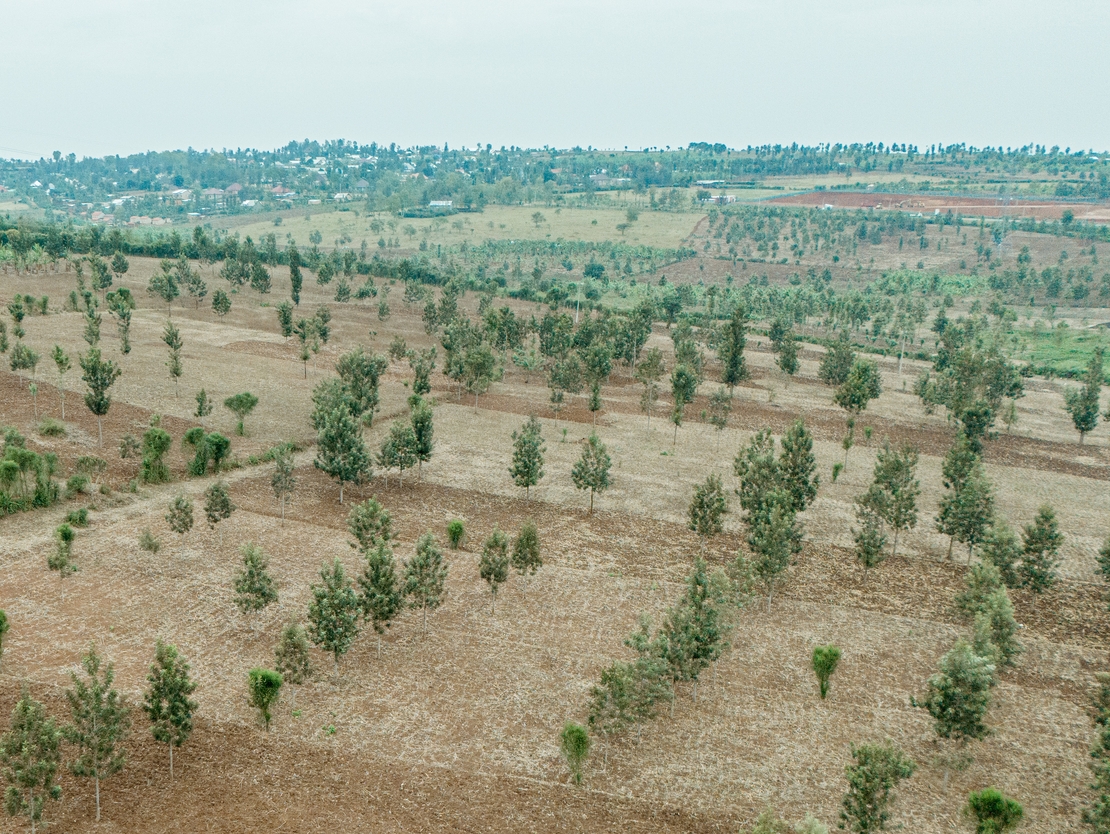
At the centre of this transformation is the Transforming Eastern Province through Adaptation (TREPA) project, a six-year Green Climate Fund initiative implemented by a consortium led by the International Union for Conservation of Nature (IUCN) in partnership with the Ministry of Environment through the Rwanda Forestry Authority, CIFOR-ICRAF, World Vision, and Cordaid. The project aims to convert degraded land into thriving, climate-resilient ecosystems while enabling communities to build sustainable livelihoods. Across the province’s seven districts, farmers are discovering that restoration is not only about planting trees, it is about securing their futures.
According to the project’s recent midterm report, TREPA has restored 73% of its target, equivalent to 43,777 hectares of degraded land, with agroforestry systems, including cropland and silvopasture, covering 83% of the restored area.
Approximately 28,801 hectares of farmland have been rehabilitated through agroforestry practices. The project has also restored 6,250 hectares of private woodlots and state-owned forests and brought 7,456 hectares of pastoral lands under climate-resilient silvopastoral systems.
Survival rates for key fodder tree species remain high, 85% for Gliricidia sepium and 75% for Calliandra calothyrsus. In total, 17.8 million seedlings, mostly native species, have been planted, alongside 289,339 fruit trees distributed to 72,334 households, reaching more than 236,000 beneficiaries who have adopted climate-smart livelihood practices.
The impact is tangible in communities across the province. In Kayonza District, beekeepers like Josephine Bagiraneza are thriving where drought once wiped out hives and livelihoods. The planting of flowering trees under TREPA now ensures nectar even in dry months, tripling honey production and strengthening cooperative enterprises.
In Nyagatare, farmer Livingston Abiyingoma has turned formerly barren land into productive pasture through improved fodder cultivation and storage, securing consistent feed for livestock and generating new income streams.
According to Dr Olivier Habimana, TREPA Chief of Party, the project’s integrated approach links environmental recovery with market resilience. “We are combining physical restoration with economic empowerment,” he noted. “By strengthening value chains for fodder, honey, and tree-based products, and improving access to finance, we are ensuring communities can sustain the gains made through restoration.”
Dr. Concorde Nsengumuremyi, Director General of the Rwanda Forestry Authority, highlighted the project’s broader impact: “TREPA has not only intervened in landscape restoration but also provided communities with opportunities, empowerment, and institutional transformation. As we move forward, we must make restoration practical, translating science into scalable action that meets people’s immediate livelihood needs.”
Echoing this, Kaori Yasuda, IUCN Rwanda Country Representative, emphasised that Rwanda’s model offers global lessons. “We are seeing policy goals translated into tangible climate resilience on the ground,” she said. “Restoration starts with people, local communities and farmers, through participatory planning, implementation, and monitoring. Communities are not just beneficiaries; they are partners in restoration,” she added.
The story unfolding in Eastern Rwanda is one of renewal, resilience, and collective action, proof that when nature and people thrive together, sustainable transformation becomes possible.
Find the TREPA project’s recent midterm report by 2025. Find the factsheet here
and the full report here
................................................................................
For media inquiries, please contact:
Habimana Jean Claude
Communications and Membership Officer – IUCN Rwanda


Disclaimer
Opinions expressed in posts featured on any Crossroads or other blogs are those of the authors and do not necessarily reflect the opinions of IUCN or a consensus of its Member organisations.

The Bangladesh Forest Department (BFD) and IUCN Bangladesh, with support from Agence Française de…

Each year, International Women's Day is an opportunity to recognise the women advancing change in…

On 14 January 2026, in Dhaka, the Bangladesh Forest Department and IUCN Bangladesh formally signed…