Chingaza National Natural Park: excellence in conservation flowing between nature and its people
In the heart of the Eastern Cordillera of the Colombian Andes, just a few kilometers from Bogotá, Chingaza National Natural Park rises as one of the most emblematic and strategic territories in South America. With nearly 77,000 hectares of páramo ecosystems, high-Andean forests, and lake complexes, Chingaza not only safeguards extraordinary biodiversity, but also demonstrates—day after day—that effective protected area management is essential for human well-being and territorial resilience.

A landscape of life, culture, and unparalleled beauty
Exploring Chingaza means entering a mosaic of ecosystems where frailejones stand as guardians of water, lagoons reflect centuries of history, and Andean wildlife finds refuge. The park is home to iconic species such as the Andean bear, the Andean condor, the puma, and the páramo tapir, as well as more than 1,300 plant species and over 500 bird species.
As evening falls, the park offers one of its most memorable scenes: the sky turns deep shades of blue and gold while mist gently descends over high-Andean valleys and lagoons. These moments connect nature, spirituality, and silence, reminding us why this territory was sacred to the Muisca Indigenous peoples and remains essential for present-day communities.
The water factory that sustains millions
Chingaza is widely recognized as the main water reserve of central Colombia. Its ecosystems regulate and store water that feeds the Chingaza System, which supplies approximately 70–80% of Bogotá’s drinking water and that of neighboring municipalities, benefiting close to 10 million people.
Beyond domestic consumption, this system is fundamental for energy and hydropower stability, ensuring regulated and reliable flows even during prolonged droughts. Recent studies and official reports show that the park’s good conservation status has been a determining factor in the historic recovery of the Chuza and San Rafael reservoirs in recent years.

People behind conservation: rangers and active management
Chingaza’s excellence is built on the ground. Today, around 70 park rangers work permanently within the protected area, facing demanding climatic conditions and vast high-mountain landscapes. Their work is complemented by active management programs, including ecological restoration initiatives, conservation agreements, biodiversity monitoring, water resource management, and strengthened governance with local communities and institutional actors.
This day-to-day effort has made it possible to maintain more than 90% of the area under natural cover, strengthen the presence of key species, and consolidate partnerships that ensure long-term conservation outcomes—core principles of the IUCN Green List Standard.
Three recognitions reflecting commitment and results
Chingaza National Natural Park holds three high-level international designations that reflect the strength of its management:
Ramsar Site: The Chingaza Lake System has been designated a Wetland of International Importance, recognizing its critical role in water regulation, high-Andean biodiversity, and migratory bird routes.
Key Biodiversity Area (KBA): Recognized for its global importance, high levels of endemism, and relevance for threatened species.
IUCN Green List of Protected and Conserved Areas: Since 2020, Chingaza has been part of this select international group demonstrating effective governance, sound planning, efficient management, and verified conservation outcomes.
The park is currently preparing for its recertification process—an exercise that goes beyond a technical assessment and reflects a deep commitment to continuous improvement, learning, and accountability.
A space for regional inspiration
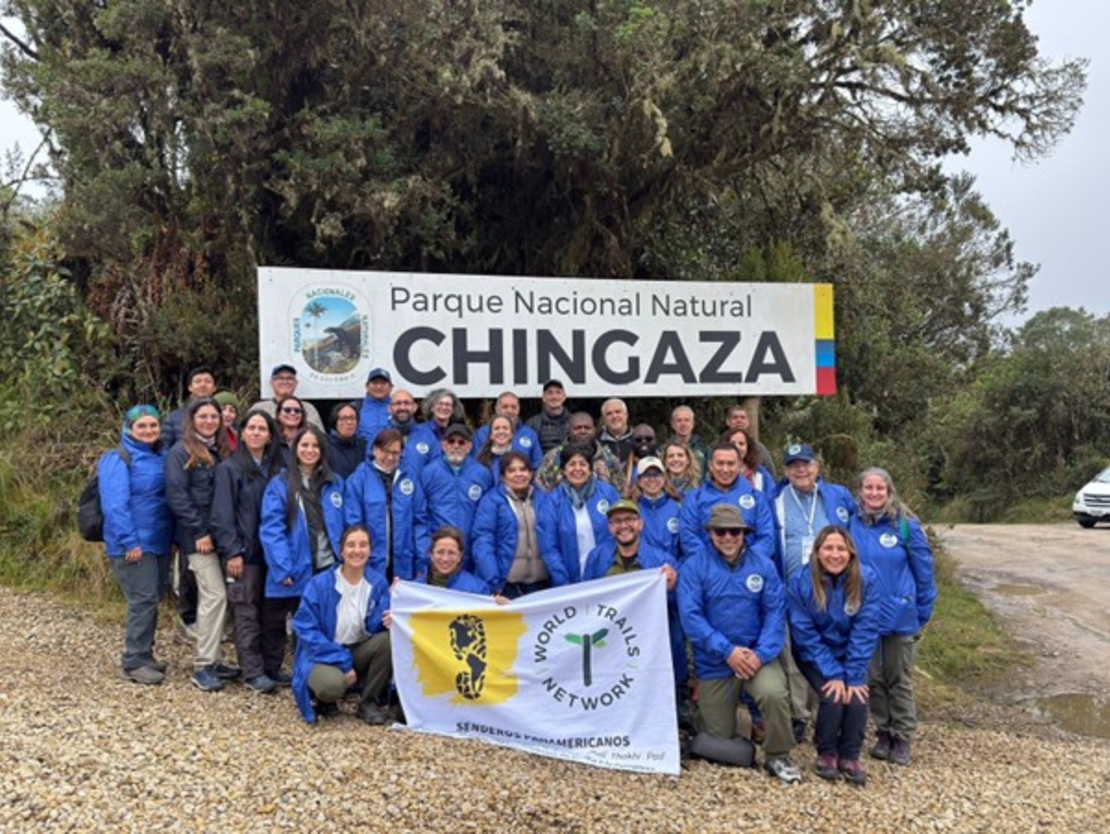
Within the framework of the RedParques Regional Council, Chingaza National Natural Park hosted a one-day technical visit by delegations from Bolivia, Chile, Colombia, Costa Rica, Cuba, Ecuador, Guyana, Paraguay, Peru, the Dominican Republic, Suriname, Uruguay, and Venezuela, together with representatives from IUCN South America, the International Ranger Federation, the Pan-American Trails Network, and EUROPARC Federation, the European network of protected areas.
The visit enabled direct, on-the-ground exchange on advanced approaches to protected area management, restoration, and governance, as well as shared reflection on regional priorities related to management effectiveness, ecological connectivity, and progress toward global commitments such as the 30x30 target.
In this context, Chingaza positioned itself as a regional reference, demonstrating how applying the IUCN Green List Standard can translate into concrete and measurable results for nature conservation and human well-being.
A reference for the future
Chingaza is not just a national park. It is a source of water, a refuge for biodiversity, an open classroom for regional learning, and a symbol of what protected areas can achieve when they are supported by vision, commitment, and dedicated people on the ground. In a global context of climate crisis and nature loss, Chingaza reminds us that investing in good management is investing in the future.


Disclaimer
Opinions expressed in posts featured on any Crossroads or other blogs are those of the authors and do not necessarily reflect the opinions of IUCN or a consensus of its Member organisations.
In Kashkadarya, Khorezm and the Republic of Karakalpakstan, local communities are helping turn…
The third in a five-part series, this webinar brought together speakers from across West and…

This week, the Yerevan Municipality hosted the inaugural ceremony marking the establishment of the…