From entry - into force - into action: why this moment for the High Seas cannot be missed
As I arrive at the United Nations Headquarters in New York, for the final substantive preparatory meeting ahead of the first Conference of the Parties (COP1) to the High Seas Treaty, the sense of urgency is palatable. We are no longer negotiating the High Seas Treaty. Now we are responsible for making it work.
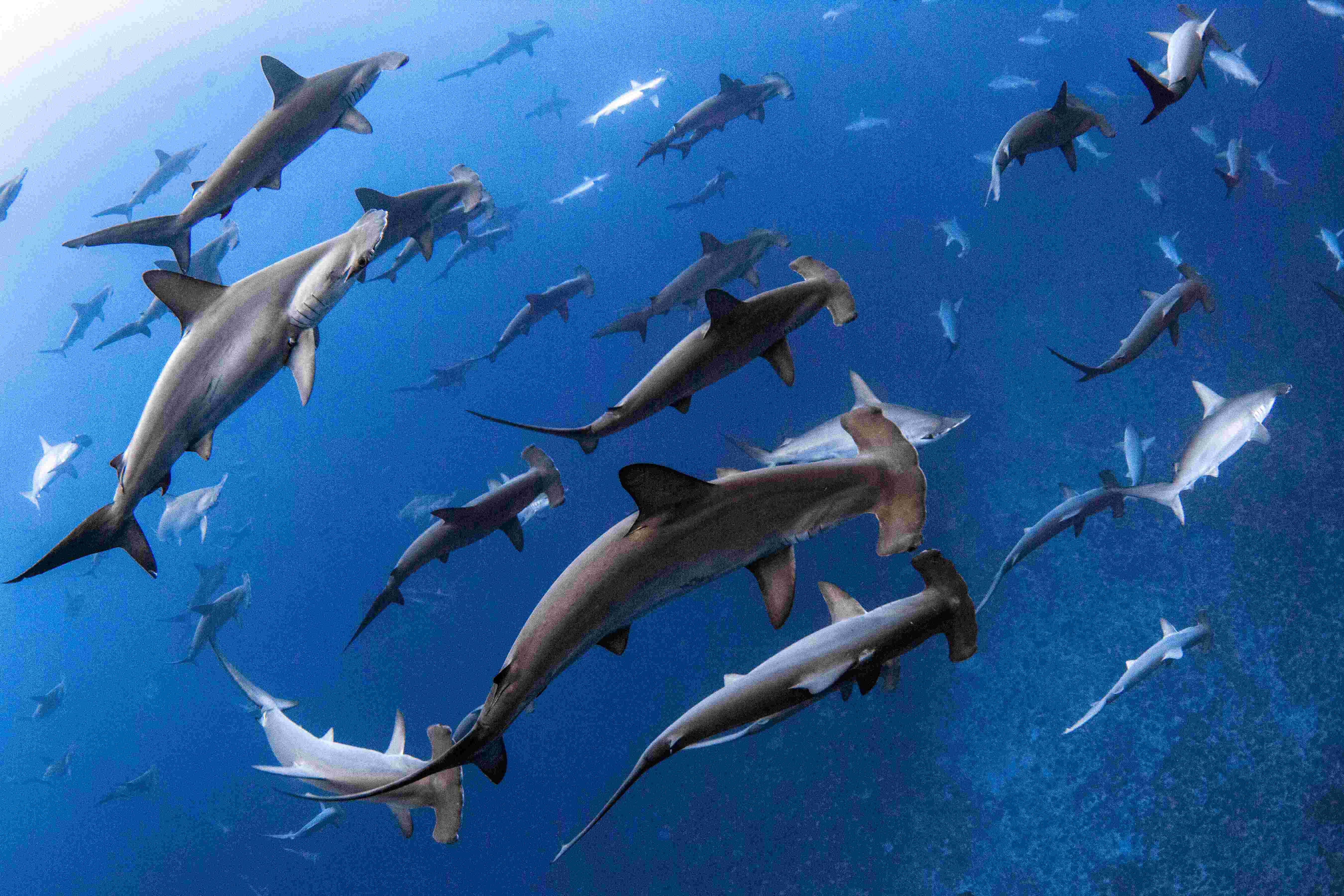
Hammerhead sharks are known to migrate thousands of kilometres across international boundaries
Photo: Masayuki Agawa-Ocean Image Bank
Minna Epps at the UN in New York

Its entry into force on January 17th this year marked a historic milestone for ocean governance. But history will not judge this agreement by its adoption. It will judge it by its implementation. And that work must begin now.
At the centre of these discussions lies a decisive issue: finance. The necessary foundation for implementing any Multilateral Environmental Agreement (MEA) – the voluntary agreements between states parties. Without immediate, adequate, and predictable financial commitments, the ambitions of the BBNJ Agreement risk remaining aspirational. The architecture exists, such as, funding streams for participation, capacity building, and conservation, but critical questions remain unresolved. What will the initial budget be? How will contributions be structured? And crucially, how will we ensure that small island developing States and least developed countries can access the resources they need to participate meaningfully?
As President Surangel Whipps Jr of Palau so clearly stated, “Finance cannot be an afterthought.” I could not agree more. Finance is not a technical detail to be deferred - it is the foundation upon which equitable and effective implementation depends.
The financial mechanism itself is complex and interdependent. It must align institutions, funding streams, and operational modalities both within the agreement and across the broader global ocean governance seascape. Delegates here face a difficult but unavoidable balance: moving quickly to operationalise core elements such as budget, governance structures, subsidiary bodies and special fund while maintaining the flexibility to refine and scale these systems over time.
The choices made in this room will determine whether the treaty can truly enable inclusive, fair and fast implementation, or whether it risks becoming fragmented and insufficient.
But finance is only one part of a much larger picture.
This preparatory meeting must also lay the institutional foundations of the agreement for the future. The operationalisation of the Scientific and Technical Body is essential—not only to provide credible, independent advice, but to ensure that decision-making is grounded in the best available science and reflects global representation. At the same time, the Clearing-House Mechanism must be rapidly developed into a transparent, accessible platform for information-sharing.
This is particularly urgent for the implementation of Environmental Impact Assessments (EIAs), where several obligations are already in force. Notifications of planned activities, assessment reports, and monitoring outcomes must be made publicly available. Without a functioning Clearing-House Mechanism, these provisions risk being undermined from the outset.
The effectiveness of the EIA framework will depend on more than procedure. It will require robust standards, clear guidance, and meaningful cooperation with existing international bodies. It must also be capable of addressing cumulative and climate-related impacts; pressures that are already reshaping ocean ecosystems.
At the same time, we must recognise that technology, particularly artificial intelligence (AI), will be central to how this agreement is implemented in practice, especially the enforcement to ensure effective management of designated Marine Protected areas in the high seas. AI and advanced data systems will transform Monitoring, Control and Surveillance (MCS), enabling more effective oversight of activities across vast and remote ocean spaces. But their role must go far beyond enforcement and ensure equitable access and use.
It should also be part of Capacity Building and the Transfer of Marine Technology (CBTMT), these tools must be shared, adapted, and made accessible to all Parties. This is not simply about deploying cutting-edge technologies; it is about ensuring equitable access to data, analytical tools, and technological capabilities that allow all countries to participate fully in decision-making and implementation.
Time is not on our side. The window to establish a system that is not only functional, but credible and responsive, is narrow.
Equally important is ensuring coherence across international processes. The BBNJ Agreement does not exist in isolation. Its success will depend on how well it aligns with and reinforces commitments under other frameworks, including those addressing biodiversity, climate change, seabed governance, and world heritage. The growing ambition reflected in recent global ocean discussions must translate into coordinated, mutually reinforcing action.
Collaboration will be the thread that ties all of this together.
No single institution, country, or stakeholder can deliver this alone. Implementation must be inclusive, enabling all States, particularly those with limited capacity to engage fully and effectively. Transparency must translate into real opportunities for participation and oversight. And partnerships must extend beyond governments to include scientific institutions, civil society including Indigenous Peoples, and regional bodies.
At IUCN, we are already working to support this transition from commitment to action. Through targeted technical assistance, support to the High Ambition Coalition (HAC), and initiatives such as Living High Seas, we are helping countries prepare for implementation, develop proposals for area-based management tools, and strengthen regional cooperation, as well as developing an explanatory guide to assist States and other relevant stakeholders to understand the BBNJ Agreement. These efforts are designed to ensure that capacity is not a barrier, but a bridge to meaningful participation.
But these initiatives alone will not be enough.
What happens here, in these final preparatory discussions, will set the trajectory for COP1 and beyond - expected no later than one year after the BBNJ entry into force, placing it around late 2026 or early 2027.
Delays are not a neutral choice, they carry real consequences for the ocean and for the communities that depend on it. We have the agreement. We have the tools. What we need now is the political will to act - quickly, fairly, and collaboratively.
The high seas have waited long enough.

Disclaimer
Opinions expressed in posts featured on any Crossroads or other blogs are those of the authors and do not necessarily reflect the opinions of IUCN or a consensus of its Member organisations.

The Bangladesh Forest Department (BFD) and IUCN Bangladesh, with support from Agence Française de…

Each year, International Women's Day is an opportunity to recognise the women advancing change in…

On 14 January 2026, in Dhaka, the Bangladesh Forest Department and IUCN Bangladesh formally signed…