Pasar al contenido principal

Green, Just Energy Transition

The Green, Just Energy Transition is more than a shift from fossil fuels to renewables—it’s a commitment to doing so in ways that are equitable for people and positive for nature. Achieving climate goals requires tripling global renewable energy capacity by 2030, improving efficiency, and expanding electricity access to the hundreds of millions still without it. But this rapid scale-up must avoid the environmental and social harms seen in past infrastructure rollouts. By aligning clean energy development with biodiversity conservation, fair labour practices, gender equality, and community participation, a green and just energy transition ensures that the move to a low-carbon future also delivers lasting benefits for people and the planet. IUCN works with governments, industry, and civil society to make this vision a reality, developing tools, partnerships, and standards that enable renewable energy expansion while safeguarding ecosystems and advancing social justice.  

Background

Climate change and biodiversity loss pose an existential threat to our planet, with each exacerbating the effects of the other. Human activities, such as burning fossil fuels and deforestation, are widely recognized as the leading causes. To address these challenges and meet the goals of the Paris Climate Agreement, we must achieve net-zero carbon dioxide emissions by 2050. This requires significant reductions in CO2 emissions from energy generation, while also ensuring access to electricity for the many people worldwide who currently lack it.  

The transition from fossil to renewable energy has been too slow, and the current pace falls far short of the 1.5-degree pathway. Climate change impacts are increasing in frequency and intensity, bringing devastation and huge economic losses globally. We therefore need to speed up decarbonisation, exponentially increase investments in and deployment of renewable energy—mainly wind and solar—and related electricity grids. The final Global Stocktake COP 28 Decision in Dubai has called for States to “triple renewable energy capacity globally.” Currently, the global growth in renewable energy generation is largely driven by Europe, the United States, and China. This will need to change for an equitable global transition. 

Renewable energy sources are growing quickly and will play a vital role in tackling climate change. In 2024, global renewable energy capacity grew by a record-breaking 15.1%, reaching 4,448 gigawatts (GW). Despite this growth, a rate of at least 16.6% annually is needed to meet the target of tripling renewable energy capacity by 2030.  

At the same time, limiting global warming is not possible without healthy ecosystems, which provide essential carbon sinks and adaptation opportunities. We cannot afford to repeat the mistakes of the fossil fuel era. It is therefore of paramount importance to develop renewable energy and electricity grid infrastructure while protecting and restoring nature. The need to expedite the planning and permitting process for renewable energy and grid infrastructure to enable faster deployment has become a top priority for governments worldwide. However, faster deployment at the needed scale can only be met if rooted in the fundamental requirement of avoiding unnecessary negative impacts on biodiversity, recalling the COP 26 cover decision that recognized the interrelated nature of the climate change and biodiversity loss crises.  

In response to these urgent needs, IUCN has developed a comprehensive programmatic approach to renewable energy and biodiversity. Below is a brief description of some of the initiatives and approaches currently being implemented by IUCN, with key objectives including:  

  • Overcoming barriers to the rapid roll out of renewable energy  
  • Ensuring that the transition to renewable energy does not come at the expense of biodiversity  
  • Increasing energy access for marginalised communities as they adapt to climate change  
  • Working with companies and regulators towards a nature- and people-positive role for renewable energy  

Related Projects

Partnerships

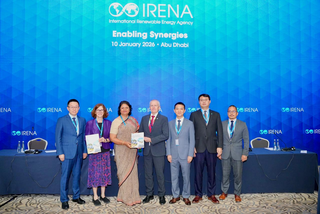
IRENA (MoU signing at WCC): The International Renewable Energy Agency (IRENA) is an intergovernmental organisation that supports countries in their transition to a sustainable energy future, and serves as the principal platform for international co-operation, a centre of excellence, and a repository of policy, technology, resource and financial knowledge on renewable energy. IRENA promotes the widespread adoption and sustainable use of all forms of renewable energy, including ...

Partnerships

IRENA (MoU signing at WCC): The International Renewable Energy Agency (IRENA) is an intergovernmental organisation that supports countries in their transition to a sustainable energy future, and serves as the principal platform for international co-operation, a centre of excellence, and a repository of policy, technology, resource and financial knowledge on renewable energy. IRENA promotes the widespread adoption and sustainable use of all forms of renewable energy, including bioenergy, geothermal, hydropower, ocean, solar and wind energy, in the pursuit of sustainable development, energy access, energy security and low-carbon economic growth and prosperity.  

Convention on the Conservation of Migratory Species of Wild Animals Energy Task Force (CMS ETF): The CMS Energy Task Force is a multi-stakeholder platform that works towards reconciling renewable energy developments with the conservation of migratory species. The CMS Energy Task Force brings together governments, multilateral environmental agreements, investors, the private sector and non-governmental organizations with an aim of avoiding and minimising negative impacts of energy developments on migratory species.  IUCN is proactively engaged and contributing as an observer organisation.  

RGI (MoU IUCN and RGI join forces to promote nature positive renewable energy generation and electricity grids - News | IUCN): RGI is a unique collaboration of NGOs and TSOs from across Europe engaging in an ‘energy transition ecosystem-of-actors’. They promote fair, transparent, sustainable  grid development to enable the growth of renewables to achieve full decarbonisation in line with the Paris Agreement.  The partnership is to advance collaboration on the development of sustainable renewable energy and electricity grid, under which the GINGR initiative was developed and materialised, see more details in the project page. IUCN is also the supporting organisation for the RGI found Offshore Coalition for Energy and Nature (OCEaN).  
CREEI (IUCN signs agreement with leading Chinese research institute on renewable energy - Story | IUCN): Facing the future, the institute is committed to developing into a world-class think tank and consulting company in the energy industry, and continues to provide high-level research results and solutions for energy-related government agencies, industry organizations and related enterprises.  The partnership aims to cooperate on research on renewable energy, including how to speed the transition away from fossil fuels and ensure that renewable energy alternatives contribute towards Nature Positive targets outlined in the Kunming-Montreal Global Biodiversity Framework.  


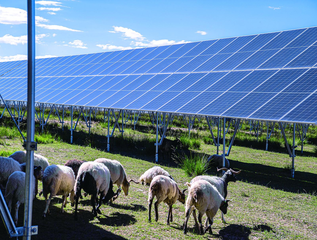
LONGi (LONGi – IUCN collaboration to support solar energy sector to contribute to biodiversity goals - Story | IUCN): Under the mission of "To make the best of solar energy to build a green world" with a brand positioning of "The most trusted, reliable solar company that blazes the trail for green technology,"LONGi is developing solutions for large-scale power plants, for different industries and households with its innovation-focused development. This collaboration highlights the importance of integrating corporate climate action with biodiversity conservation efforts. In addition to supporting the solar energy sector to contribute towards global biodiversity goals, the partnership could help promote the potential for photovoltaic projects to have benefits for nature and raise awareness of conservation in the solar energy industry. 

REDEIA (IUCN and REDEIA join forces to promote nature-positive energy infrastructure in Spain and Latin America - Story | IUCN): REDIEA guarantees the electricity supply and ensure connectivity, driving a green transition that is fair and based on sustainability criteria, showcasing our neutrality and contributing to social and territorial cohesion. The partnership will focus on promoting a positive impact on biodiversity and the natural surroundings of REDEIA facilities in Spain and Latin America.

Ipieca: Ipieca brings together members and stakeholders to lead in integrating sustainability by advancing climate action, environmental responsibility and social performance across oil, gas and renewables activities. The objective of this partnership is to improve energy companies’ environmental performance in biodiversity conservation and activities that accelerate the energy transition.  

 Shell: The collaboration between the International Union for Conservation of Nature (IUCN) and Shell, established in 1999, has evolved into a powerful partnership aimed at addressing some of the most pressing environmental challenges. Building on years of trust and leveraging each other's strengths, the renewed collaboration focuses on the interlinkages between biodiversity and climate crises, emphasizing the need for transformative changes in production and consumption patterns to meet societal goals. The vision of this partnership is a "just transition towards a low carbon and nature-positive future," underpinned by four main outcomes: Integrating Science-Based Approaches, Influencing the Sector and Global Goals, Improving Knowledge and Learning, and Building a Transformative Collaboration Model. 

Opportunities

Decarbonisation  

Building on its programmatic collaboration with the wind and solar sectors, the IUCN CCET team is now expanding its focus to include other critical components of the low-carbon energy transition. This includes dedicated projects and initiatives on sustainable biofuels, carbon capture and storage (CCS/CDR), and green hydrogen. These efforts are aimed at refining and advancing IUCN’s overarching strategic approach to the global energy transition.  

IUCN brings unique ...

Opportunities

Decarbonisation  

Building on its programmatic collaboration with the wind and solar sectors, the IUCN CCET team is now expanding its focus to include other critical components of the low-carbon energy transition. This includes dedicated projects and initiatives on sustainable biofuels, carbon capture and storage (CCS/CDR), and green hydrogen. These efforts are aimed at refining and advancing IUCN’s overarching strategic approach to the global energy transition.  

IUCN brings unique value to this space by leveraging its deep expertise in biodiversity conservation, environmental governance, and multi-stakeholder engagement. As part of its mission, IUCN helps ensure that emerging energy solutions are environmentally responsible, socially equitable, and aligned with global sustainability goals.  

Key Areas of Activity  

Biofuels

 IUCN is exploring how sustainably produced biofuels can reduce reliance on fossil fuels. This includes: 

  • Evaluating their environmental and socio-economic impacts  
  • Promoting responsible sourcing and land-use practices  
  • Guiding efforts to prevent the spread of invasive species  
  • Ensuring compatibility with biodiversity protection and rural livelihoods  

IUCN Resolutions and Recommendations

  • WCC 2008 RES 083: Industrial agrofuel production. For more opportunities for the rural poor, women and indigenous peoples, and that increase the resilience of agro-ecosystems to climate change.’  
  • WCC 2008 RES 082: Sustainable biomass-based energy to support efforts to develop sustainable biofuels that conserve biodiversity, bring significant benefits to climate-change mitigation and adaptation.’  
  • WCC 2012 Res 088: Responsible renewable energy sources. This resolution ‘requests the Director General to promote, on the basis of IUCN data, the compilation of a report to be made available to Members, including an assessment of the environmental and social impacts which, to date, have been caused by the production and use of biofuels on a global scale’;  
  • WCC 2012 Res 087: Energy and Conservation. recognize that deciding between energy sources must take into consideration the inextricable linkages between energy, food and water security;’
  • WCC 2020 Rec 011: The fight against imported deforestation.  

Carbon Capture and Dioxide Removal (CCS/CDR)  

As global attention turns to negative emissions technologies, IUCN is:  

  • Assessing innovative carbon capture and storage solutions  
  • Ensuring ecosystem integrity and environmental safeguards  
  • Contributing to policy frameworks that support credible net-zero pathways  

Hydrogen  

With growing interest in clean hydrogen as a fuel of the future, IUCN is focused on:  

  • Supporting the development of green hydrogen technologies  
  • Minimizing ecological impacts during production and infrastructure deployment  
  • Encouraging collaboration for scalable, sustainable implementation  

This multi-pronged approach positions IUCN to not only contribute to a carbon-neutral future but also to ensure that the path to it safeguards nature, supports communities, and enhances resilience.