Connecting nature and energy: initiative to promote the coexistence of power lines and biodiversity
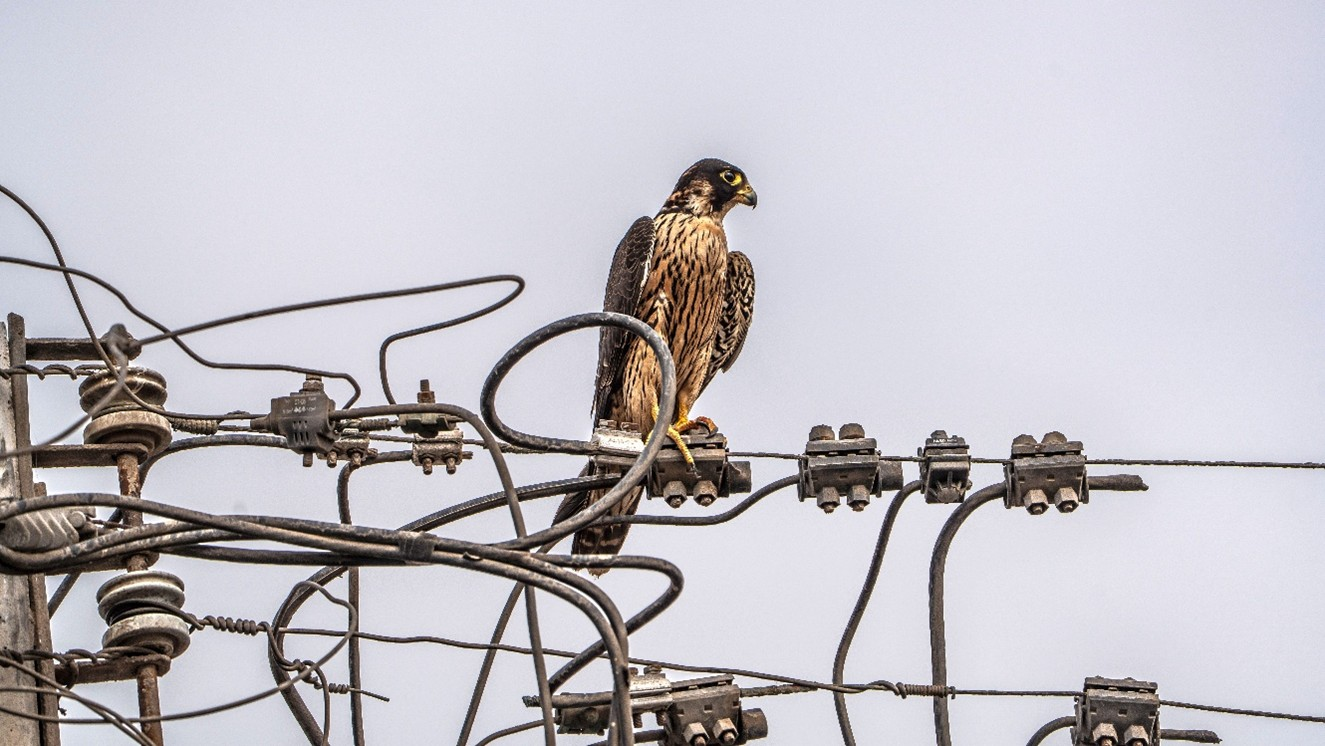
Peregrine falcon on power line
Electrical infrastructure, and especially power lines, is present in many of our landscapes and is an integral part of the socio-economic development of our societies. Electricity grids are a key infrastructure for human well-being and for the development of renewable energy sources around the world, essential to address the climate emergency. However, if power lines, both for transmission and distribution, are not properly planned, designed and operated, they can have significant negative impacts on biodiversity, including migratory species, due to direct mortality from electrocution and collision as well as the loss of connectivity of ecological corridors and flyways, among other threats.
This side event at CMS COP15 will provide an overview of this issue and why and how it affects the most sensitive species, mainly birds but also other groups such as mammals. It will highlight best practices, experiences and practical guidelines to facilitate coexistence between power lines and biodiversity, especially migratory species, thus minimising risks on nature. Building on the work of IUCN and ETF to strengthen cooperation and dialogue among stakeholders and develop and promote guidance and tools for regulators and industry, from a global and multi-institutional perspective, the event will showcase experiences from international organisations, governments and the private sector.
Within IUCN, the line of work on power lines and biodiversity has been developed especially by the IUCN Centre for Mediterranean Cooperation (IUCN Med), which has launched an initiative for the conservation of birds of prey and other migratory birds in the Mediterranean region, through capacity building, exchange of experiences between key actors and development of a technical toolkit, also developed at the global level. This work is now being expanded to Latin America, and this event will serve to present a new manual on the prevention and mitigation of the impacts of power lines on wildlife in Latin America, as well as a new initiative to train and create a network of experts in this region. IUCN promotes the integration of biodiversity conservation into industry and spatial planning, among other areas, through its participation in the CMS ETF.
As a multi-stakeholder platform, the ETF fosters cooperation among governments, multilateral environmental agreements, international organisations, civil society, and financial institutions.
With this event, we seek to support the work of CMS by:
- Focusing on the threat that power lines can pose to certain populations and species, and promoting the exchange of available knowledge and studies, especially in Latin America;
- Supporting evidence-based best practices and promoting successful solutions and experiences to reconcile electrical infrastructure with wildlife conservation, presenting relevant available resources, such guidelines on power lines and wildlife (available in English and French, and taking this opportunity to launch the new Spanish version);
- Strengthening collaboration between experts, governments, electricity companies, financial institutions, the conservation community, and other key actors in the region, and promoting a network of cooperation and exchange;
- Contributing to CMS COP15 agenda items on Flyways and Ecological Connectivity, Action Plans for Birds and Conservation of, among others, Raptors and Vultures, Infrastructure, Renewable Energy, Climate Change, as well as to the implementation of the CSM ETF Workplan 2025-2023
Speakers
Helena Clavero Sousa, IUCN
Grettel Delgadillo Molina, Grupo Electrificación Sostenible de Costa Rica/Humane World for Animals
Vivianne Eilers, IBAMA, Ministério do Meio Ambiente e Mudança do Clima, Brazil
Raquel Carvalho, SAVE Brasil
Ruth Tiffer-Sotomayor, World Bank Group
COP15 agenda items and relevant resolutions
26.3 Flyways
26.4 Action Plans for Birds
26.5 Action Plan for Migratory Landbirds in the African Eurasian Region
26.6 Conservation of African-Eurasian Vultures
26.7 Saker Falcon (Falco cherrug) Global Action Plan
26.8 Internationally Important Raptor Areas
28.2 Ecological Connectivity
28.9 Cumulative Effects Assessments
28.10 Infrastructure
28.11 Renewable Energy
28.12 Climate Change
Res.10.11 (Rev.COP13) Power Lines and Migratory Birds
Resolution 11.27 (Rev.COP13) Renewable Energy and Migratory Species
Res. 11.17 (Rev.COP14) Action Plan for Migratory Landbirds in the African-Eurasian Region