Fortescue and IUCN chart a science-based path to net positive impact for biodiversity
Gland, Switzerland — IUCN and Fortescue have published findings from the first phase of their strategic collaboration, showing how science-based tools can guide a mining company’s journey toward net positive impact on biodiversity and Nature Positive contributions. The work, carried out at the Eliwana iron ore mine in Western Australia’s Pilbara region, demonstrates what rigorous, credible biodiversity action looks like in practice.
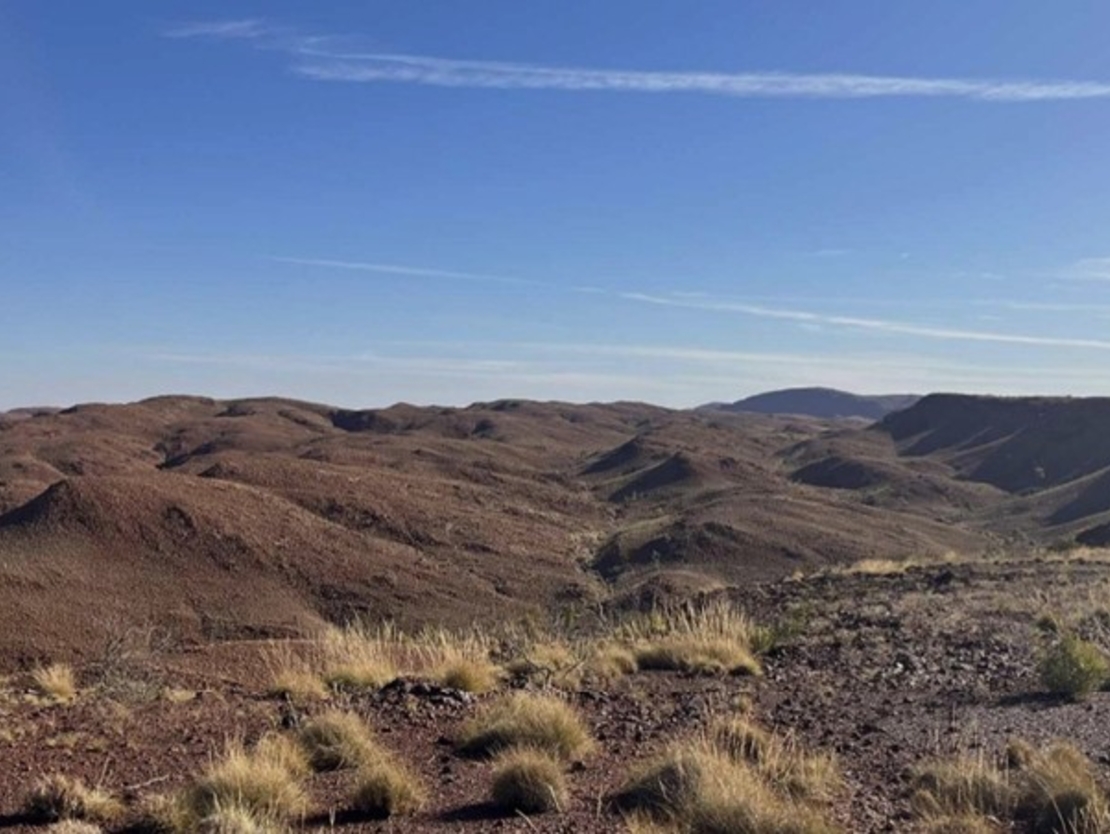
Fortescue has committed to achieving net positive impact on biodiversity by 2030. This collaboration with IUCN, which began in March 2025, is building the scientific foundation to do so credibly — using IUCN Review Protocol for Biodiversity Net Gain and, for the first time, IUCN RHINO (Rapid, High-Integrity Nature-positive Outcomes), a science-based framework that helps companies quantify species extinction risk and prioritise the actions that will make the greatest difference. The findings were presented recently at UNEP-WCMC’s Nature Action Dialogues, an international forum in Cambridge, UK.
Pilbara biodiversity under the microscope
The Pilbara region is home to rich and highly distinctive arid-adapted fauna, much of it found nowhere else on Earth. The assessment focused on an Area of Influence — the geographic zone where mine activities could potentially affect biodiversity — covering approximately 13,800 km², encompassing the Eliwana mine and the broader Western Hub exploration area on the Country of the Puutu Kunti Kurrama and Pinikura (PKKP) Traditional Custodians.
Using the STAR metric (Species Threat Abatement and Restoration), which draws on the IUCN Red List of Threatened Species™, the team confirmed five globally threatened species through field surveys, species distribution modelling and expert review: the Endangered Northern Quoll (Dasyurus hallucatus), the Critically Endangered Night Parrot (Pezoporus occidentalis), the Vulnerable Ghost Bat (Macroderma gigas), the Vulnerable Grey Falcon (Falco hypoleucos) and the Vulnerable Southern Whiteface (Aphelocephala leucopsis). The Northern Quoll and Night Parrot together account for around 77% of the calibrated species threat score.
The assessment also ranked threats driving species decline: invasive non-native species and livestock farming and ranching each contributed 16.7% to the overall score, followed by fire and fire suppression at 13.2% — pinpointing where action will have the greatest impact.
Jarrod Pittson, Group Manager, Environment, Closure and International Communities at Fortescue said: “This work is helping us move from understanding biodiversity impacts to taking action where it matters most. By identifying the species and threats that need the greatest attention, we’re better placed to target our efforts and measure the difference we’re making over time.”
Martin Sneary, Director of Business and Nature, IUCN, said: “The private sector has a critical role to play in halting and reversing biodiversity loss. Fortescue’s engagement with this process reflects the kind of rigorous, science-based commitment needed to translate corporate biodiversity pledges into outcomes that matter for nature.”
From assessment to action
The assessment is the starting point, not the endpoint. Fortescue and IUCN will now develop a biodiversity action plan targeting the priority threats identified, with the goal of delivering measurable reductions in species extinction risk. This will involve engaging stakeholders to balance land use with measurable biodiversity outcomes.
The full case study, published as a practical resource for other companies navigating similar challenges, is available at iucnrhino.org.
About IUCN
IUCN — International Union for Conservation of Nature is the world’s largest and most diverse environmental network. Harnessing the experience, resources and reach of its more than 1,500 Member organisations and 19,000 experts, IUCN is the global authority on the status of the natural world and the measures needed to safeguard it.
About Fortescue
Fortescue, an Australian company, is the fourth largest and one of the world’s lowest-cost mining companies and is committed to working toward net positive impact for biodiversity across its operations. Fortescue’s Pilbara mining operations are connected by 760 kilometres of rail to Port Hedland, exporting almost 200 million tonnes of iron ore annually to customers worldwide.


The Bangladesh Forest Department (BFD) and IUCN Bangladesh, with support from Agence Française de…

Each year, International Women's Day is an opportunity to recognise the women advancing change in…

On 14 January 2026, in Dhaka, the Bangladesh Forest Department and IUCN Bangladesh formally signed…