Savannahs and Grasslands: The planet's forgotten giants to take center stage in Latin American debate
Delegations from eleven countries will meet in Ecuador to articulate a Latin American voice on savannahs and grasslands ahead of UNCCD COP17, to be held this year in Mongolia.
Photo: ©Bruno Ferreiro - Chaco Films - WWF

Photo: ©Julián Manrique/WWF Colombia
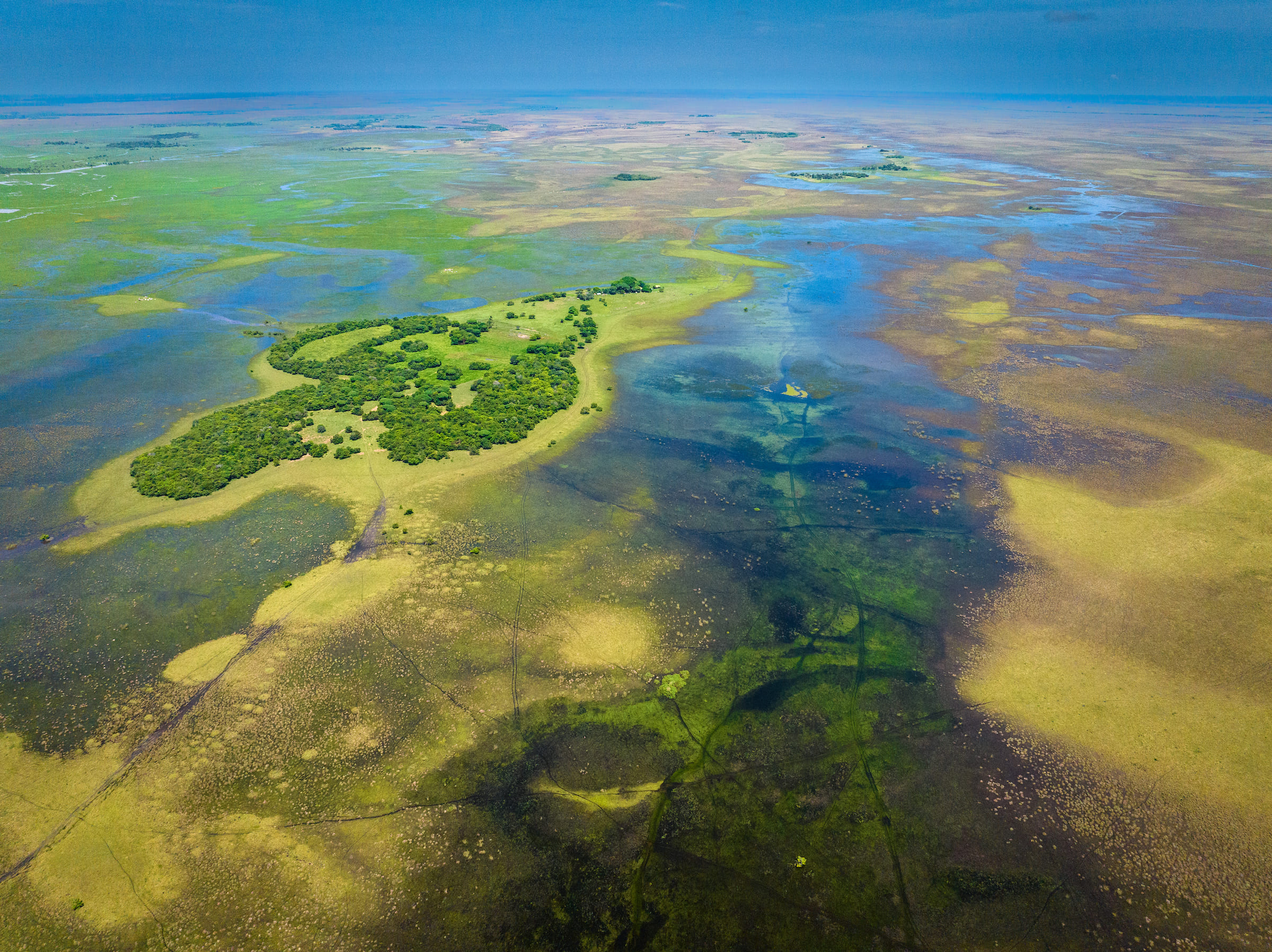
Representatives from governments, national focal points of the United Nations Convention to Combat Desertification (UNCCD), and civil society organisations from eleven Latin American countries, including the host nation, will gather on 17 June in Quito, Ecuador, to participate in the Latin America Preparatory Meeting on Grasslands and Savannahs ahead of UNCCD COP17.
Supported by the UNCCD Secretariat, the Global Alliance for Rangelands and Pastoralists, and Mongolia as the host country of COP17, this event—organised by the International Union for Conservation of Nature (IUCN)—aims to strengthen technical and political understanding of these ecosystems and promote a shared regional vision that contributes to global discussions on land degradation, biodiversity, and climate change.
A regional block with a unified voice
Latin America's grasslands and savannahs—stretching from the Argentine Pampas to the Venezuelan Llanos and the Brazilian Cerrado—have historically been underestimated in environmental and development agendas. This is despite the fact that they harbor extraordinary biodiversity, sustain the livelihoods of millions of people, and play a fundamental role in water regulation, sustainable production, carbon storage, and climate change resilience.
Despite their ecological, social, and economic importance, these ecosystems still face a significant representation gap in public policies, investment frameworks, and multilateral processes. This gap is particularly critical in a context where land degradation, biodiversity loss, and the impacts of climate change demand increasingly integrated responses.
The meeting is especially relevant within the framework of the International Year of Rangelands and Pastoralists 2026 (IYRP), proclaimed by the United Nations, and the upcoming UNCCD COP17 in Mongolia—a country where pastoral systems and rangelands are central to national identity and land management policies. Furthermore, COP17 will be the first of the three Rio Convention Conferences of the Parties to be held in 2026, offering a strategic opportunity to boost the recognition of these ecosystems within international land, biodiversity, and climate agendas.
Historically, global discussions on land degradation and pastoral systems have been primarily driven by regions like Africa and Asia. However, Latin America is home to some of the most extensive and biodiverse savannah and grassland ecosystems on the planet, as well as valuable experience in landscape conservation, restoration, and sustainable management. The meeting precisely seeks to strengthen regional coordination so that Latin American priorities, experiences, and solutions gain higher visibility in international debates and enrich the global agenda.
"For too long, savannahs and grasslands have remained on the sidelines of major global environmental decisions, despite their enormous contribution to biodiversity, water security, food production, and climate resilience. In 2026, we have a unique opportunity to change that reality. Latin America is home to some of the most important landscapes on the planet and has much to contribute to building global solutions for land degradation,", Dr. Grethel Aguilar, Director General of the IUCN, points out.

Beyond COP17: Ecosystems on the Global Agenda
In this regard, Gabriel Quijandría, IUCN Regional Director for South America, highlighted that the meeting aims to generate an impact that transcends the COP17 negotiation process.
"Latin America has much to contribute to the global conversation on land restoration and the sustainable management of grasslands and savannahs. Our ecosystems, experiences, and challenges are distinct, which is why it is vital for the region to arrive at COP17 with a shared vision and a more coordinated voice. However, our aspiration goes beyond influencing a single conference. We want to contribute to a lasting shift in how these ecosystems are recognized, valued, and integrated into development, biodiversity, climate, and land restoration agendas. COP17 is a means to advance toward that goal, not an end in itself." , Gabriel Quijandría, IUCN Regional Director for South America.
With the participation of national focal points, representatives from the UNCCD Secretariat, and civil society from Argentina, Bolivia, Brazil, Chile, Colombia, Ecuador, Mexico, Panama, Paraguay, Peru, and Uruguay, the event seeks to lay the groundwork for long-term regional advocacy and strengthen Latin America's contribution to global debates on sustainable land management.
Two days of high-level technical and political dialogue
The schedule for the Preparatory Meeting includes expert panels and dialogue spaces designed to exchange experiences, build capacities, and craft common messaging for the region. Additionally, a field visit to the Pintag–Antisana high-Andean ecosystem is planned, allowing participants to connect political debate with concrete, on-the-ground management and conservation experiences.
Discussions will address topics related to the sustainable management and restoration of savannahs and grasslands, Land Degradation Neutrality, coordination opportunities among the three Rio Conventions, and the financing mechanisms required to scale up actions. The outcomes of the meeting will help identify regional priorities and strengthen Latin American participation at COP17 and in future international processes linked to sustainable land management.

____________________________________________________________________
About the Project
This milestone marks a breakthrough for the Savannahs and Grasslands Platform, which is supported by the International Climate Initiative (IKI) on behalf of the German Federal Ministry for the Environment, Climate Action, Nature Conservation and Nuclear Safety (BMUKN). It is implemented by IUCN South America in collaboration with the IUCN Global Forest and Grasslands Programme, in partnership with WWF Colombia, Fundación Vida Silvestre Argentina, WWF-Paraguay, agri benchmark, and the Leibniz Centre for Agricultural Landscape Research (ZALF).


The Bangladesh Forest Department (BFD) and IUCN Bangladesh, with support from Agence Française de…

Each year, International Women's Day is an opportunity to recognise the women advancing change in…

On 14 January 2026, in Dhaka, the Bangladesh Forest Department and IUCN Bangladesh formally signed…