Advancing Nature Restoration Plans through collaboration and knowledge exchange
As EU Member States prepare their National Restoration Plans (NRPs) under the EU Nature Restoration Regulation, government representatives and experts from across Europe gathered at the start of June in Zagreb for a two-day workshop, organised by the IUCN European Regional Office under the Technical Support Instrument (TSI) project “Supporting the development of the National Restoration Plans of Croatia, the Netherlands, and Poland”, in cooperation with the Reform and Investment Task Force (SG REFORM) of the European Commission.
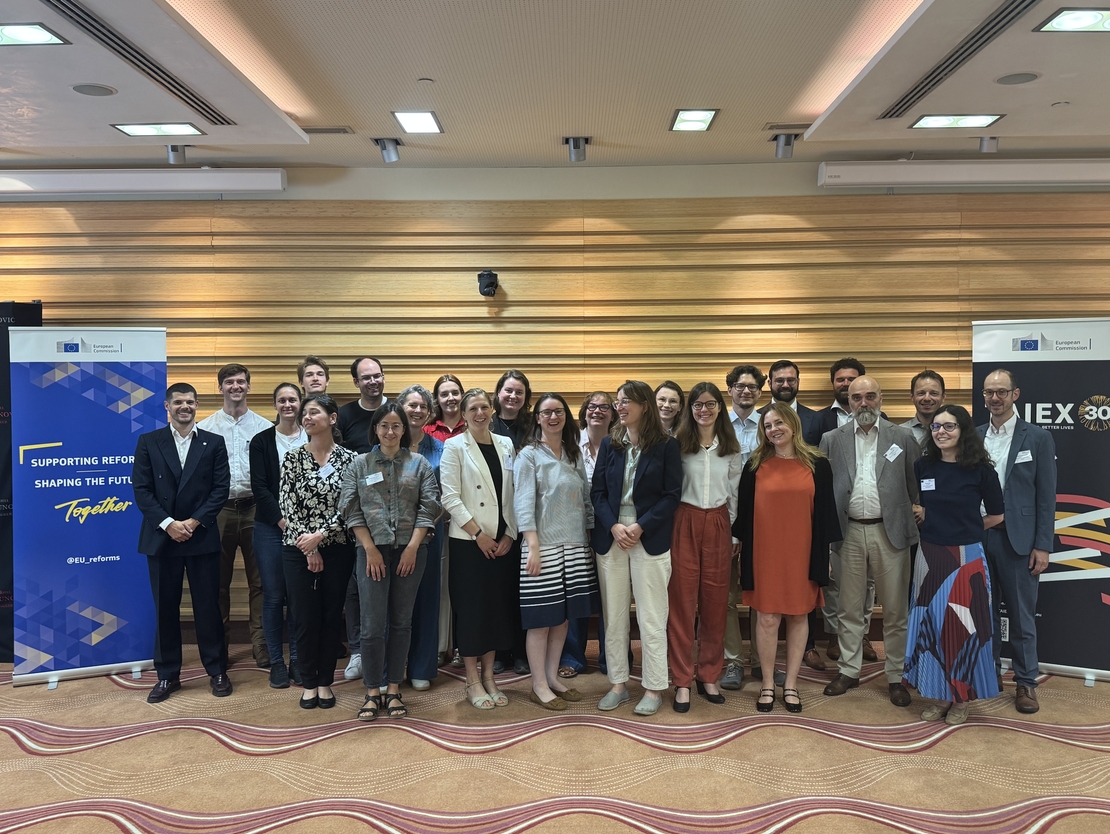
The workshop provided a valuable platform for knowledge exchange and experience sharing, with speakers from ten EU Member States presenting on aspects of their countries’ NRP drafting process. The discussion covered a wide range of topics, from socio-economic analyses to monitoring frameworks and financing of restoration action.
Through interactive group-work, representatives from Croatia, Poland, The Netherlands as well as Belgium, Czechia, Germany, Ireland, Italy, Lithuania, and Slovenia, reflected on ongoing restoration planning processes, shared challenges and possible transferrable solutions.
Three takeaways stand out in particular:
Building bridges: More channels of communication and platforms for collaboration are needed for MS to coordinate on matters of nature restoration. Challenges are often shared among MS and even where innovative solutions exist, opportunities for constructive and peer-to-peer exchanges are lacking, . Communities of Practice could boost national capacity, enhance NRR implementation and foster cross-border cooperation, as ecosystems do not stop at national borders.
“Ecosystems exist at landscape scale, but there is a lack of transnational cooperation on the measures which affects such ecosystems. Synergies between bordering Member States can present opportunities for collaboration. One such example is that of the Oder river, which flows through Czechia, Germany and Poland.”
Marta Höffner, Ministry of Climate and Environment, Poland
The need for adequate finance: A lack of financing remains the largest barrier to implementation of the NRR. Member States struggle to identify reliable financing options to fund their nature restoration efforts. With the structure of the next EU budget being negotiated, uncertainty around EU public funding for nature impede the planning process, as countries look towards innovative financing approaches such as Nature Credits to fill in the gaps.
"Developing effective Nature Restoration Plans is both a technical and collaborative endeavour. Bringing together colleagues from across ministries has shown the immense value of sharing experiences, discussing common challenges, and learning from one another. IUCN is pleased to support this exchange and remains committed to providing the science, knowledge and convening power needed to help Member States develop ambitious, practical and evidence-based plans that deliver lasting benefits for biodiversity, climate and people."
Gábor Figeczky, Senior Manager, IUCN Europe
Mind the gap(s). NRR implementation comes with novel environmental and socio-economic data monitoring requirements. While EU Member States are not starting from scratch and can rely on pre-existing monitoring schemes, they need to be re-evaluated and aligned towards NRR needs. In some cases, significant knowledge gaps are to be overcome to establish knowledge baselines and develop data-based restoration actions.
Successful nature restoration requires not only ambition but also shared learning and continuous cooperation across institutions, stakeholders and national borders. IUCN will continue to support EU Member States in their tireless efforts ahead of the NRP draft submission deadline in September 2026 and beyond.

The Bangladesh Forest Department (BFD) and IUCN Bangladesh, with support from Agence Française de…

Each year, International Women's Day is an opportunity to recognise the women advancing change in…

On 14 January 2026, in Dhaka, the Bangladesh Forest Department and IUCN Bangladesh formally signed…