Dr. Sophie George is Professor Emerita at Georgia Southern University, she spent 6 total years at the National Science Foundation as a program officer and was a visiting lecturer at Friday Harbor Labs ...
IUCN COMMISSION GROUP
IUCN SSC Marine Star Specialist Group
Group leadership

Dr Sophie GEORGE
Co-Chair
Dr. Sophie George is Professor Emerita at Georgia Southern University, she spent 6 total years at the National Science Foundation as a program officer and was a visiting lecturer at Friday Harbor Labs, University of Washington, spring 2023. She has been a visiting researcher at Friday Harbor Labs, University of Washington for the last 23 years. Her main research interests revolve around environmental change and impacts on marine invertebrate larvae. Her main goal is to understand how echinoderm larvae will respond to the predicted increase in marine heat waves. She is specifically interested in the conservation of species belonging to this group.
Dr Angela STEVENSON
Co-Chair
Dr. Angela Stevenson is an Associate Professor of Marine Biology at the University of Plymouth and GEOMAR Helmholtz Centre for Ocean Research Kiel. She is a marine ecologist whose research explores the diversity, ecology, and evolution of life on the seafloor, from shallow coastal habitats to the deep sea. Her primary research focuses on crinoids (feather stars and sea lilies), using these ancient marine animals as model systems to investigate fundamental questions in ecology, conservation, functional biology, and evolution.
Dr. Stevenson previously held a postdoctoral position at GEOMAR in Germany, and was awarded an Ocean Leaders Postdoctoral Fellowship at the University of British Columbia, in Canada, where she also completed her undergraduate degrees in Marine Biology and Chemistry.
Passionate about marine conservation and public engagement, Dr. Stevenson co-founded and co-leads the Wild Postcard Project, an international community initiative that uses art and creativity to inspire curiosity, foster connections with nature, and support biodiversity conservation.
Dr. Angela Stevenson is an Associate Professor of Marine Biology at the University of Plymouth and GEOMAR Helmholtz Centre for Ocean Research Kiel. She is a marine ecologist whose research explores ...
Advisors
- Richard R. Strathmann (University of Washington)
- Christopher Mah (National Museum of Natural History, Washington DC.)
More about the Specialist Group
The IUCN SSC Marine Star Specialist Group currently comprises 29 members (48% female), with representation from North America, Central and South America, Africa, Europe, Asia, Australia, and New Zealand.
This group aims to work towards expanding the coverage, quality and content of biodiversity assessments, improving and publishing biodiversity and conservation knowledge, and enhancing biodiversity conservation action through the implementation of effective, collaborative and practical approaches, therefore improving membership and the capacity of the SSC network and its alliances. This will enable the IUCN to inform society and policymakers to consider science-based information pertaining to decisions regarding marine star conservation and marine ecosystem health.
MISSION
To provide information to IUCN on the diversity of asteroids, ophiuroids and crinoids (sea stars, brittle stars, feather stars and sea lilies) and their role in maintaining ecosystem biodiversity and function. Furthermore, to identify their threats from climate change, disease, coastal development, pollution, invasive species, and habitat destruction including deep sea mining and fishing activities.
Specialist Group work
Cave-dwelling asteroids and ophiuroids
Research expert: Fernando Calderón-Gutiérrez.
Environmental conditions and locations:
-
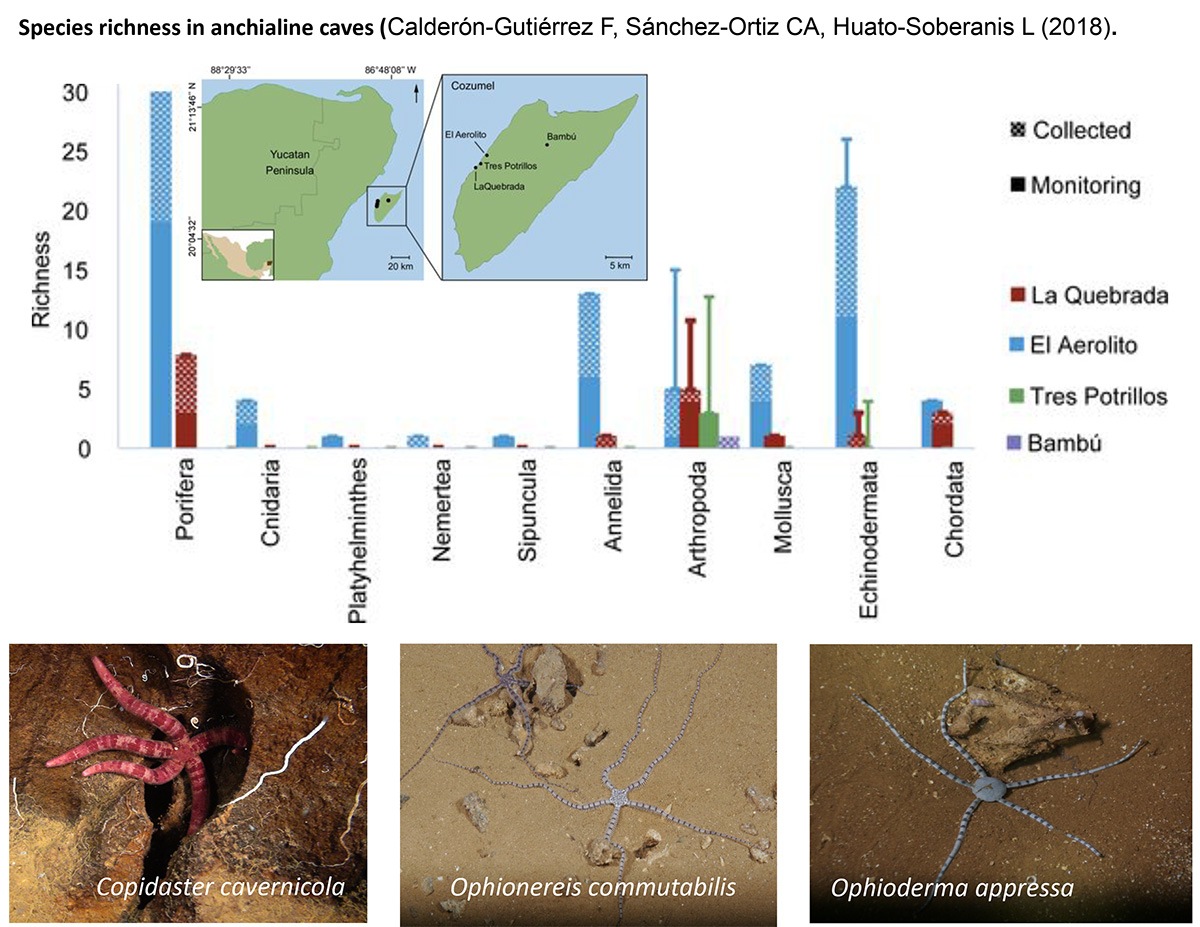
Underwater caves are characterized by extreme abiotic conditions (such as, absence of light, low food availability, low oxygen concentration, and isolation). Currently, 4 asteroids and 11 ophiuroids have been found in caves in El Aerolito, on Cozumel Island, Mexico (see Figure below).
-
The asteroid, Copidaster cavernicola (Cozumel Island) and 3 ophiuroids, Ophionereis commutabilis (Cozumel Island), Amphicutis stygobita (San Salvador Island, Bahamas), and Ophiozonella cavernalis (Okinawa, Le, and Shimoji Islands, Japan) have been described as cave adapted fauna (i.e., stygobionts). The asteroid and ophiuroids from Mexico and Japan are endemic.
Population estimates of cave-dwelling species are scanty:
-
C. copidaster has a population size of less than 300 individuals and may already be critically endangered.
-
O. commutabilis has a population size of close to 10,000 individuals but is only found on Cozumel Island.
Due to severe weather conditions, climate change, and the strong anthropogenic pressure in the area (e.g., deforestation, coastal development, deep well injection), most of these endemic species may already be critically endangered. There is thus a need for the development and implementation of conservation strategies for cave-dwelling asteroids and ophiuroids. No cave-dwelling crinoids have been reported.
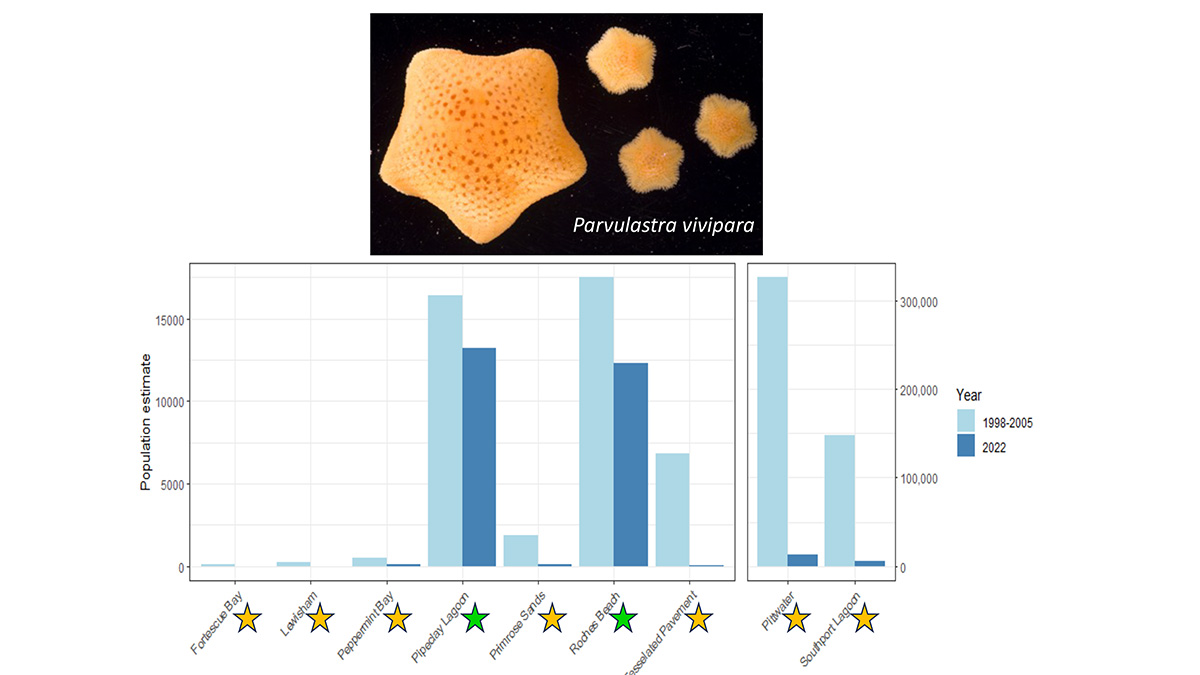
Live bearing sea stars (Parvulastra vivipara) in Australia
Research expert: Maria Byrne.
P. vivipara is endemic with specific habitat requirements. It is found in the mid-littoral zone on rocky shorelines. Over the last 20 years, the population size of live bearing sea star populations in Australia decreased by 90% (map shows site locations in the Lower Hawkesbury Estuary, LHE).
Causes:
- Rising temperatures and increasing storms
- Habitat degradation through increasing urbanization, road work, pollution, and declining water quality
- Development of oyster aquaculture
- Biofouling and cementation of rocks resulting in reduced food availability.
Restoration efforts and current threats:
- Relocation efforts of P. vivipara adults in 1988 and 2001 because of upgrades to a bridge and causeway across Pittwater, part of the LHE, failed! Survey estimates indicate < 100 individuals at four locations.
- A 2023 upgrade of the same causeway continues to be a serious threat.
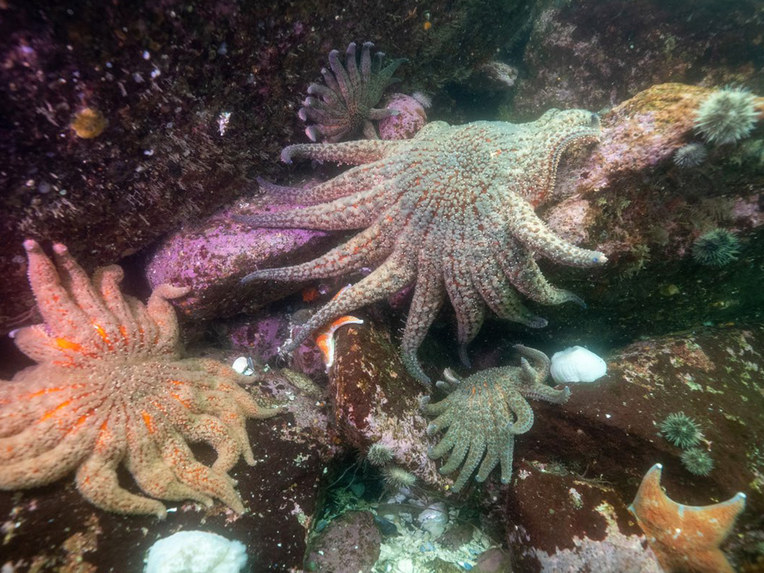
Pacific Northwest Sea stars
(in progress)
Deep-sea sea stars
(in progress)
Annual Report

Learn about MSSG’s work and results in 2024 and 2025.
Previous reports:
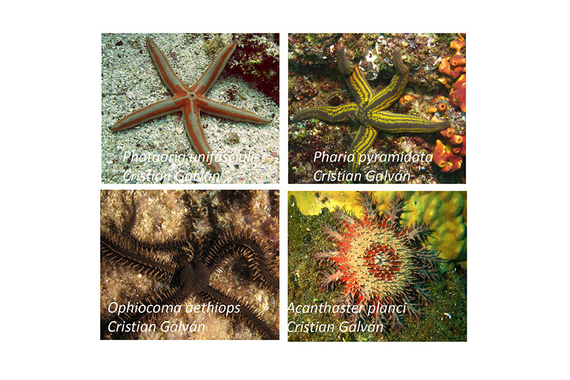
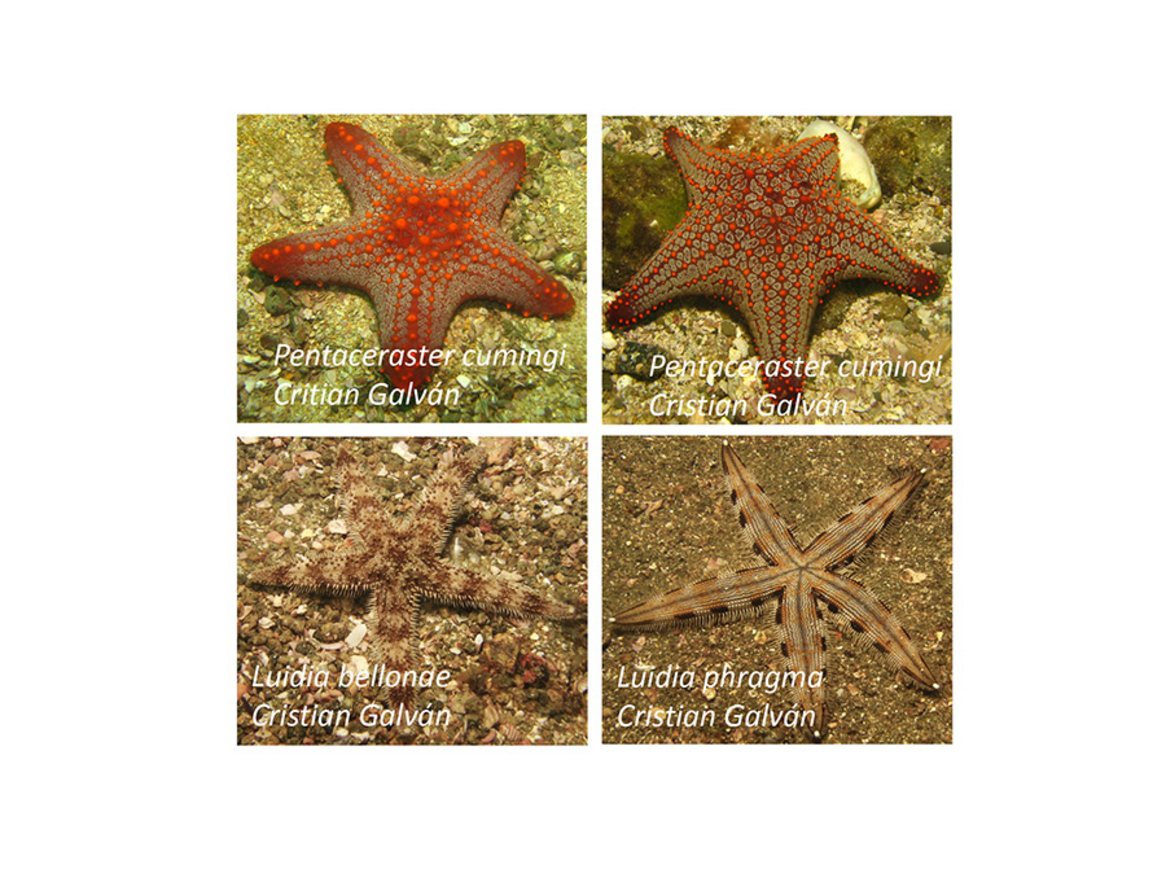
Asteroids and an ophiuroid from the Mexican Pacific region. Pictures by Cristian Galván.
Photo: Cristian Galván
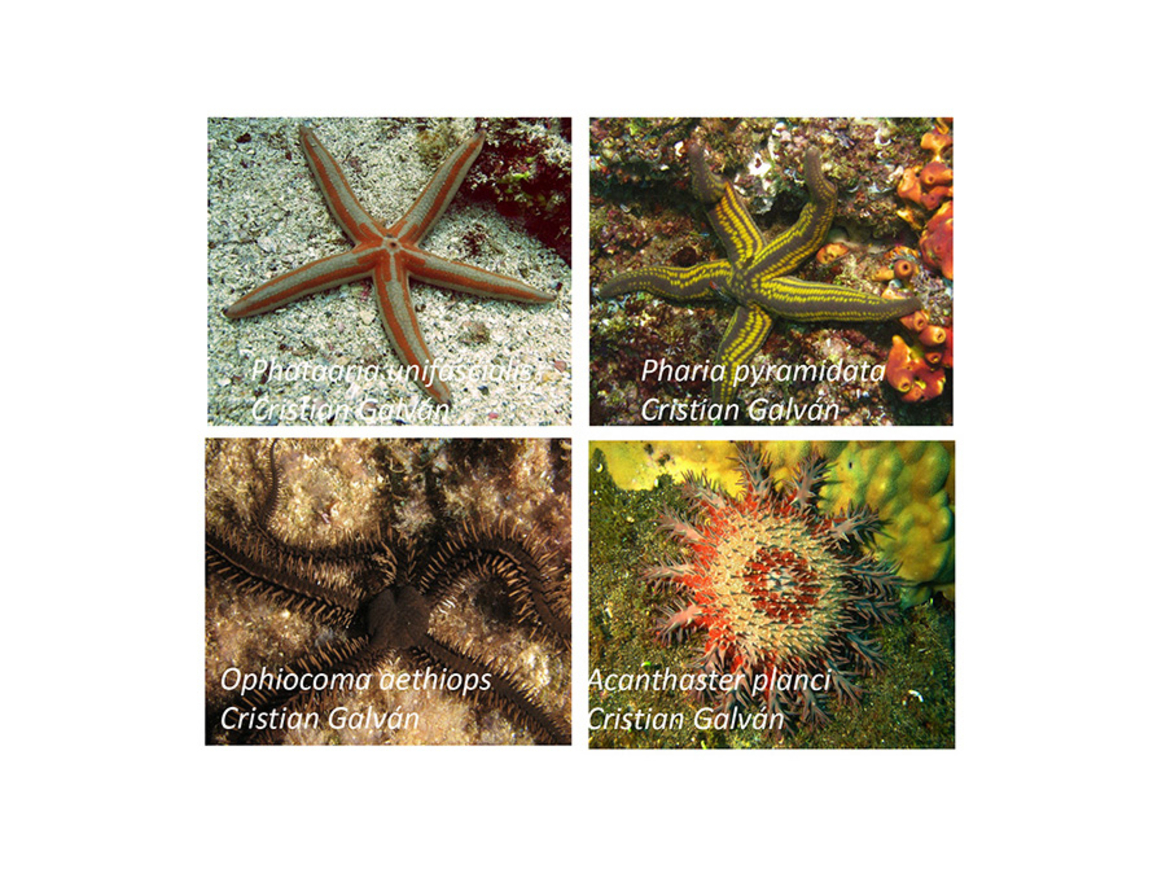
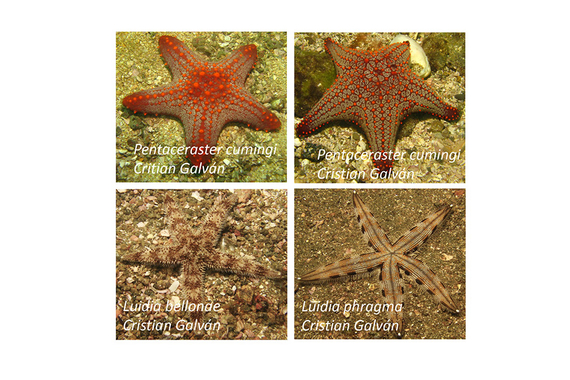
Asteroids and an ophiuroid from the Mexican Pacific region. Pictures by Cristian Galván.
Photo: Cristian Galván
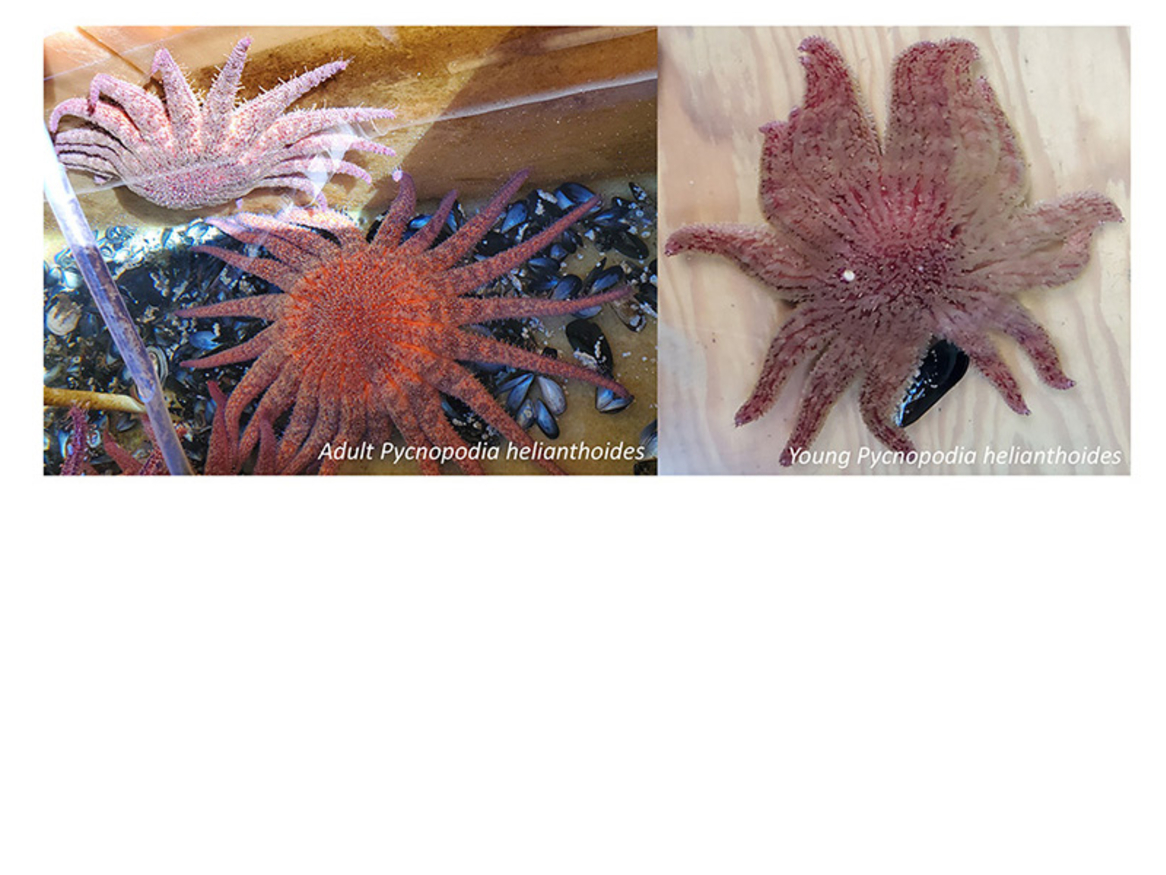
Pycnopodia helianthoides one of the largest sea stars in the world with up to 24 arms, is found in the Pacific from Alaska to California. Pictures taken by Sophie George at Friday Harbor Labs, University of Washington with permission from Dr. Jason Hodin.
Photo: Jason Hodin