Strengthening local governance of mangroves through Community Forestry Associations in the Ayeyarwady Delta
The mangroves of the Ayeyarwady Delta are vital ecosystems. They provide breeding habitats for fish and other aquatic animals, store significant amounts of carbon, protect coastal communities from cyclones and storm surges, and support the livelihoods of thousands of households through fisheries, forest products, and other ecosystem services.
Yet these mangroves have been under heavy pressure for decades. Agricultural expansion, unsustainable logging, fuelwood collection, and aquaculture development have caused the loss of more than a half of the delta's original mangrove cover. The devastating impacts of Cyclone Nargis in 2008, which claimed around 140,000 lives according to the Post-Nargis Joint Assessment report, further demonstrated the critical role that healthy mangrove forests play in protecting coastal communities from natural disasters.
Photo: Group discussion on formation of CFA in Pho Htoo Taungya Village, Pyapon Township © IUCN Myanmar
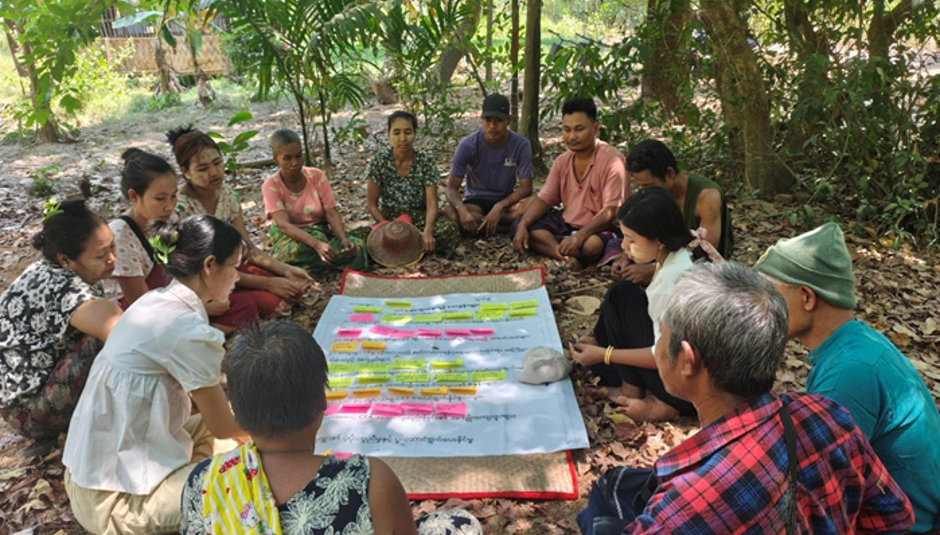
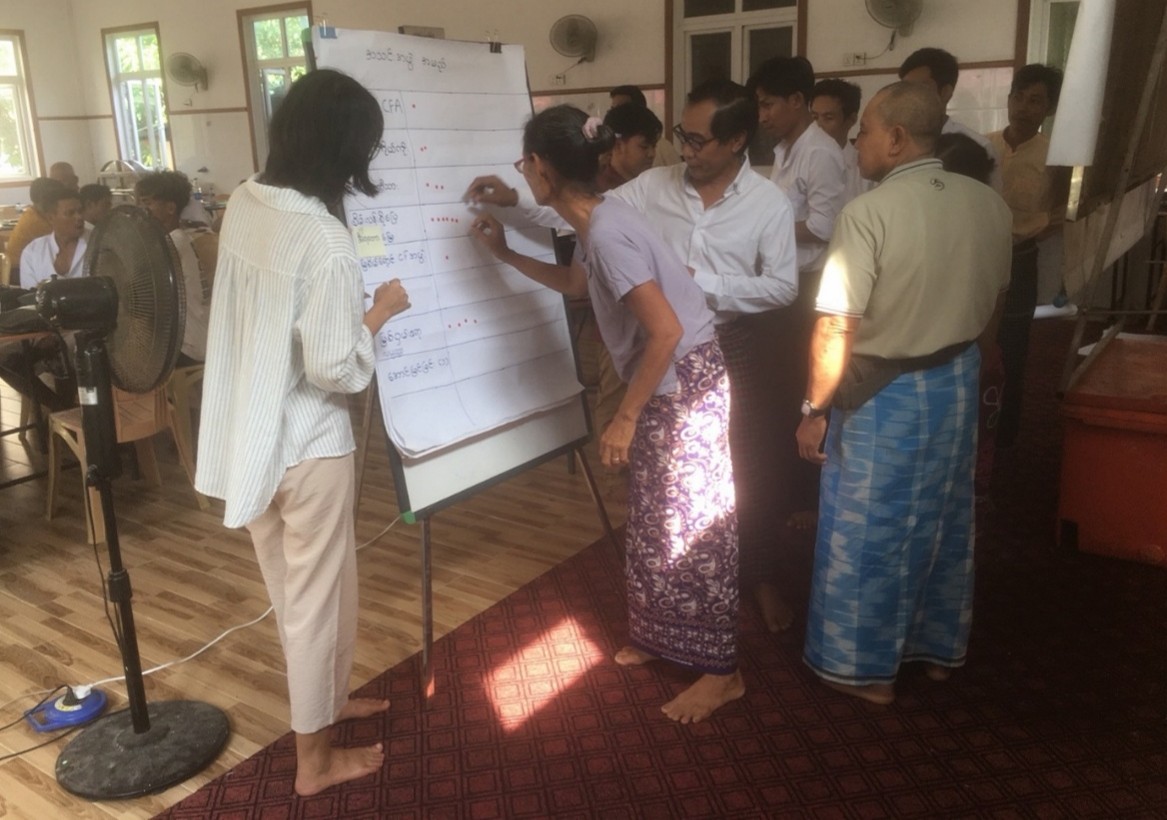
Photo: Voting on development of CFA charter in Labutta Township © IUCN Myanmar
Today, local communities are taking a leading role in restoring and safeguarding their mangroves through community forestry (CF) whereby management responsibilities are delegated from the Forest Department (FD) to legally established community committees. Based on the principle that larger organizations will have a greater voice, IUCN is supporting the establishment of Community Forestry Associations (CFAs) at the township level to strengthen large-area mangrove governance and ensure that communities have a greater say in managing the delta's mangroves.
Community Forestry: Building Local Stewardship
CF was formally introduced in Myanmar in 1995 through the Community Forestry Instructions (CFIs), which provided the legal basis for collaborative forest management between the FD and local communities. Under this system, Community Forest User Groups (CFUGs) receive renewable 30-year CF certificates that grant legal rights to restore, protect, and sustainably manage designated forest areas.
Initially designed to meet local subsistence needs, CF has evolved into a comprehensive approach to sustainable forest management, biodiversity conservation, climate change mitigation, and rural livelihood development.
Important reforms to the CFIs in 2016 and 2019 accelerated CF formation by:
simplifying CF registration procedures;
recognizing CF under the 2018 Forest Law;
allowing the establishment of CF enterprises;
permitting the commercial marketing of timber and NTFPs; and
promoting community-based forest enterprises and value addition.
Today, CF is probably Myanmar's largest community-based natural resource management programmes. According to the FD’s statistics, as of 2025, the FD had issued CF certificates to 7,801 CFUGs, with 193,905 members and covering 450,000 hectares—almost half of the national CF target (919,000 hectares)
Community Forestry in the Ayeyarwady Delta
CF was introduced in the Ayeyarwady in the early 2000s. Since then, the FD and local communities have worked with FREDA, ECCDI, MERA (formerly MERN), RECOFTC, JICA, DANIDA, and others to establish CF throughout the delta. These initiatives have focused on restoring degraded mangroves, securing community tenure, improving coastal livelihoods, and strengthening local stewardship of mangrove resources.
More recent programmes have expanded this approach by integrating biodiversity conservation, climate adaptation, mangrove-friendly aquaculture, and community-based enterprises. According to the FD’s statistics, more than 8,000 hectares of CF have been established across over 60 CFUGs in the delta. Nearly 65% of the total area established has been since the CFI reforms in 2016 and 2019.
Why Community Forestry Associations Matter
While individual CFUGs have managed their own forests, many conservation challenges and opportunities extend well beyond the boundaries of a single CF. Illegal logging, mangrove conversion, watershed management, habitat connectivity, and coordination with government agencies require collaboration between neighbouring communities and other stakeholders. Addressing these landscape-scale issues calls for stronger partnerships and more coordinated governance.
To meet this need, IUCN is implementing the project "Protecting and Restoring Mangroves in Myanmar's Ayeyarwady Delta through Community-led Governance and Sustainable Mangrove-friendly Livelihoods" in partnership with WWF-Myanmar and the Mangrove and Environment Rehabilitation-conservation Association (MERA). Fundedby the Global Mangrove Alliance (GMA), the project promotes sustainable mangrove management, diversified livelihoods, biodiversity conservation, and greater participation of women and youth across Pyapon, Bogale, and Labutta Townships.
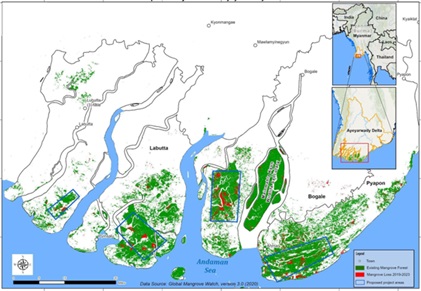
A key component of the project is the establishment of township-level CFAs. Rather than replacing CFUGs, CFAs create a platform through which multiple CFUGs can work together. The associations strengthen coordination among communities, improve engagement with government agencies and development partners, facilitate integrated landscape planning, mobilize resources, and advocate for shared community interests.
Communities Shape Their Own Associations
In early 2026, IUCN organized meetings with 50 CFUGs across the three project townships to introduce the concept of CFA and seek their input to their establishment. The consultations aimed to:
explain the purpose and benefits of CFAs;
promote inclusive participation of women, youth, and vulnerable groups;
identify community priorities for landscape-level mangrove management; and
facilitate the democratic selection of representatives.
Through these consultations, each CFUG selected three representatives to participate in establishing a township-level CFA. Then, IUCN organized separate township-level workshops in June and July 2026, bringing together the selected representatives from all participating CFUGs.
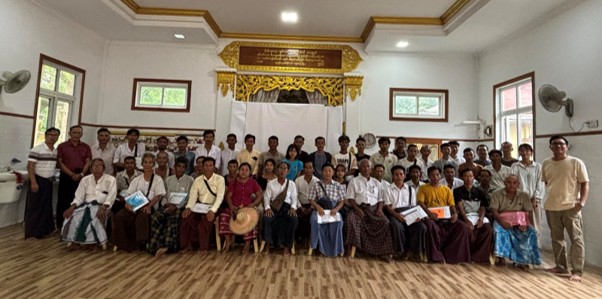
During the workshops, participants:
built relationships and networks among CFUGs;
increased their understanding of Myanmar's legal framework governing local associations;
drafted CFA charters outlining the associations' objectives, membership, and management structures; and
discussed future plan for formal CFA registration.
These activities laid the foundation for inclusive, representative, and legally recognized CFAs capable of coordinating conservation and community development across the wider mangrove landscape.
Looking Ahead
The establishment of CFAs represents an important milestone in the evolution of community-based forest governance in Myanmar. IUCN will continue supporting the newly formed CFAs through their registration as local CSOs. CFA members will receive capacity-building training to strengthen leadership, governance, financial management, organizational development, and institutional sustainability. IUCN will also facilitate the preparation of Integrated Mangrove Management Plans to guide coordinated mangrove conservation, restoration, and sustainable resource management across each township.
Recognizing that long-term success depends on financial sustainability, IUCN will work with the CFAs to develop sustainable financing mechanisms, supported by seed funding and technical assistance, enabling the associations to become self-reliant institutions capable of serving their communities well beyond the lifetime of the project.
In Kashkadarya, Khorezm and the Republic of Karakalpakstan, local communities are helping turn…
The third in a five-part series, this webinar brought together speakers from across West and…

This week, the Yerevan Municipality hosted the inaugural ceremony marking the establishment of the…