IUCN Central Asia Office marks first anniversary, strengthening regional cooperation for nature
One year after its opening in Tashkent, the IUCN Central Asia Office is marking its first anniversary as a growing regional hub for cooperation, knowledge exchange and action for nature. Opened in June 2025 with the support of the Government of Uzbekistan, the Office serves Kazakhstan, Kyrgyzstan, Tajikistan, Turkmenistan and Uzbekistan, helping connect national and regional priorities with IUCN’s global expertise, standards and tools.
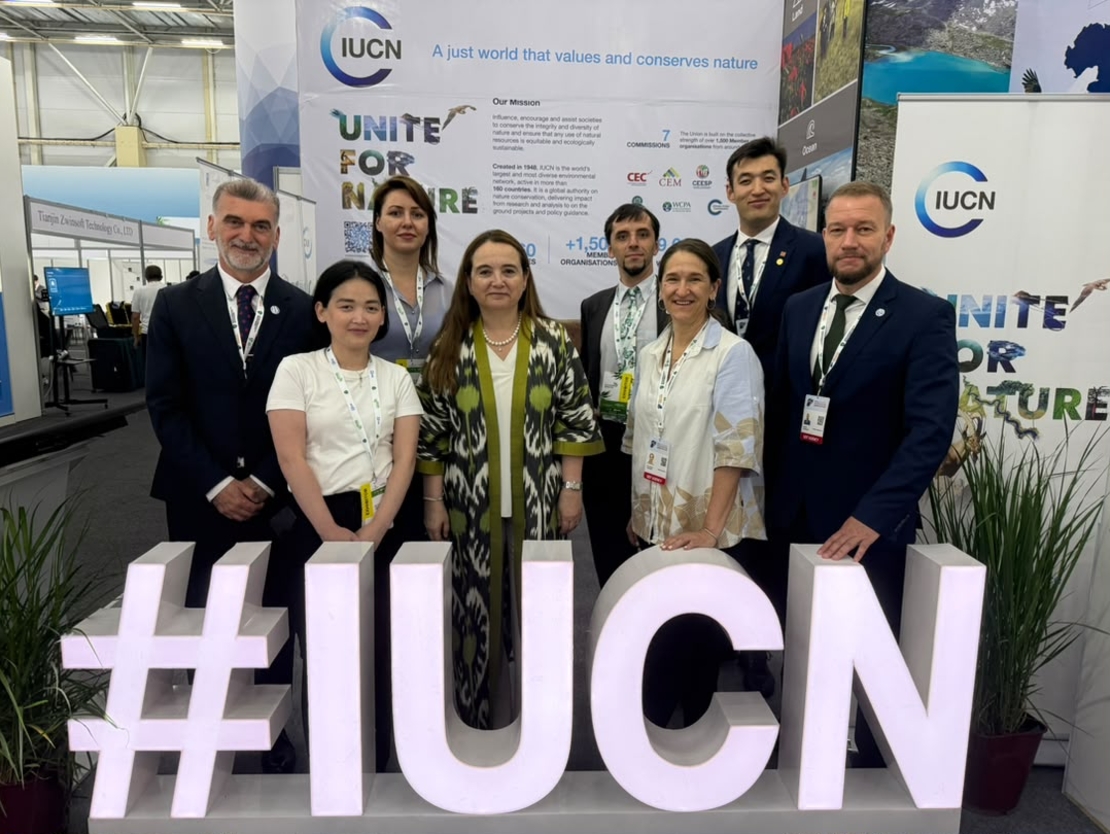
IUCN Director General, Dr Aguilar, and the IUCN Central Asia team at the EcoExpo in Samarkand, Uzbekistan, June 2026. Left to right: Dr Avramoski, Ms Khvan, Ms Kozel, Dr Aguilar, Mr Iscenco, Ms Garcia-Huidobro, Mr Makhmudov and Mr Gorshkov
“The first year of the IUCN Central Asia Office has shown the value of having a strong regional platform rooted in science, partnership and cooperation,” said Dmitry Gorshkov, Head of the IUCN Central Asia Office. “From Tashkent, where we are hosted at the Central Asia Green University, we are working with governments, experts, IUCN Members and Commissions, and partners across Central Asia to support practical solutions for biodiversity and climate resilience. Over the years, the Office has built a growing programme portfolio approaching EUR 20 million, reflecting both the region’s ambition and IUCN’s long-term commitment to supporting countries in achieving a future where people and nature thrive together.”
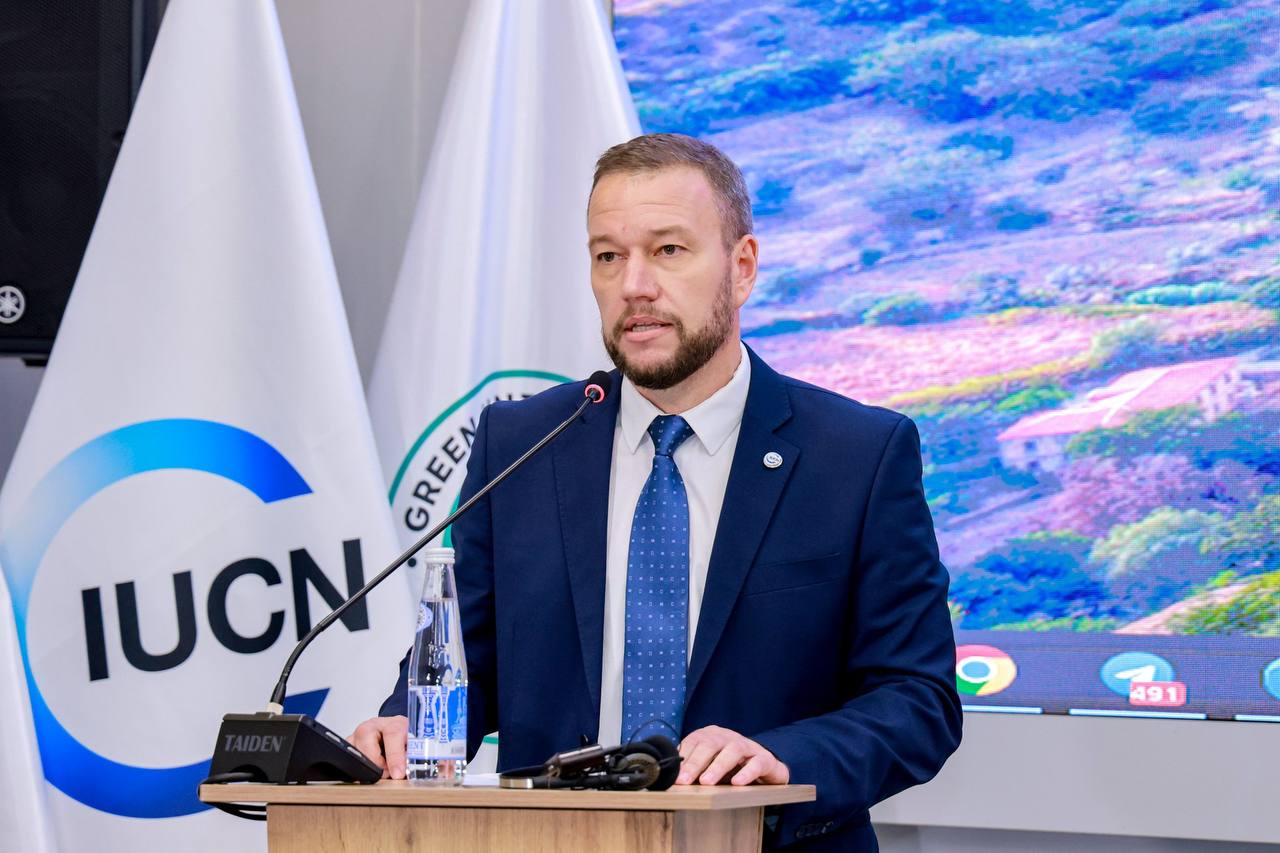
A major milestone of the Office’s first year was its designation as the Central Asia Technical and Scientific Cooperation Support Centre under the Convention on Biological Diversity, which will lead and coordinate technical and scientific cooperation across Armenia, Azerbaijan, Belarus, the Russian Federation and five Central Asian countries, while supporting them in advancing national priorities set out in National Biodiversity Strategies and Action Plans and other relevant policy frameworks. The Office is also co-hosting the Ramsar Regional Initiative for Central Asia and helping strengthen regional cooperation on wetlands and providing technical support.
The anniversary comes at a time of growing environmental momentum in Central Asia. Recent regional events, including the CITES COP20, the Eighth GEF Assembly, EcoExpo Central Asia in Samarkand, and the Regional Ecological Summit in Astana, have highlighted increasing ambition across governments, businesses, scientific institutions and civil society to advance sustainable development, strengthen resilience and place nature at the centre of decision-making. From ecosystem restoration and water security to green finance and climate adaptation, the region is demonstrating both ambition and action.
“The establishment of the IUCN Central Asia Office in Tashkent has strengthened our shared ability to cooperate on environmental priorities that are important for the entire region. Its location within the Green University building further enhances its strategic importance by creating a platform for closer integration of science, education, and practical environmental action, while promoting innovation, knowledge exchange and regional cooperation,” said H.E. Mr Aziz Abdukhakimov, Advisor to the President of the Republic of Uzbekistan on Environmental Issues and Chairman of the National Committee on Ecology and Climate Change. “Uzbekistan is proud to support this work and to contribute to stronger regional cooperation for nature. We also welcome the regional initiative to develop a Central Asian Red Data Book, which can help strengthen the scientific basis for biodiversity conservation and support countries in protecting the region’s unique and threatened species.”
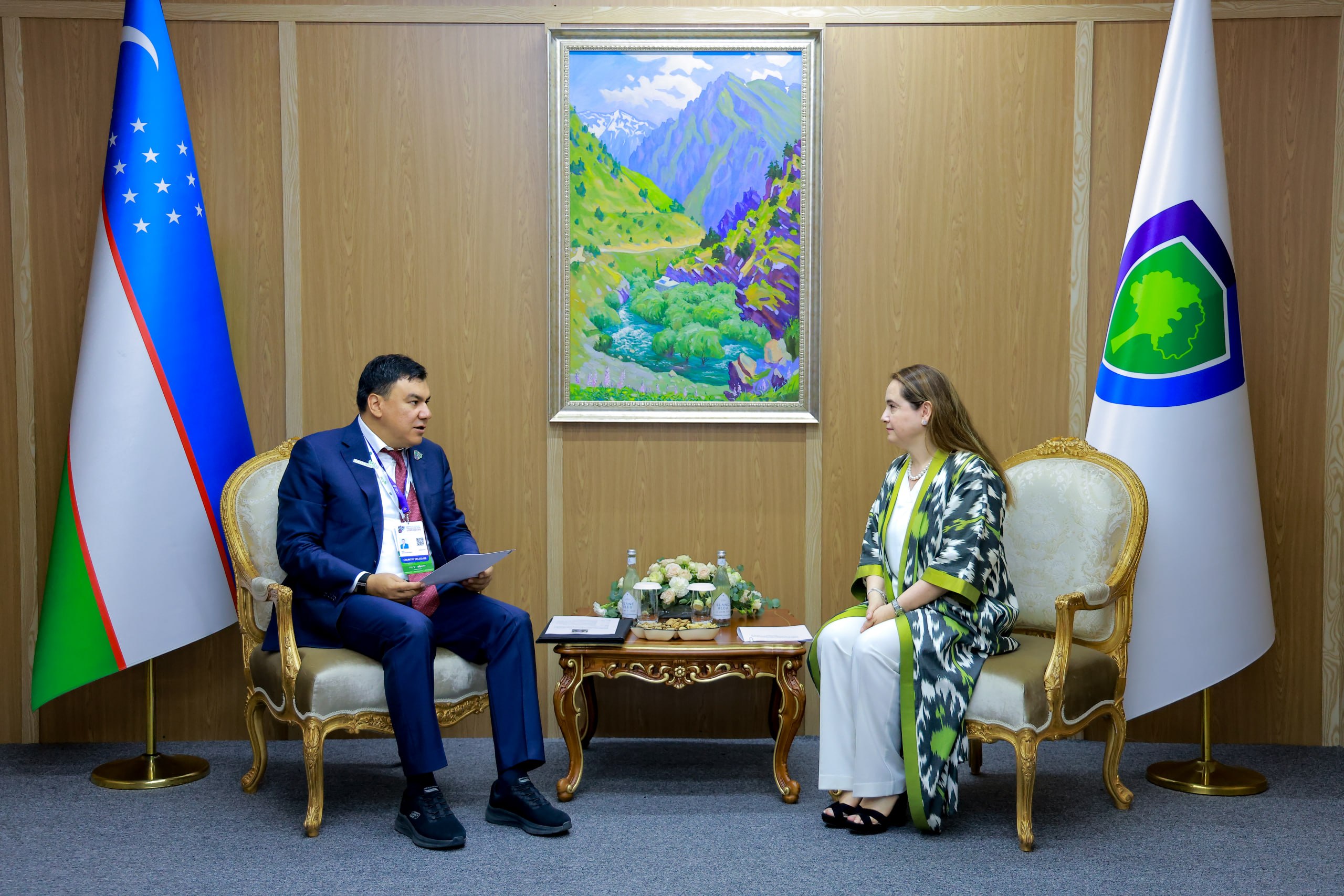
Over the past year, the Office has advanced work on species conservation, protected and conserved areas and the One Health approach in nature conservation, water security and environmental governance, ecosystem restoration and Nature-based Solutions. Cooperation with the Central Asian Green University has also expanded through its membership in the IUCN Academy of Environmental Law, strengthening the university’s links with international environmental governance, legal research and academic exchange. As it enters its second year, the IUCN Central Asia Office will continue building on this momentum, working with countries and partners across the region to advance the IUCN Programme, contribute to the implementation of global biodiversity and climate goals, and promote solutions grounded in science, cooperation and nature.
*
About IUCN
IUCN is a membership Union uniquely composed of both government and civil society organisations. It harnesses the experience, resources and reach of its more than 1,500 Member organisations and the input of more than 19,000 experts. This diversity and vast expertise make IUCN the global authority on the status of the natural world and the measures needed to safeguard it.
The IUCN Regional Office for Eastern Europe and Central Asia (IUCN ECARO) was established in 2015 with a view to supporting IUCN constituency and implementing the IUCN Programme in most countries of the IUCN Statutory Region East Europe, North and Central Asia. In an effort to contribute to a more sustainable future for this region, IUCN ECARO focuses its work on good governance, the long-term protection of biodiversity and sustainable use of natural resources. The office is based in Belgrade, Serbia, and was initially established as the IUCN Programme Office for South-Eastern Europe (IUCN SEE) in 2004. The IUCN Central Asia office was officially opened in 2025, in Tashkent, Uzbekistan.
http://www.iucn.org/ecaro
Telegram: https://t.me/IUCN_ECARO
About the National Committee on Ecology and Climate Change
The National Committee on Ecology and Climate Change of the Republic of Uzbekistan is the authorised government body responsible for implementing state policy in the areas of environmental protection, climate change mitigation, biodiversity conservation, afforestation, combating desertification and the sustainable management of natural resources. The Committee coordinates national environmental programmes and initiatives aimed at promoting ecological sustainability and improving environmental quality across the country.
The Committee is responsible for implementing five nationwide environmental projects: Zero Waste Territory, focused on improving waste management and recycling systems; Clean Air, aimed at enhancing air quality; Yashil Makon (Green Space), a nationwide afforestation and greening initiative; Eco-Culture, promoting environmental awareness and sustainable lifestyles; and Bio Heritage, dedicated to conserving biodiversity and protecting natural heritage for future generations.
https://gov.uz/eco
Telegram: https://t.me/ecogovuz


The Bangladesh Forest Department (BFD) and IUCN Bangladesh, with support from Agence Française de…

Each year, International Women's Day is an opportunity to recognise the women advancing change in…

On 14 January 2026, in Dhaka, the Bangladesh Forest Department and IUCN Bangladesh formally signed…