Advancing coastal restoration in Europe through the IUCN Global Standard for Nature-based Solutions
A new publication developed jointly by the IUCN Centre for Mediterranean Cooperation (IUCN Med) and the IUCN Nature-based Solutions (NbS) Global Programme within the Horizon 2020 REST-COAST project explores how the IUCN Global Standard for Nature-based Solutions can help ensure that coastal restoration efforts deliver lasting benefits for both people and nature.
Flooded rice fields in Ebro Delta, Spain
Photo: Jordi Clave Garsot | Dreamstime.com

Marshes in the Bay of Arcachon near Arès, France.
Photo: Musat Christian | Dreamstime.com
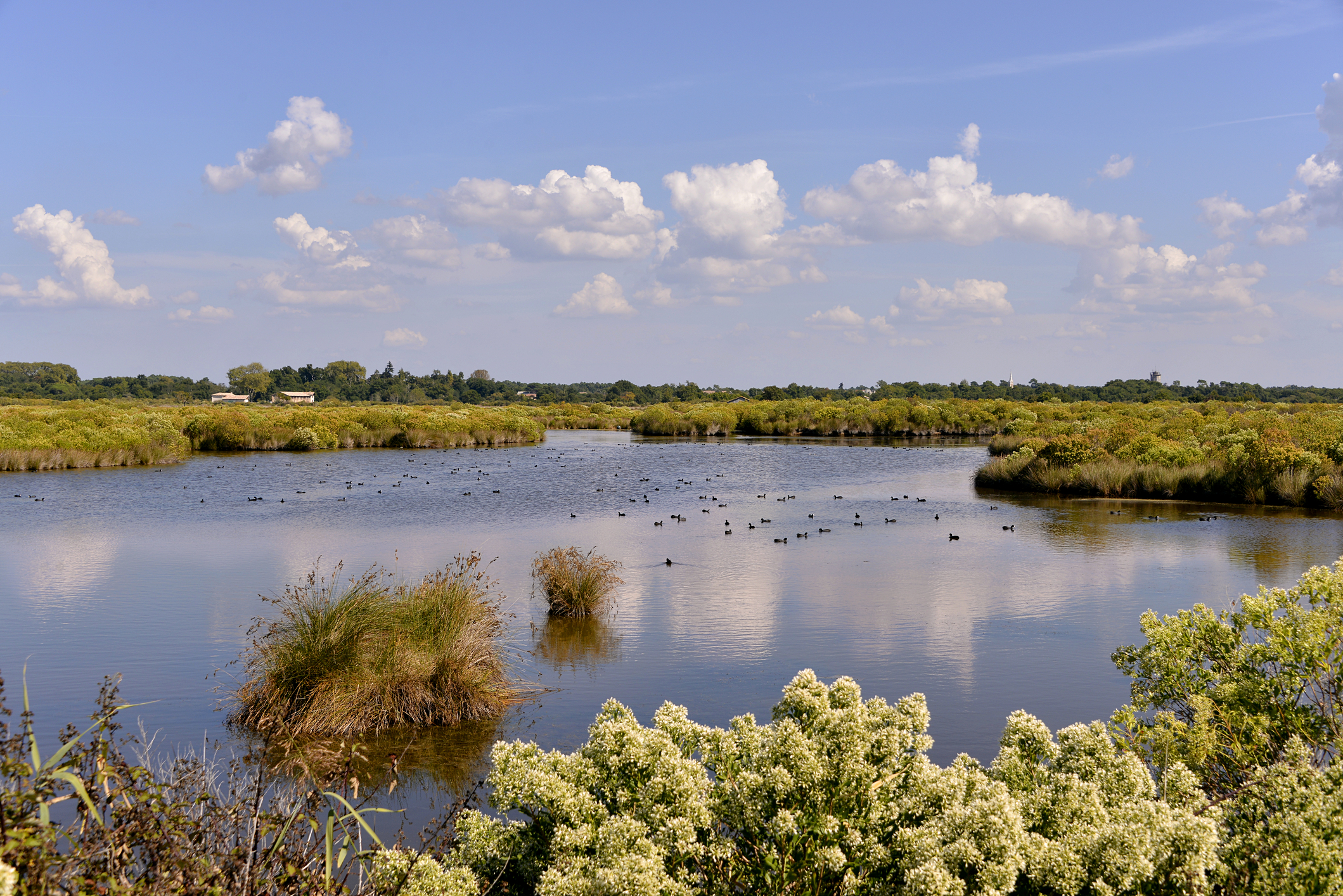
Photo: IUCN Med
As countries seek to meet ambitious restoration and climate targets, coastal ecosystems are increasingly recognised as critical allies in addressing biodiversity loss, climate adaptation and disaster risk reduction. Yet ensuring that restoration efforts deliver long-term benefits for both people and nature requires more than ecological interventions alone.
A new publication developed jointly by the IUCN Centre for Mediterranean Cooperation (IUCN Med) and the IUCN Nature-based Solutions (NbS) Global Programme within the Horizon 2020 REST-COAST project explores how the IUCN Global Standard for Nature-based Solutions can help ensure that coastal restoration efforts deliver lasting benefits for both people and nature.
The report, Advancing Coastal Restoration through the IUCN Global Standard for Nature-based Solutions: Running the Standard in REST-COAST Pilot Sites, presents the results of an assessment carried out across nine restoration sites located in the Mediterranean, Black Sea, Atlantic and North Sea regions.
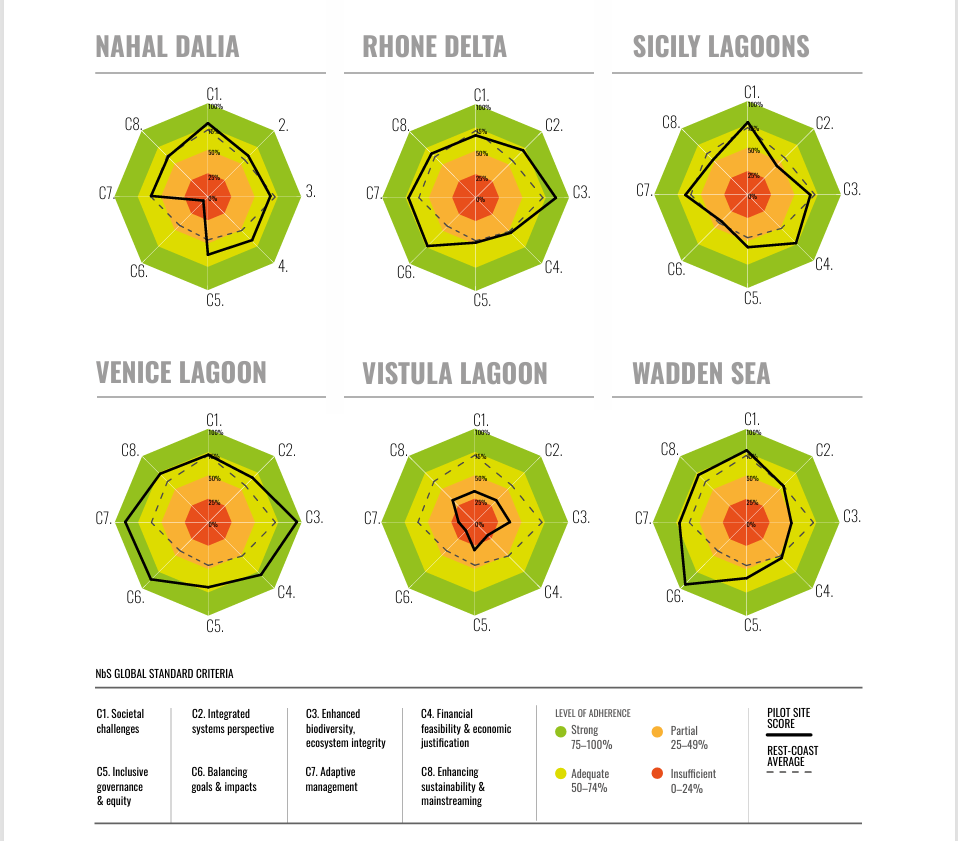
Using the IUCN Global Standard, the assessment examined how restoration interventions align with the eight criteria that define Nature-based Solutions, including societal benefits, biodiversity outcomes, governance, economic viability and long-term sustainability.
While the overall REST-COAST project is performing adequately, the findings reveal encouraging processes to keep improving. Across the Pilot Sites, restoration actions generally demonstrated strong performance in addressing societal challenges and enhancing biodiversity and ecosystem integrity. Many interventions are already contributing to habitat recovery, climate adaptation and ecosystem resilience through approaches that work with natural processes rather than against them.
Inclusive governance and balancing ecological and social goals emerged as the most critical areas for improvement. Meaningful stakeholder participation and systematic management of trade-offs between ecological and social outcomes remain central to scaling restoration effectively.
“Without strong governance, restoration remains a series of well-funded pilots. What we learned from REST-COAST is that when communities, governments and conservation actors work within clear governance frameworks, with real decision-making power and accountability, restoration scales. That's what transforms Nature-based Solutions from projects into strategies” said Angela Andrade, IUCN Commission on Ecosystem Management, Nature, and Global Nexus Thematic Group Lead.
Long-term financing emerged as other main challenge. While restoration projects work brilliantly in their pilot phase, many lack financial frameworks beyond the initial funding cycle. Without dedicated long-term financing, even successful interventions cannot scale.
At the same time, strong adherence to the Standard is possible despite complex governance frameworks as for the case of Venice Lagoon.
“The assessment ultimately demonstrates that large-scale coastal restoration is possible when addressing can deliver significant benefits for biodiversity, climate adaptation and local communities when ecological interventions are combined with strong governance frameworks and long-term planning”, commented Naomie Kayitesi, Programme Officer at IUCN's Nature-based Solutions Management Hub.
Transformative governance
Recognising these challenges, IUCN's approach goes beyond assessment. Within REST-COAST, IUCN has played a central role in applying the Global Standard for Nature-based Solutions and supporting the development of governance approaches that can help scale up restoration efforts beyond individual pilot sites.
By providing governance roadmaps and recommendations, IUCN has explored how governance can enable transformative change by strengthening stakeholder participation, supporting collaborative decision-making and identifying pathways for integrating restoration into broader policy frameworks.
To complement this work, IUCN and project partners have developed a series of policy briefs addressing key challenges and opportunities for coastal restoration. These publications provide recommendations for decision-makers on topics ranging from governance and financing to the mainstreaming of Nature-based Solutions in coastal planning and management.
Translating lessons into action: the Málaga Think Tank
The lessons emerging from REST-COAST were further explored during the think tank “Advancing the Application of the IUCN Global Standard for NbS in Coastal Restoration: Lessons from REST-COAST and the IUCN Portfolio”, held in Málaga in May 2025.
The event brought together experts from the IUCN Centre for Mediterranean Cooperation, the IUCN European Regional Office (EURO), the IUCN Eastern Europe and Central Asia Regional Office (ECARO), the IUCN Commission on Ecosystem Management (CEM) and the IUCN NbS Global Programme. Participants exchanged experiences from different regions and projects, exploring common challenges in applying the Global Standard and discussing pathways to scale Nature-based Solutions from pilot interventions to long-term institutional frameworks.
“REST-COAST demonstrates that ambitious coastal restoration is achievable in Europe. By combining rigorous assessment with governance innovation and cross-regional learning, Nature-based Solutions deliver for biodiversity, climate resilience and communities. Now the challenge is scaling these lessons as Europe implements the Nature Restoration Regulation and meets its climate commitments”, Pilar Marín, REST-COAST project coordinator at IUCN Centre for Mediterranean Cooperation.
As governments work towards the objectives of the EU Nature Restoration Regulation, the Kunming-Montreal Global Biodiversity Framework and the UN Decade on Ecosystem Restoration, the lessons generated through REST-COAST offer valuable guidance for scaling up effective Nature-based Solutions across Europe and beyond.
A complementary video documents the exchanges and governance approaches developed during the project and summarised the governance approaches tested in REST-COAST and showcases how they translate into practice across different coastal contexts.
Explore the resources