IUCN and partners convene ocean leaders to advance ocean action ahead of Africa’s first Our Ocean Conference
Mombasa, Kenya, 15 June 2026 — The Western Indian Ocean, host region for Africa’s first Our Ocean Conference, is home to globally significant marine biodiversity, productive coastal and marine ecosystems, and millions of people whose livelihoods, food security and economic well-being depend on a healthy ocean. The region is increasingly emerging as a hub for innovation, partnership and locally led action, demonstrating scalable solutions that can inform global efforts to address ocean degradation, strengthen resilience and advance sustainable blue economy development.
In response to the escalating threats of marine pollution, biodiversity loss, and climate impacts on ocean ecosystems and coastal communities, governments, investors, scientists, development partners, civil society organizations, youth leaders, Indigenous Peoples and Local Communities (IPLCs), and private sector actors are gathering in Mombasa, Kenya, for the Regenerative Ocean Forum, a strategic platform focused on advancing solutions for ocean regeneration, climate resilience, circular economy development, and sustainable blue economies. Africa is set to host the 11th Our Ocean Conference for the first time, IUCN and its partners are bringing together global leaders and stakeholders to accelerate action on some of the most pressing challenges facing the ocean, from biodiversity loss and climate change to marine pollution and sustainable development, while advancing solutions that support a healthy, productive and resilient ocean.
The Forum builds on the momentum generated by the inaugural Regenerative Ocean Week held in Dar es Salaam, Tanzania, in 2025, which brought together ocean leaders, innovators, investors, policymakers, researchers, and communities around a shared vision for a regenerative blue economy. One year later, stakeholders are reconvening to strengthen partnerships, showcase emerging solutions, and accelerate action ahead of the 11th Our Ocean Conference (OOC11), which officially opens later on 16 June and marks the first time the global conference is being hosted on African soil.
This forum comes at a time when policymakers, businesses, investors, and communities are seeking practical approaches capable of simultaneously addressing climate resilience, biodiversity conservation, marine pollution, and sustainable development. Discussions throughout the two-day programme will explore pathways to strengthen ocean governance, accelerate the regenerative blue economy, mobilize finance and investment, advance circular economy solutions, support sustainable and inclusive livelihoods, scale ecosystem restoration, empower IPLCs, and deepen regional collaboration across the Western Indian Ocean.
“The conversations taking place this week demonstrate that the world is not short of solutions. Across regions and sectors, governments, communities, businesses and partners are advancing innovative approaches to ocean governance, ecosystem restoration, circular economy development and sustainable livelihoods. The challenge before us is to accelerate implementation, strengthen collaboration and mobilize the investment needed to scale these efforts and secure a healthy, productive and resilient ocean for future generations,” notes Thomas Sberna, IUCN ESARO Regional Head for Coastal and Ocean Resilience.
The Forum is also highlighting the growing momentum behind flagship regional initiatives, including the Great Blue Wall, an Africa-born movement advancing ocean regeneration and resilient blue economies across the Western Indian Ocean. New insights and milestones from the initiative are expected to be unveiled during OOC11.
One of the Forum’s major focuses is advancing practical solutions to marine plastic pollution and strengthening circular economy systems that prevent waste leakage into rivers, coastlines and the ocean, while creating sustainable economic opportunities for communities and businesses.
“Plastic pollution remains one of the most visible and pressing threats facing our oceans, coastlines and communities. Yet it also presents an opportunity to rethink how we produce, use, and manage materials. Through advancing circular solutions, we can unlock innovation and entrepreneurship opportunities that reduce leakage into the environment, and build more resilient and sustainable local economies,” adds Peter Manyara, Regional Ocean Partnerships Manager and IslandPlas Project lead IUCN ESARO.
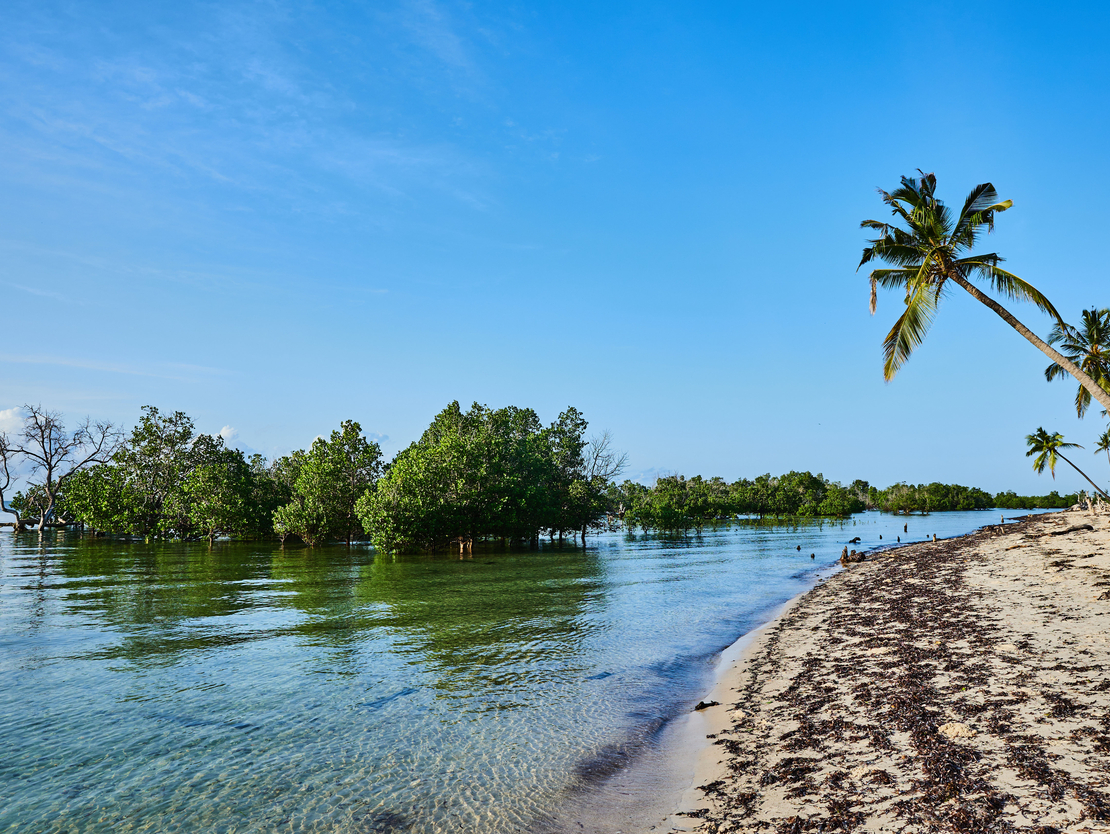
The Forum is further showcasing how ecosystem restoration through Nature-based Solutions (NbS) is helping strengthen resilience across the region and beyond, from mangrove forests and seagrass meadows to coral reefs and other critical coastal habitats that support biodiversity, fisheries, tourism, and climate adaptation.
Denise Nicolau, Regional Coastal and Ocean Ecosystems Manager, IUCN ESARO, states, “Nature is not simply a component of the blue economy; it is the foundation upon which resilient communities, thriving ecosystems, and sustainable economic development depend. Across the Western Indian Ocean, Regenerative Seascapes project work continues to demonstrate that NbS, inclusive governance, and community-led stewardship can generate tangible benefits for biodiversity, livelihoods, climate resilience, and local economies. The opportunity before us is to scale these proven approaches, strengthen partnerships, and unlock the investment needed to advance a regenerative blue economy that delivers lasting impact for both people and nature.”
Recognizing that long-term ocean sustainability depends on inclusive governance and local stewardship, the Forum is also highlighting the leadership of IPLCs in shaping resilient and sustainable ocean futures.
As Africa prepares to host its first Our Ocean Conference, the Regenerative Ocean Forum sends a powerful message that transformative ocean action is already underway. Across the world, governments, communities, businesses and partners are advancing innovative solutions that restore ecosystems, strengthen resilience, reduce pollution and support sustainable livelihoods. The challenge now is to accelerate implementation and scale these efforts to meet the urgency of the ocean crisis. The Forum therefore serves not only as a precursor to OOC11, but as a platform to strengthen ocean leadership, resilience, and regeneration.
About IUCN
The International Union for Conservation of Nature (IUCN) is a membership Union uniquely composed of both government and civil society organisations. Created in 1948, IUCN has grown into the world’s largest and most diverse environmental network, bringing together more than 1,400 Member organisations and around 17,000 experts. IUCN works to conserve nature and ensure that any use of natural resources is equitable and ecologically sustainable through science, policy, field action, and partnerships.
Media contact
Ghaamid Abdulbasat
Regional Ocean Communications Officer
IUCN Eastern and Southern Africa Regional Office (ESARO)


The Bangladesh Forest Department (BFD) and IUCN Bangladesh, with support from Agence Française de…

Each year, International Women's Day is an opportunity to recognise the women advancing change in…

On 14 January 2026, in Dhaka, the Bangladesh Forest Department and IUCN Bangladesh formally signed…