Second season of Cherish the Nature Spain launches to protect Mediterranean seagrass meadows
Over the past few weeks, IUCN Med and OMODA & JAECOO have launched the second season of their collaboration in Spain with two activities in Cabo de Gata-Níjar Natural Park: an immersion workshop for journalists on the conservation of Posidonia oceanica and a citizen science and beach clean-up action with volunteers, company clients and staff.
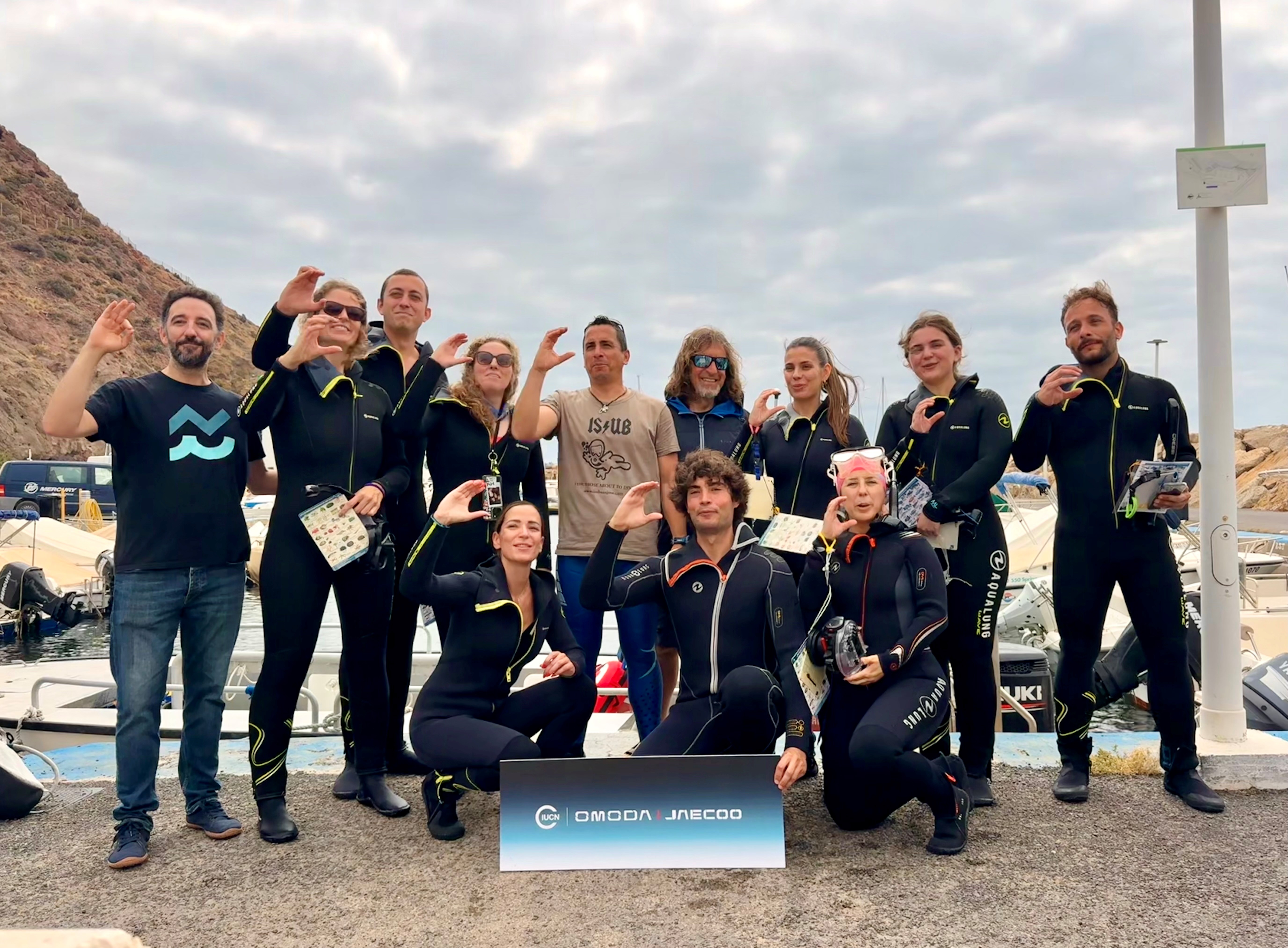
Foto de grupo con los periodistas que participaron en la actividad de monitoreo en Cala Higuera (PN Cabo de Gata-Níjar)
Photo: IUCN
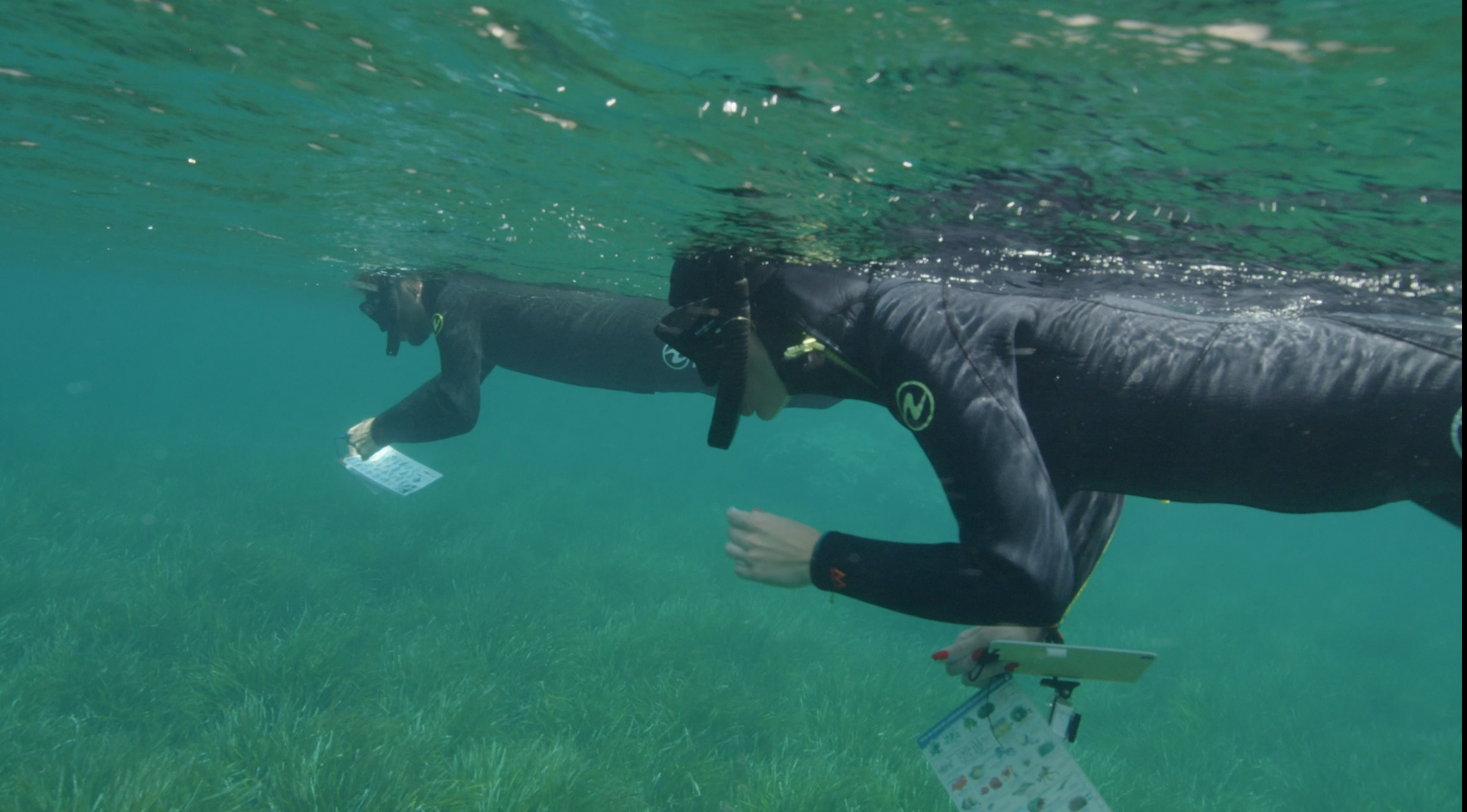
Monitoreo de Posidonia por el grupo de periodistas en Cabo de Gata-Níjar (España)
Photo: IUCN | Antonio Márquez
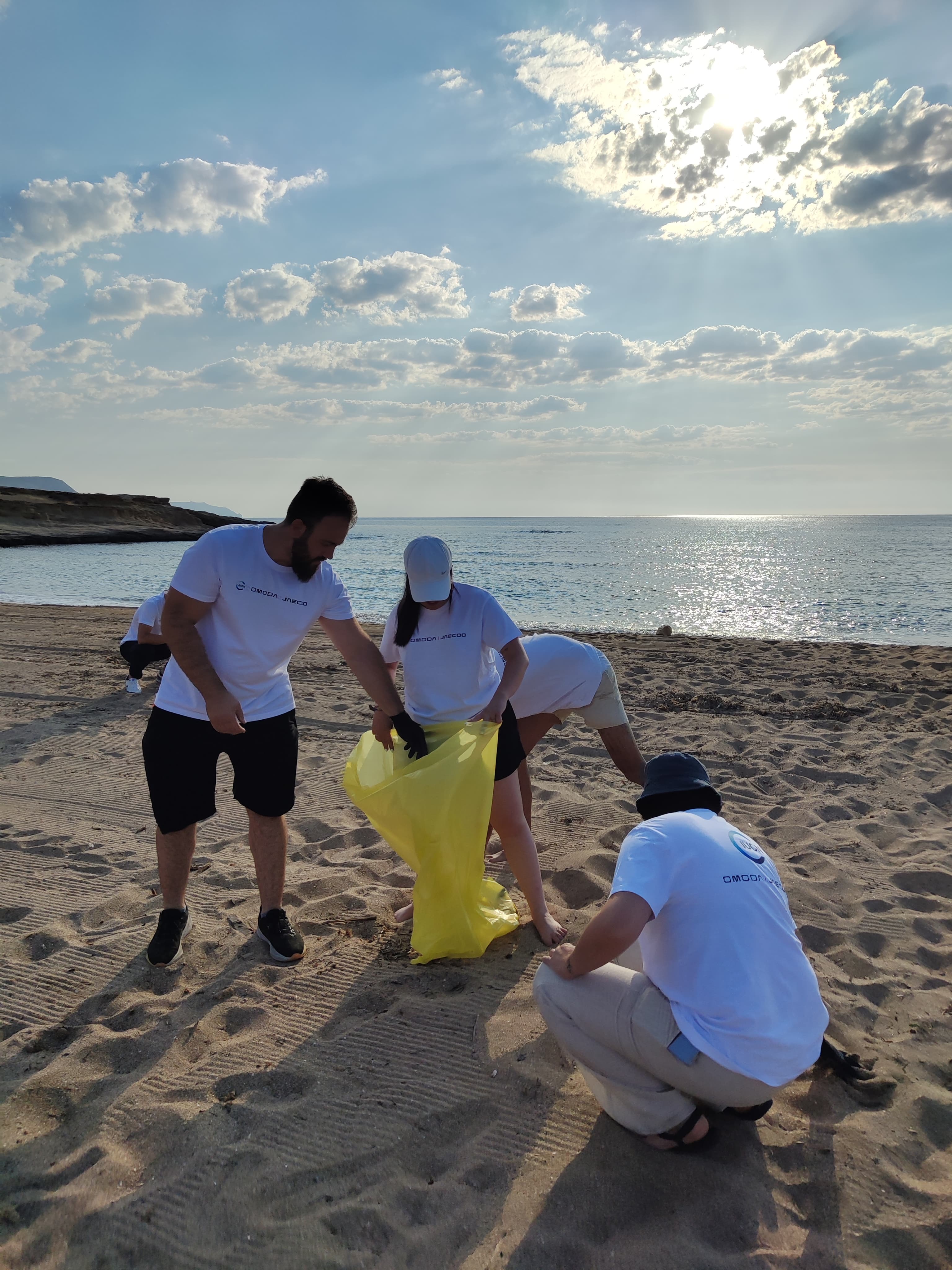
Momento de la actividad de recogida de basura por los voluntarios en colaboración con la Asociación Hombre y Territorio
Photo: IUCN
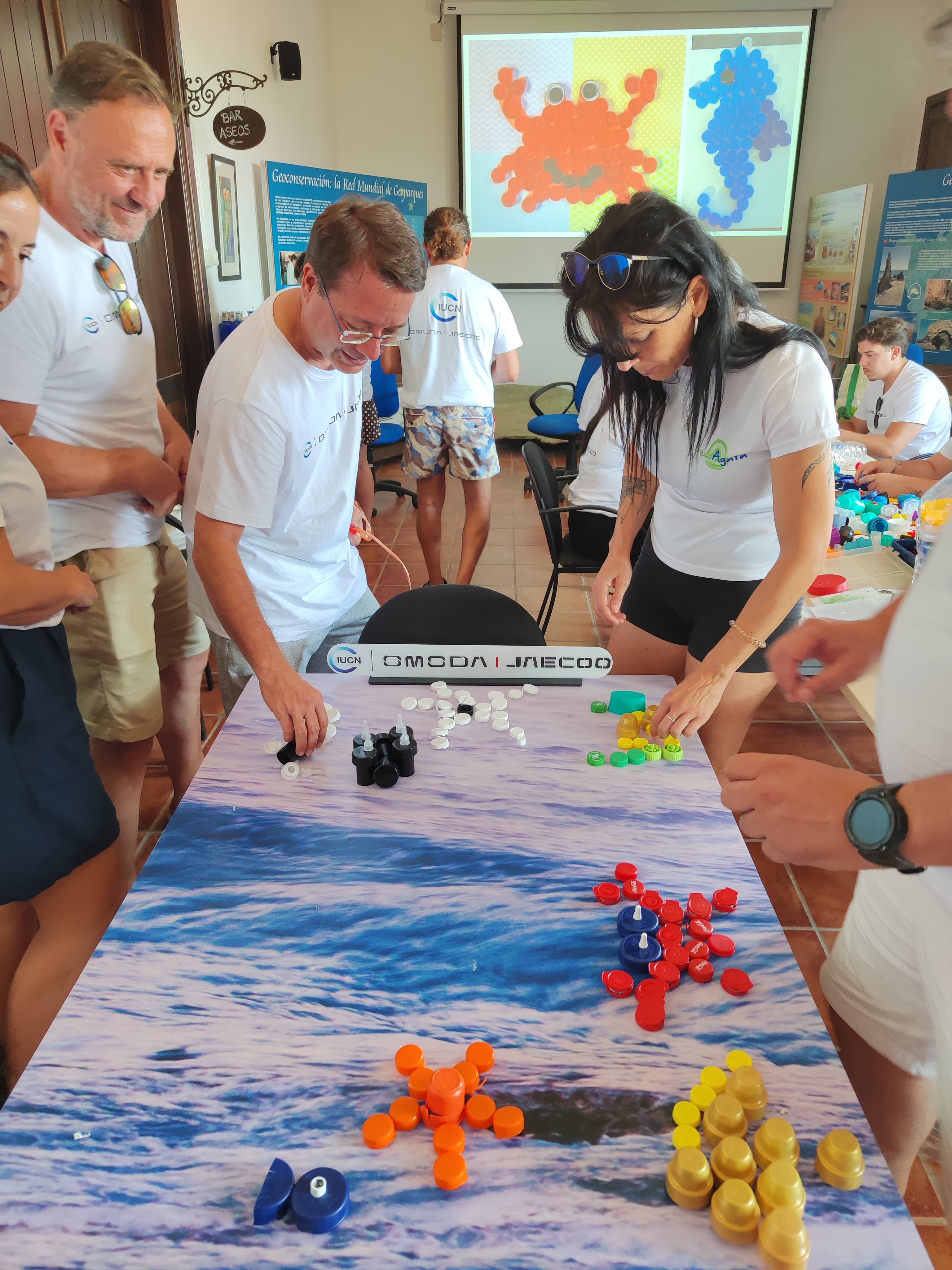
Taller de reciclaje de basura marina en Rodalquilar (Almería, Spain)
Photo: IUCN
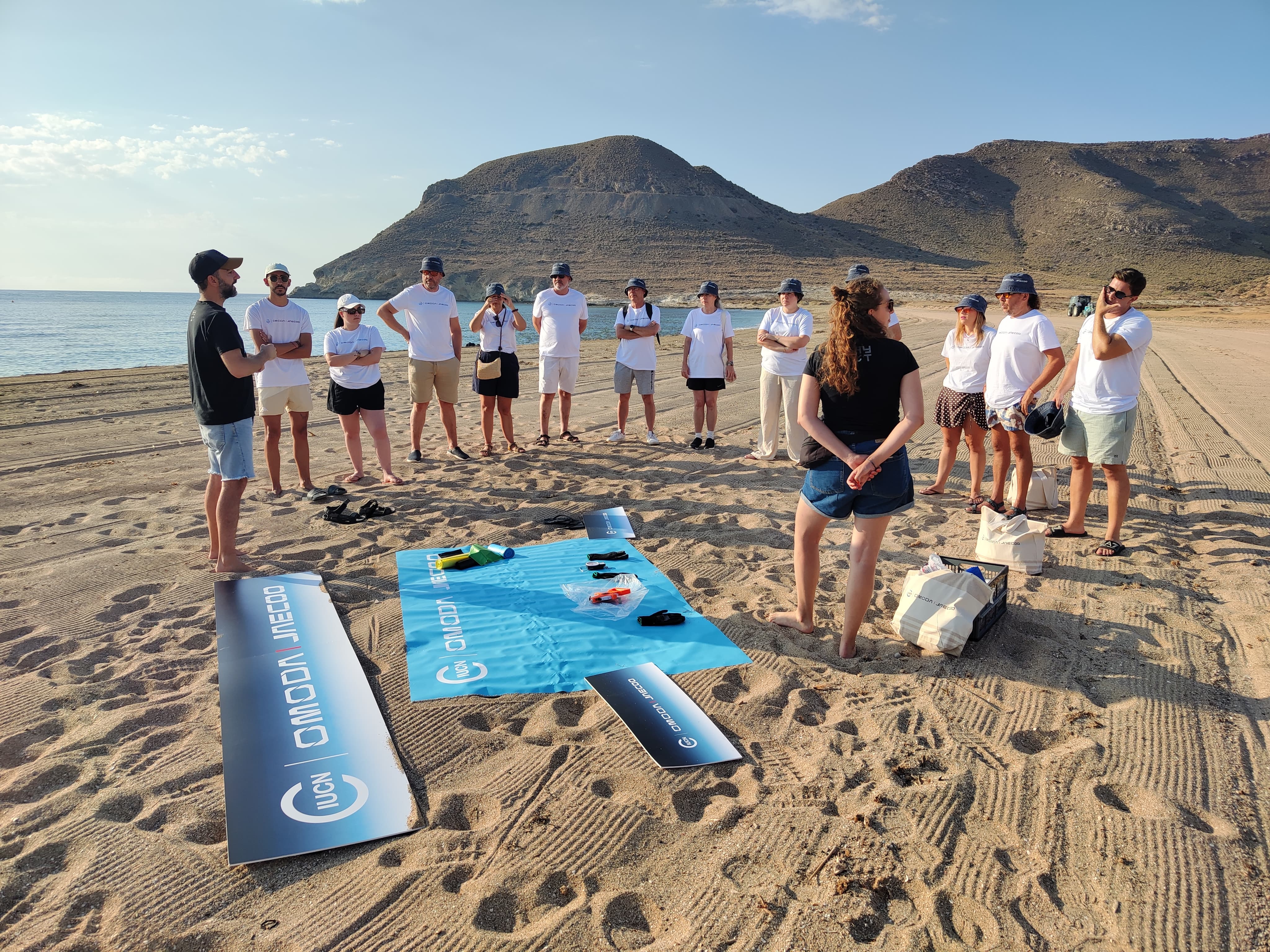
Voluntarios recibiendo las instrucciones sobre la acción de recogida de basuras marinas, playa El Playazo (Almería, España)
Photo: IUCN
The Mediterranean has once again been the setting for an alliance that brings together conservation, scientific knowledge and social participation. In recent weeks, the Cherish the Nature initiative, driven by the International Union for Conservation of Nature (IUCN) and the Chery Group, has launched the second phase of activities in Spain with two actions implemented in Cabo de Gata-Níjar Natural Park (Almería).
These actions have been led by the IUCN Centre for Mediterranean Cooperation (IUCN Med), together with OMODA & JAECOO, as part of the Cherish the Nature Spain initiative, in coordination with the Andalusian Regional Ministry of Sustainability and Environment, the management team of Cabo de Gata-Níjar Natural Park and the Hombre y Territorio Association (HyT). The activities combined scientific monitoring, education, citizen science and communication to improve the conservation status of Posidonia oceanica ecosystems.
The initiative delivered its main activities during June and early July 2026. The first event combined educational sessions, marine observation and citizen science protocols with the participation of media and communication professionals. Participants received training on Posidonia monitoring protocols and conducted guided marine surveys with local diving specialists from Centro de Buceo Isub to help document the current state of seagrass meadows.
The second activity, held in early July, focused on a beach clean-up operation at El Playazo Beach (Rodalquilar) using the MARNOBA protocol, a citizen science methodology that identifies and records marine litter to better understand its sources and support improved waste management. The programme also included a workshop on recycling and circular economy approaches to marine litter prevention, encouraging participants to reflect on the impacts of waste on coastal ecosystems and the role everyone can play in reducing it.
Ecological context and conservation priorities
Posidonia oceanica is an endemic Mediterranean seagrass species that forms extensive submarine meadows at depths of up to 40 to 45 metres. These meadows provide essential ecosystem services: they function as feeding, shelter and breeding grounds for numerous marine species; protect coastal areas from erosion through wave attenuation; contribute to water filtration and oxygen production; and act as significant blue carbon sinks, sequestering carbon in leaves, roots and sediments over extended periods.
Despite its ecological importance, Posidonia oceanica meadows throughout the Mediterranean face increasing pressures from boat anchoring, coastal development, certain fishing practices, marine pollution and climate change impacts. Progressive degradation of these habitats represents an environmental, economic and social challenge for Mediterranean coastal communities and resource management authorities.
Cherish the Nature is a global partnership between the IUCN and Chery Group launched in October 2024 to support conservation, restoration and sustainable management of more than 10 million hectares of ecosystems worldwide. In Spain, the initiative is implemented within a three-year framework (2025-2027) through IUCN Med in collaboration with OMODA & JAECOO.
Video: Monitoring and conservation of Posidonia event with journalists
Links:
- Dossier de prensa (in Spanish)
- Know more about the activities of the IUCN Centre for Mediterranean Cooperation.


The Bangladesh Forest Department (BFD) and IUCN Bangladesh, with support from Agence Française de…

Each year, International Women's Day is an opportunity to recognise the women advancing change in…

On 14 January 2026, in Dhaka, the Bangladesh Forest Department and IUCN Bangladesh formally signed…