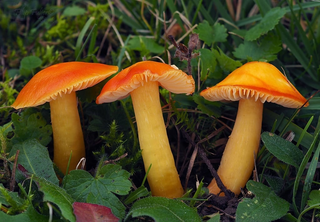
Good levels of biodiversity above and below ground on agricultural land not only provides ecosystem services but also increases the resilience of agroecosystems. Agricultural biodiversity has been found to strengthen the resilience of agroecosystems to climate change, but widespread intensive agricultural practices, such as monocultures or the excessive use of pesticides and fertilisers, have been recognised as key drivers of biodiversity loss.

Global extinction risk assessment of soil-dependent species

Soil biodiversity is crucial to the maintenance of multiple critical ecosystem functions and services. However, remarkably little is known about the conservation status of most soil-dependent species. To better understand the current situation, this paper determined the number of soil-dependent species listed in the various categories of the IUCN Red List of Threatened Species

Soil-dependent” species have been defined as species that “spend a key part of their life cycle within a soil profile or predominantly inhabit the soil-litter interface.” The list includes terrestrial vertebrates, invertebrates like arthropods and molluscs, and fungi. The study identified 8,653 soil-dependent species currently listed on the IUCN Red List, including 1,758 globally threatened species and 1,722 classified as Data Deficient.

The research underscores that soil biodiversity supports critical ecosystem services, including climate regulation, soil formation, nutrient cycling, and sustainable agriculture and calls for stronger investment in assessing soil biodiversity, expanding expertise on soil-dependent species, and improving collaboration across scientific and conservation networks.

Article: Global extinction risk assessment of soil-dependent species: recent progress and recommendations

Soil species added to the Red List of Threatened Species 

Established in 1964, the International Union for Conservation of Nature’s Red List of Threatened Species has evolved to become the world’s most comprehensive information source on the global extinction risk status of animal, fungus and plant species. The IUCN Red List is a critical indicator of the health of the world’s biodiversity. Far more than a list of species and their status, it is a powerful tool to inform and catalyse action for biodiversity conservation. 

Understanding the conservation status of soil biodiversity, the life that maintains soil health, can support the journey towards truly sustainable agricultural systems. Maintaining the diversity of soil life, and the myriad biotic and abiotic interactions, enables nutritionally richer soil to be generated, improving most crop growth. The paper indicated below, from Soils For Europe, co-authored by IUCN, gives an overview of the current state of knowledge on nature conservation of soil biodiversity and presents a roadmap with recommendations for addressing the knowledge gaps it identifies:

Article: Outlook on the knowledge gaps to improve nature conservation of soil biodiversity

Pixabay / Aritha
Unsplash/ Matthieu Rochette