Enhancing "Ecosystems, Biodiversity and Human Health” in the Global Plastics Treaty
Plastic pollution is intrinsically linked to the triple planetary crisis of biodiversity loss, climate change and pollution. It affects terrestrial, freshwater, coastal and marine ecosystems, threatens food security and human health, and imposes significant economic costs on societies worldwide. A new legal brief looks at how to enhance “Ecosystems, Biodiversity and Human Health” in the Global Plastics Treaty.
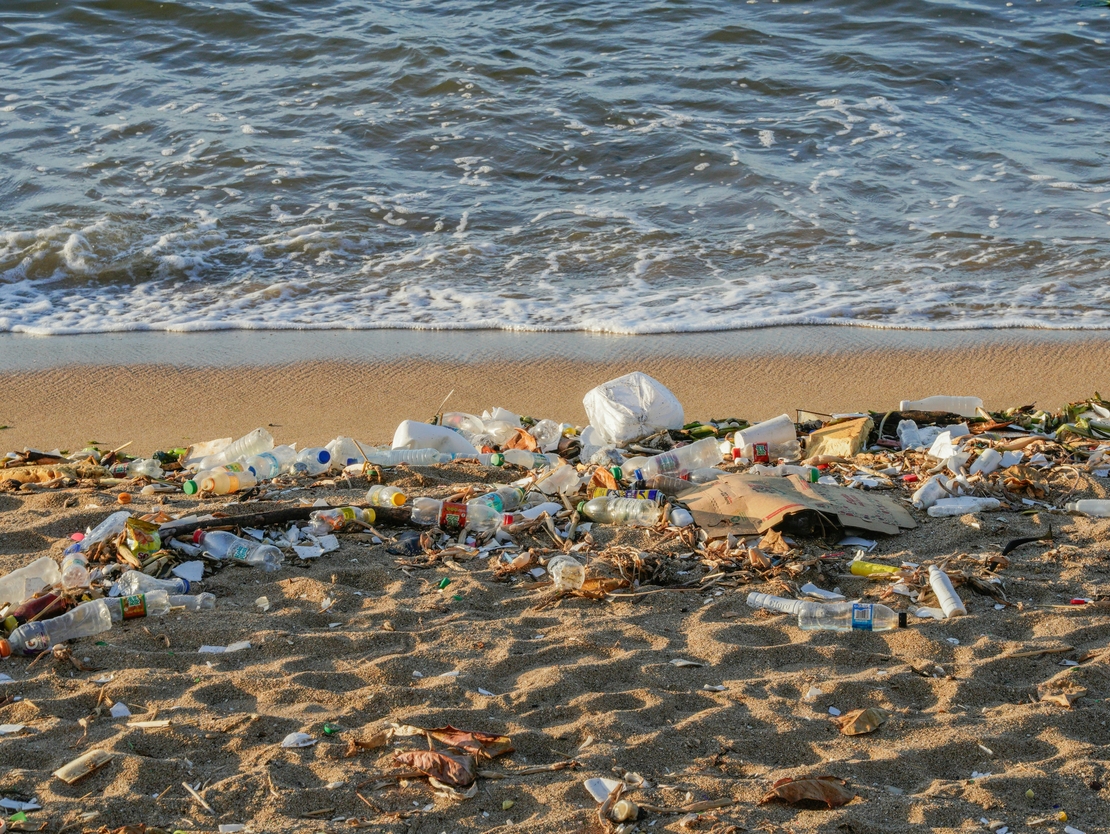
Plastic pollution is intrinsically linked to the triple planetary crisis of biodiversity loss, climate change and pollution. It affects terrestrial, freshwater, coastal and marine ecosystems, threatens food security and human health, and imposes significant economic costs on societies worldwide. The future international legally binding instrument on plastic pollution – the Global Plastics Treaty – presents a historic opportunity to address one of the most pervasive drivers of environmental degradation worldwide. Hence, the reference to “Ecosystems, Biodiversity and Human Health”, including a OneHealth approach is still missing as a key element of the draft text to date.
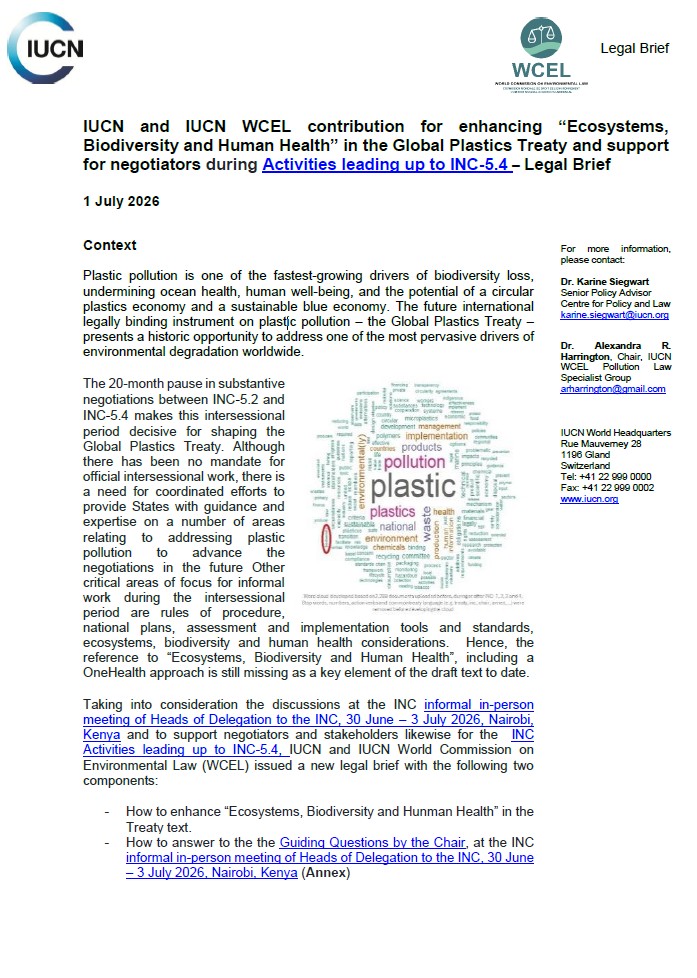
Taking into consideration the discussions at the INC informal in-person meeting of Heads of Delegation to the INC, 30 June – 3 July 2026, Nairobi, Kenya and to support negotiators and stakeholders likewise for the INC Activities leading up to INC-5.4, IUCN and IUCN World Commission on Environmental Law (WCEL) issued a new legal brief with the following two components:
Enhance “Ecosystems, Biodiversity and Hunman Health” in the Treaty text
IUCN WCEL answers to the the Guiding Questions by the Chair, at the INC informal in-person meeting of Heads of Delegation to the INC, 30 June – 3 July 2026, Nairobi, Kenya
It is essential that the INC ensure that the textual proposals enshrine the growing trend of cooperation and coordination between different Multilateral Environmental Agreements (MEAs) and other international treaty regimes, including those on Biodiversity and Ecosystems. This would also ensure that the governance bodies of the Plastics Treaty would be empowered to engage with other secretariats and MEA governance bodies in a way that has become commonplace between existing MEAs. Thus, integrating biodiversity and One Health as well as international cooperation clauses will help countries meet obligations across multiple MEAs, would advance efforts to break the silos and support a common approach under different agreements and organizations, ensuring a clear nexus with critical topics such as biodiversity, circular economy solutions and health as well as bridging climate/biodiversity finance with chemicals/waste funding. Yet, the effectiveness of the treaty will ultimately depend on the ambition of its substantive obligations and on the availability of adequate, predictable, accessible and sustainable financial resources to support implementation. Effective implementation of the treaty represents an opportunity not only to reduce plastic pollution but also to advance biodiversity conservation, ecosystem restoration, climate resilience and sustainable development. Point out that this approach strengthens coherence with the Kunming‑Montreal Global Biodiversity Framework, especially Target 7.
As IUCN looks ahead to roll out the 2026–2029 Programme, and in line with the recently adopted IUCN Resolution WCC-2025-Res-058, which asks IUCN and its members for continued engagement to end plastic pollution across the full life cycle, on local, national, regional and international level, including for the concluding of the negotiations for a future Plastics Treaty, IUCN and IUCN WCEL continue helping to maintain momentum despite the long gap in substantive negotiations between INC 5.2. and INC 5.4., scheduled to take place in March 2027. This is being done with concrete tools and evidence, such as a strong package of policy briefs, legal analyses, technical assessments and on‑the‑ground project experience that can support the INC Chair’s roadmap and the INC Activities leading up to INC-5.4. while ensuring countries can effectively participate and secure ambitious global and national commitments, including on legislation and being prepared for implementation.
In addition to IUCN’s efforts within the negotiations, through its legal, technical and economic expertise, IUCN aims to strengthen ongoing projects/programs (IUCN Plastics work globally) with capacity building and legal training for national legislation related to plastics management, chemicals, wastes; scaling up ocean conservation by addressing plastics in marine ecosystems, building on a Source-to-Sea Approach; advancing the understanding on the impacts of the plastic pollution and mismanaged waste affecting the emergence of the transformative concept of a Regenerative Blue Economy.
A second informal in-person meeting is scheduled to take place 27 to 30 September 2026 in Bangkok, Thailand and IUCN and IUCN WCEL look forward to providing guidance and insights to assist as the informal work toward a Global Plastics Treaty continues.

The Bangladesh Forest Department (BFD) and IUCN Bangladesh, with support from Agence Française de…

Each year, International Women's Day is an opportunity to recognise the women advancing change in…

On 14 January 2026, in Dhaka, the Bangladesh Forest Department and IUCN Bangladesh formally signed…