New GEF-funded project strengthening wildlife use and trade indicators
As countries prepare for critical upcoming global biodiversity meetings, a new project is set to revolutionise how countries monitor wildlife use and trade in an increasingly digital world.
IUCN and eight partner organisations have launched IN‑WILD, a new project funded by the Global Environment Facility (GEF) Innovation Window, that will use data from social media platforms, online marketplaces, and online wildlife trade databases to build a clearer picture of how wildlife is being bought, sold, and used around the world. Accurate information is essential for ensuring that wildlife is used sustainably and threatened species are protected, yet many countries face challenges in monitoring wildlife trade, especially as more transactions move online.
The project brings together experts from science, policy and practice to help countries improve their capacity to track progress toward the Kunming-Montreal Global Biodiversity Framework, particularly Targets 5 and 9 on sustainable use and wildlife trade, and to maintain long-term monitoring of wildlife use and trade beyond the 2030 Targets.
“Developing novel AI‑driven approaches to collect and standardise data from social media and online digital databases is an essential step towards helping governments keep pace with fast‑moving wildlife market dynamics,” said Dr Oliver Tallowin, Senior Programme Officer, Wildlife Use and Trade, IUCN.
Bringing new digital data into wildlife monitoring
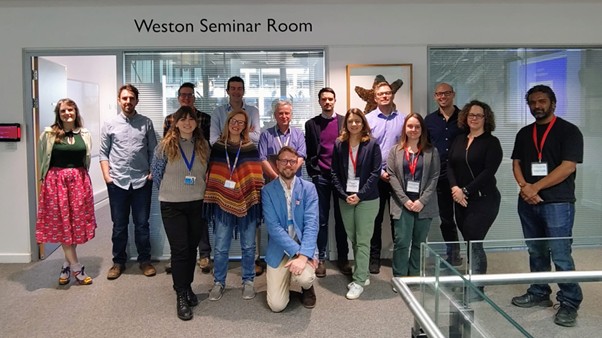
Critical gaps exist in the monitoring of wildlife use and trade, including limited resources and capacity for biodiversity policymakers to put informed international trade regulations in place. IN-WILD addresses these challenges by co-developing the indicators with a Stakeholder Working Group made up of a diverse panel of Multilateral Environmental Agreement (MEA) Secretariats, government agencies, and representatives of Indigenous People and local communities.
“The Stakeholder Working Group is where this project's priorities get set. By bringing together government agencies and policymakers who will use these indicators, alongside MEA Secretariats, Indigenous Peoples and local communities representatives, women, youth, and civil society, we can focus on the indicators that matter most for policy and help countries embed these tools directly into their national biodiversity reporting processes,” said Dr Dan Challender, Senior Research Fellow, University of Oxford.
Co-developing indicators with those who will use them
IN-WILD is building a global Stakeholder Network open to all governments, policymakers, Indigenous Peoples and local communities, scientists, and civil society groups interested in shaping the development of these indicators. The Network is a critical component of the IN-WILD project, aiming to leverage global expertise and interest in improving sustainable wildlife use and trade monitoring across disciplines, sectors and regions by providing opportunities to engage with IN-WILD as it develops.
The IN-WILD team will present early findings at a side event during the Convention on Biological Diversity's (CBD) next subsidiary scientific advisory meeting in Nairobi (SBSTTA-28) ahead of the Conference of the Parties to the UN Convention on Biological Diversity (CBD COP17) later in the year. All are invited to attend to learn more about how IN-WILD is developing indicators and engaging with diverse policy, academic, and civil society organisations to help shape the process.
IN-WILD is led by IUCN and comprises a consortium of experts from UNEP-WCMC, UNODC, ZSL, TRAFFIC, IUCN CEESP-SSC Sustainable Use and Livelihoods Specialist Group (SULi), the University of Oxford, the University of Cambridge, and the University of Helsinki.


The Bangladesh Forest Department (BFD) and IUCN Bangladesh, with support from Agence Française de…

Each year, International Women's Day is an opportunity to recognise the women advancing change in…

On 14 January 2026, in Dhaka, the Bangladesh Forest Department and IUCN Bangladesh formally signed…