A focus on inclusive finance: The GEF-7 Inclusive Conservation Initiative Phase Two Report
IUCN and Conservation International are co-implementing agencies on the GEF-funded Inclusive Conservation Initiative, which works with Indigenous Peoples in their continuing efforts to safeguard Earth’s natural ecosystems.
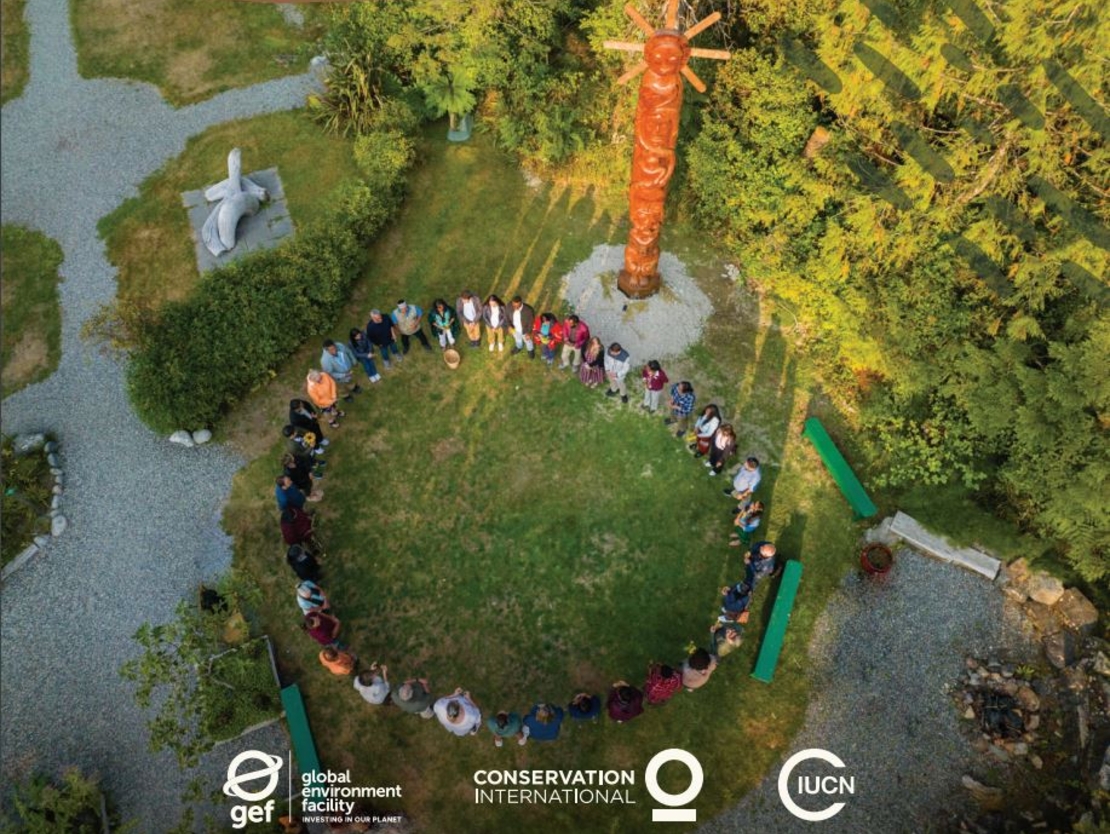
The International Union for Conservation of Nature and Conservation International (CI) play complementary and pivotal roles as co-implementing agencies in the Inclusive Conservation Initiative (ICI) along with the ICI’s IP and LC -Led Global Steering Committee, which is supported by the Global Environment Facility (GEF). ICI enhances Indigenous Peoples' (IPs) and Local Communities (LCs) efforts to steward their lands, waters, and natural resources to deliver global biodiversity benefits. The latest Phase Two Report highlights the critical role of inclusive finance, ensuring that IPs and LCs have direct access to finance. This enables them to carry-out self-determined initiatives through the traditional governance structures.
A major contribution from GEF Agencies to the ICI is its alignment with the IUCN-developed Podong Initiative and CI’s Community-Led Solutions Partnership, both of which focus on co-design processes supporting Indigenous leadership and direct access financing. These initiatives, along with emerging partnerships, scales ICI through co-design, co-development, and Indigenous leadership. For instance, in Peru the collaboration between ICI facilitated by CI and the Tenure Facility has boosted investment in FENAMAD (Native Federation of Madre de Dios River and tributaries) and improved policy alignment among partners. IUCN has also worked very closely with IUCN’s Indigenous Peoples’ Organizations Members and the International Indigenous Forum on Biodiversity (IIFB) to co-design, co-develop, and co-lead the Podong Indigenous Peoples Initiative, providing significant additional support to three ICI partners to scale-up their work: Sotz’il in Guatemala and Panama; UCRT in Tanzania; and NEFIN in Nepal.
ICI partners also engaged in project management and proposal development training through the Indigenous Peoples Finance Access Facility (IPFAF), which is supported by the US Department of State and facilitated by CI. IPFAF focuses on enhancing Indigenous Peoples’ access to funding for conservation, restoration, and better management of their territories. In the context of the Convention on Biological Diversity (CBD), ICI supported an international “Rights and Equity Workshop” in collaboration with IIFB, IUCN, its commissions, and donors. Hosted by IMPACT Kenya, this workshop addressed the 2022 Kunming-Montreal Global Biodiversity Framework (GBF), which prioritizes human and Indigenous rights in biodiversity policy. The workshop resulted in a new global Roadmap for Advancing Rights and Equity, outlining 11 priority areas and 32 action items. Additionally, ICI contributed to a policy brief titled, “Achieving the Global Biodiversity Framework through Guaranteeing the Roles, Rights, and Contributions of Indigenous Peoples and Local Communities”.
Strengthening the administrative and operational capacities of ICI partners involves support in fiscal management and sustainable resource utilisation, ensuring effective stewardship and long-term benefits. As part of this process, CI and IUCN, as GEF Agencies, have adapted their institutional policies and procedures to meet these challenges.
As Co-Implementing Agencies, CI and IUCN have been instrumental in integrating the extensive experience of their networks with the traditional knowledge and innovation of Indigenous Peoples. Through collective practices of learning by doing, a robust framework for inclusive conservation. This framework emphasises self-determination, mutual respect, and reciprocity, placing IPs and LCs leaders at the centre of decision-making.