“30x30” Financing Successful, Effective Area-Based Conservation at Scale
At the IUCN Leaders Forum in Palexpo, Geneva, on October 8, 2024, James Hardcastle, Head of IUCN Protected and Conserved Areas, led a session on financing effective area-based conservation at scale, titled “30x30: How to Finance Successful, Effective Area-Based Conservation at Scale?”
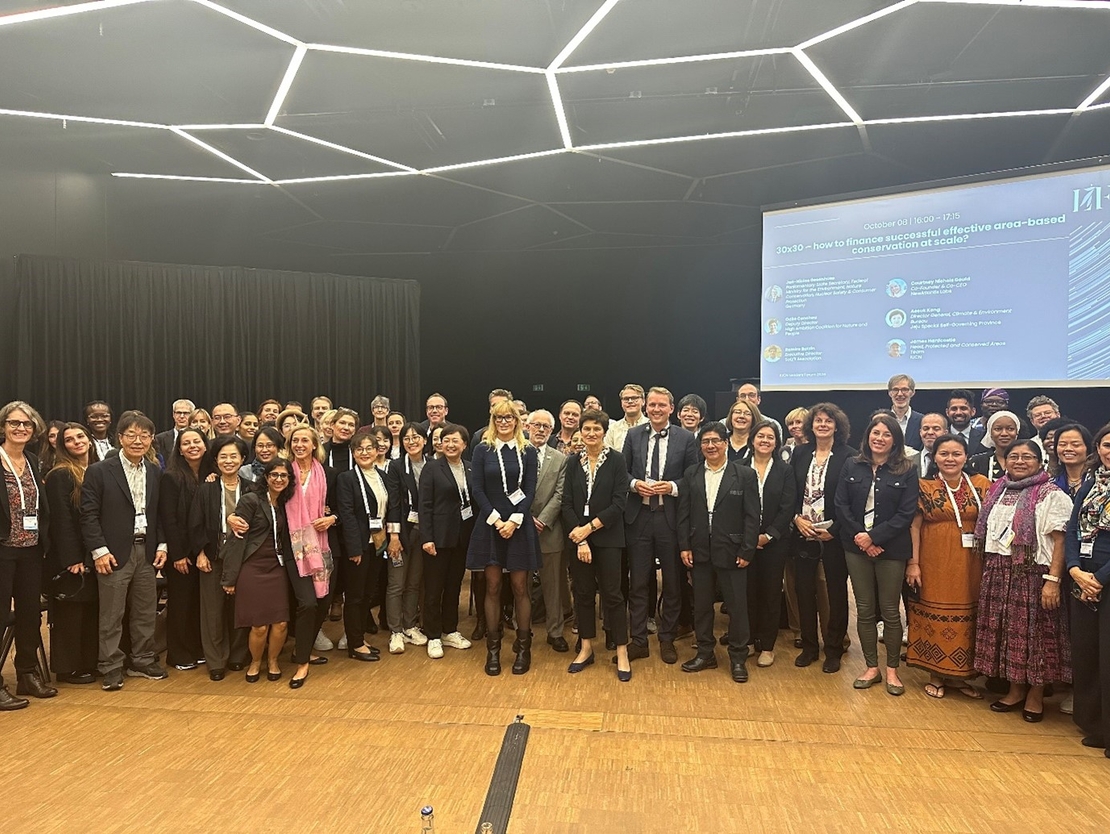
For years, countries and organizations like IUCN have advocated globally to secure commitment to this ambitious 30x30 target, which aims to protect 30% of the world’s land and oceans by 2030. While the percentage is significant, the focus is on inclusivity—expanding participation beyond traditional conservationists to involve a wide array of stakeholders. The goal is not only to increase the number of protected areas but also to enhance their effectiveness by fostering engagement and providing resources and recognition to diverse groups.
The 30x30 target aims to bring together civil society, private sector actors, local communities, entrepreneurs, businesses, governments, and international organizations. By connecting resources with commitment, these efforts seek to manage funding effectively, expand community engagement, and strengthen existing protected areas. Emphasizing inclusivity means aligning conservation initiatives with local values and communities, making them more sustainable and resonant with those they impact directly.
This holistic approach aims to create a robust framework for scaling conservation efforts while empowering communities and maximizing the social, economic, and ecological benefits of these areas.
During the session, the panel explored essential questions, such as: What concrete steps do we take next? How do we effectively channel resources into action? These questions were asked to both the participants and panelists, guiding a focused discussion on turning ambitions into tangible outcomes.
The panel featured distinguished guests:
- Jan Niclas Gesenhues, Parliamentary State Secretary, Federal Ministry for Environment, Nature Conservation, Nuclear Safety, and Consumer Protection
- Odile Conschou, Deputy Director of the High Ambition Coalition for Nature and People
- Romiro Batzin, Executive Director, Sotz’il Association
- Courtney Nichols Gould, Co-Founder & Co-CEO, NewAtlantics Lab
- Aessuk Kang, Director General, Climate & Environment Bureau, Jeju Special Self-Governing Province
A participant survey indicated optimism about the 30x30 target: half of the attendees expressed confidence in achieving the 30% conservation goal by 2030 and in unlocking the necessary funding and resources.
The session was structured as a moderated interview, where panelists addressed thought-provoking questions:
Reflecting on the 30x30 target's opportunities: panelists were asked to identify three opportunities that the 30x30 target presents for the conservation community, countries, and Indigenous peoples. They highlighted how this target serves as a platform for collaboration, an avenue for advancing Indigenous rights and perspectives, and a mechanism for aligning global efforts with local priorities.
Government roles in resource mobilization: the discussion delved into how governments can contribute to resource mobilization for the 30x30. Emphasis was placed on public-private partnerships, policy innovation, and financial commitments that can bridge the funding gap and drive progress.
Promoting cultural change in conservation: panelists reflected on their roles in fostering cultural change in conservation practices, stressing the importance of shifting societal values towards greater environmental stewardship. They discussed strategies for enhancing public engagement, integrating conservation into everyday practices, and making conservation accessible and relevant to a wider audience.
Through these discussions, the session underscored the importance of a multi-stakeholder approach, where governments, NGOs, Indigenous groups, and the private sector collaborate to meet the 30x30 goals, ensuring that conservation efforts are inclusive, effective, and adequately funded.
- Jan Niclas Gesenhues emphasized that the German Government sees the most urgent task as establishing a practical implementation mechanism for any agreements reached on the 30x30 target. Germany is prepared to actively contribute to these efforts, as it is vital to halt the ongoing biodiversity crisis and mitigate further species extinction. Beyond biodiversity, Gesenhues pointed out that conservation efforts align with broader objectives, such as promoting public health, supporting the green transition, and fostering economic growth. These efforts, he argued, should convey to the public that nature conservation plays a crucial role in achieving diverse societal goals: without nature, we lose essential foundations for food security, economic stability, and human well-being.
He highlighted that Europe’s shifting geopolitical landscape has created a dual trend, where environmental politics and climate protection are increasingly pressured by renewed concerns over safety, stability, and security. This backdrop emphasizes the importance of reframing biodiversity conservation as essential for both ecological integrity and human security. As such, conservation is not only about protecting species and ecosystems but also about safeguarding communities, businesses, and economic resilience.
Gesenhues noted the growing interest from both the public sector and various governments in biodiversity issues, creating an opportune moment for action. He underscored the importance of leveraging partnerships to enhance financial contributions, share knowledge, and develop effective tools for conservation. Programs like the Accelerator Partnership for national biodiversity strategies and development cooperation initiatives offer practical instruments that, with robust implementation, can advance these objectives.
By anchoring biodiversity in the broader agenda of security, health, and economic development, Gesenhues believes that governments can effectively drive conservation action at the necessary scale.
- Ramiro Batzin highlighted that at the national level, Indigenous communities have successfully linked national and international policies to support biodiversity conservation and achieve the 30x30 target. This alignment provides a framework for Indigenous communities to take concrete conservation actions, guided by an analysis of public policies that recognize the Global Biodiversity Framework. However, Batzin noted that there is still much work ahead, particularly in ensuring that funding is channeled effectively. He emphasized the need for public and intercultural policies that acknowledge and integrate traditional knowledge, which will facilitate the implementation of Indigenous-led conservation systems. He called for stronger dialogue between public, private, and business sectors, urging these groups to reflect on their roles and commit to fundamental change.
- Aessuk Kang spoke about the various government programs being implemented in Jeju, such as initiatives around biodiversity conservation, incentive programs, and compensation mechanisms that prioritize inclusive participation. Jeju has pioneered payment services linked to ecotourism and environmental education, fostering a collaborative approach with local communities to enhance environmental services. Kang stressed that the 30x30 target should focus on inclusivity—on who counts, who is involved, and who is brought to the table. By emphasizing these aspects, Jeju aims to foster a model of conservation that is participatory and community-centered.
- Odile Conchou responded with a question: How can the High Ambition Coalition (HAC), which brings together conservation, ecology, and private sector stakeholders, effectively channel resources toward the 30x30 target? Conchou explained that the coalition's primary goal is to maintain political momentum around the 30x30 commitment, advocating for countries to adopt and uphold the target. The HAC Secretariat and co-chairs have been instrumental in supporting member countries with implementation. She stressed that sustaining this political momentum is crucial to avoid losing focus on the 30x30 goals. Additionally, the coalition seeks to enhance member countries' technical capacities to ensure they can meet their commitments and effectively contribute to the conservation targets.
Each of these leaders underscored the importance of collaborative frameworks, funding strategies, and technical support to make the 30x30 target an inclusive and achievable reality.
How can funds be allocated? What role does private sector play?
The discussion highlighted the crucial need to involve a diverse range of partners in achieving the 30x30 target—particularly ministers of finance, agriculture, and stakeholders across both public and private financial sectors. By engaging these sectors, conservation efforts can be better integrated into broader economic activities, creating essential links between the protected 30% and the remaining 70% of land and ocean areas. As it stands, business-as-usual approaches within the 70% risk undermining the effectiveness of the protected areas.
It was observed that while financing for climate change initiatives is increasing, biodiversity conservation continues to receive comparatively little attention from financial institutions. To meet the 30x30 goals, the scale and focus of financial investments must shift. A key aspect of this shift involves building confidence among financial actors that their investments in biodiversity are secure and impactful.
- Courtney Nichols Gould addressed the question of engaging local actors by expressing optimism that the 30x30 goal can indeed be achieved. She highlighted the potential for creating new financial incentives and ecological recovery initiatives that can fundamentally transform business practices and promote sustainable development. Gould sees significant opportunities for the private sector and entrepreneurs within the 30x30 framework, particularly through innovative business models that recognize and reward the unique value that local communities bring to conservation.
She emphasized that a major opportunity lies in facilitating a meaningful transfer of wealth back to communities. By developing business models that accurately reflect the contributions and needs of local communities, conservation efforts can serve as a catalyst for empowering these communities. This could be a defining moment in the history of conservation, as it would signal a shift towards recognizing and valuing the vital roles these communities play.
Gould noted that entrepreneurs are inherently risk-takers, willing to navigate uncertainties in pursuit of solutions. She argued that effective solutions require an intimate understanding of the local context, including economic challenges, livelihood issues, and the deep cultural connections to the land. By living in and learning from these places, the private sector can design solutions that not only address conservation goals but also create job opportunities and foster economic resilience for local populations. In this way, the 30x30 target can support both environmental and socio-economic objectives, ultimately creating a win-win situation for nature and communities.
Indigenous Economy
Participants inquired about the role of the Indigenous economy within the 30x30 framework. Specifically, there is interest in how Indigenous economic systems can be supported and integrated into broader conservation efforts. Indigenous communities often possess sustainable practices rooted in traditional knowledge, which can significantly contribute to conservation. By strengthening Indigenous economies, the 30x30 target can provide pathways for local stewardship and create economic incentives that align with conservation goals. This support might involve promoting Indigenous-led businesses, facilitating market access for sustainably sourced products, and developing policies that respect Indigenous rights and land uses.
Biotechnology Accelerator
Another question centered around the potential for a biotechnology accelerator to support the 30x30 initiative. Biotechnology can offer innovative solutions to biodiversity challenges, such as species conservation, habitat restoration, and ecosystem monitoring. An accelerator program could foster partnerships between conservationists, scientists, and entrepreneurs to develop biotechnological tools and techniques that support conservation. These innovations might include bioengineering for habitat restoration, advances in genetic diversity preservation, or tools for combating invasive species. By investing in biotechnology, the 30x30 initiative could enhance its capacity to address complex ecological issues with cutting-edge solutions.
Transition Mechanisms
Participants also expressed interest in mechanisms that can facilitate transitions toward the 30x30 goals, particularly for industries or communities heavily reliant on natural resource extraction. Effective transition mechanisms might include financial support for alternative livelihoods, policy frameworks for sustainable business practices, and training programs to help local economies adapt to conservation goals. Just transition frameworks, which consider social and economic impacts, are critical to ensuring that communities can move towards more sustainable practices without facing undue hardship. Supporting this transition might involve public-private partnerships, incentive programs for green investments, and educational initiatives that prepare communities for a more sustainable future.
Last words from panelists
Courtney Nichols Gould underscored the untapped potential within the private sector to invest in biodiversity, noting that significant private funds are seeking investment opportunities in this area. She emphasized the role of incubators in directing these investments effectively, suggesting that they could play a pivotal role in achieving the 30x30 target by fostering innovative and sustainable projects.
Ramiro Batzin highlighted the importance of developing economic models that are tailored to local communities. He pointed out that Indigenous communities often face challenges in accessing conventional financial systems, and he advocated for alternative, collective financial solutions. Batzin stressed the need for proper recognition of Indigenous lands and called for improved access to financing, particularly for Indigenous women. He proposed supporting women’s organizations as an effective pathway to increasing financial inclusion within Indigenous communities, thereby enhancing their ability to contribute to conservation efforts.
Aessuk Kang shared insights from Jeju, where two financial systems facilitate the transition toward sustainable practices: tax-based payment services and incentive programs for local communities. These mechanisms provide practical financial support to encourage conservation actions at the community level, ensuring local buy-in and participation.
Jan Niclas Gesenhues noted the importance of building a powerful movement to support 30x30, especially when facing political or economic conflicts. While there is ample scientific evidence supporting biodiversity protection, Gesenhues acknowledged that political decision-making often outweighs scientific data. He emphasized the need to forge new alliances, particularly with unexpected partners, to create the necessary momentum. Start-ups focused on nature-based solutions can attract these “surprising allies,” bringing diverse support and funding sources into the conservation space.
Odile Conchou urged the group to think beyond 2030. She emphasized the importance of envisioning the future after achieving the 30x30 goal, ensuring that efforts remain sustainable and continue to build on the progress made.