IUCN and ARA Norte, IP strengthen partnership for the implementation of the MozWater Resources project in Cabo Delgado
Pemba, Cabo Delgado - On September 10, the City of Pemba hosted a strategic meeting between the International Union for Conservation of Nature (IUCN) and the Regional Administration of Northern Waters, IP (ARA Norte), whose objective is to strengthen inter-institutional collaboration for the implementation of the second phase of the MozWater Resources project.
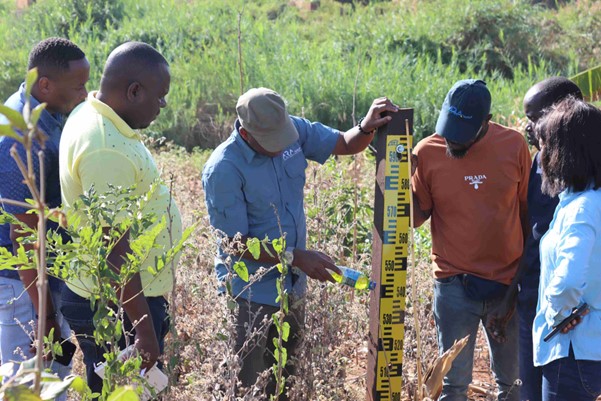


The meeting began at the facilities of the Regional Administration of Águas do Norte, IP (ARA Norte) with an induction session to the partner within the scope of the MozwateR project, followed by a field visit to the districts of Montepuez and Balama, marking the beginning of field activities. The induction session of the project began with the opening speech led by Micas Bule, Director of the Management of the Montepuez and Messalo Basins, who highlighted the importance of the partnership for the sustainable management of water resources in the region in the Northern Region of the country. Next, IUCN in the person of the chief of party of the MozwateR project addressed the reasons and needs of induction.
"The induction aims to familiarize and train the staff involved in the project with the tools, methods and procedures that will be used during the implementation of the MozwateR project. This ensures that everyone is aligned and prepared to work effectively within the programmatic area defined by the MozwateR project. With this induction, IUCN intends to align expectations with partners, said the Chief of the Party, Agostinho Bento.
The induction session addressed topics such as monitoring and evaluation, transparency in procurement processes and promotion of gender equality.
Notably from the chief of party during the visit, IUCN intends to verify the places that will deserve the intervention of the MozwateR project, a process that will ensure better monitoring during the execution of activities. The activities will be guided to align with initiatives based on the Integrated Management of Water Resources, with a focus on the resilience of watersheds and water security for communities and ecosystems.

The technical visit included inspections of water infrastructures, such as hydrometric, telemetric and rainfall stations, as well as the Chipembe and Impere dams. The teams identified urgent needs for intervention to mitigate the floods, impacts of floods and conflicts over the use of riverbanks.


The Bangladesh Forest Department (BFD) and IUCN Bangladesh, with support from Agence Française de…

Each year, International Women's Day is an opportunity to recognise the women advancing change in…

On 14 January 2026, in Dhaka, the Bangladesh Forest Department and IUCN Bangladesh formally signed…