Mtwara launches Multi-stakeholder Seascape Forum to strengthen marine conservation and sustainable blue economy
30th June, 2026 - Mtwara, Tanzania. The future of Mtwara's marine and coastal ecosystems entered a new chapter today with the official launch of the Mtwara Seascape Multi-Stakeholder Forum, a landmark platform that brings together government, local communities, research institutions, civil society organizations and the private sector to jointly safeguard one of Tanzania's most valuable coastal seascapes
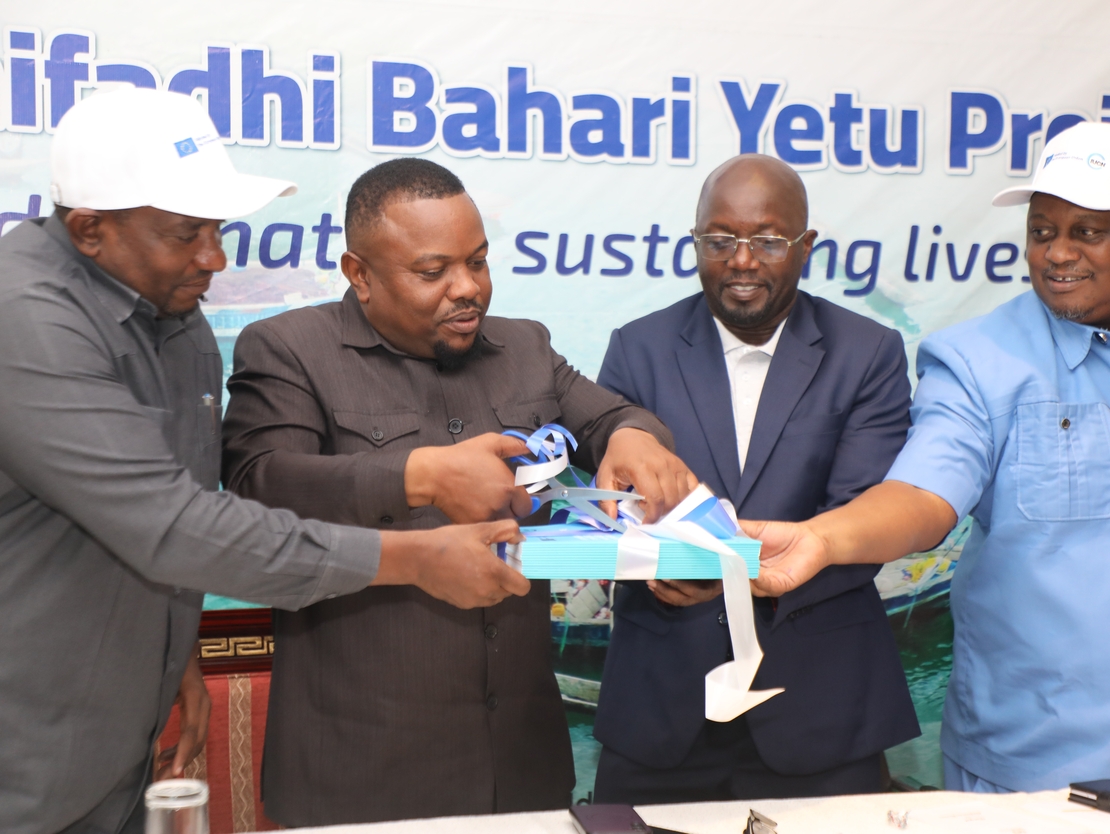
Officially launched on behalf of Mtwara Regional Commissioner by the District Commissioner Hon. Abdalla Mwaipaya, the Forum establishes a formal mechanism through which relevant stakeholders working across the Mtwara seascape will work together to address shared environmental challenges while unlocking opportunities within Tanzania's growing blue economy.
Speaking during the launch, the District Commissioner emphasized that Mtwara's coastline remains one of the region's greatest economic assets, providing livelihoods, food security and employment for thousands of coastal residents. However, he noted that fragmented management, outdated planning frameworks, limited institutional coordination and increasing environmental pressures have weakened efforts to sustainably manage marine ecosystems.
"The challenges facing our ocean cannot be solved by one institution alone. Today's launch creates a platform where government, communities, civil society, researchers and the private sector will work as one team to plan, implement and monitor the sustainable management of Mtwara's marine and coastal resources." said the District Commissioner.
He further noted that the Forum complements rather than replacing existing institutions by strengthening coordination among agencies responsible for fisheries, marine protected areas, forestry, water resources and local government. By bringing stakeholders together under one governance structure, the initiative is expected to improve collaboration, increase accountability and accelerate implementation of Tanzania's Blue Economy agenda.
Representing IUCN Tanzania country representative, The Chief of Party for the Bahari Yetu project Dr. Mathias Igulu reaffirmed the organization’s commitment to supporting collaborative conservation that delivers benefits for both people and nature. "Today is not simply about launching a forum; it is about launching a new partnership to protect our shared marine heritage while ensuring that its benefits contribute to sustainable development for the people of Mtwara."
Dr. Igulu highlighted that the Forum was born from an extensive consultative process that brought together government institutions, Beach Management Units (BMUs), Collaborative Fisheries Management Areas (CFMAs), researchers, academicians, non-governmental organizations, the private sector, women, youth and coastal communities. While these stakeholders shared common conservation goals, consultations revealed that their efforts often operated independently, limiting collective impact.
This realization led to the development of a common platform where stakeholders can coordinate actions, share knowledge and jointly respond to pressing challenges including illegal fishing, mangrove degradation, marine pollution and the impacts of climate change.
The Chairperson of the Interim Seascape Steering Committee, Dr. Redfred Ngowo, described the launch as a historic milestone for the region. "Our marine and coastal resources are the foundation of livelihood and economic development in Mtwara. Yet they continue to face growing threats from illegal fishing, degradation of mangroves and coral reefs, pollution and climate change. These challenges require genuine collaboration, shared vision and collective responsibility."
He emphasized that the Forum creates an inclusive space where every stakeholder from government institutions and researchers to local communities whose daily lives depend on marine resources can contribute to shaping the future of the seascape.
The establishment of the Mtwara Seascape Multi-Stakeholder Forum builds on significant progress already achieved through awareness raising, stakeholder mapping, institutional engagement and the formation of an Interim Committee responsible for developing the Forum's governance framework and the Mtwara Seascape Strategic Management Framework. The Forum is expected to play a central role in coordinating conservation initiatives while promoting sustainable fisheries, protecting biodiversity, strengthening climate resilience and expanding opportunities under the blue economy through research, innovation and community participation.
The launch marks the culmination of months of stakeholder consultations, institutional engagement and collaborative planning supported by IUCN through the European Union-funded Pamoja Tuhifadhi Bahari Yetu project. More importantly, it signals the beginning of a new era of coordinated governance for the sustainable management of Mtwara's marine and coastal resources.
About the Mtwara Seascape
The Mtwara Seascape Forum is a collaborative seascape approach that promotes integrated governance of interconnected marine,and coastal, l ecosystems. The initiative seeks to balance biodiversity conservation with sustainable livelihoods by fostering cross-sectoral collaboration, inclusive decision-making, and coordinated management of natural resources. The approach recognizes that healthy ecosystems, resilient communities and sustainable economic development are inseparable.
By integrating conservation with livelihood opportunities, the initiative seeks to strengthen coastal resilience while ensuring that marine resources continue to support present and future generations. The Seascape is geographically extending from Litokoto area at the Ruvuma River estuary in the south to Mgao village in the north, and inland from Mahurunga to Mtegu within Mtwara Region
About the Bahari Yetu Project
The Pamoja Tuhifadhi Bahari Yetu (Bahari Yetu) Project is funded by the European Union and implemented by IUCN as the lead implementing agency together with partners The Nature Conservancy(TNC), WWF, FORUM CC and WCS. Impemented in The project supports improved marine governance, conservation of coastal forests, reduction of marine plastic pollution, strengthened environmental research and data systems, and enhanced resilience of coastal communities across Tanzania.
For more information please contact:
Catherine Kayombo,
Communication and Membership Officer, IUCN Tanzania
[email protected]
Remmy Lema,
Senior Program Officer – Bahari Yetu Project , IUCN Tanzania
Dr. Mathias Igulu,
Chief of Party Bahari Yetu Project, IUCN Tanzania
About IUCN
IUCN is a membership Union uniquely composed of both government and civil society organisations. It provides public, private and non-governmental organisations with the knowledge and tools that enable human progress, economic development and nature conservation to take place together.
Created in 1948, IUCN is now the world’s largest and most diverse environmental network, harnessing the knowledge, resources and reach of more than 1,400 Member organisations and around 15,000 experts. It is a leading provider of conservation data, assessments and analysis. Its broad membership enables IUCN to fill the role of incubator and trusted repository of best practices, tools and international standards.
IUCN provides a neutral space in which diverse stakeholders including governments, NGOs, scientists, businesses, local communities, indigenous peoples organisations and others can work together to forge and implement solutions to environmental challenges and achieve sustainable development.
Working with many partners and supporters, IUCN implements a large and diverse portfolio of conservation projects worldwide. Combining the latest science with the traditional knowledge of local communities, these projects work to reverse habitat loss, restore ecosystems and improve people’s well-being.


The Bangladesh Forest Department (BFD) and IUCN Bangladesh, with support from Agence Française de…

Each year, International Women's Day is an opportunity to recognise the women advancing change in…

On 14 January 2026, in Dhaka, the Bangladesh Forest Department and IUCN Bangladesh formally signed…