North East Unguja Seascape multi-stakeholders forum launched to support coastal and ocean resilience in Zanzibar
Unguja, Zanzibar, 16 July 2026 – Stakeholders from government, coastal communities, civil society, academia, the private sector and development partners have launched the Northeast Unguja Seascape Multi-Stakeholder Forum (NEUS-MSF), establishing a coordinated platform to strengthen the governance of one of Zanzibar's most ecologically and economically significant marine landscapes.
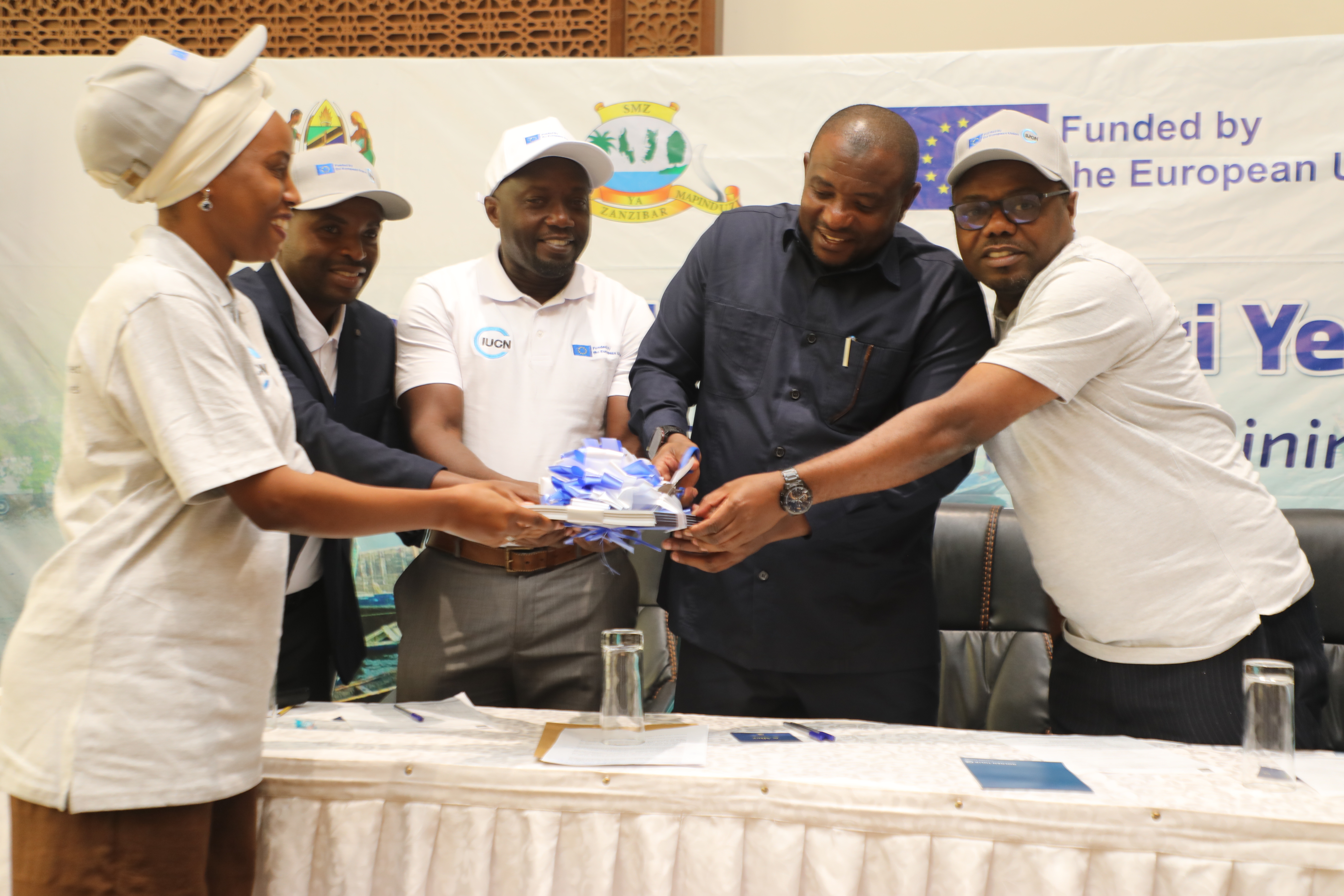
The guest of honor, Dr Salim Hamza joined by the high-table to cut the ribbon officiating the launch of the forum.
Photo: Bahari Yetu Project/IUCN Tanzania
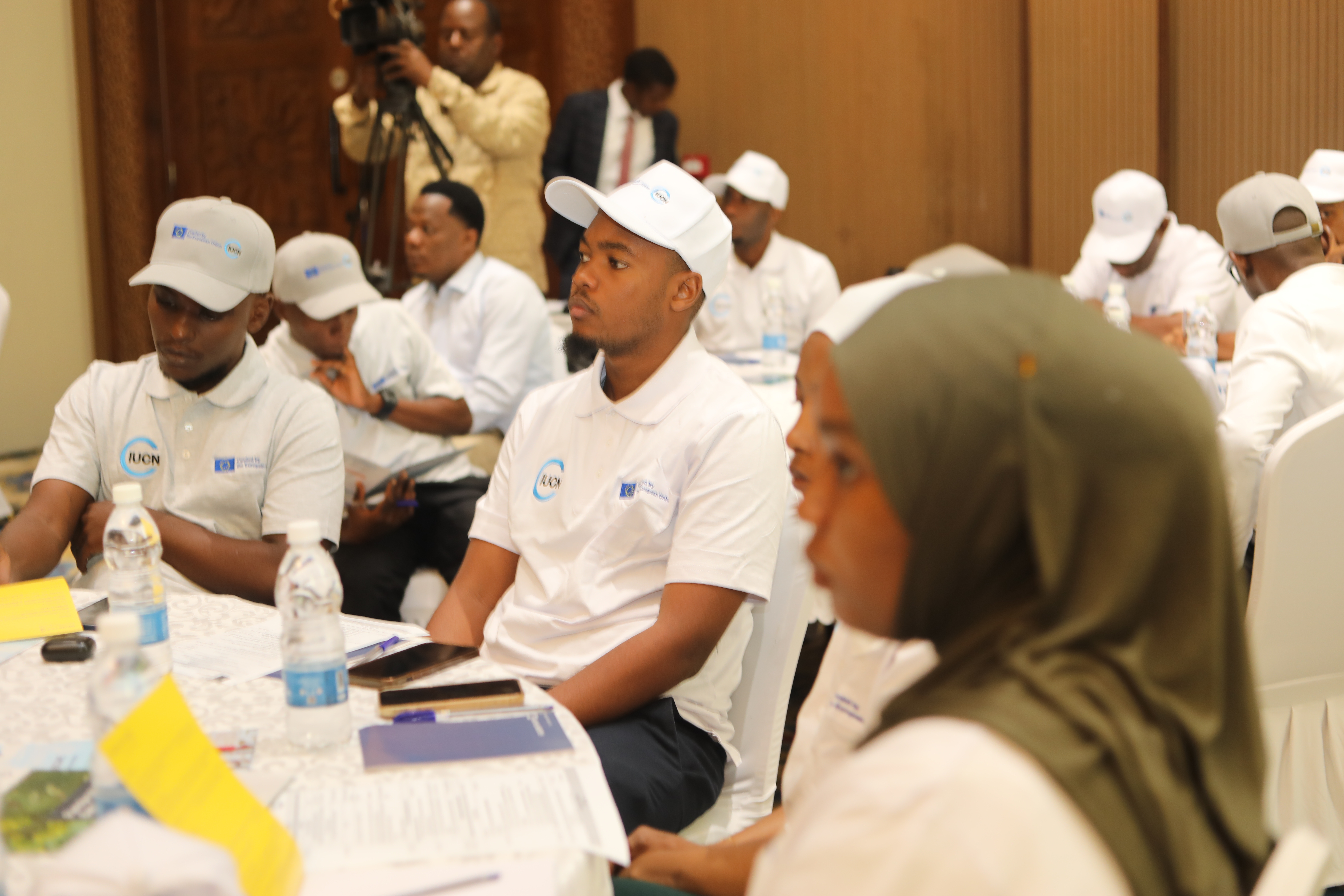
Participants keenly following the launching event.
Photo: Bahari Yetu Project/IUCN Tanzania
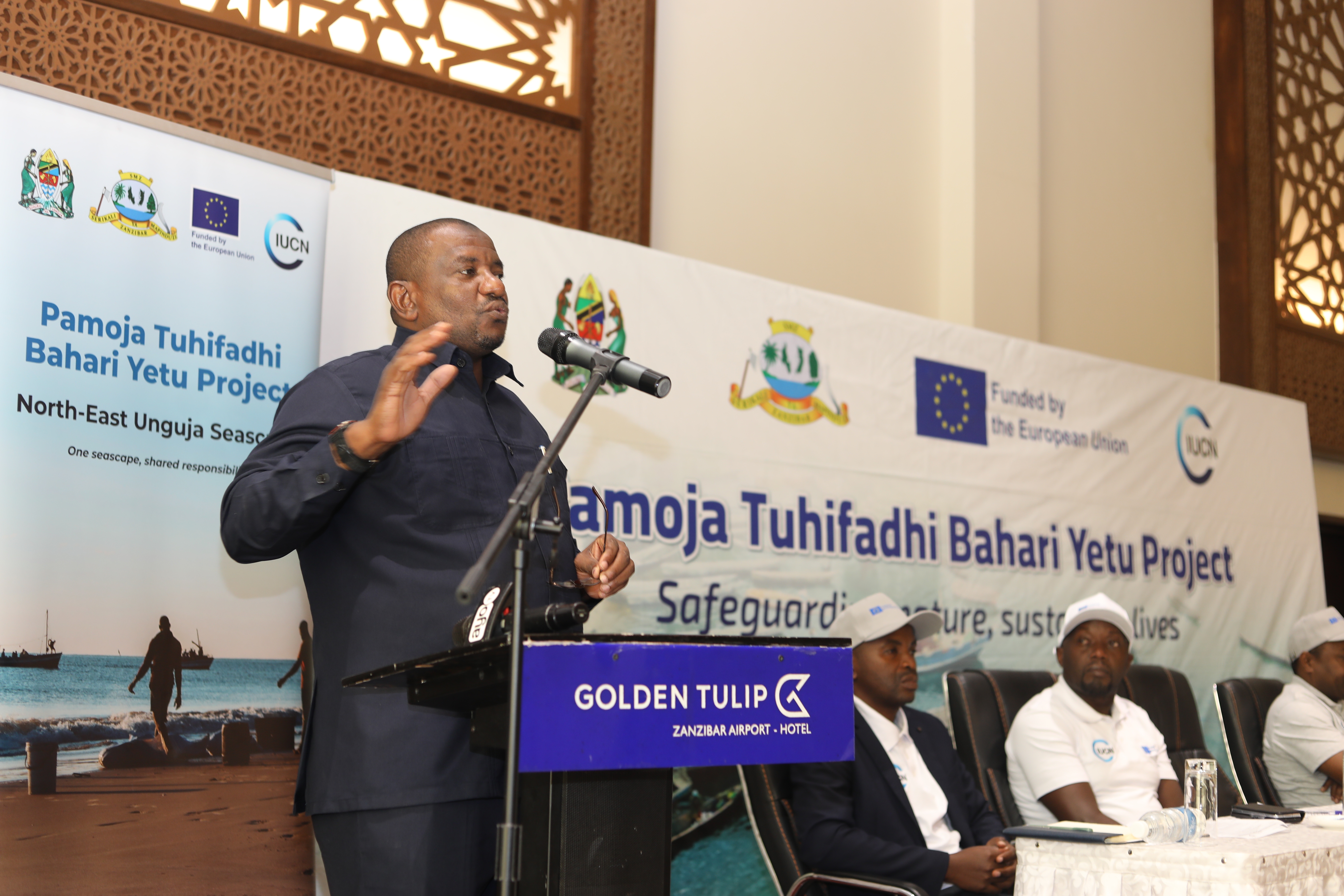
Dr Salim Hamza giving remarks from the Ministry of Blue Economy and Fisheries at the forum's launching event.
Photo: Bahari Yetu Project/IUCN Tanzania
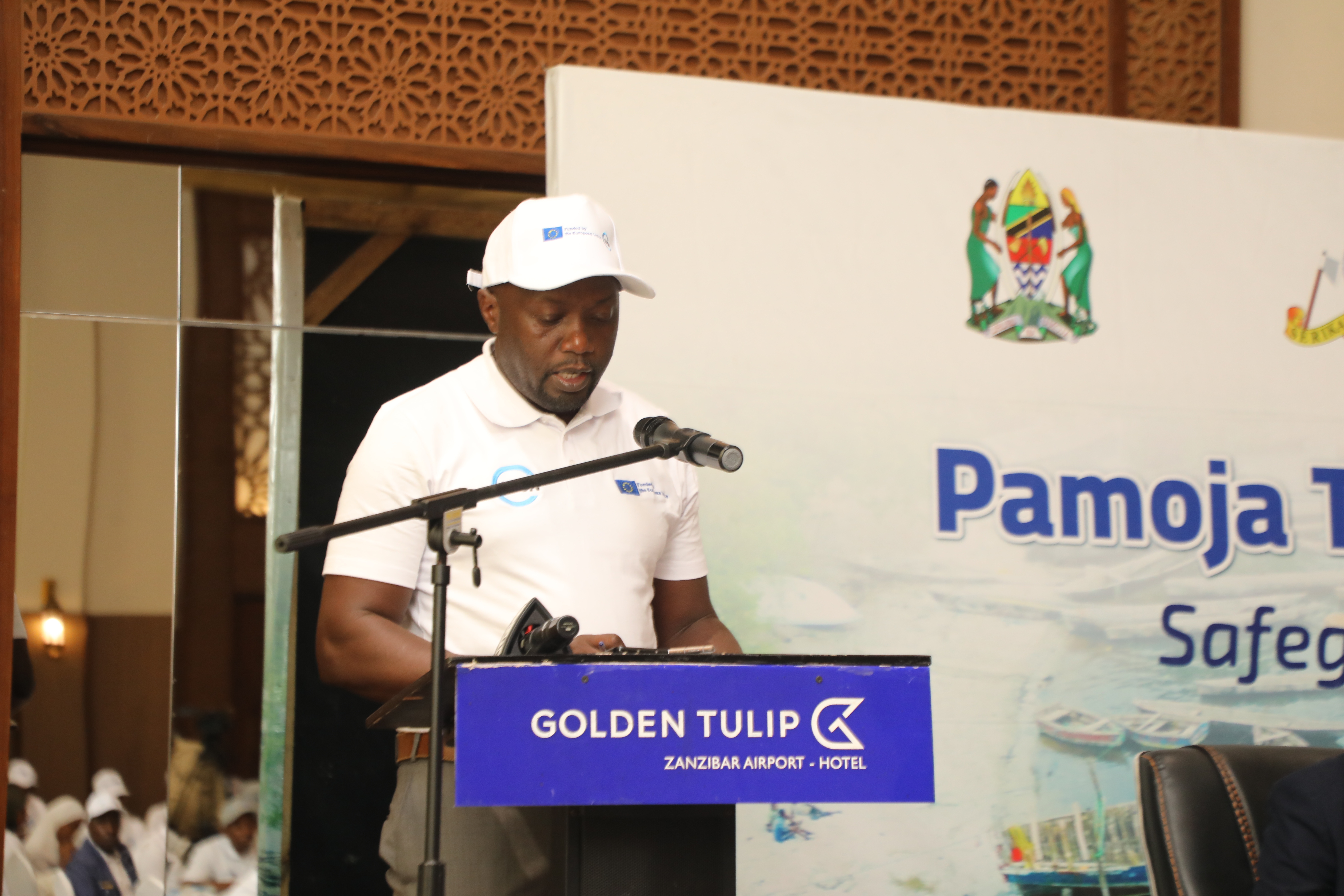
Dr Mathias Igulu giving remarks on behalf of IUCN and the Bahari Yetu Project at the launch of the forum.
Photo: Bahari Yetu Project/IUCN Tanzania
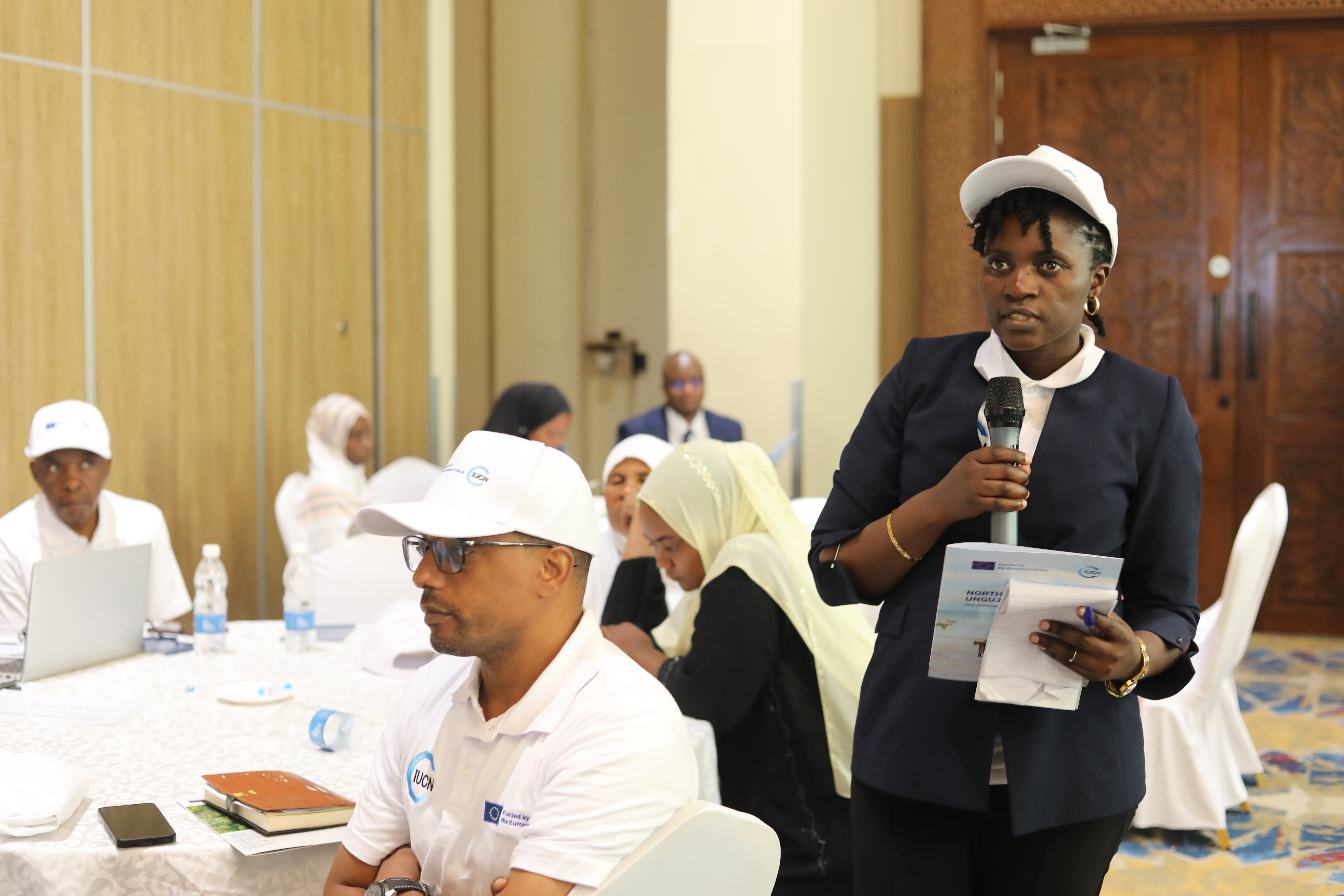
One of the forum's stakeholder speaking at a session during the launching event.
Photo: Bahari Yetu Project/IUCN Tanzania
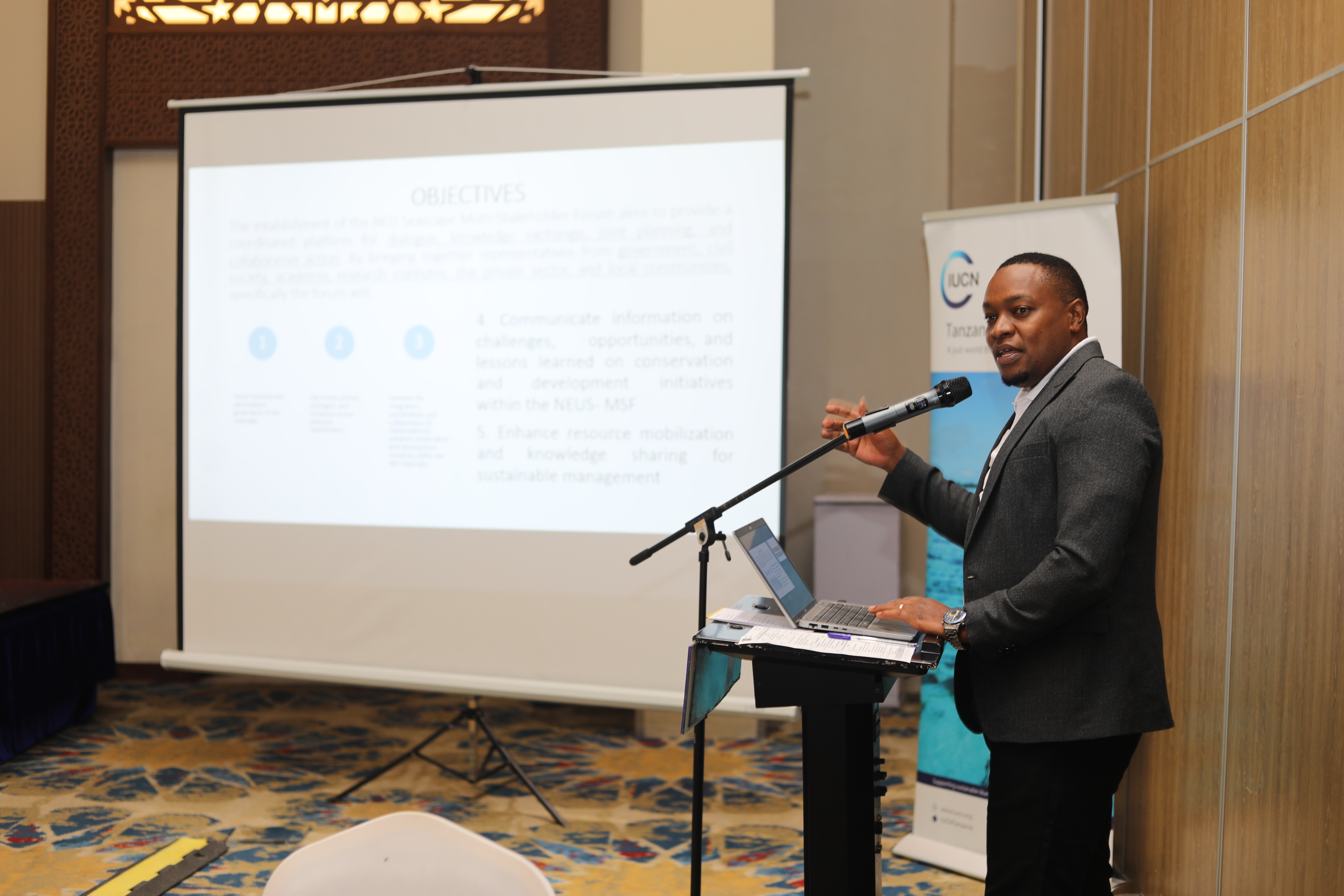
The Bahari Yetu project senior officer from IUCN, Mr. Remmy Lema presenting the seascape's strategic framework to the forum's stakeholders at guests at the launching event.
Photo: Bahari Yetu Project/IUCN Tanzania
About the Bahari Yetu Project
The Pamoja Tuhifadhi Bahari Yetu (Bahari Yetu) Project is funded by the European Union and implemented by IUCN as the lead implementing agency together with partners The Nature Conservancy(TNC), WWF, FORUM CC and WCS. Implemented in The project supports improved marine governance, conservation of coastal forests, reduction of marine plastic pollution, strengthened environmental research and data systems, and enhanced resilience of coastal communities across Tanzania.
For more information please contact:
Catherine Kayombo,
Communication and Membership Officer, IUCN Tanzania
[email protected]
Remmy Lema,
Senior Program Officer – Bahari Yetu Project, IUCN Tanzania
[email protected]
Dr. Mathias Igulu,
Chief of Party Bahari Yetu Project, IUCN Tanzania
[email protected]
About IUCN
IUCN is a membership Union uniquely composed of both government and civil society organisations. It provides public, private and non-governmental organisations with the knowledge and tools that enable human progress, economic development and nature conservation to take place together.
Created in 1948, IUCN is now the world’s largest and most diverse environmental network, harnessing the knowledge, resources and reach of more than 1,400 Member organisations and around 15,000 experts. It is a leading provider of conservation data, assessments and analysis. Its broad membership enables IUCN to fill the role of incubator and trusted repository of best practices, tools and international standards.
IUCN provides a neutral space in which diverse stakeholders including governments, NGOs, scientists, businesses, local communities, indigenous peoples organisations and others can work together to forge and implement solutions to environmental challenges and achieve sustainable development.
Working with many partners and supporters, IUCN implements a large and diverse portfolio of conservation projects worldwide. Combining the latest science with the traditional knowledge of local communities, these projects work to reverse habitat loss, restore ecosystems and improve people’s well-being.
www.iucn.org https://x.com/iucntanzania https://instagram.com/iucntanzania


The Bangladesh Forest Department (BFD) and IUCN Bangladesh, with support from Agence Française de…

Each year, International Women's Day is an opportunity to recognise the women advancing change in…

On 14 January 2026, in Dhaka, the Bangladesh Forest Department and IUCN Bangladesh formally signed…