Professor Cymie R. Payne is on the faculty of Rutgers University. She has appeared as counsel before the Internationall Tribunal for the Law of the Sea and as expert before the International Court of ...
IUCN COMMISSION GROUP
IUCN WCEL Ocean Law Specialist Group
Group leadership
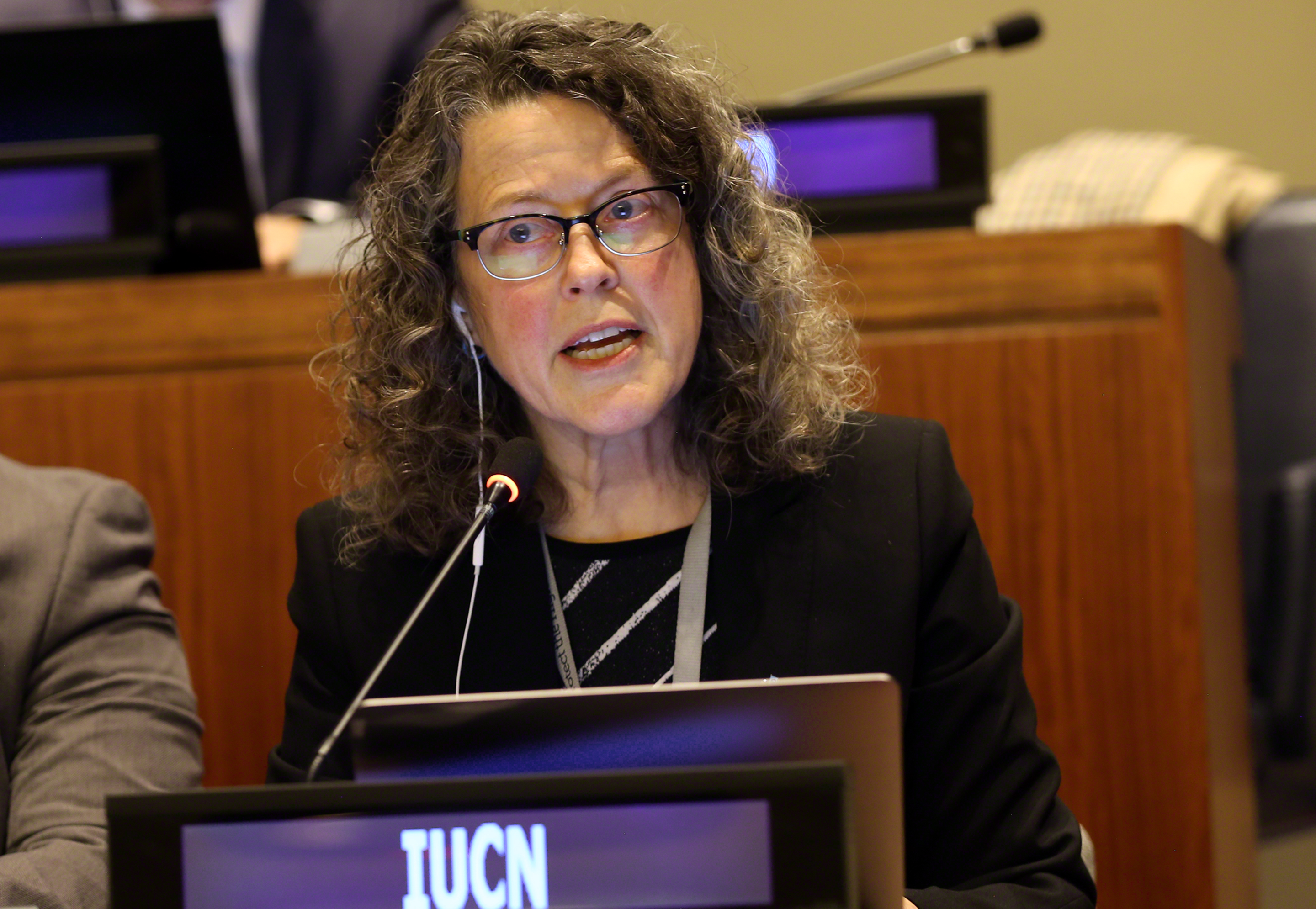
Prof Cymie PAYNE
Chair
Professor Cymie R. Payne is on the faculty of Rutgers University. She has appeared as counsel before the Internationall Tribunal for the Law of the Sea and as expert before the International Court of Justice. She is legal advisor to the IUCN delegation to the UN for the BBNJ Agreement She has been a member of the University of California, Berkeley Law faculty and served as an attorney with the UN Security Council environmental war reparations program, the U.S. Dept of the Interior, and the law firm of Goodwin, Procter. She holds an MA from the Fletcher School of Law and Diplomacy and a Juris Doctor from the University of California, Berkeley. She received the 2025 WCEL Nicholas Robinson Award for Excellence in Environmental Law and Policy.

Mr Pradeep SINGH
Deputy Chair
Pradeep Singh is a Senior Project Manager at Oceano Azul Foundation in Lisbon, Portugal. He holds an LL.M degree from Harvard Law School, an LL.M. degree in Global Environment and Climate Change Law from the University of Edinburgh as a British Chevening scholar, and an LL.B. degree with first-class honours from the University of Malaya in his home country, Malaysia. Pradeep has published extensively on the topics within his expertise, which range from public international law, global environmental law and climate law, the law of the sea and ocean governance. He regularly attends and participates in meetings and events of the International Seabed Authority, including until recently as a member of the IUCN delegation. Pradeep routinely provides legal advice to several delegates and supports governments on technical matters pertaining to marine areas beyond national jurisdiction.
Pradeep Singh is a Senior Project Manager at Oceano Azul Foundation in Lisbon, Portugal. He holds an LL.M degree from Harvard Law School, an LL.M. degree in Global Environment and Climate Change Law ...
Goals of the Specialist Group
- Serving as the primary source of legal expertise on the marine environment to IUCN and partners
- Participating in negotiations on a legally binding instrument for the conservation and sustainable use of marine biological diversity beyond areas of national jurisdiction under the UN Convention on the Law of the Sea (UNCLOS)
- Producing a new publication to highlight the legal isssues of ocean acidification
- Monitoring and contributing to diverse intergovernmental fora dealing with marine legal issues, including the International Tribunal for the Law of the Sea, the International Seabed Authority, the International Maritime Organization, and Regional Fisheries Management Organizations
Overview of core projects
1. Resolutions
The OLSG considers, on an ongoing basis, which of the resolutions adopted at WCC 2025 and older resolutions are relevant to specific projects. The OLSG seeks to support the Union’s resolutions through our project activities, including coordinating with other parts of the Union, and providing focal point reports on resolutions where appropriate. The OLSG also considers which resolutions, new and old, address issues within the OLSG remit and that specifically seek support from WCEL and evaluates whether and how to support those resolutions.
2. BBNJ Agreement Implementation
The Biodiversity Beyond National Jurisdiction Agreement (BBNJ Agreement) came into force on 17 January 2026, following important contributions by the OLSG to its negotiation, adoption and ratification. The next phase of work will be to ensure that it is implemented to be effective and equitable.
Relevant resolutions are: WCC-2025-006 - Promoting the models of regional or sub-national protected natural areas to achieve the global target of 30% protected and conserved areas by 2030; WCC-2025- 032 Protecting seamounts and vulnerable marine ecosystems from destructive practices; WCC-2025-033 Port State measures regarding illegal, unreported and unregulated fishing; WCC-2025-035 Protection of mesopelagic ecosystem integrity; WCC-2025-041 Developing a policy on geoengineering; WCC-2025-055 - Advancing an ethical human-ocean relationship; WCC-2025-128 Global conservation strategy for the high seas based on area-based management tools, including marine protected areas; WCC-2025-138 Welcoming the International Court of Justice Advisory Opinion on climate change.
Activities in support of the BBNJ Agreement implementation will comprise continued engagement with the Preparatory Commission meetings, the Conferences of the Parties, inter-sessional meetings and consultations with government and non-government representatives and collaborators. Cymie Payne carries out this part of the project as a member of the High Seas Alliance Policy Group and a member of the Informal BBNJ Dialogues Advisory Group. This project will also strive to increase educational efforts to inform the general public.
Emphasis will be placed on the Environmental Impact Assessment (EIA) pillar of the BBNJ Agreement, which is an important tool for achieving “a regenerative approach to using ocean resources” (IUCN Programme 2026-2029) in areas beyond national jurisdiction; it has also been referenced by the international courts in their advisory opinions on climate change.
3. International Seabed Authority Seabed Mining Exploitation Regulations
The OLSG will:
- Support IUCN and its members on legal, regulatory and governance matters pertaining to the International Seabed Authority (ISA).
- Contribute to ongoing negotiations on the draft regulations for the exploitation of seabed mineral resources in areas beyond national jurisdiction and other related matters at the ISA, including the development of a robust general policy for the protection of the marine environment.
- Support implementation of WCC 122 (2021) calling for a moratorium on deep-sea mining in the Area until and unless specific conditions and prerequisites (contained therein) are met.
4. Ocean Rights
This project will advance and contribute to the development of ethical Ocean governance through the implementation of IUCN Resolution 8.055. The OLSG coordinates with Philippe Cullet and the Rights of Nature (RoN) Specialist Group on this topic, through regular updates and joint planning. While the RoN SG addresses rights of nature globally, the OLSG focuses on Ocean Rights and builds on Michelle Bender’s longstanding leadership in this area. The creation of an informal contact group between the OLSG and the RoN SG is envisioned to ensure close collaboration and consistency.
5. International Courts and Tribunals (ICTs) and Climate Change – Participation, Education, Implementation
The OLSG builds on its experience providing written and oral arguments for all three of the ITLOS advisory opinions, and its members’ experience contributing as experts to ITLOS, the International Court of Justice, and other international courts and tribunals.
The OLSG work on climate change focuses on legal instruments and institutions associated with the marine environment. Where these overlap with the mandate of other WCEL specialist groups, in particular the Climate Change Specialist Group, OLSG will coordinate with the Climate Change SG in a reciprocal manner. The creation of an informal contact group between the OLSG and the Climate Change SG is envisioned to ensure close collaboration and consistency.
6. Other projects as may be determined by OLSG leads with members, TBD
The OLSG will continue to solicit interest from its members in initiating projects, particularly those that
implement IUCN resolutions.
OLSG leadership and members are actively engaged in several areas of IUCN’s work that are not
described here as “projects” but that should be noted in this work plan and that may develop into
projects. They include:
- Collaboration with the IUCN secretariat on developing a geoengineering policy;
- Collaboration with IUCN members on implementing resolutions for conservation of sea mounts
and the mesopelagic zone, and on conservation of polar areas; - Exploring how marine spatial planning (mentioned in the IUCN Programme) can be implemented
in areas beyond national jurisdiction; - Contributing expertise on the protection of the marine environment in relation to armed conflict
and environmental crimes. - Contributing to the requests for WCEL support of Resolution 8.033, Port State measures
regarding illegal, unreported and unregulated fishing, in particular: exploration of options to
strengthen legal frameworks addressing IUU fishing; participation in a task force, should one be
established, to develop an integrated IUCN strategy (see also Resolution 8.035).