IUCN participates in the 1st Regional Forum in the Congo Basin
18-20 November 2024, Yaoundé Cameroon
The Agroecology Forum provides a platform for reflection and exchanges between different stakeholders on the transition to agroecological and organic food systems. It aims to address current and future environmental challenges through panels and plenary sessions. The forum also promotes the sale and consumption of agroecological products through an outdoor Exhibition Fair, while supporting and strengthening producers, with a particular focus on women and young people who are at the forefront of innovative organic and agroecological practices. Congo Basin countries as well as a few West African countries were represented.
Delivering a presentation on "Agroecology and Biodiversity Conservation" during the 1st Regional Forum on Agroecology in the Congo Basin was an honour for IUCN, represented by the West and Central Africa Regional Office. The event provided a significant platform to discuss the integration of agroecology in addressing key environmental challenges.
The presentation emphasised the importance of tackling the three major planetary crises: climate change, biodiversity loss, and pollution, highlighting agroecology as a holistic solution to these interconnected issues, bearing in mind that it requires adaptation to each socioeconomic, geographic and environmental contexts. The crucial role of traditional knowledge systems was also discussed, particularly given the rich cultural diversity of the Congo Basin and Africa as a whole, stressing how these systems can enhance agroecological practices.
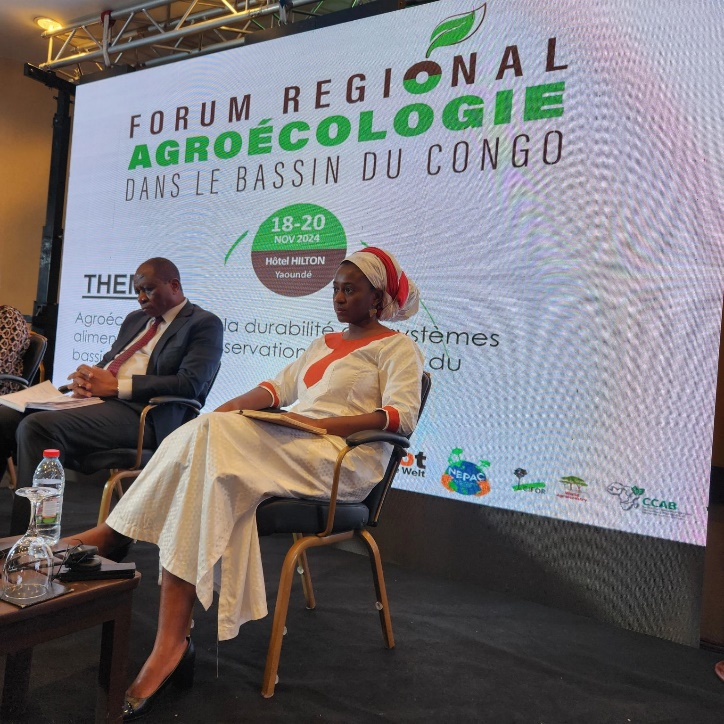
Photo: Tanya Merceron, BIOPAMA Regional Coordinator for West and Central Africa, delivering IUCN's presentation
Furthermore, the link between conservation and social justice was explored, advocating for inclusive approaches that benefit both nature and local communities. Other Effective Conservation Measures (OECMs) were introduced, explaining their significance in global conservation efforts and how they contribute to protecting biodiversity beyond traditional protected areas.
Additionally, the presentation called for the harmonization of regional policies on biodiversity and agroecology, proposing clear operational pathways involving various sectors such as environment, agriculture, livestock, socioeconomy, finance and research.
The event was initiated by a BIOPAMA grantee, SAILD, with whom IUCN implemented the “Project to optimise conservation of Deng Deng National Park by strengthening the capacities of local communities in agroecological practices in Cameroon”.
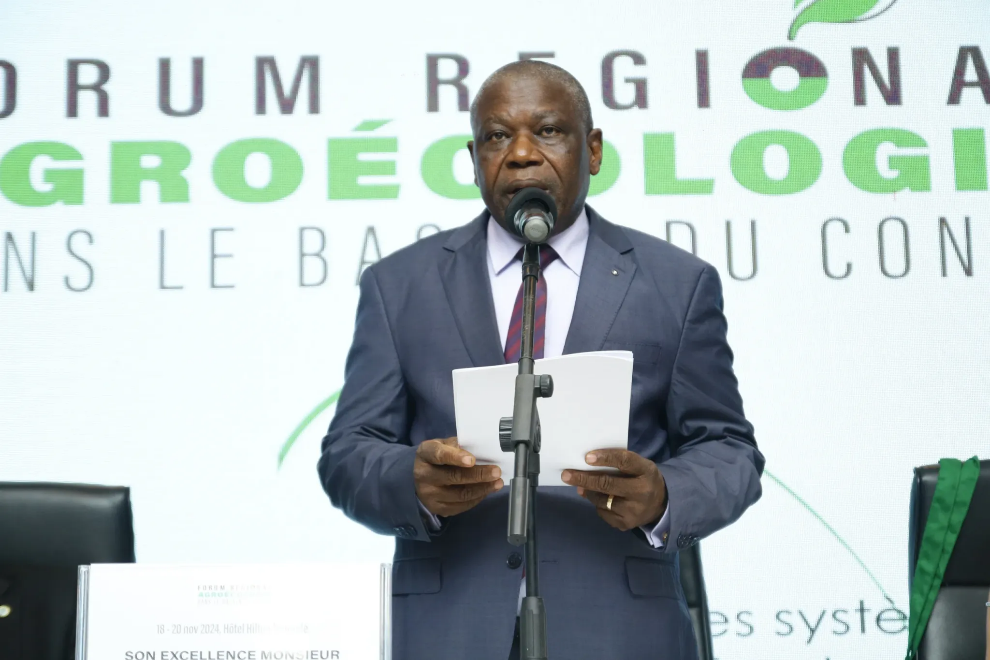
Photo: Official opening by the Minister of Agriculture and rural development, Gabriel Mbairobe
The project focuses on agroecological practices to promote protected areas conservation. Its key objectives are to:
- Ensure that local populations reduce their agricultural activities within the park. The park's physical boundaries were marked out and sensitization activities were conducted.
- Support the introduction of agroecological practices for the benefit of the population living in buffer zones. To achieve this, the project facilitated the identification of land outside the park and trained farmers in agroecological practices such as tree nurseries.
- Support the development of alternative livelihood for local communities through income-generating activities such as poultry breeding and beekeeping. These activities also helped reduce pressure on natural resources.
SAILD, “Service d'Appui aux Initiatives locales de Développement”, is a non-governmental organization based in Yaoundé, Cameroon. Founded in 1988, the organisation supports farmers and communities in areas where natural resources are exploited, helping them with their entrepreneurial and agro-pastoral initiatives for socio-economic and cultural development, as well as sustainable resource management.
SAILD operates through three main programs:
- Natural Resources Management focuses on managing local resources to promote development and well-being in village communities.
- Food Security and Nutrition, works to improve food security and nutrition in rural areas, particularly in the East and Far North regions of Cameroon. This involves training farmers in agroecological practices, improving soil fertility, and supporting the marketing of agricultural products.
- Rural Communication aims to democratize information, especially for vulnerable groups, to support their socio-cultural and economic development. SAILD provides documentation and advisory services through the Documentation Center for Rural Development (CDDR) and publishes a monthly newspaper, "La Voix Du Paysan (Peasant’s voice)," which covers agropastoral topics.
This forum was a remarkable opportunity to advocate for sustainable practices and policies that can drive positive change in the Congo Basin and beyond. IUCN is proud collaborate with SAILD and other organizations and networks to support this transformative process.
To learn more about IUCN’s work on agroecology:
https://portals.iucn.org/library/node/8548
https://portals.iucn.org/library/node/8913
To learn more about SAILD: