Reflections from UNOC3: Reimagining Ocean Governance in the Pacific
As I sit to write this reflection, the buzz of the 3rd United Nations Ocean Conference (UNOC3) in Nice is still settling. This was my first time attending a global ocean congress of this scale, and I can only describe the experience as both energising and overwhelming. The energy and momentum were incredible, but by the end of the week, I was completely drained, my social battery at zero.
Photo: UNOC3
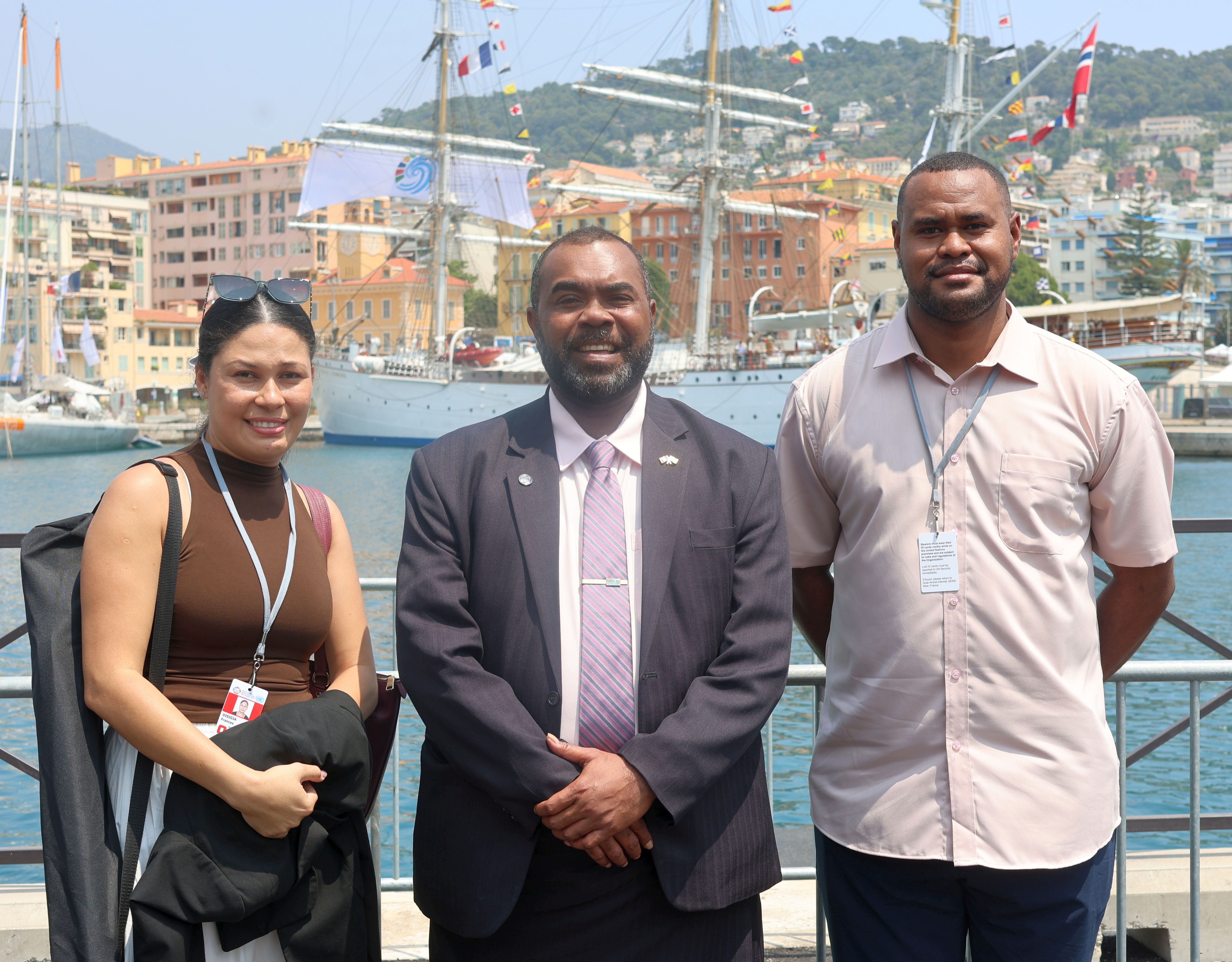
Photo: UNOC3
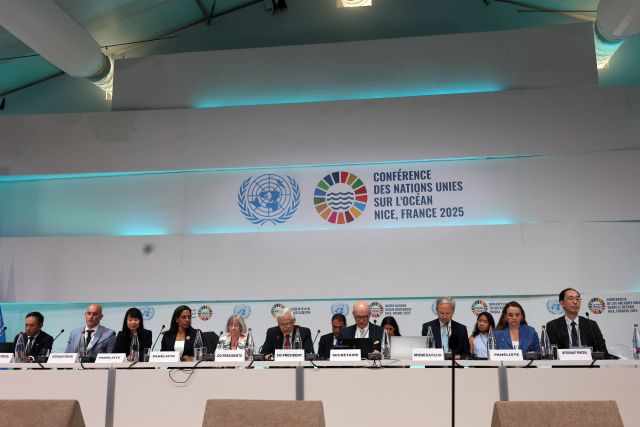
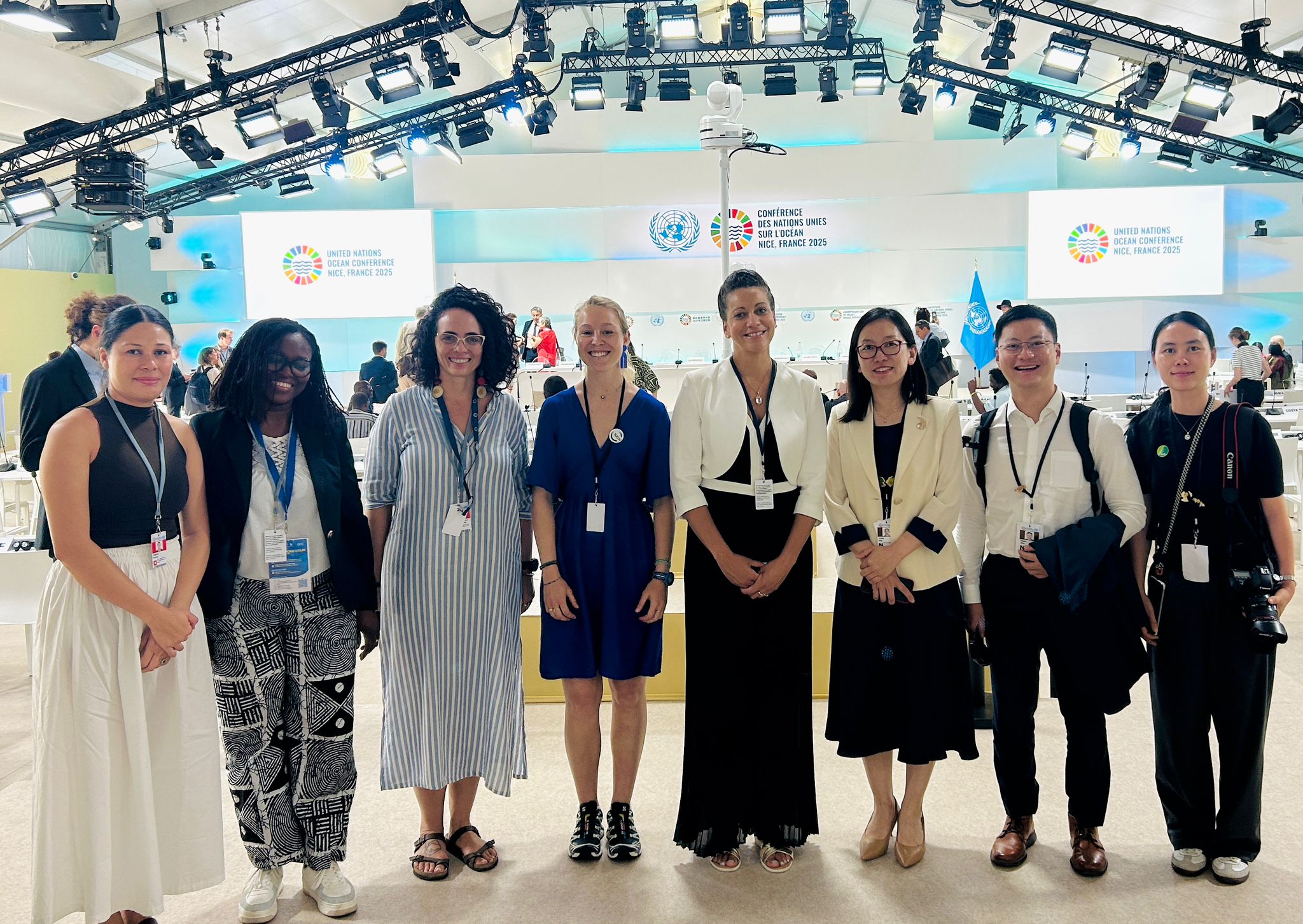
Photo: UNOC3
Still, I waited for the calm after the conference to collect my thoughts and reflect: Was it all worth it? Did we, as a global ocean community, achieve what we set out to do? And more importantly, what does it mean for our work at the International Union of Conservation of Nature and Natural Resources (IUCN), especially at IUCN ORO?
Our week began even before the official opening of UNOC3. On Sunday, 8 June, we arrived in Nice and went straight to the Tiaki Moana side event, hosted at the stunning Citadel of Villefranche-sur-Mer. Set against the French Riviera, the venue carried the perfect symbolism: history, guardianship, and natural beauty.
But it was what unfolded inside that made it unforgettable.
Tiaki Moana (meaning "to care for the ocean") was more than a side event. It was a Pacific-led movement, built on Indigenous knowledge, community voices, and youth leadership. With support from IUCN, Pew, and others, the event used a bottom-up, co-created format, where over 200 participants shaped the agenda and the outcome report.
There was no rigid programme, just intentional listening, grounded in ancestral wisdom, and aligned with current global priorities like the Montreal Biodiversity Framework and 30x30 targets.
The message from the Pacific was resounding: We don’t wait for a seat at the table, we bring our own mat, our science, our culture, and our solutions.
Traditional knowledge was not just acknowledged - it was central to the discussions that ensued. Through the lens of climate, culture, and conservation, Tiaki Moana reminded us that ocean governance begins in the community, not policy.
IUCN ORO Side Event: Pacific Leadership at the Forefront
On Tuesday, 10 June, IUCN Oceania Regional Office hosted a major side event at the Hyatt Hotel in Nice, bringing together Pacific leaders and global partners to spotlight regional progress toward the 30x30 conservation goal.
Opening with traditional blessings and cultural framing, the event was both ceremonial and strategic.
Key highlights included:
Dr. Grethel Aguilar, IUCN Director General, emphasising collective action, justice, and harmony in reaching global goals. She acknowledged Pacific leadership and reaffirmed IUCN’s commitment to supporting long-term ocean governance.
President Hilda Heine of the Republic of Marshall Islands shared the inspiring progress of the Micronesia Challenge, with a target to protect 30% of nearshore marine and 20% of terrestrial resources by 2030.
Minister Ralph Regenvanu, from Vanuatu called for financial and technical support to scale up climate-resilient marine stewardship rooted in traditional practices.
In a historic statement, Minister Jeremie Katidjo Monnier, from New Caledonia announced a 50-year moratorium on deep-sea mining, a bold move applauded by the audience and widely referenced in subsequent UNOC sessions.
The panel also featured rich dialogue on transboundary marine protected areas, youth participation, and the role of traditional knowledge in guiding science-based policy. The event closed with a collective call to sustain momentum and deepen regional collaboration, especially through IUCN, SPREP, and partner institutions.
Setting the Scene: High Expectations, Limited Access
The official week of the congress began with much anticipation, but also, some challenges. Unfortunately, access to the Blue Zone, where many key side events were held, especially those on the BBNJ Treaty, was restricted. For many of us supporting BBNJ implementation in regions like the Pacific, this was disappointing. However, it did not deter the flow of information and engagement. Conversations continued in hallways, informal spaces, and across receptions, showing just how interconnected and motivated our ocean community has become.
The BBNJ Treaty: Front and Centre
Throughout the week, the BBNJ Treaty remained one of the most discussed and celebrated developments. Multiple countries announced their ratification, bringing us to 50 ratifications, just ten short of the threshold required for the treaty to enter into force. The momentum was real, and the Pacific Islands played a pivotal role in pushing that forward.
Our region’s messages, calling for equitable implementation, capacity building, and support for small island developing states, were heard and echoed in multiple sessions. IUCN delegation, both global and regional, was consistently present in these conversations, reinforcing our commitment to supporting country-led implementation.
Connections, Community, and Learning
Beyond the official outcomes, UNOC3 was a powerful space for building connections and reflecting on our collective work. I had the opportunity to meet both familiar faces and new actors, scientists, indigenous leaders, legal scholars, and passionate youth, all working towards a common purpose: protecting our ocean.
These exchanges have helped me reimagine how we, at IUCN, approach ocean governance in the Pacific. It’s clear that we must continue to support national priorities, ensure legal frameworks are inclusive and enforceable, and provide targeted technical support that enables our island nations to lead on sustainable ocean governance.
IUCN Oceania team has already been making strong strides in supporting national legislative reviews and capacity-building for BBNJ Treaty ratification. What UNOC3 affirmed for me is that this work must not only continue but expand and evolve.
Moving from Commitments to Action
UNOC3 closed with a strong political declaration and over 800 voluntary commitments. But as many noted throughout the week, implementation is where the real work begins. For IUCN, this means:
• Continuing to offer technical and legal expertise to countries ratifying and implementing the BBNJ Treaty.
• Supporting regional collaboration and information-sharing, especially through the Clearing-House Mechanism and upcoming institutional frameworks.
• Contributing to conversations on sustainable financing, equity, and capacity development.
Final Thoughts: A Demanding but Worthwhile Journey
This conference illustrated both the complexity and beauty of global ocean diplomacy. Yes, it was exhausting, but it was also affirming. I left with a renewed sense of purpose, a deeper understanding of the challenges ahead, and most importantly, a growing network of allies working towards the same goals.
UNOC3 was a step forward, not a solution, but a catalyst. And I am proud to be part of IUCN’s efforts to translate that momentum into lasting impact for Pacific communities and for the health of our shared ocean.

Disclaimer
Opinions expressed in posts featured on any Crossroads or other blogs are those of the authors and do not necessarily reflect the opinions of IUCN or a consensus of its Member organisations.

The Bangladesh Forest Department (BFD) and IUCN Bangladesh, with support from Agence Française de…

Each year, International Women's Day is an opportunity to recognise the women advancing change in…

On 14 January 2026, in Dhaka, the Bangladesh Forest Department and IUCN Bangladesh formally signed…