Dialogues for a connected nature: Collaboration to advance ecological connectivity in Spain
Ávila, 27 June 2025 – This week, the first national dialogues on ecological connectivity in Spain took place at the Catholic University of Ávila, within the framework of the event titled “Conservation of ecological connectivity in Spain: A dialogue to accelerate collaboration and action.”
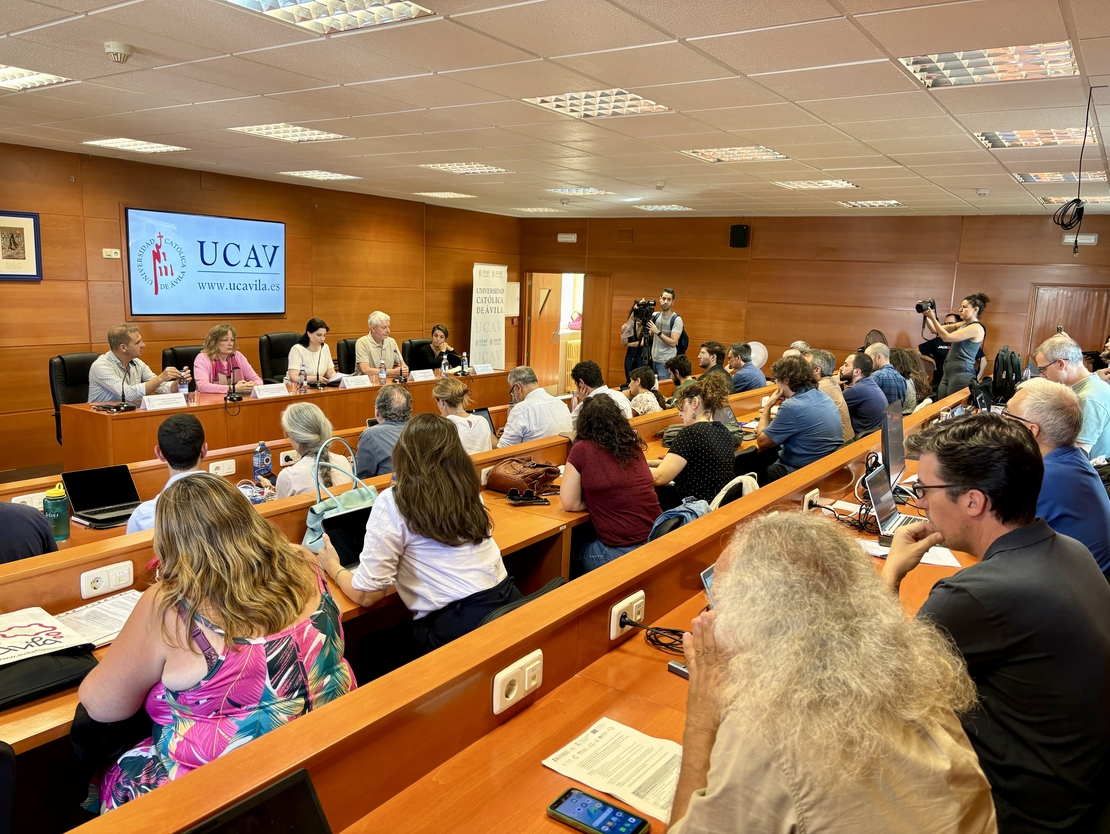
The event brought together over three days more than 40 experts from 25 institutions, including regional governments, environmental organizations, research centres, and representatives from the Ministry for the Ecological Transition and the Demographic Challenge (MITECO).
The meeting contributed to building a shared vision on how to address ecological connectivity from an integrated and coherent perspective. The sessions highlighted the need to harmonize technical and regulatory criteria at the national level to effectively guide policies and actions related to land management.
Among the priorities identified was the importance of improving coordination among public administration departments involved in spatial planning, as well as advancing knowledge and management of fluvial, coastal, marine, and urban connectivity—areas that remain underdeveloped in many environmental strategies.
Participants agreed to work in the coming months on the development of a technical recommendations document to facilitate coordinated progress in these areas.

A network vision: protected areas should not be islands
Carla Danelutti, Programme Coordinator at the IUCN Centre for Mediterranean Cooperation (IUCN Med), positively highlighted the quality of the exchanges and the strong commitment shown by participants.“These sessions provide a solid foundation to better integrate ecological connectivity into public policies, and directly contribute to achieving Target 3 of the Global Biodiversity Framework, which aims to conserve 30% of terrestrial and marine ecosystems through well-connected, equitably managed, and representative systems,” she noted.
She also added that “protected areas should not be seen as isolated islands, but as interconnected elements within a functional network that allows the movement of species and ecological processes. The exchange and dialogue initiated by this expert group open new opportunities to move in that direction.”

MEDCONECTA: An opportunity to apply science and action
As part of the event, a technical workshop was held on 24 June linked to the MEDCONECTA project, led by IUCN Med and the Spanish National Research Council (CSIC) – Experimental Station of Arid Zones (EEZA), and funded by the Fundación Biodiversidad of MITECO under the Recovery, Transformation and Resilience Plan (PRTR), financed by the European Union – NextGenerationEU. The project, focused on the arid arc of southeastern Spain — covering the autonomous regions of Andalusia, Murcia, and Valencia — aims to improve spatial continuity of green infrastructure by identifying potential green corridors.
In its current phase, the work focuses on defining Nature-based Solutions to enhance ecological connectivity, with special attention to Natura 2000 sites and surrounding areas. In this context, integrating scientific knowledge with local technical expertise is essential for effective planning aligned with current regulatory frameworks.
During the workshop, participants received practical training on the spatial continuity algorithm developed within the project and discussed potential interventions applicable in the territory.

Institutional collaboration and alignment with national and regional policies
The event was organized by the IUCN Centre for Mediterranean Cooperation, CSIC-EEZA, and the IUCN Spanish National Committee, with support from Fundación Aptenia, the Connectivity Conservation Specialist Group (CCSG) of the IUCN World Commission on Protected Areas, the Centre for Large Landscape Conservation, and with technical and logistical support from the CEUICN-UCAV Chair and the Catholic University of Ávila — which generously provided the venue — along with Fundación Biodiversidad and MITECO, and with funding from the IUCN Chair managed by the Spanish Committee of IUCN.
These sessions align with the National Strategy for Green Infrastructure, Ecological Connectivity, and Restoration, as well as with the regional plans currently under development. Collectively, these frameworks offer a roadmap to reduce habitat fragmentation, strengthen ecological connectivity, and secure the provision of essential ecosystem services for the resilience of the territory and the well-being of people.


The Bangladesh Forest Department (BFD) and IUCN Bangladesh, with support from Agence Française de…

Each year, International Women's Day is an opportunity to recognise the women advancing change in…

On 14 January 2026, in Dhaka, the Bangladesh Forest Department and IUCN Bangladesh formally signed…