IUCN key messages at the 47th session of the World Heritage Committee
The UNESCO World Heritage Convention is among the most widely accepted international conservation treaties, ratified today by 196 States Parties. The Convention’s recognition from the outset that natural (biological, ecological or geological) and cultural values are linked makes the Convention a pioneer in recognizing the links between nature and culture. The Convention has also created robust mechanisms for intergovernmental oversight, providing a unique assessment of outcomes from area-based conservation measures. UNESCO’s World Heritage Committee, comprising 21 elected States Parties, is the intergovernmental decision-making body for the World Heritage Convention and usually meets once per year.
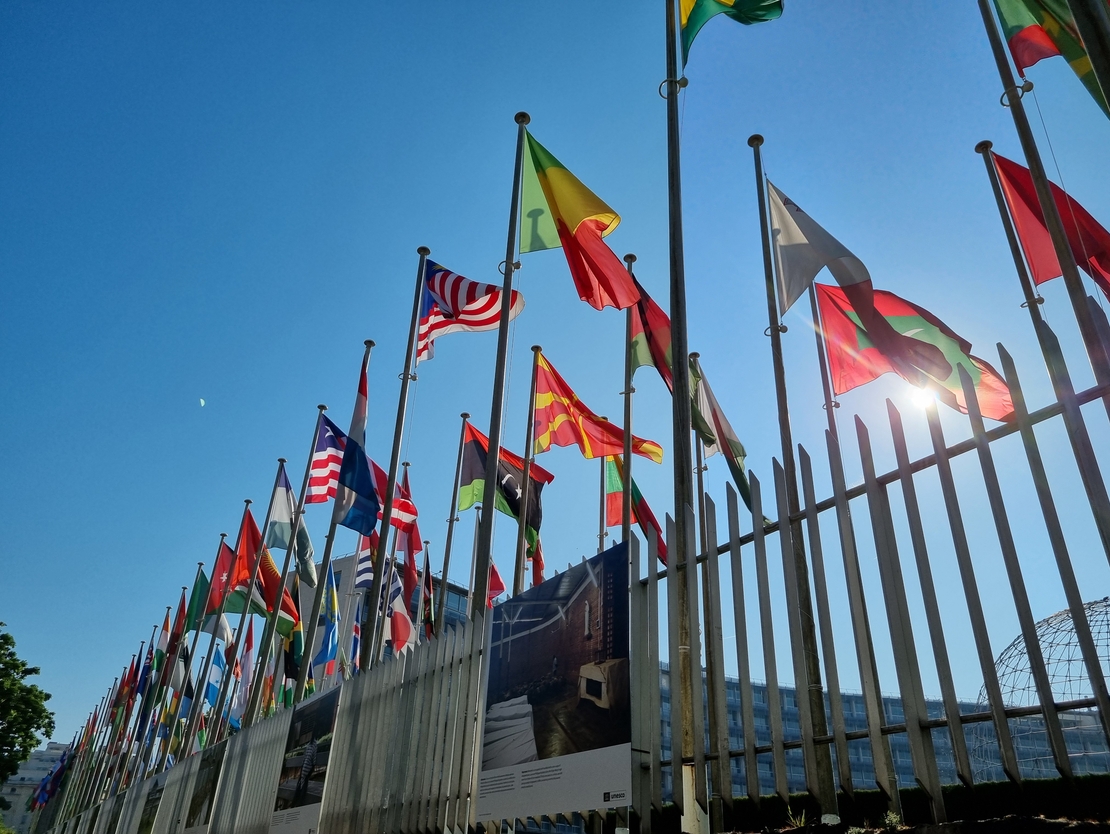
As the official World Heritage Advisory Body for nature, IUCN reaffirms its commitment to supporting the World Heritage Committee, States Parties, UNESCO, ICOMOS, ICCROM and all stakeholders to achieve shared conservation goals. IUCN’s advice to the Committee is grounded in technical independence, science, field experience, and collaboration. IUCN encourages decisions that ensure the Convention’s credibility and effectiveness, while delivering real and positive outcomes for people and nature in line with the IUCN World Heritage Strategy.
IUCN co-drafted nearly 80 World Heritage state of conservation reports for examination by the Committee (items 7A and 7B, including the addendums). Seventeen of these reports are for sites on the List of World Heritage in Danger.
IUCN will also present its evaluation for new nominations that are proposed for their nature conservation values (items 8), including for five sites which IUCN considers meet the requirements for World Heritage listing, and several other sites with potential for future inclusion on the World Heritage List.
The summary reports of the Advisory Bodies (item 5B.Rev), including IUCN, give an overview of activities since the previous session of the World Heritage Committee.
IUCN is also taking action in support of Priority Africa, including follow up to the Nairobi Declaration (item 5C) and support World Heritage and Small Islands Developing States (item 5E), including a new thematic study for the Pacific region.
In addition to IUCN’s statutory activities on World Heritage, IUCN also supports the protection and conservation of natural World Heritage in countless other ways.
IUCN will also highlight the following key messages during the 47COM:
Natural and mixed World Heritage sites are underrepresented, and IUCN supports the decision of the intersessional Open-ended Working Group (OEWG) of States Parties to recommend better representation of nature conservation sites on the UNESCO World Heritage List. In particular, IUCN supports the call for:
A more credible and balanced List that reflects the full diversity of the planet’s natural heritage; Strengthened prioritization of nature in future nominations, including by considering potential candidate natural sites and features identified in over 30 Gap Studies undertaken by IUCN;
Enhanced support for States Parties to prepare high-quality, credible proposals which can often take several years to develop (including local consultations and scientific studies);
More direct support for World Heritage sites to address threats and to deliver conservation results, including through synergistic actions across the Multilateral Environmental Agreements (MEAs).
Respect and realize Indigenous Peoples’ rights (items 5D, 11) as well as site level matters (items 7 and 8)
The rights of Indigenous Peoples and Local Communities must be recognized, respected and upheld. IUCN supports the positions advanced in the report of the OEWG (Item 11), welcomes the enhanced dialogue with the International Indigenous Peoples’ Forum for World Heritage (IIPFWH), and considers it is essential to:
Promote full and effective participation of Indigenous Peoples in World Heritage site governance;
Recognize rights-based approaches, including the implementation of the Convention’s commitment to Free, Prior and Informed Consent (FPIC), as essential to equitable and effective conservation;
Embed Indigenous issues and leadership into the Convention’s future directions.
World Heritage properties play a foundational role in achieving our global biodiversity targets and, in line with the IUCN World Heritage Strategy, IUCN has continued to advocate for synergistic actions that achieve outcomes for World Heritage and people, wider conservation of biodiversity and geodiversity, and delivery of climate and sustainable development actions. More specifically, IUCN calls for:
States Parties to improve policy coherence to ensure that national biodiversity strategies and action plans, including those designed to implement the Kunming-Montreal Global Biodiversity Framework (KM-GBF), as well as climate and development plans, include actions that safeguard natural heritage and implement the decisions of the World Heritage Committee;
Recognition and support for nature-based solutions which can contribute to the conservation of World Heritage sites, including those listed primarily for cultural heritage values (e.g. urban sites, cultural landscapes, etc.) while also helping countries reach global biodiversity targets;
Greater synergies between World Heritage sites and other international designations, including Ramsar wetlands, Biosphere Reserves, UNESCO Global Geoparks and GIAHS (Globally Important Agricultural Heritage Systems), to scale up conservation impact and efficiency from the currently over 3,500 Internationally Designated Areas, many of which overlap;
Prioritization of World Heritage and other designations in existing and new financing mechanisms, including multilateral finance such as the Global Environment Facility (GEF) funds (including Global Biodiversity Framework Fund), bilateral finance channeled through development cooperation, granting mechanisms, public-private partnerships and philanthropic initiatives.
It is notable for instance that the GEF provides a financial mechanism for several Conventions, including CBD, but is not directly linked to the World Heritage Convention. Yet GEF grants have de facto been essential for the creation of world-class management systems which helped underpin many cases of World Heritage designation, and today several GEF grants support World Heritage conservation. Strengthened and more systematic WH and GEF connections are therefore a key opportunity to deliver better results through World Heritage site conservation.
Capacity building and knowledge exchange is foundational to effective conservation and requires sustained funding. IUCN and ICCROM, with partners, have pioneered effective delivery through the World Heritage Leadership Programme, and a newly established Specialist Group for World Heritage has been launched within the IUCN World Commission on Protected Areas (WCPA). IUCN welcomes the proposed new World Heritage capacity building strategy (item 6A) and calls for:
Capacity building to be increased as a core activity of the Convention and be adequately resourced, including through the leading work of ICCROM, IUCN and ICOMOS, as well as in UNESCO;
Underserved regions and countries to be prioritized in capacity development initiatives, and coordinated and coherent support to be provided to UNESCO Category 2 Centres;
An inclusive people-centred approach to heritage that is responsive to global challenges such as climate change, biodiversity conservation, rights-based approaches and sustainable development, to ensure the long-term sustainability of the Convention, extending the approach pioneered through the World Heritage Leadership Programme.
Additional information
For more information about IUCN’s work on World Heritage, visit here and follow on LinkedIn @IUCN WorldHeritage.
For the IUCN World Heritage Strategy, visit here.
For the full list of documents for the World Heritage Committee meeting (available in both English and French), visit here.
The livestream of the World Heritage Committee is available at https://whc.unesco.org/en/sessions/47COM/.

The Bangladesh Forest Department (BFD) and IUCN Bangladesh, with support from Agence Française de…

Each year, International Women's Day is an opportunity to recognise the women advancing change in…

On 14 January 2026, in Dhaka, the Bangladesh Forest Department and IUCN Bangladesh formally signed…