How can the United Nations stay relevant in a changing global financial system?
Coming back from the 4th International Conference on Financing for Development in Sevilla, the IUCN delegation shares its reflections on how the United Nations can adapt to a shifting global economic and financial systems.
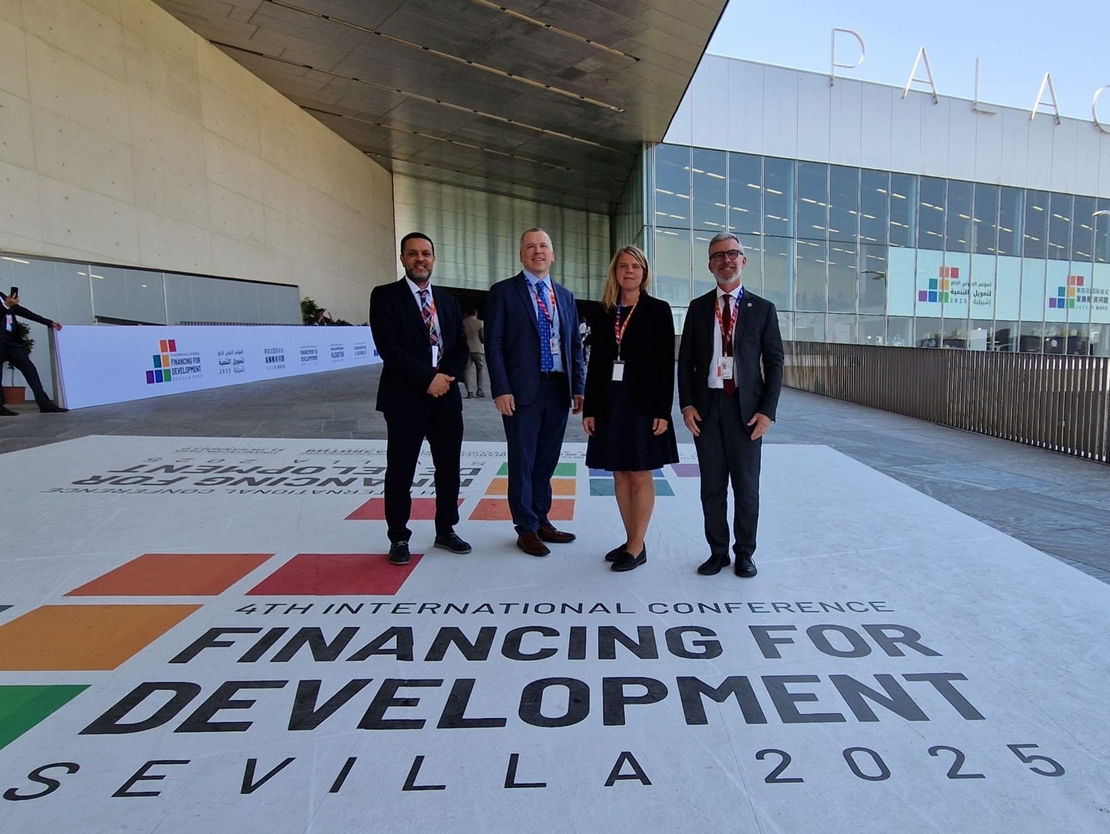
The heat in Sevilla is oppressing, and inside the conference rooms delegates’ tempers are boiling. Disappointment from a watered-down outcome document, the price for a fragile geopolitical consensus, is met with civil society’s concern about a shrinking civil society space and frustration at their exclusion from the negotiation process. In most government statements, the fact that an outcome was reached at all is highlighted as a success – proof that the multilateral system is alive and kicking, despite its challenges.
We might now be filled with the pessimism of middle age – but in the decades that have passed since the first discussions on international financing no country has joined the elusive group of Luxembourg and a few Nordic countries to meet or exceed their Official Development Assistance (ODA) targets. New finance commitments for climate and biodiversity remain underfunded, while humanitarian needs far exceed the available funds.
The discussion seems to have moved on from the old focus on ODA and in Sevilla central on the agenda was support for domestic revenue collection, debt restructuring, reforming the international financial architecture and the private sector. Climate change featured visibly at the conference and it is clear that there is a lot of expectations on climate finance to deliver much needed investments for developing countries vulnerable to the impacts of climate change. Much less visible topics were financing for biodiversity and transitioning to a nature-positive economy.
One of the main announcements on climate finance this week was the launch of a coalition to impose a levy on luxury air travel which includes France, Spain, Kenya, Somalia, Benin, Sierra Leone and Antigua and Barbuda. These kind of initiatives – ideas that do not include ODA or debt mechanisms and that diversify the financing landscape - are where the solution for a cleaner future seems to be.
This in itself creates a need for the multilateral system to change – with an ever increasing number of actors, mechanisms and financing streams the role of the UN system as a governance mechanism for financing is diminishing and what is left is its role as a convening power. To stay relevant the UN system needs to focus on implementation: it must be more efficient in order to compete with leaner actors.

Disclaimer
Opinions expressed in posts featured on any Crossroads or other blogs are those of the authors and do not necessarily reflect the opinions of IUCN or a consensus of its Member organisations.

The Bangladesh Forest Department (BFD) and IUCN Bangladesh, with support from Agence Française de…

Each year, International Women's Day is an opportunity to recognise the women advancing change in…

On 14 January 2026, in Dhaka, the Bangladesh Forest Department and IUCN Bangladesh formally signed…