Youth take the lead in ocean protection at the “Ocean” film screening in Mauritius
Wednesday 23 July 2025, Bagatelle, Mauritius – Over 200 youth and stakeholders gathered today at Star Cinema Bagatelle for the screening of “Ocean”, the visually stunning and emotionally powerful documentary with Sir David Attenborough. The event, co-organised by the International Union for Conservation of Nature – Eastern and Southern African Regional Office (IUCN-ESARO), Reef Conservation (Mauritius) and Shoals Rodrigues under the Biodiversity Beyond National Jurisdiction (BBNJ), aimed to raise awareness on marine biodiversity and catalyse youth action for ocean protection across the islands.
Dr. Honourable Arvin Boolell, Minister of Agro-Industry, Food Security, Blue Economy and Fisheries, Mr Joseph Varok Ravina, Commissioner for Youth and Sports, Arts and Culture, Ms Katie Lalor, Deputy Australian High Commissioner to the Republic of Mauritius, Ms Melany Poorun Sooprayen, Programme Manager, Coastal and Ocean Resilience Programme, IUCN ESARO, Mr Charles Davy, President of Reef Conservation, Mr Grégory Martin, Vice President of Reef Conservation, Ms Kathy Young, CEO of Reef Conservation, Ms Lisa Tang Chong, Senior Education Programme Manager at Reef Conservation and Ms Marie Eloïse Meunier, representative of Shoals Rodrigues.

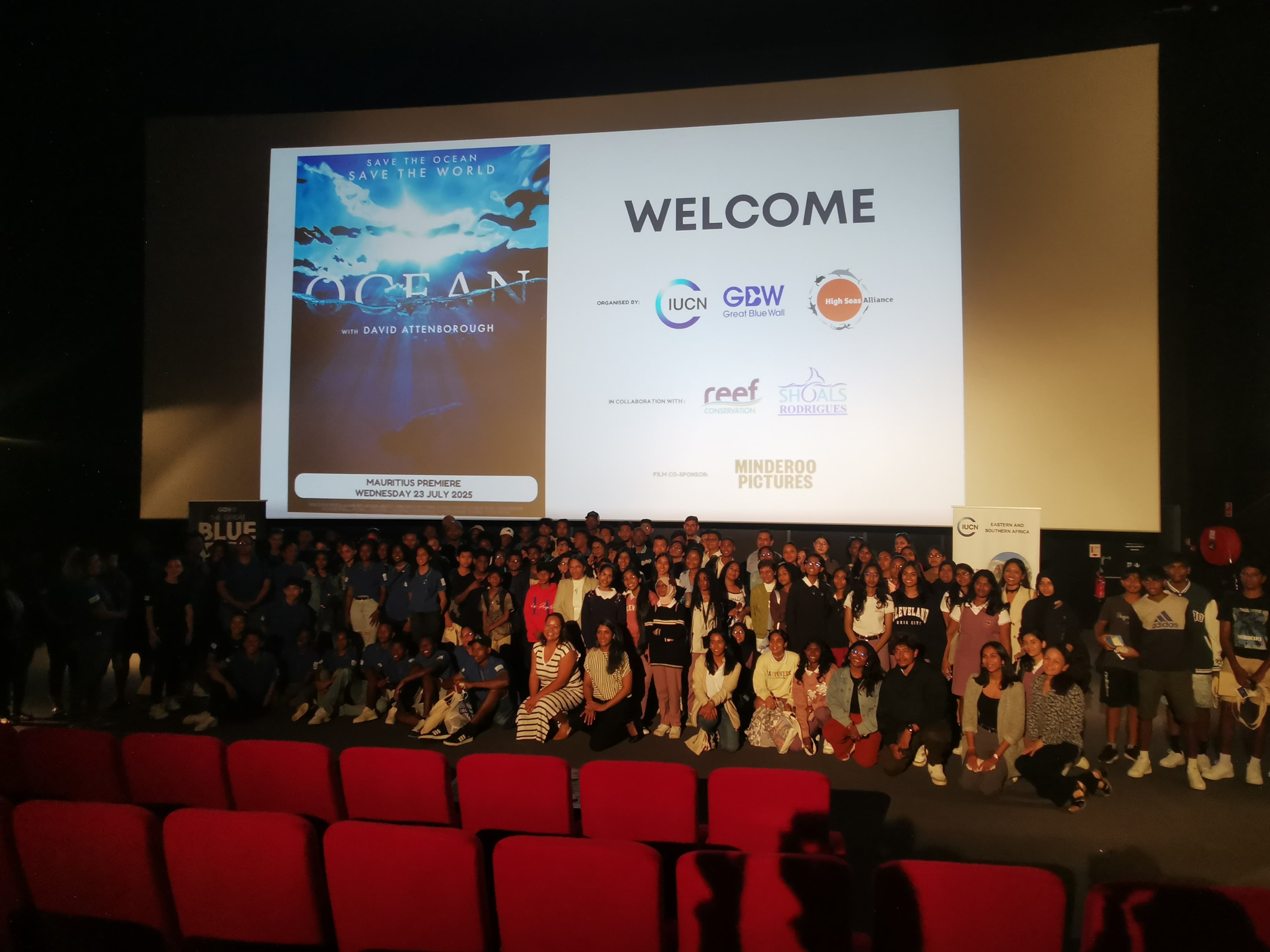
This screening was made possible through the generous support of the High Seas Alliance and the Minderoo Foundation, two leading partners committed to advancing global ocean protection and public awareness. Their collaboration with IUCN has enabled the use of powerful storytelling to bring the ocean’s beauty and vulnerability to life, while amplifying youth voices across the region. The event in Mauritius is part of a wider campaign to inspire action for the ocean through community screenings, education and intergenerational dialogue.
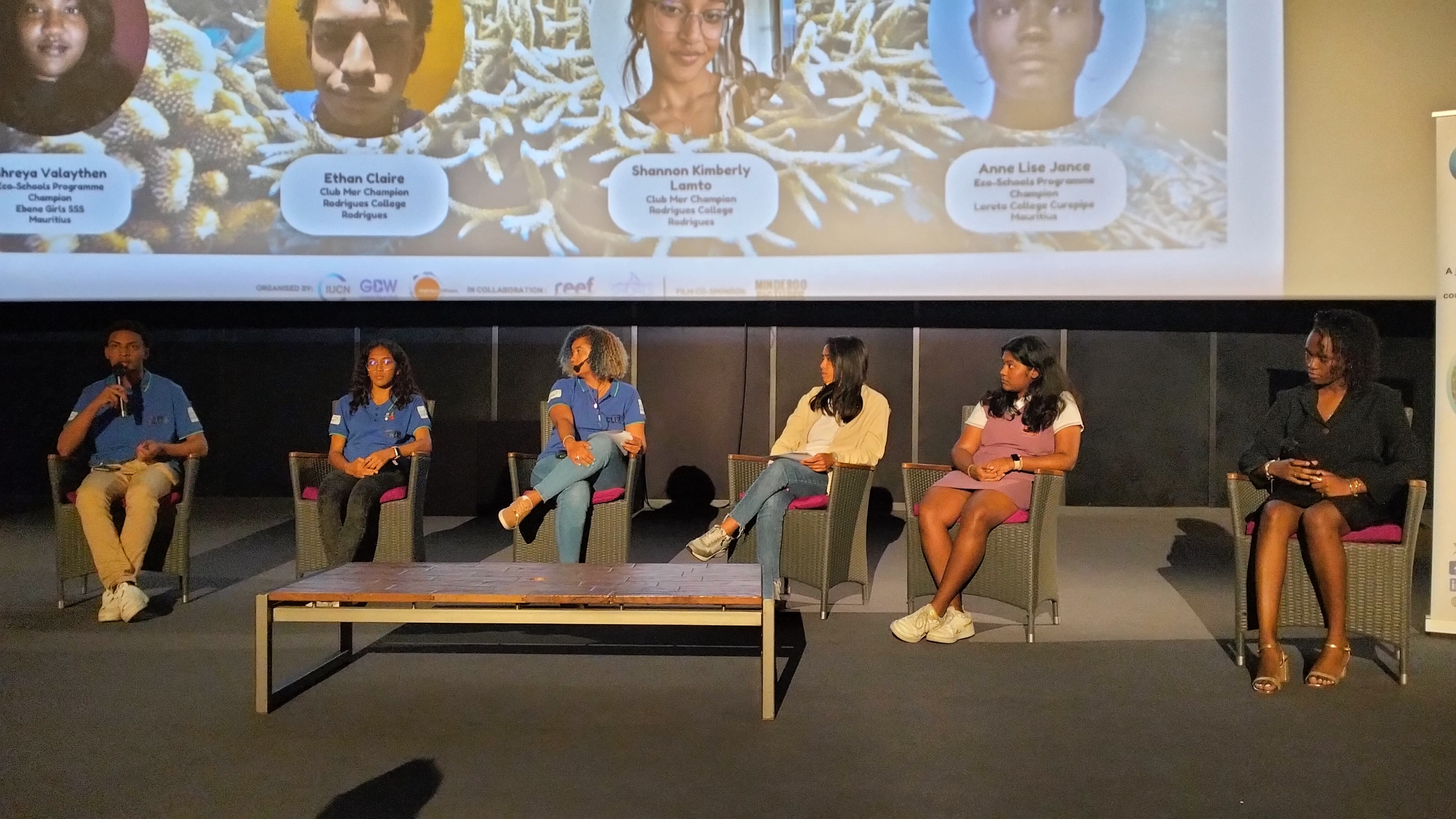
This unique initiative brought together students from eco-schools and eco-campus networks, community groups, the fishing sector, NGOs and key institutional partners for an intergenerational conversation on the future of the ocean. The screening was followed by a youth-led panel discussion and an interactive Reflection Wall where participants expressed their hopes and commitments for ocean sustainability.
The event forms part of IUCN’s broader efforts to support national and regional efforts under the BBNJ Agreement, which seeks to protect marine biodiversity in areas beyond national borders, often referred to as international waters, ‘the high seas’ or ‘shared seas’.
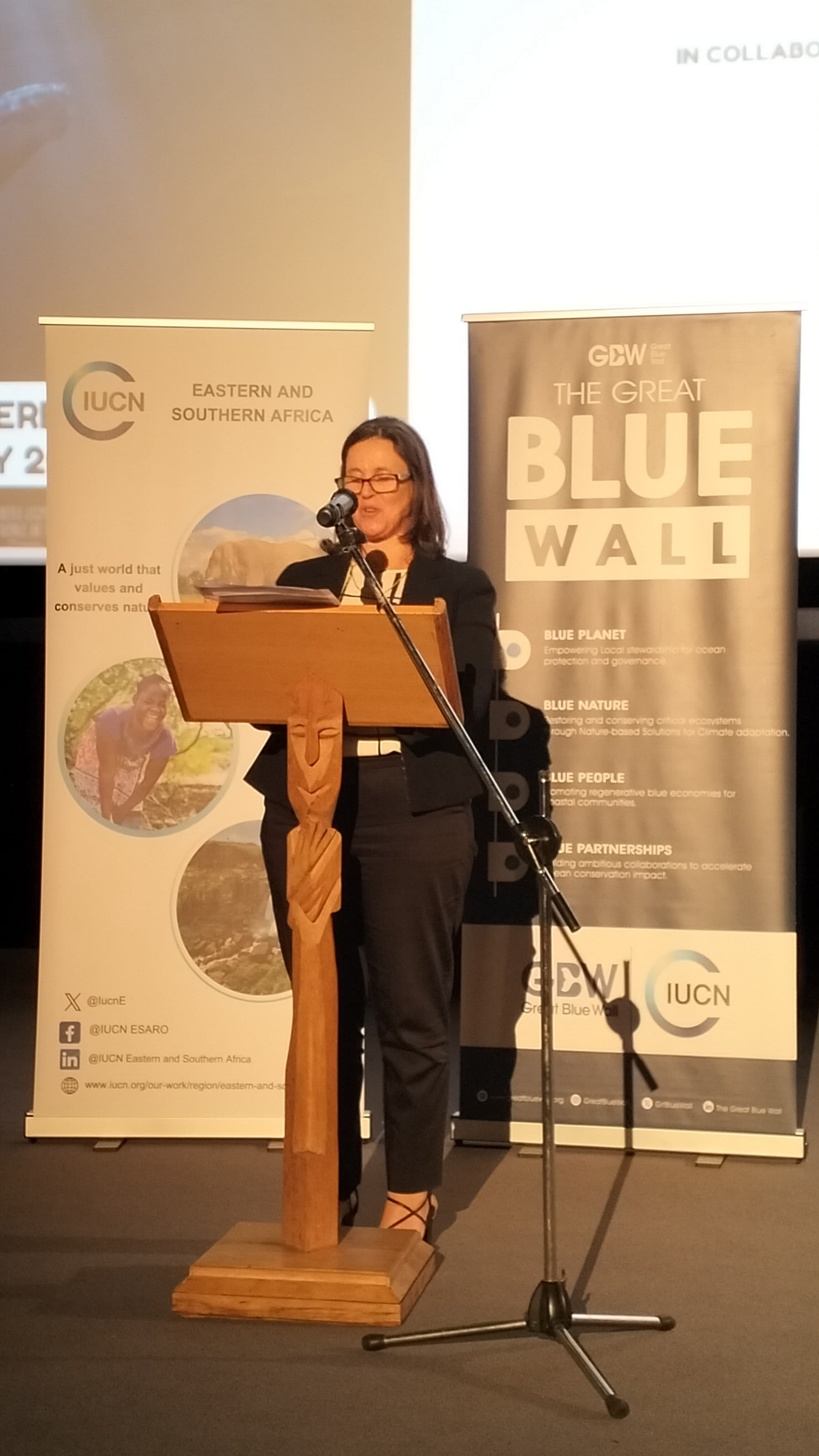
Welcoming the audience, Ms. Melany Poorun-Sooprayen, Programme Manager for the Coastal and Ocean Resilience (COR) Programme (Mauritius) at IUCN-ESARO, said:
“This screening is not just about watching a film. It’s about feeling the ocean, understanding what is at stake and recognising the role each of us can play in protecting the vast, beautiful and fragile marine ecosystems that surround our islands and stretch far beyond into what we now call the shared seas. As islanders, we live close to the ocean. We depend on it. And we see, more than most, how it is changing. That is why today is about you, the youth, your reflections, your stories and your voices.”
During her official remarks, Ms. Katie Lalor, Deputy Australian High Commissioner to the Republic of Mauritius stated:
“This film today was made possible through a special partnership between two remarkable people, Sir David Attenborough, whose voice narrates the story for the future generations and Dr Andrew Forrest AO, a proud Australian businessman, scientist and philanthropist, who helped bring this film to life through the Minderoo Foundation. As a scientist, Dr Forrest is a marine ecologist, who is dedicated to protecting our oceans. Through the Minderoo pictures, he helped fund and support this film so it could reach audiences like you, young people at the fore front of climate change and biodiversity lost. His message is clear, our oceans are in trouble but with leadership, science and actions, they can recover within our lifetimes.”
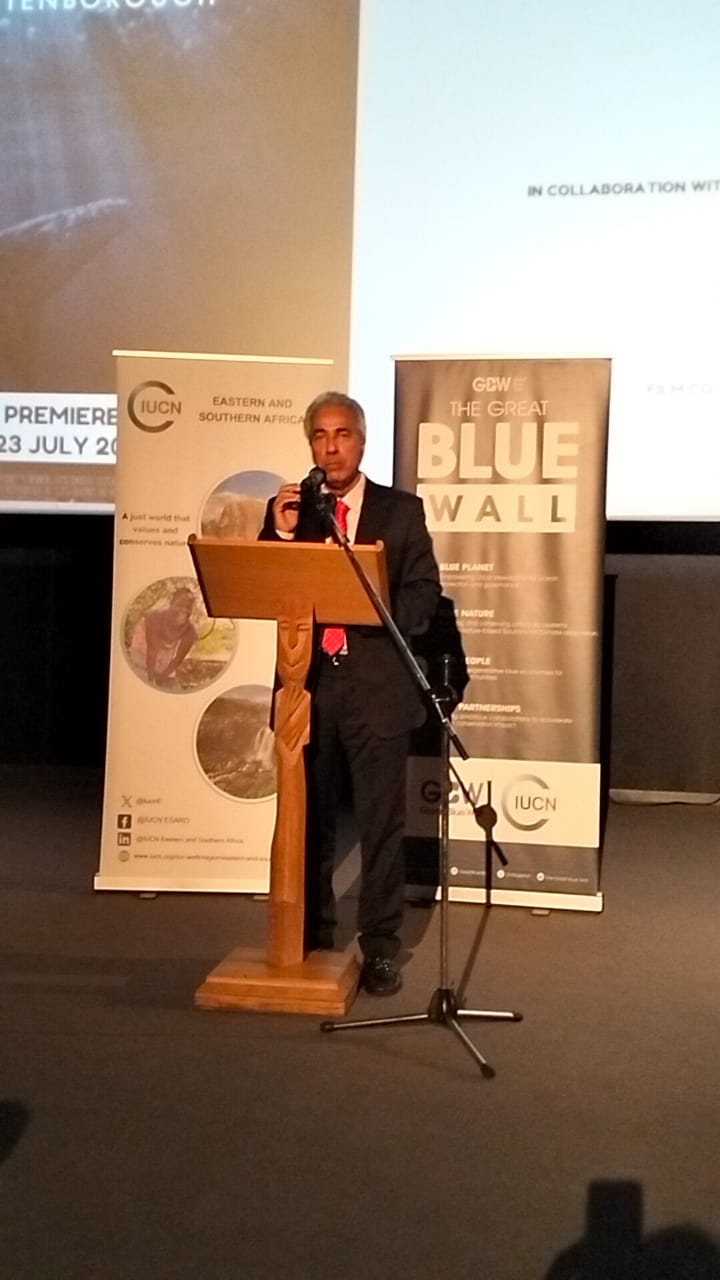
The keynote address was delivered by Dr. the Honourable Arvin Boolell, GOSK, Minister of Agro-Industry, Food Security, Blue Economy and Fisheries. He emphasised:
The ocean is life, it is a source of inspiration, and it deserves our respect. That is why we have to make sure whether we are on the lagoon or beyond our jurisdiction, the ocean is here today and here to stay.
He further stated:
“The message that was conveyed during the third UN Ocean Conference held in Nice, France is clear, ‘The ocean deserves not only our respect, but we have to make sure that it is free from pollution’. We need to understand the meaning of sustainability, and if there is no sustainability, there is no life, no livelihood, no lifeline. My appeal to one and all today, is to understand the relevance and importance of the ocean economy.”
The screening in Mauritius follows similar events held in Seychelles and Kenya and contributes to building national and regional momentum around ocean governance. It also reinforces the Republic of Mauritius’s leadership role in the BBNJ process and its commitment to youth engagement and marine protection.
The event also featured a youth-led discussion with panellist from Mauritius and Rodrigues Islands. Reflections from the discussion following the film screening, along with photos and messages shared by the audience and young participants, will be published on IUCN’s regional platforms as part of its ongoing ocean advocacy and storytelling campaign under the Great Blue Wall Initiative.
In addition, the youth messages and insights collected from the panel and the Reflection Wall will be compiled and shared with the Ministry of Blue Economy and Fisheries. These contributions aim to inform future youth engagement strategies and support national efforts to promote ocean literacy, inclusive governance, and a sustainable blue economy for the Republic of Mauritius.
About IUCN and the Great Blue Wall
The International Union for Conservation of Nature (IUCN) is the world’s largest and leading environmental network, serving as the standard-setting body for nature conservation. With its unique membership structure of governments, civil society organisations and vast network of scientific and technical experts, IUCN leads global conservation policy. IUCN supports science-based policy and programmatic interventions to safeguard nature and advance sustainable development, including through Observer Status with the UN General Assembly and formal advisory roles to multiple Multilateral Environmental Agreements.
Through its Eastern and Southern Africa Regional Office (ESARO), IUCN supports 24 countries, including Mauritius. Under its Coastal and Ocean Resilience Programme, IUCN is the convener of the Great Blue Wall Initiative (GBW), an African-led effort to create a regenerative blue corridor across the Western Indian Ocean. GBW integrates conservation, climate and economic goals through connected seascapes, aiming to conserve 2.5 million km², restore 2 million hectares and generate 2 million blue jobs by 2030.
By aligning conservation, climate and economic priorities, the Great Blue Wall aims to establish a replicable, investment-ready model for delivering the Kunming-Montreal Global Biodiversity Framework and the Paris Agreement, while positioning Africa and its island states as vanguards of regenerative ocean governance. IUCN is present in Mauritius and has launched a range of projects and initiatives under its Coastal and Ocean Resilience Programme, as well as the GBW initiative in the Western Indian Ocean, to support the achievement of shared regional objectives. Current projects underway in Mauritius include the IslandPlas project (Advancing circular solutions to plastic waste pollution in African islands) and the BBNJ Ratification Support Project.
The BBNJ Africa Project and the Ocean Film
As part of GBW, IUCN leads a regional project to accelerate ratification and implementation of the BBNJ Agreement across Africa, supported by the Minderoo Foundation and Bloomberg Ocean Fund. The project focuses on:
Raising awareness on the Agreement and its components and building capacity for ratification;
Strengthening legal and institutional frameworks;
Fostering regional cooperation across countries, in collaboration with the African Union and partners;
Improving science–policy coordination to support implementation of the BBNJ Agreement.
Under those pillars, IUCN has extended direct technical support to countries towards the ratification of the BBNJ Agreement, convened regional meetings with the African Union Commission and the Nairobi Convention, provided technical support to the Africa Group of negotiators in New York and is currently developing an African network of BBNJ experts as well as conducting a baseline study of Africa’s readiness to implement the BBNJ Agreement and identifying Pilot BBNJ Centres of Excellence.
The screening of “Ocean” in Mauritius, Seychelles, Kenya and other parts of Africa a key advocacy component of this project, amplifying its Voices Beyond Blue Campaign as well as leveraging storytelling to build national dialogue and political momentum.
For media inquiries, please contact:
Mr Ghaamid HATIBU
Regional Ocean Communications Officer
Email: [email protected]


The Bangladesh Forest Department (BFD) and IUCN Bangladesh, with support from Agence Française de…

Each year, International Women's Day is an opportunity to recognise the women advancing change in…

On 14 January 2026, in Dhaka, the Bangladesh Forest Department and IUCN Bangladesh formally signed…