IUCN World Conservation Congress continues on day three, celebrating conservation done with conviction
On day three of IUCN World Conservation Congress in Abu Dhabi, the mood shifted to celebration; IUCN's diverse Union is leading the movement towards more just and equitable area-based conservation through innovation, heart and collaboration.
Innovators in the spotlight
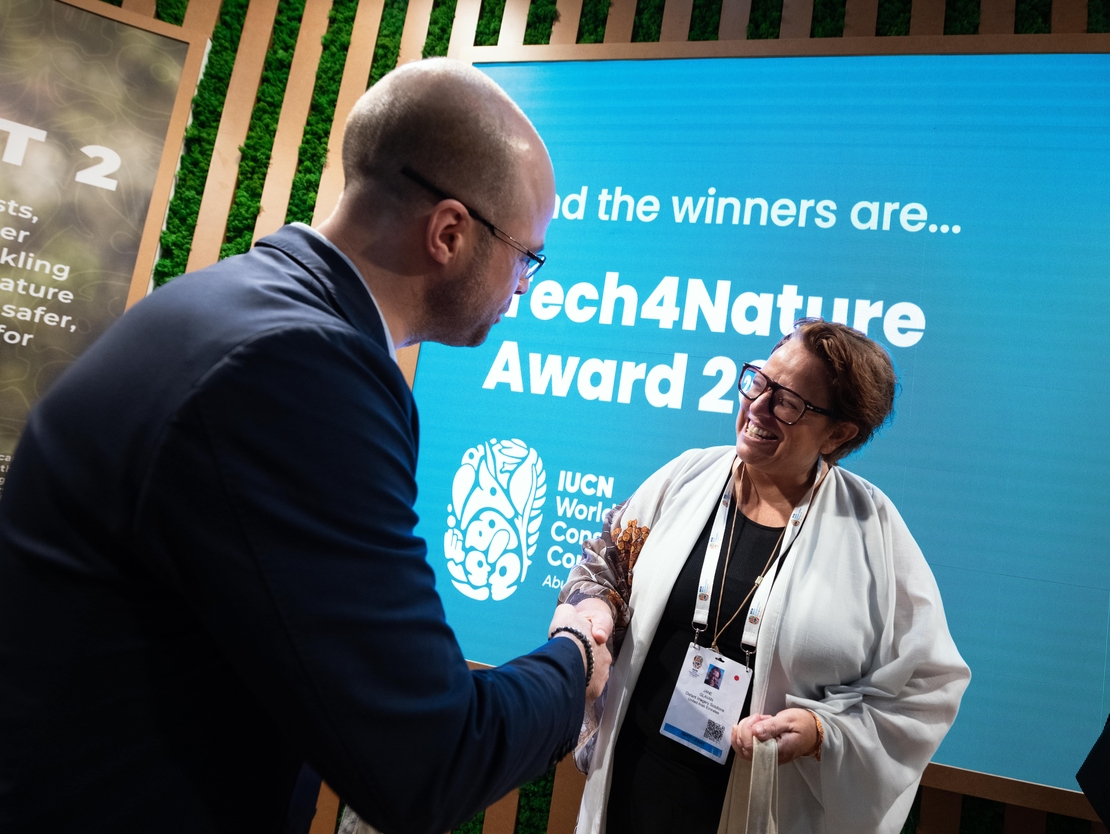
The inaugural Tech4Nature Award Ceremony was a celebration of how digital innovation is transforming conservation practice. Launched under the global Tech4Nature partnership, the Award recognises creative and impactful uses of technology for conservation. Three winners were honoured across the categories of Tech Innovation for Area-based Conservation, Species Conservation, and NatureTech Stewards — giving them their well-deserved recognition and showcasing how technology, when guided by inclusivity and purpose, can strengthen conservation outcomes and build lasting partnerships for nature. The awards were followed by an engaging Tech4Nature debate, highlighting that scaling up resilient conservation requires both innovation and the wisdom of proven practice.
Strong people, strong protected areas
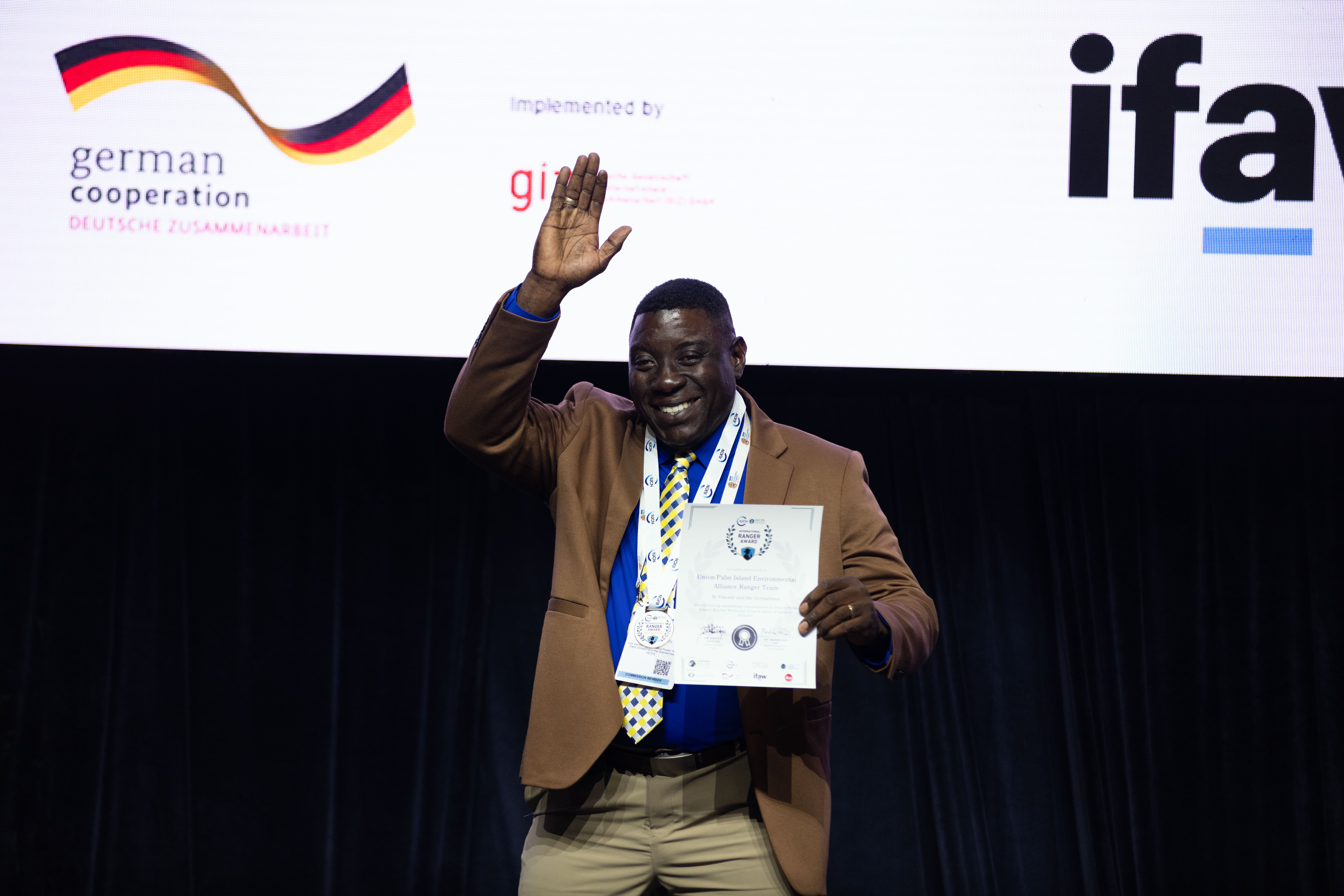
In an inspiring recognition of the efforts of individual rangers and ranger teams, the IUCN WCPA International Ranger Awards drew a large and enthusiastic audience. Through speeches, videos, and prizes – and sustained applause, smiles and hugs – the heroic efforts of rangers and nature guardians to persevere through hardships ranging from war to kidnap and torture was commemorated.
Rangers Beyond Borders: Building Capacity Together, showcased the work of Korean park rangers, including visitor rescue and safety management, the use of AI technology to monitor degraded areas, ecological restoration efforts, and the development and implementation of visitor programmes. The session also featured a case study from Thailand’s national parks, illustrating successful collaboration with local communities.
The launch of the IUCN World Heritage Outlook 4 recognised the successes possible when protected and conserved area management authorities are enabled in their work. Among the findings, the report highlighted the excellent news that four natural World Heritage sites in West and Central Africa that are off the critical list. The Niokolo Koba National Park is one of the success stories, due to the efforts supported through BIOPAMA, among other partners.
Recognising best practices
Beyond recognising the people behind conservation, the events supported by IUCN Protected and Conserved Areas on day three of IUCN Congress 2025 shone a light on best practices. A two-hour toolbox session on best practices for grant-making doubled the venue's capacity with a long line of attendees at the door, whilst participants inside engaged in enriching exchanges highlighting the need for strong communications action, knowledge management, sound project design, the implementation of environmental and social safeguards, and more. Since 2010, IUCN has implemented more than 50 grant-making facilities.
A focus on communications techniques for conservation action similarly draw a magnetic crowd at the IUCN Programme 2026-2029 Pavilion. A panel composing of Commission Chairs, influencers, grassroots conservationists and communications professionals workshopped successful techniques with a highly engaged and diverse audience.
Amplifying voices and recognising local leadership
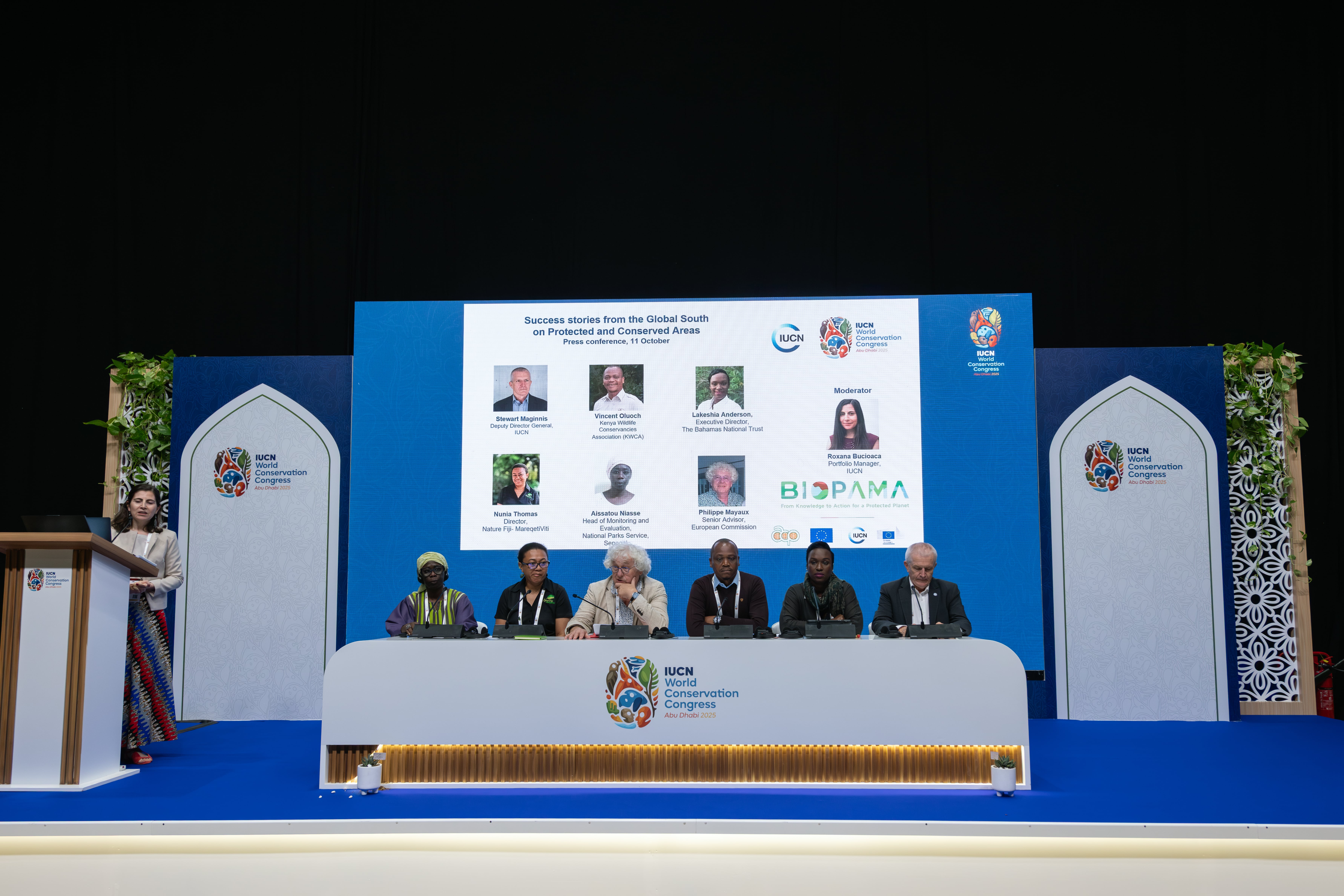
Beyond tech innovators, the successes of grassroots conservationists pioneering local conservation successes shone through a series of events. Grantees and partners of the Biodiversity and Protected Area Management (BIOPAMA) programme spoke to the transformative impacts of the initiative in helping organisations survive the COVID-19 pandemic, advance on the goals of the Kunming-Montreal Global Biodiversity Framework (GBF), and achieve genuine behavioural change. Other sessions drew on the experience of BESTLIFE2030 and Tech4Nature to illustrate how impacts such as the restoration of island ecosystems through the management of invasive species can be achieved through partnerships between local actors and institutions such as IUCN.
The capacity for local actors to direct duty-bearers to address issues of justice in protected areas was highlighted throughout the day. Panels of diverse actors were followed by small group discussions which produced high quality recommendations that will be published on the IUCN Learning for Governance pages. In the Reimagining Pavilion, panellists discussed the need to address historical injustice and the specific role of IUCN, with a presentation of the ongoing research to document rights issues and current mechanisms, to stimulate new best practice guidance and case studies for CBD reporting. And over the in Commissions Pavilion, an event discussed IUCN’s work on truth and reconciliation processes by directing members to advance Resolution 119 to address colonial legacies in conservation.
Recognising conservation achievement through the IUCN Green List
Last but certainly not least, the IUCN Green List continued to capture the attention of Congress-goers across the venue. Coral Triangle Day highlighted the collective efforts of Indonesia, Malaysia, Papua New Guinea, the Philippines, Solomon Islands, and Timor-Leste in safeguarding the world’s epicenter of marine biodiversity, through the SOMACORE initiative. Women, youth, and communities were highlighted as the drivers of change for Asia's seascapes, whereas the innovative approaches of the Coral Reef Bond Indonesia was on show.
“The Standard doesn’t prescribe how things must be done—it defines what needs to be achieved. This flexibility allows protected areas to approach the same elements in different ways, based on their local context.”
Similarly, an event drawing partners including the Sustainable Finance Coalition, IUCN WCPA TAPAS group, Sango Nature Project (Zimbabwe), and Finance Montréal highlighted innovative approaches to finance for conservation Cross-sector collaboration, innovative finance, and community engagement were defined as key elements to making conservation both impactful and financially sustainable.
After the first round of consultation to gather feedback on where changes are needed, the Standard Committee has prepared a new draft for the IUCN Green List Standard v2.0 and is now available for consultation until 30 Nov 2025. (French, Spanish, English)
Join us on day 4 of IUCN World Conservation Congress: view our events


The Bangladesh Forest Department (BFD) and IUCN Bangladesh, with support from Agence Française de…

Each year, International Women's Day is an opportunity to recognise the women advancing change in…

On 14 January 2026, in Dhaka, the Bangladesh Forest Department and IUCN Bangladesh formally signed…