MEDCONECTA identifies priority areas to strengthen Green Infrastructure in southeast Spain
The MEDCONECTA project has identified priority areas where strategically designed Nature-based Solutions (NbS) can strengthen Green Infrastructure across the arid landscapes of southeast Spain. By combining spatial analysis with field validation and collaboration with land managers, the project highlights locations where relatively small interventions can yield significant impacts in improving ecological connectivity, restoring ecosystem functions and enhancing resilience to climate change.
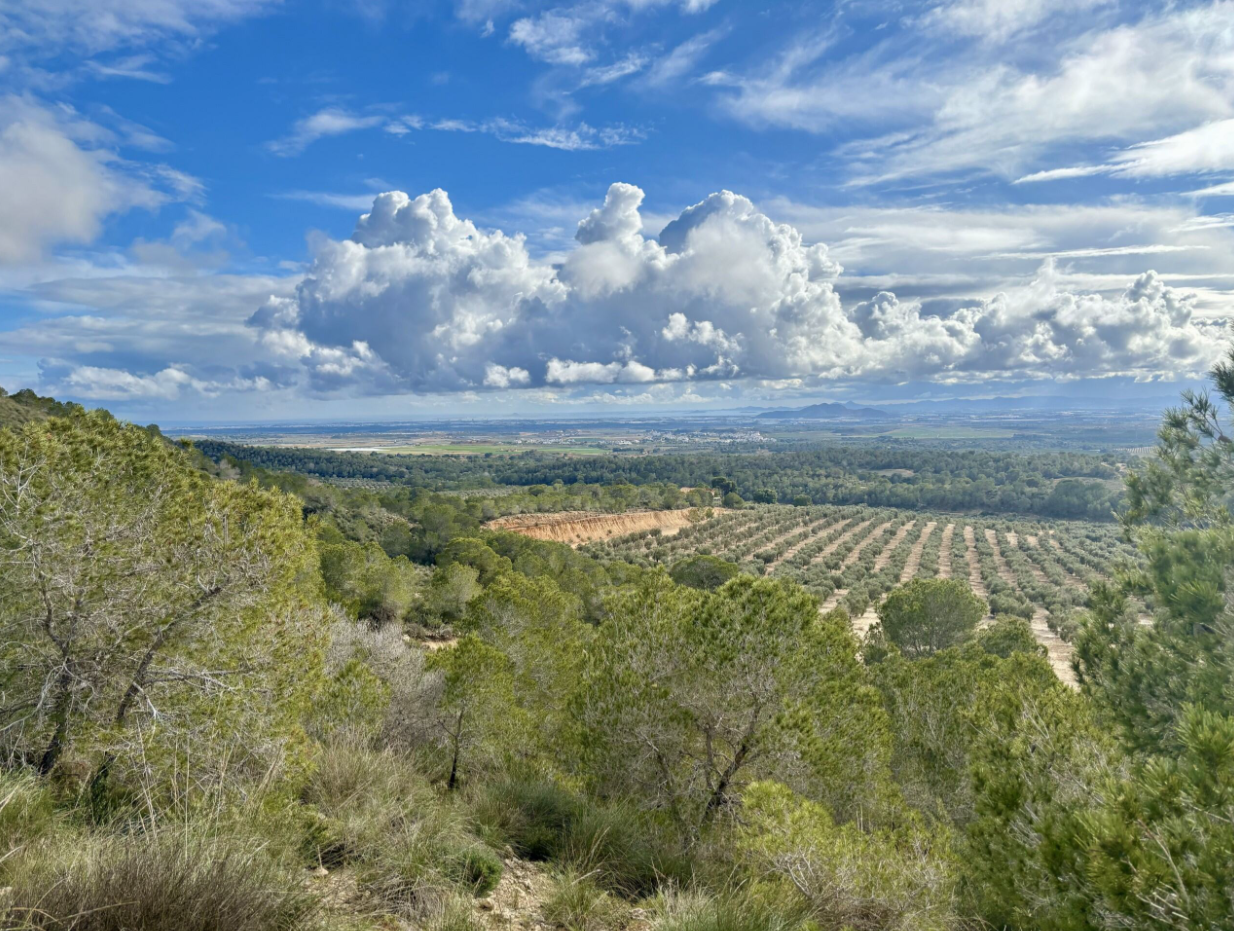
This article presents an overview of the project’s approach to identifying potential sites that could form part of Green Infrastructure, three candidate areas for intervention in Murcia, Alicante and Almería, and the operational tools developed to support decision-making, including a catalogue of potential NbS interventions and guidance for planning Green Infrastructure projects.
From an algorithm to decision-making on the ground: three candidate areas for intervention
Focusing on the arid arc of the south-eastern Iberian Peninsula, MEDCONECTA identifies candidate areas in strategic locations where minimal interventions can help to improve the spatial coherence of Green Infrastructure. Specifically, in the project, the Sites of Community Importance (SCIs) of the Natura 2000 Network were selected as the starting point for identifying potential Green Infrastructure within the project. The three cases below, selected within the project following the application of the spatial continuity algorithm and subsequent validation with land managers, illustrate different territorial contexts, pressures and potential nature-based interventions, showing how the MEDCONECTA approach can translate into concrete planning considerations.
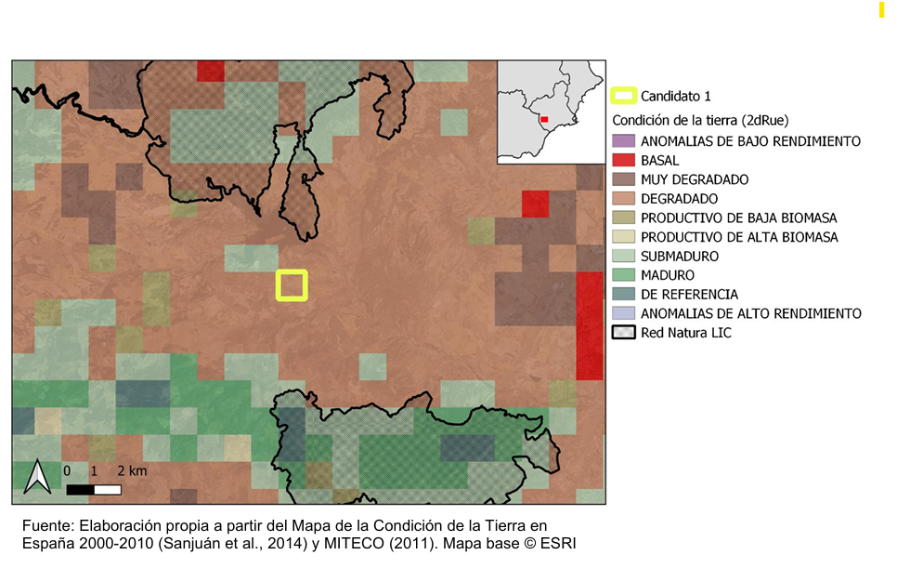
Candidate 1: Murcia
Lomas del Buitre y Río Luchena ↔ Sierra de la Torrecilla
In the area of Lorca (Murcia), MEDCONECTA identifies potential nature-based measures to tackle common challenges in semi-arid agricultural landscapes, including water scarcity, soil erosion and habitat fragmentation. This case centres on the Rambla de los Coroneles and the surrounding agricultural mosaic, which is in a degraded condition and currently impedes continuity between the SCIs Lomas del Buitre and Sierra de la Torrecilla. The proposed interventions prioritise recuperating ecosystem functioning and connectivity for example by re-vegetating riparian areas with native species to restore hydromorphological functioning and establishing multifunctional native hedgerows within cultivated plots to reconnect habitat patches and limit soil erosion. Together, these actions are expected to improve the rambla’s capacity to buffer flood peaks and curb erosion, while strengthening ecological connectivity and resilience to extreme climate events in the area.
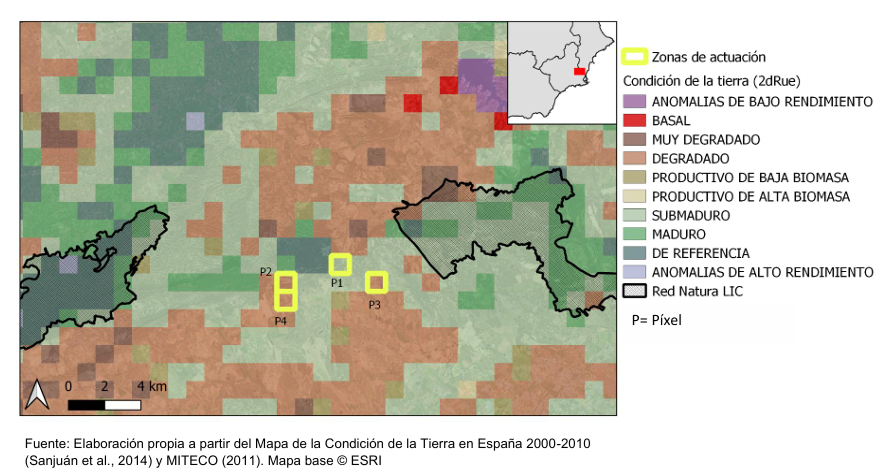
Candidate 2: Murcia-Alicante
Sierra de Escalona y Dehesa de Campoamor ↔ Carrascoy y El Valle
MEDCONECTA has also identified a candidate area between the LICs Sierra de Escalona and Dehesa de Campoamor with Carrascoy and El Valle, spanning the Murcia-Alicante border and representing a potential linkage across a Mediterranean mosaic of pinewoods, shrubland, scrub pastures and cultivated land, which supports an important biodiversity including raptors, tortoises, small carnivores, birds and pollinators. The proposed interventions in this area focus on restoring landscape permeability and continuity, for instance through multifunctional native hedgerows between plots and the restoration of selected abandoned parcels with native shrub communities. In parallel, redesigning key sections of agricultural fencing and creating a wildlife crossing at the main infrastructure bottleneck could help facilitate fauna movement and other ecological processes. Together, these actions are expected to help improve landscape continuity, soil and water regulation and resilience, while reducing erosion and flood impacts associated with impermeable barriers and altered drainage.
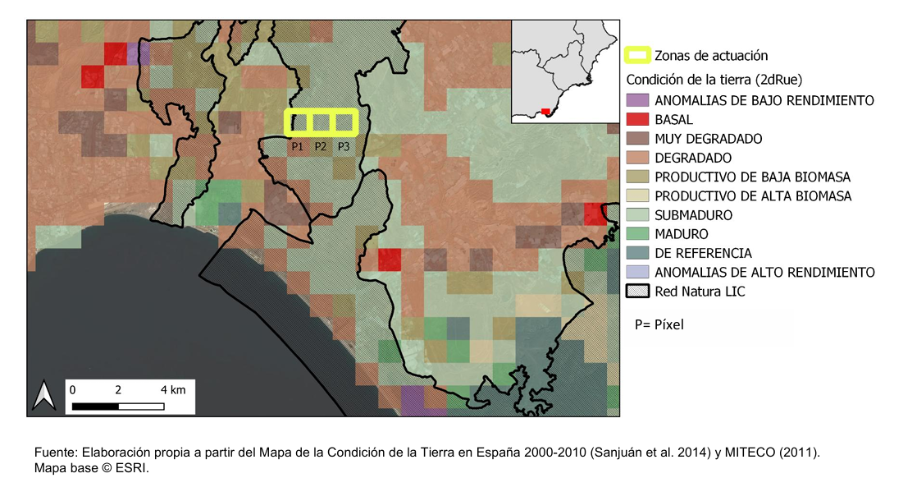
Candidate 3: Almería
Cabo de Gata-Níjar ↔ Ramblas del Gergal, Tabernas y Sur de Sierra Alhamilla
In the Campo de Níjar (Almería), within a semi-arid coastal area situated between the LICs Cabo de Gata–Níjar and Ramblas del Gérgal, Tabernas and the southern Sierra Alhamilla, this candidate area represents a landscape heavily transformed by intensive agriculture and greenhouses, where semi-arid habitats persist as small, isolated remnants, and fragmentation has been further intensified by roads and the ongoing construction of a high-speed train rail. Here, the intervention strategy focuses on restoring landscape permeability and hydrological functioning: disused agricultural tracks and compacted surfaces could be restored through the removal of compacted materials and revegetation with native semi-arid species, while priority stretches of the Rambla de los Césares could be restored by removing artificial elements, recovering the natural channel and re-establishing native riparian vegetation. Together, these measures are expected to reduce erosion and flood impacts during intense rainfall events, while helping to restore connectivity across the agricultural matrix and strengthen climate resilience in a desertification-prone region.
From project results to operational guidance
Building on this approach and the findings from the candidate areas, MEDCONECTA has developed an operational guide to support technicians and managers in the selection, design and planning of NbS within Green Infrastructure projects. The guide connects the project's territorial evidence - generated through the spatial continuity algorithm and refined through site-based assessment and validation with land managers and technicians - with practical needs for decision-making on the ground. These interventions are designed to address wider societal challenges, including climate change, disaster risk, water security and socioeconomic development, whilst simultaneously responding to the specific environmental conditions of each site. In order to facilitate implementation, the guide proposes criteria for evaluating the viability and prioritisation of potential interventions, emphasising important feasibility considerations that frequently determine success. These include technical requirements, coordination needs and socioeconomic factors.
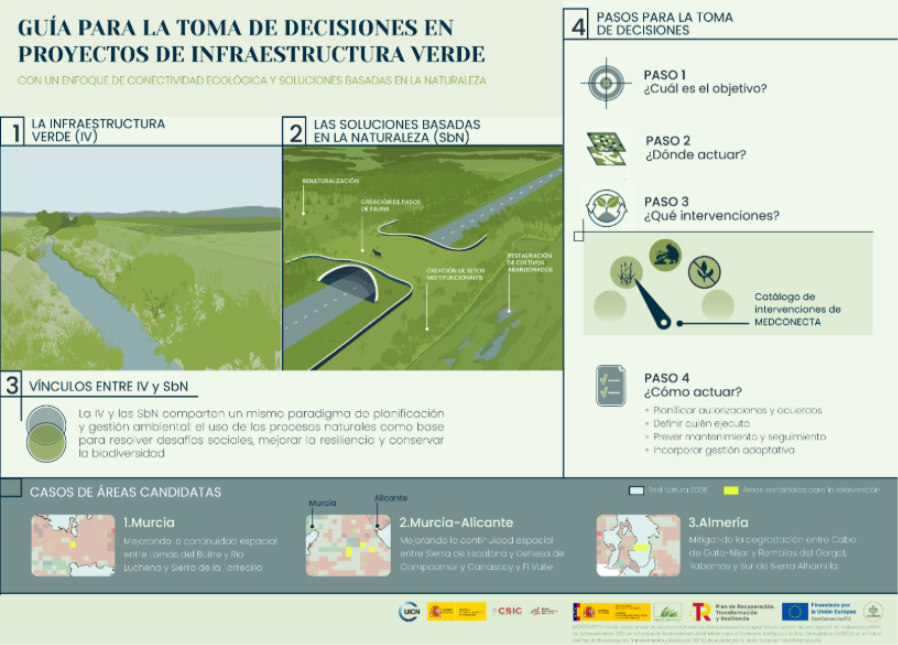
Catalogue of potential NbS interventions
In parallel, MEDCONECTA has developed a catalogue of potential NbS interventions to support Green Infrastructure planning and management. This catalogue, included as an appendix to the aforementioned decision-making guide, compiles a wide range of interventions identified through the project and expected benefits from a NbS perspective. Examples include implementing agroecological practices, restoration of water bodies, restoring abandoned crops, removing disused tracks and compacted surfaces, removing invasive alien species, creating wildlife crossings, and removing waste - framed in terms of their contribution to resorting biodiversity and ecological connectivity, addressing societal challenges, and enhancing resilience.
Zooming out: why is this work important in the arid Mediterranean?
The arid Mediterranean is characterised by highly fragmented and vulnerable landscapes, where land degradation and the loss of ecological functionality reduce key ecosystem services such as water regulation, soil protection and climate risk mitigation. In this context, the Spanish State Strategy on Green Infrastructure and Ecological Connectivity and Restoration underlines the need to integrate conservation, management and restoration to progress towards a functional and resilient ecological network.
This is where NbS provide a clear operational pathway. The IUCN Global Standard for NbS defines NbS as “actions to protect, sustainably use, manage and restore natural or modified ecosystems, which address societal challenges, effectively and adaptively, providing human well-being and biodiversity benefits” (IUCN, 2020). In arid Mediterranean environments, NbS are particularly relevant because they can deliver multiple benefits at once, supporting biodiversity while also improving resilience to issues such as water stress and erosion. However, strengthening Green Infrastructure requires not only identifying where ecosystems are under pressure, but also where action can most effectively improve landscape continuity, connectivity and resilience.
The MEDCONECTA project (2022-2025), led by IUCN Med and the Experimental Station of Arid Zones (EEZA-CSIC) and supported by the Biodiversity Foundation of Ministry for the Ecological Transition and the Demographic Challenge (MITECO) within the Recovery, Transformation and Resilience Plan (PRTR) with NextGenerationEU funding, contributes to this objective by combining territorial analysis and nature-based interventions to support Green Infrastructure planning.
MEDCONECTA resources online (in Spanish):
MEDCONECTA algorithm (CatGrowing): https://github.com/Aruiz99/CatGrowing