Professor Achinthi C. Vithanage is the Executive Director of the Pace | Haub Environmental Law Program & Professor of Law for Designated Service in Environmental Law at the Elisabeth Haub School of ...
IUCN COMMISSION GROUP
IUCN WCEL Human Rights and the Environment Specialist Group
Group leadership

Prof Achinthi VITHANAGE
Professor Achinthi C. Vithanage is the Executive Director of the Pace | Haub Environmental Law Program & Professor of Law for Designated Service in Environmental Law at the Elisabeth Haub School of Law at Pace University, where she teaches, researches, and writes scholarship in the field of international environmental law, and was the recipient of the 2025 Ottinger Award for Faculty Achievement. Professor Vithanage is recognized as one of the United States’ leading environmental and energy lawyers with listings in LawDragon’s inaugural Environmental and Energy Lawyers list in 2021 and in LawDragon’s 500 Leading Environmental Lawyers Guides for 2023, 2024, 2025, and 2026.
In addition to chairing the newly formed Human Rights & the Environment Specialist Group of the International Union for Conservation of Nature’s (IUCN) World Commission on Environmental Law, she is the IUCN Faculty Lead for Pace | Haub Environmental Law’s Global Center for Environmental Legal Studies (GCELS), an IUCN member institution, and has served on the Secretariat for the IUCN Academy of Environmental Law since 2021.
She also co-leads the Climate Change Collaborative Research Network for the Law & Society Association, and is an originating member of the International Association of Energy Law, a global network of early career energy law professors. She serves on several Boards, including the Editorial Advisory Board for the Environmental Law Institute’s Environmental Forum publication, the Editorial Board for Yearbook of International Environmental Law, the Board of Directors of the Federated Conservationists of Westchester County, and the Sustainable Business Law Hub’s Advisory Board. Within the American Bar Association’s Section on Environment Energy & Resources (SEER), she is a member of the Executive Committee and is a member of the Sustainability in Legal Education and Climate Change Task Force. She previously served on SEER Governing Council (2023–2025), co-founded the Environmental Law Society Network and the Law Student Transition Task Force, and is a former Co-Chair of the International Law Committee. She has represented the ABA as its delegate at several Climate Change COPs and Bonn Climate Meetings.
Professor Vithanage’s scholarship ranges across international environmental law and human rights and include publications like “Marine Protected Areas: The Chagos Case and the Need to Marry International Environmental Law with Indigenous Rights” in Brill’s Yearbook of Polar Law (2012), “Resource Wars: A Conflict of Interests in the Bering Sea Climate Resilience Area” in ABA SEER’s Natural Resources & Environment (2017), and “Addressing Correlations Between Gender-Based Violence and Climate Change: An Expanded Role for International Climate Change Law and Education for Sustainable Development” in the Pace Environmental Law Review (2021). She recently published “The Agreement and International Environmental Law” in Brill’s The Agreement on Marine Biodiversity of Areas Beyond National Jurisdiction: Commentary and Analysis (2025) and is preparing a chapter on Ocean Defenders in a forthcoming book on environmental defenders. She is also co-editing several forthcoming publications, including a Handbook on Essential Concepts of Human Rights and the Environment (2028), a Handbook on Environmental Human Rights (2029), and an Encyclopedia on Climate Change Law (2029).
Previously, she was a Visiting Associate Professor of Law at the George Washington University Law School in Washington D.C. Professor Vithanage was born in Sri Lanka, lived in the United Arab Emirates, practiced as an attorney in the state of New South Wales (NSW) in Australia, and undertook tertiary studies in Australia, Japan, China, Spain, and the United States, providing her a unique international perspective.
Ms LORENA CORDERO
Deputy Chair
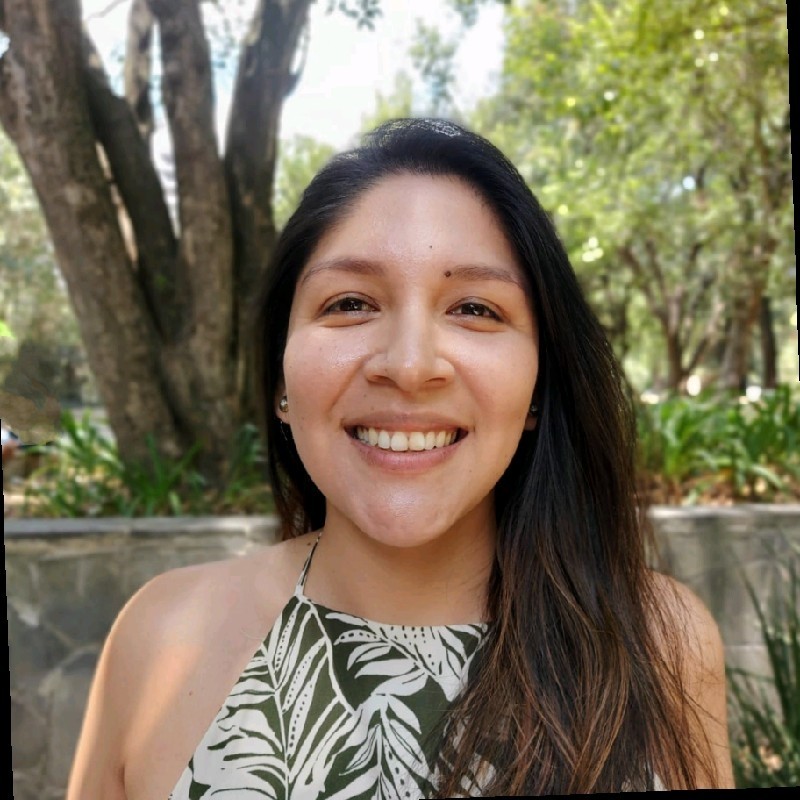
Lorena Cordero is an environmental lawyer specializing in climate change, energy, and natural resources law, with a strong focus on human rights–based approaches to environmental governance. She currently serves as Environmental Policy Coordinator at Conservation International Peru. In academia, she is a lecturer at the Faculty of Law of Universidad Científica del Sur, where she teaches Sustainable Development and contributes to the postgraduate Environmental Law Master’s Programme, and at the Faculty of Law of Pontificia Universidad Católica del Perú (PUCP), where she teaches academic research.
Her experience spans environmental regulation, climate and energy policy, and enforcement across public institutions, international organizations, and civil society. She has worked with global initiatives such as C40 Cities Climate Leadership Group on urban climate policy and with Student Energy on advancing youth-led energy transition efforts. She has contributed to multi-level governance processes across Latin America, particularly in areas such as air quality, sustainable mobility, and social inclusion.
Lorena has led legal responses to oil spills in the Peruvian Amazon, working closely with Indigenous communities and subnational authorities, and has supported the development of national climate and energy policies, including energy transition strategies. She has also been actively involved in the design and implementation of carbon markets and REDD+ projects, integrating safeguards and rights-based approaches.
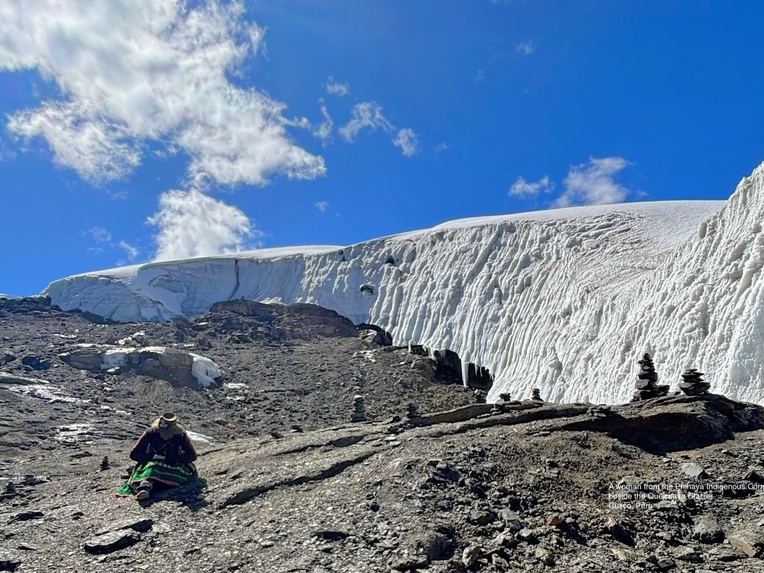
Her current research focuses on glacier recession and its human rights impacts on Indigenous communities, as well as the effectiveness of enforcement mechanisms in biodiversity policies, particularly in coastal wetlands. She also explores energy transition governance within the Andean Community, examining regulatory and institutional frameworks for sustainable energy integration in the region.
Through her academic work, she contributes to strategic litigation and capacity building at the Environmental Litigation Clinic of Universidad Científica del Sur, focusing on environmental justice and human rights. She is the recipient of the 2025 Sustainable Leadership Recognition awarded by Solidaritas in the Master’s category for Sustainable Cities and Communities (SDG 11) and Partnerships for the Goals (SDG 17). She obtained her law degree from the Pontificia Universidad Católica del Perú (PUCP) and holds a Master of Public Administration in Energy, Technology, and Climate Policy from University College London (UCL).
Lorena Cordero is an environmental lawyer specializing in climate change, energy, and natural resources law, with a strong focus on human rights–based approaches to environmental governance. She ...
1. Overview and description of the Human Rights and Environment Specialist Group
The IUCN WCEL Human Rights and the Environment Specialist Group (HR&E SG) emerged from a long-standing call for integrating human rights-based approaches into consideration of environmental concerns, in related decision-making, and in the development and implementation of solutions to those concerns.
The HR&E SG serves as a legal advisory and knowledge platform within WCEL, bringing together legal scholars, practitioners, policymakers, and experts working across the intersections between international human rights law and environmental law. The HR&E SG strives to encourage dialogue, discussion and action among the membership, in relation to human rights and environment issues.
Members of the HR&E SG engage across a range of thematic areas, including:
- Strengthening the protection of environmental human right defenders, particularly in high risk contexts such as ocean, coastal, freshwater, glacial, and Amazonian ecosystems, where pressures from extractives activities, conservation measures, illegal economies, and land and resource conflicts converge;
- Researching current and novel applications of human rights concepts, principles, and laws to emerging environmental realities like sea-level rise, natural disasters, and climate-induced migration; and
- Promoting coherence between environmental goals and human rights obligations.
Membership is open to professionals working on environmental issues with international human rights law implications, including early-career and senior experts. Members contribute on a voluntary basis
through participation in project activities, expert dialogue, and knowledge development.
2. Overview of Core Projects
Project 1: Mainstreaming Human Rights-Based Approaches Across WCEL and IUCN Activities
Objective
This project will assess the extent to which human rights are integrated into environmental and biodiversity frameworks, identifying gaps, risks and opportunities for improved alignment. It will focus on strengthening institutional, legal and policy coherence between environmental objectives and human rights obligations.
Activities
- Engage in dialogue with other Specialist Group chairs and deputy chairs on rights-based approaches and institutional practices relevant to their sub-specialty.
- Identify a HR&E member to serve as a liaison to each Specialist Group.
- Serve as legal expertise on human rights obligations for other Specialty Groups, IUCN Commissions, and the Secretariat, and contribute to internal and external knowledge products on rights-based environmental governance.
- Conduct legal and policy assessments to identify human rights gaps in environmental governance frameworks.
- Analyse cross-cutting issues, including but not limited to, participation, access to justice, Indigenous Peoples’ rights, gender considerations and accountability mechanisms.
Project Lead(s): Achinthi Vithanage and Lorena Cordero
Project 2: Research and Advocacy on Legal Avenues for Protecting Environmental Defenders
Objective
This project will strengthen legal, policy and institutional responses to the protection of environmental defenders across IUCN regions. It will address risks faced by defenders linked to biodiversity conservation, climate action and natural resource governance, integrating a rights-based and regionally differentiated approach.
Activities
- Support implementation of Resolution 7.115 ‘Protecting environmental human and peoples’ rights defenders and whistleblowers’ and Resolution 49 ‘Strengthening safe civic spaces to fulfil the Kunming-Montreal Global Biodiversity Framework’
- Conduct regional legal and policy investigations on environmental defenders’ situations:
- 3 investigations in 2027 (regions TBD)
- 3 investigations in 2028 (regions TBD)
- 2 investigations in 2029 (regions TBD)
- Analyse gaps in national and regional legal frameworks for the protection of environmental defenders
- Develop recommendations aligned with international human rights standards and environmental agreements
Project Lead: To be confirmed
Project 3: New & Emerging Ideas in Human Rights and the Environment
Objective
To establish a cohort of regional investigators, comprised of both academics and practitioners, who will identify and report on new and emerging ideas in the human rights and the environment context.
Activities
- An ongoing survey of IUCN regions to identify new and emerging ideas in the human rights and the environment context.
- Elevating ideas with high potential for positive impact.
Identifying ways to integrate ideas with high potential in relevant legal, policy and institutional frameworks.
Project Lead: To be confirmed
3. Contribution to IUCN Programme and Resolutions
Contributing to the implementation of the IUCN Programme 2026–2029 and relevant WCC resolutions will be an underlying goal of the HR&E SG. The HR&E SG will continue to assess relevant resolutions and align its activities to support their implementation, including through collaboration with IUCN Members, Commissions, and the Secretariat.
4. Contact information
Please contact the HR&E SG leadership team should you have any questions, comments or suggestions:
Chair - Professor Achinthi Vithanage
E-mail: [email protected]
LinkedIn: https://www.linkedin.com/in/achinthi-vithanage-37a9a667/
Deputy Chair - Lecturer Lorena Cordero
E-mail: [email protected]
LinkedIn: https://www.linkedin.com/in/lorenacorderomaldonado/
5. Terms of Refernence (TORs):
Human Rights and Environment Specialist Group - Terms of Reference (TORs) 2026-2029
6. How to Join the Human Rights and Environment Specialist Group (HR&E SG)
Are you interested in contributing to the work of the IUCN WCEL Human Rights and Environment Specialist Group? We would be delighted to welcome you to our global community of environmental law scholars, practitioners, students, and advocates.
Step 1. Create an IUCN Commissions Membership Account
Visit the IUCN Commissions Membership Portal and create an account if you are not already registered.
Membership Portal: https://portals.iucn.org/commissions/
Step 2. Apply for Membership in the World Commission on Environmental Law (WCEL)
Once logged in, click the "Apply+" button at the top of the portal. Select the IUCN World Commission on Environmental Law (WCEL) and complete the online membership application.
Application portal: https://portals.iucn.org/commissions/apply
Step 3. Indicate Your Interest in the Human Rights and Environment Specialist Group (HR&E SG)
In your application, please indicate that you would like to join the Human Rights and Environment Specialist Group. We encourage you to mention your interest in the "Brief Outline" section of the application form.
Step 4. Submit Your Application and Get Involved
Review and submit your application through the membership portal. Once your application has been approved, you will be able to participate in the activities, events, publications, and collaborative initiatives of the Human Rights and Environment Specialist Group.
Need Assistance?
Watch the general membership application tutorial video for guidance through the process.
If you have any questions, please contact us. We look forward to welcoming you to our growing community.