IUCN acknowledges the EU Livestock Strategy and looks ahead to UNCCD COP17 to advance land restoration
The European Commission published its EU Livestock Strategy on 7 July. IUCN acknowledges the Strategy's recognition of the role of livestock farming in addressing the triple planetary crisis of climate change, biodiversity loss and pollution, all key drivers towards food insecurity. For these positive intentions to work, the Strategy needs to be underpinned by coherent implementation across the relevant EU policy frameworks and international commitments.
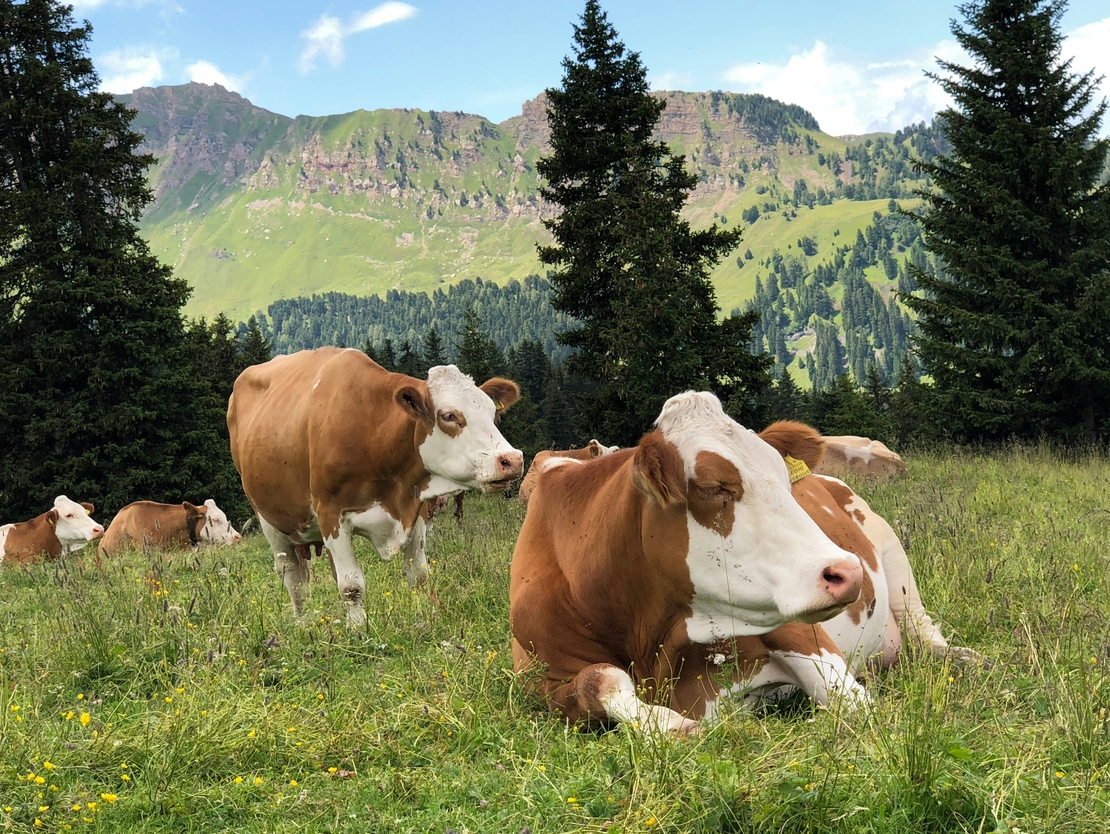
The Livestock Strategy acknowledges the interdependence between livestock farming and nature conservation and recognises the need to support the transition towards more sustainable livestock systems. It includes welcomed references to some sustainable approaches to agriculture, including extensive livestock production and organic farming. Yet, it does not set out the policy measures required to operationalise this ambition, including the adaptation of livestock densities to ecological conditions and the wider deployment of Nature-based Solutions.
IUCN also welcomes the Strategy's recognition that investments in sustainability are investments in the long-term resilience of the livestock sector. Investment in nature conservation, ecosystem restoration and more resilient water management are strategic investments in the long-term resilience of the ecosystems upon which livestock production and agriculture depend, hence investments for Europe's food security. Delivering these objectives would require a more ambitious level of policy coherence and funding, notably through the next Multiannual Financial Framework and continued support for sustainable agricultural practices.
While the Strategy calls for a coherent policy framework, this objective should also be reflected in finding a shared pathway between sustainable livestock systems and nature restoration. Ensuring stronger alignment between the Common Agricultural Policy and the Nature Restoration Regulation and their instruments is essential to support the restoration of agroecosystems while strengthening the long-term resilience and competitiveness of the livestock sector. This should also be accompanied by coherent implementation of the Water Framework Directive and the Nitrates Directive, recognising that restoring freshwater ecosystems and improving water quality are integral to resilient livestock systems.
In this perspective and considering the poor conservation status of 49% of Europe’s grasslands and a large proportion of rangelands globally, IUCN underlines its recently adopted Resolution 8.008 and reaffirms its support for the International Year of Rangelands and Pastoralists in 2026. In light of these considerations, IUCN recommends demonstrating global leadership by advancing ambitious land restoration commitments at the upcoming 17th session of the Conference of the Parties to the United Nations Convention to Combat Desertification (UNCCD COP17). The UNCCD COP17 further represents a key opportunity for Europe to capitalize on insights and best practices in restoration and sustainable livestock management from an international perspective, at a pivotal moment for implementation of dedicated EU legislation.
Achieving a coherent transition for the livestock sector would also require climate and biodiversity objectives to be pursued in a mutually reinforcing manner. IUCN therefore underlines the importance to design solutions that foster synergies and deliver multiple benefits and to avoid impacts that new carbon farming methodologies for enteric fermentation and manure management could have on biodiversity and ecosystem services, through inadvertently incentivising the unsustainable intensification of livestock production.
In addition, the Strategy recognises that consumer demand can support the transition towards more sustainable livestock systems. However, it does not consider how EU food policies and promotion programmes could more effectively encourage sustainable consumption patterns, in line with the EU protein plan, towards more balanced animal consumption levels that would ensure livestock densities to be more consistent with biodiversity conservation.
The EU Livestock Strategy provides an important basis for shaping the future of the sector. IUCN, a broad membership network of more than 400 organisations in Europe, states, governments, sub-national authorities, and civil society, stands ready to work with institutions, Member States and all stakeholders to provide the scientific evidence and tools that can inform the continuous implementation of nature restoration in agricultural settings, the development of robust sustainability standards for livestock products as well as the creation of the future Livestock Platform.

The Bangladesh Forest Department (BFD) and IUCN Bangladesh, with support from Agence Française de…

Each year, International Women's Day is an opportunity to recognise the women advancing change in…

On 14 January 2026, in Dhaka, the Bangladesh Forest Department and IUCN Bangladesh formally signed…