Dr. Oliver Ryder is the Kleberg Endowed Director of Conservation Genetics at the San Diego Zoo Wildlife Alliance (SDZWA). He oversees research activities in biobanking, molecular genetics, genomics ...
IUCN COMMISSION GROUP
IUCN SSC Animal Biobanking for Conservation Specialist Group
Overview and description
Description:
The Animal Biobanking for Conservation Specialist Group (ABCSG) was established in 2022 with a mission to create a global network for sharing information and expertise to establish facilities that ...
Group leadership
Dr Oliver RYDER
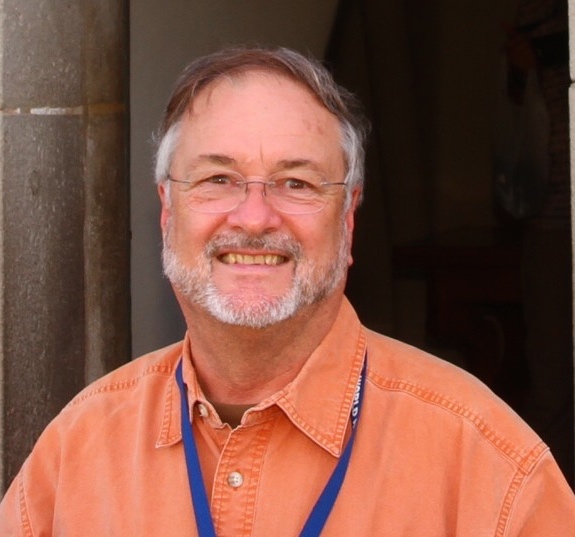
Dr. Oliver Ryder is the Kleberg Endowed Director of Conservation Genetics at the San Diego Zoo Wildlife Alliance (SDZWA). He oversees research activities in biobanking, molecular genetics, genomics studies, and genetic rescue efforts, including stem cell applications, that are focused on reducing extinction risk and contributing to species recovery and sustainable populations. He received a PhD in Biology from the University of California, San Diego, where he is now an Adjunct Professor in the Department of Evolution, Behavior, and Ecology. His contributions include key studies relevant to conservation efforts for gorillas, California condors, Przewalski’s horses, black-footed ferrets, Anegada iguanas, bighorn sheep, Pacific pocket mice, and other species. He is a founding Co-chair of the Animal Biobanking for Conservation Specialist Group of the SSC-IUCN.

Dr Boripat SIRIAROONRAT
Boripat received his veterinary degree from Chulalongkorn University in 1994 and Master of Science in Zoology in 1998. He has been interested in the wildlife research and conservation since he was a veterinary student. He used to teach at Chulalongkorn University and Mahidol University before going to USA for his PhD training at the Smithsonian’s National Zoological Park and its Conservation & Research Center (currently renamed Smithsonian’s Conservation Biology Institute) and received a PhD in Environmental Science and Policy from George Mason University in 2006. His extensive research experience in reproductive science and integrated conservation with international partners and organizations has led him to come home to work for the Zoological Park Organization of Thailand (ZPOT). The establishment of Endangered Species Conservation & Research Institute with a component of reintroduction program, Wildlife Assisted Reproductive Technology Center and Wildlife BioBank were a few accomplishments during his 12 years of service at ZPOT. ZPOT team and partners successfully produced live offspring from giant panda, clouded leopard and Eld’s deer and Asian elephant using assisted reproduction. He is currently a researcher at the Faculty of Environment and Resource Studies, Mahidol University in Thailand.
Boripat received his veterinary degree from Chulalongkorn University in 1994 and Master of Science in Zoology in 1998. He has been interested in the wildlife research and conservation since he was a ...

Ms. Mitali Sharma
Communications and Administrative Officer
Mitali Sharma is an independent consultant based in Singapore. She works for various environmental organisations on species conservation and area-based conservation projects. Mitali has a Master of Research (MRes) degree in Biodiversity, Evolution, and Conservation from University College London (UCL) and a BSc (Hons) in Biological Sciences (Animal Behaviour, Welfare, and Ethics) from the Royal Veterinary College, London. In her role as the Communications and Administrative Officer, she will work on advancing the targets of the Specialist Group by primarily managing administrative and communications tasks, and also supporting the Specialist Group’s research activities.Communications and Administrative Officer
Mitali Sharma is an independent consultant based in Singapore. She works for various environmental organisations on species conservation and area-based conservation projects. Mitali has a Master of Research (MRes) degree in Biodiversity, Evolution, and Conservation from University College London (UCL) and a BSc (Hons) in Biological Sciences (Animal Behaviour, Welfare, and Ethics) from the Royal Veterinary College, London. In her role as the Communications and Administrative Officer, she will work on advancing the targets of the Specialist Group by primarily managing administrative and communications tasks, and also supporting the Specialist Group’s research activities.
Communications and Administrative Officer
Mitali Sharma is an independent consultant based in Singapore. She works for various environmental organisations on species conservation and area-based ...
Center for Species Survival—Biodiversity Banking
The Animal Biobanking for Conservation Specialist Group works in close collaboration with the Center for Species Survival (CSS)—Biodiversity Banking based at the San Diego Zoo Wildlife Alliance (SDZWA) through the support of the CSS Species Survival Officer, Dr. Katie Heineman. The CSS—Biodiversity Banking catalyzes biobanking conservation action in the IUCN SSC by connecting the expertise and Threatened species collection information of SDZWA’s Wildlife Biodiversity Bank to Specialist Groups to increase international capacity for biobanking. For more information about the CSS—Biodiversity Banking, contact Dr. Katie Heineman.


Context
Biobanking is crucial for conservation—it is the conservation intervention that presents the lowest risk today for the highest potential impact in the future.
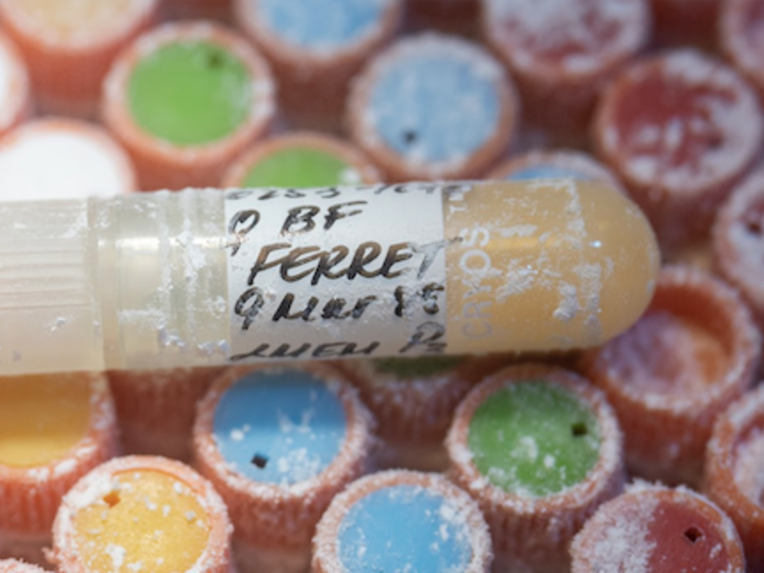
Biobanking is based on the concept of cryopreservation—freezing genetic resources, such as cells, gametes, seeds, and tissues. This is practiced across multiple domains: in agriculture (for breed preservation), laboratories (for model organism strains), and zoos and aquariums (for conservation). By freezing viable materials, we secure future access to genetic diversity and simultaneously aggregate a vast library of biological information that will be available to current and future generations of scientists.
Modern cryobiology methods were developed around the mid-20th century, with semen cryobanking being the first method to be established, followed by the cryopreservation of whole embryos and viable cell cultures. The concept of applying cryopreservation to conservation took hold around the same time once these methods had been developed. In 1975, pathologist Kurt Benirschke and San Diego Zoo Wildlife Alliance (SDZWA) director Charles Bieler founded the Center for Reproduction of Endangered Species (CRES) (now known as the Institute for Conservation Research) and established the world’s first dedicated “Frozen Zoo” that preserved skin and semen samples from a variety of species.
Biobanked materials serve as the foundation for a pivotal new set of conservation options that afford us the opportunity to safeguard genetic capital, support population sustainability, and reduce extinction risk. In addition, access to cryobanked cells and other banked biomaterials has been crucial to studies on ecology, evolution, genomics, and wildlife health, fostering an unprecedented understanding of life on earth.
There is a growing recognition for the urgency of biobanking. Biobanking is an explicit component of the One Plan approach, helping bridge ex situ and in situ conservation. It is also an integral component of the One Health approach and contributes to several of the United Nations Sustainable Development Goals and targets of the Convention on Biological Diversity Kunming-Montreal Global Biodiversity Framework. In addition, the Nagoya Protocol has propelled the topic of biobanking to the forefront of global discussions about conservation. Recognising the need for greater coordination in this field, IUCN's 2020 Resolution 079 (WCC-2020-Res-079) specifically calls for the establishment of a collaborative global biobanking network.
In response to this, the Animal Biobanking for Conservation Specialist Group (ABCSG) was established in 2022, with a mission to create a global network for sharing information and expertise to establish facilities that cryopreserve viable animal cells and tissues.
Annual Report
Learn about ABCSG’s work and results in 2024 and 2025.
Workshop Reports:
Asian Biobanking Workshop and Networking Forum Workshop
Newsletters
Read updates on the ABC SG’s work and future activities.
- IUCN SSC Animal Biobanking for Conservation Specialist Group Newsletter, Issue 4
- IUCN SSC Animal Biobanking for Conservation Specialist Group Newsletter, Issue 3
- IUCN SSC Animal Biobanking for Conservation Specialist Group Newsletter, Issue 2
- IUCN SSC Animal Biobanking for Conservation Specialist Group Newsletter, Issue 1
Contact Us

If you are interested in our Specialist Group, please subscribe to our newsletter to receive updates (open to all) and/or officially join as a Specialist Group member by contacting the Co-Chairs (if you have experience with animal biobanking), Dr. Oliver Ryder and Dr. Boripat Siriaroonrat.
For other inquiries, please contact the Specialist Group’s Communications and Administrative Officer, Mitali Sharma.