Chair
Dr Philippe Cullet, JSD (Stanford), LLM (Lond), MA (Lond), Licence en droit (Geneva) is Professor of international and environmental law at SOAS University of London and a Visiting Professor at ...
The IUCN WCEL Rights of Nature Specialist Group (RoNSG) serves as a source of legal expertise on the recognition, interpretation, and implementation of Rights of Nature across legal systems and ...
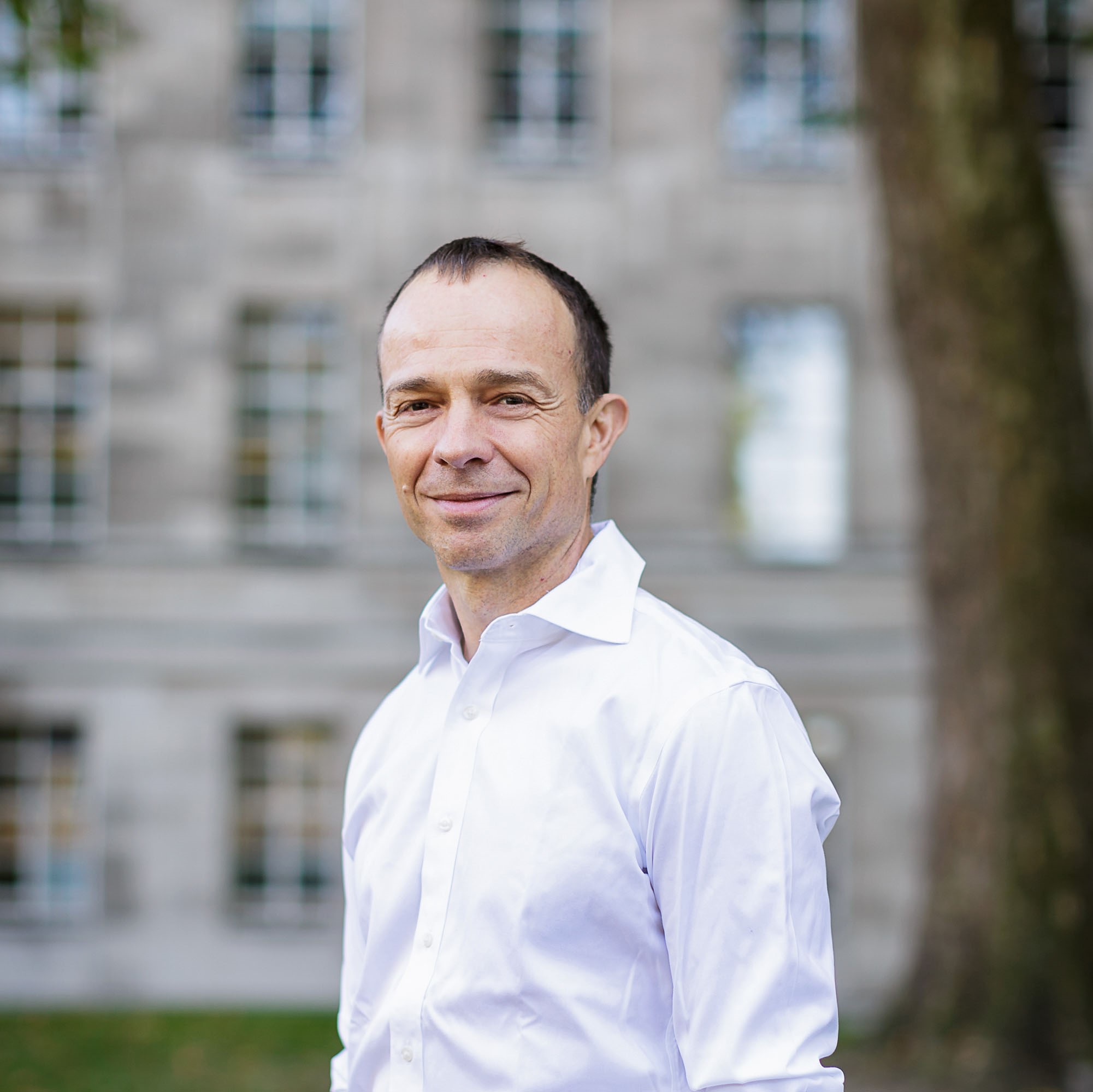
Chair
Dr Philippe Cullet, JSD (Stanford), LLM (Lond), MA (Lond), Licence en droit (Geneva) is Professor of international and environmental law at SOAS University of London and a Visiting Professor at the National Law University Delhi. He works on environmental and natural resources law, with a special focus on water, equity and indigenous environmental knowledge. He is the recipient of an ERC Advanced Grant (2025-2030) focusing on multi-scalar dimensions of sectoral water conflicts in South Asia (WATCON.org). His publications reflect his engagement with international law and policy, the global South and India. His latest edited book is River Rejuvenation and River Rights: Evolving Debates in India (Routledge, 2026) [co-edited with Ruchi Shree]. He is the Guest Editor of a Special issue on Indigenous Ecological Knowledge in South Asia – Lessons for Rights of Nature Discourses, Journal of Environmental Studies and Sciences (forthcoming 2026).
Chair
Dr Philippe Cullet, JSD (Stanford), LLM (Lond), MA (Lond), Licence en droit (Geneva) is Professor of international and environmental law at SOAS University of London and a Visiting Professor at ...
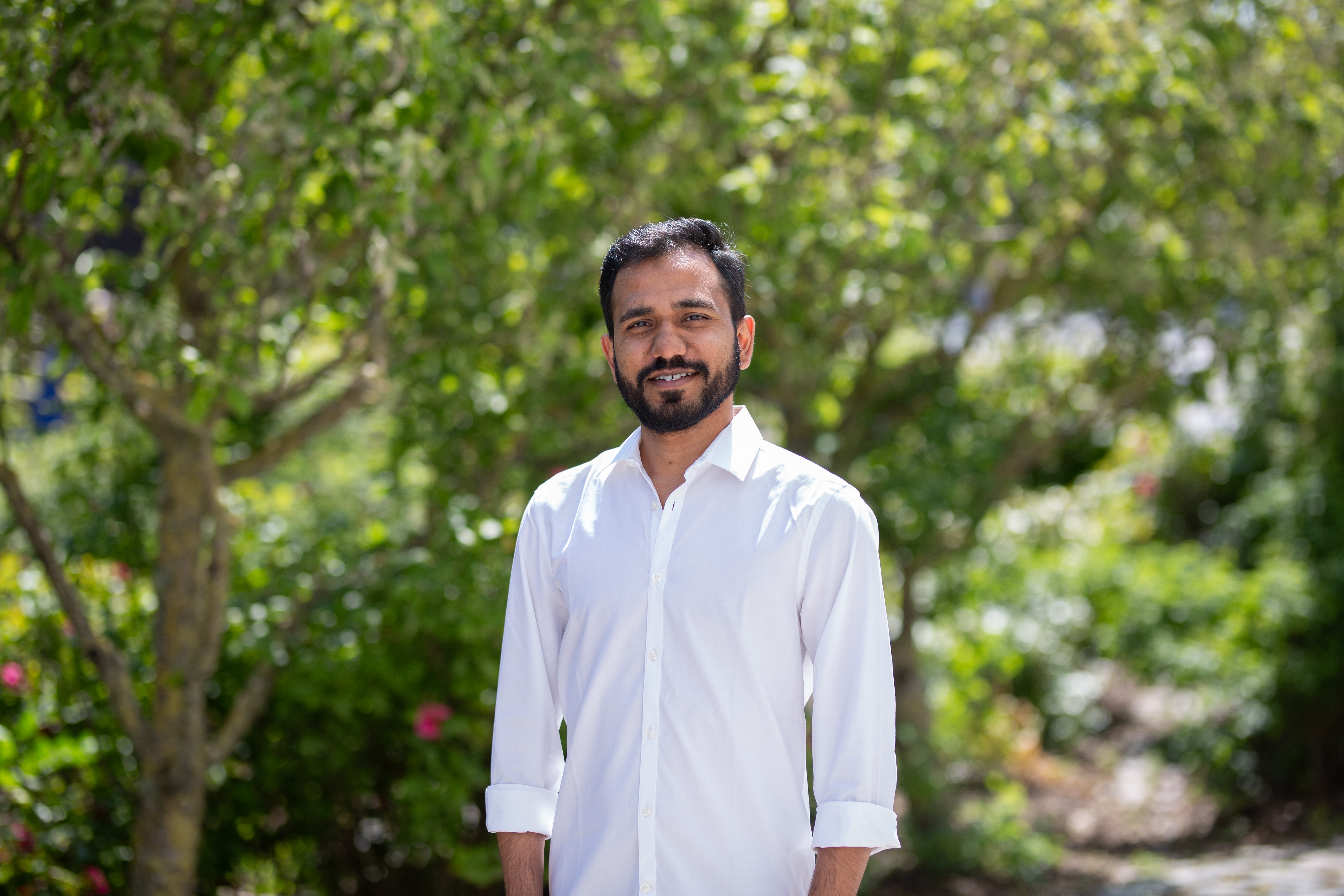
Dr. Harsh Vardhan Bhati is a lawyer, researcher, and educator specializing in environmental law, cultural heritage law, natural resources law, and energy law. He holds a doctoral degree in environmental law (Doctor of Laws/juris doktor) from Uppsala University, Sweden; an LL.M. in Environmental, Natural Resources, and Energy Law from Lewis & Clark Law School, United States, where he received the Environmental Ambassador LL.M. Award; and a law degree from Jindal Global Law School, O. P. Jindal Global University, India.
His research adopts an interdisciplinary approach to law, climate governance, and heritage conservation. His doctoral dissertation examined how international legal obligations under the UNESCO World Heritage Convention are interpreted and implemented at the national and local levels in light of international climate and energy commitments, and how these legal and institutional frameworks influence decision-making and the agency of public officials, municipal authorities, heritage professionals, and local communities seeking to balance heritage conservation with decarbonization and sustainability goals.
Harsh advises and collaborates with international, intergovernmental, and non-governmental organizations, while also supporting national governments on questions of environmental law and policy, heritage conservation, rights of nature, climate change, and sustainable development. His fieldwork has engaged Indigenous, pastoral, and urban communities across India, the Brazilian Amazon, Ecuador, and the European Union. He has teaching experience in environmental law and policy, including teaching on rights of nature and the right to a healthy environment, at Uppsala University and O. P. Jindal Global University.
He has published in leading international peer-reviewed journals, including Oxford’s Journal of Environmental Law, Journal for European Environmental and Planning Law, Environmental Policy and Law, Frontiers in Sustainable Cities, and Nordic Environmental Law Journal. Alongside his academic research, his work also engages with emerging governance models concerning ecological personhood and the rights of nature, including through international scholarly platforms such as the Research Group on Rights of Nature and Animals under the auspices of the International Association of Constitutional Law and International Law Association.
Dr. Harsh Vardhan Bhati is a lawyer, researcher, and educator specializing in environmental law, cultural heritage law, natural resources law, and energy law. He holds a doctoral degree in ...
The Rights of Nature Specialist Group aims to:
Support inclusive and informed engagement with Rights of Nature by recognizing the diversity of legal traditions and governance contexts, the absence of a one-size-fits-all solution, and the need to address risks related to legal uncertainty, implementation challenges, and potential institutional or political resistance.
Four core, cross-cutting projects are proposed for the 2026–2029 quadrennium. These projects may include presentations, expert discussions, policy briefs, and contributions to conferences and relevant IUCN processes, with the aim of supporting informed understanding of how different legal systems approach and operationalize Rights of Nature at national and international levels, and of identifying associated legal and governance challenges.
Additional projects may be proposed to the Specialist Group leadership during the quadrennium, and specific working groups may be established as appropriate to support particular activities.
In consideration of World Conservation Congress Resolution 8.053 Operationalising the rights of nature and evaluating their implementation in territories (2025), this project will focus on legal regimes that recognize natural entities as subjects of law across territories, and seek to promote innovative frameworks aligned with principles relevant to the rights of nature.
The specific thematic focus and sequencing of activities under this project may be refined over the course of the quadrennium by the Chair and Deputy Chair of the Specialist Group.
Activities:
The Specialist Group will in particular:
a. Contribute to the documentation and promotion of local, national, and international initiatives where Rights of Nature are already recognized or are in the process of being recognized.
b. Contribute to assess the governance aspects of Rights of Nature experiments.
c. Contribute to capacity building, based on lessons learned from existing experiences, to support actors in the practical implementation of Rights of Nature in various contexts.
d. Encourage the development of an information note for use by IUCN, WCEL, and other international organizations in fostering debates about Rights of Nature.
e. Study relationships between Rights of Nature, human rights (including the right to a healthy environment), and obligation-based environmental law.
f. Contribute, as appropriate, to the work of other international organizations fostering the development of Rights of Nature.
Outputs:
a. An information note developed during the quadrennium;
b. Presentations or expert discussions organized in connection with WCEL or IUCN meetings or events;
c. Contributions to WCEL conferences, IUCN Congresses, or other relevant fora, as appropriate.
In consideration of World Conservation Congress Resolution 8.054 Recognition of the rights of Antarctica (2025) and Resolution 8.055 Advancing an ethical human-ocean relationship (2025), this project will focus on legal and governance approaches relevant to the application of Rights of Nature concepts to global commons, including oceans and Antarctica.
The project aims to contribute to informed legal reflection on the recognition of intrinsic values and rights associated with global commons, the corresponding responsibilities of human actors, and the governance challenges arising in areas beyond national jurisdiction. The work related to Resolution 8.055 concerning ocean rights will be undertaken in cooperation with the Ocean Law Specialist Group.
Activities:
The Specialist Group will in particular:
a. Contribute to the evaluation of the concept of the fundamental rights of Antarctica and corresponding duties of humans.
b. Contribute to the assessment of implementation of the Resolution 8.054 Recognition of the rights of Antarctica.
c. Contribute to studying and discussing best practices and policy documents related to the integration and respect for the ocean’s intrinsic values in ocean governance.
d. Engaging, as appropriate, with other WCEL Specialist Groups and IUCN entities working on global commons-related legal issues, to support coherence and exchange of expertise.
Outputs:
a. Expert discussions or panels addressing legal perspectives on Rights of Nature in the context of global commons organized in connection with WCEL or IUCN events;
b. Contributions to relevant IUCN, WCEL, or partner-led processes or fora, as appropriate.
In consideration of World Conservation Congress Resolution 8.066 Living in harmony with rivers through the rights of nature and ecocentric law (2025), this project will focus on legal and governance approaches relating to the recognition of elements of nature, such as rivers, and other nonhuman entities through Rights of Nature frameworks. The project aims to contribute to comparative legal reflection on how Rights of Nature approaches are applied to rivers and other interconnected natural systems, and how these approaches interact with existing water, wetlands, and ecosystem governance frameworks
Activities:
The Specialist Group will in particular:
a. Promote the protection and restoration of rivers through Rights of Nature frameworks in relation with other elements of nature.
b. Study the relationship between Rights of Rivers and the Rights of Wetlands with a view to develop guidelines.
c. Engage, as appropriate, with other WCEL Specialist Groups and IUCN entities, including those working on water, wetlands, and ecosystem governance, to support exchange of legal perspectives.
Outputs:
a. Expert discussions or panels examining legal approaches to Rights of Rivers and related elements of nature organized in connection with WCEL or IUCN events, including in relation to the potential development of guidelines.
b. Contributions to relevant WCEL, IUCN, or partner-led fora, as appropriate.
In consideration of 2025 World Conservation Congress resolutions related to Rights of Nature, this project will focus on Indigenous Peoples, biocultural heritage, and customary law perspectives relevant to Rights of Nature, and their interaction with state-based legal and governance frameworks. The project aims to support informed legal reflection on how Indigenous knowledge systems, biocultural heritage, and customary practices relate to Rights of Nature, while recognising the diversity and contextual specificity of these approaches across regions and legal traditions.
Engagement under this project recognizes both the importance and complexity of Indigenous engagement, including interactions between Indigenous knowledge systems, scientific expertise, and state law, and seeks to ensure that Rights of Nature initiatives do not oversimplify or instrumentalize these relationships, and have respect for multiple knowledge systems.
Activities:
The Specialist Group will contribute to:
a. Supporting the dissemination and discussion of Indigenous scholarship and Indigenous-led perspectives related to Rights of Nature.
b. Studying and promoting biocultural heritage, conservation, and governance of cultural and natural environment in relation to Rights of Nature.
c. Studying and promoting indigenous and local community perspectives on human–nature relationships in relation to Rights of Nature.
d. Studying and promoting cultural and environmental customary practices in relation to Rights of Nature.
e. Reflecting on the legal relevance of Indigenous Peoples’ and local communities’ customary practices that contribute to sustainable use and ethical coexistence with nature, as reflected in World Conservation Congress Resolution 8.069 Nature: Integrating science, ethical approaches and harmonious coexistence with strategies for ecological recovery (2025), with attention to how such practices interact with Rights of Nature frameworks and state-based environmental law.
Outputs:
a. Expert discussions or roundtables addressing Indigenous, biocultural, and customary dimensions of Rights of Nature organized in connection with WCEL or IUCN meetings or events.
b. Contributions to relevant WCEL, IUCN, or partner-led fora, as appropriate
Subject to capacity and available resources, outputs during the 2026-2029 quadrennium may include:
• WCEL issue papers, policy briefs, or guidance notes addressing legal design, governance interactions, and implementation challenges related to Rights of Nature.
• Comparative or thematic presentations, roundtable discussion, and webinars examining legal developments across territories and legal traditions.
• Contributions to the IUCN World Conservation Congress, WCEL conferences, and other relevant international or regional fora.
• Publications and policy-relevant summaries synthesizing legal analysis for practitioner and decision-maker audiences.
All outputs will reflect the Specialist Group’s advisory mandate, commitment to legal rigour, and respect for plural legal and cultural approaches.
• The Specialist Group’s coordination will be led by the Chair and the Deputy Chair of Rights of Nature Specialist Group.
• Activities may include expert meetings, online seminars, roundtable discussions, and collaborative presentation/writing initiatives.
• Collaboration with other WCEL Specialist Groups, Task Forces, IUCN, and other international organizations will be encouraged where mandates align and added value is clear.
• The Specialist Group will seek to facilitate inclusive participation, including, where appropriate, the involvement of Indigenous Peoples, local communities, youth, women, and early-career researchers and practitioners, in particular from the Global South.
The Chair/Deputy Chair of the Specialist Group will provide a report on their activities to the WCEL Chair and Deputy Chair every year. This report will include an overview of the progress in implementing activities, main achievements, and a list of all events, publications, and other global knowledge products launched in the reporting year.
The Rights of Nature Law Specialist Group will seek alignment, as appropriate, with:
• The IUCN Programme for the 2026–2029 period;
• Relevant World Conservation Congress resolutions, including
- Resolution 8.053 on Operationalising the rights of nature and evaluating their implementation in territories (WCC 2025);
- Resolution 8.054 on Recognition of the rights of Antarctica (WCC 2025);
- Resolution 8.055 on Advancing an ethical human–ocean relationship (WCC 2025);
- Resolution 8.066 on Living in harmony with rivers through the rights of nature and ecocentric law (WCC 2025); and
- Resolution 8.069 Nature: Integrating science, ethical approaches and harmonious coexistence with strategies for ecological recovery (WCC 2025)
• Related initiatives of WCEL Specialist Groups, Task Forces, and other IUCN Commissions, where mandates align and collaboration adds value.
Rights of Nature SG - Terms of Reference (TORs) 2025-2029
We welcome new partnerships, assistance, and collaboration as we take forward our mandate. If you are interested in any aspect of the RoNSG, please contact us at [email protected].