Reporting directly to and working closely with American Prairie's CEO, Scott is responsible for overseeing all organizational operations including conservation strategy, philanthropy, brand and ...
IUCN COMMISSION GROUP
IUCN WCPA Large Scale Conservation Area Task Force
Overview and description
Description:
The Large-Scale Conservation Areas Task Force is a global community of practice connecting WCPA members who are actively leading specific, very large landscape, seascape and riverine conservation ...
Group leadership

Mr Scott BRENNAN
Reporting directly to and working closely with American Prairie's CEO, Scott is responsible for overseeing all organizational operations including conservation strategy, philanthropy, brand and reputation, field operations, education and community outreach, federal and state outreach, operations and finance, organizational systems and processes, risk management, personnel management and organizational health and culture. He is also responsible for implementing and guiding the execution of American Prairie’s overall strategy and acting as an expert resource for staff, board and others regarding all aspects of the organization's overall vision, goals, opportunities, and challenges. American Prairie's mission is to create one of the largest nature reserves in the United States, a refuge for people and wildlife preserved forever as part of America’s heritage.
In his most recent prior role, Scott directed the landscape connectivity, protected areas, community conservation, science and policy work of the Yellowstone to Yukon Conservation Initiative, whose mission is to connect and protect habitat throughout the 1.4M sq/km Yellowstone to the Yukon so people and nature can thrive. He is an accomplished leader of local, regional, national and international conservation campaign teams, an award-winning educator and journalist, and a deeply committed practitioner of collaborative large landscape conservation. Scott also chairs the Large Scale Conservation Area Task Force of the IUCN's World Commission on Protected Areas.
Scott brings extensive experience in campaign leadership, government relations, communications, diversity, equity and inclusion as well as ENGO leadership, management and fundraising to his work at American Prairie. Throughout his career Scott and the teams he has led have worked closely with scientists, grassroots advocates, Indigenous communities and elected officials to achieve strategic synergy between conservation and sustainable economic development.
Earlier in his career, Scott worked for The Wilderness Society for 14 years in a series of state and national leadership roles, served as the founding director of the campaign to protect Bristol Bay, Alaska from the threat of large scale mining. He has also lived, worked and traveled extensively in the Kavango-Zambezi Transfrontier Conservation Area in Southern Africa as well as the Trans-Himalaya. He holds two degrees in environmental science, taught many university-level courses in environmental science, policy and journalism and won accolades for his work as an environmental journalist and educator.
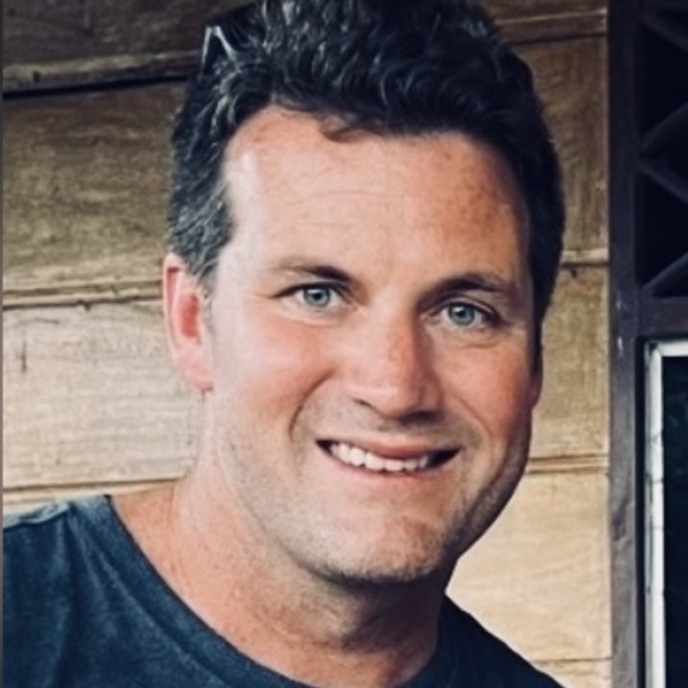
Mr Jordan REEVES
Jordan leads the Landscape Connectivity Program through deep collaboration with Y2Y’s talented staff, sovereign First Nations and Tribes, rural communities, government agencies, and a breadth of other committed partners.
He brings 20+ years of experience to this role, combining a variety of skillsets developed through work at the intersection of landscape conservation, community development, advocacy, and community organizing.
Jordan has led conservation campaigns and land management efforts in previous roles at The Wilderness Society, The Nature Conservancy, and the Washington State Department of Natural Resources. He began his career in community-led conservation as a U.S. Peace Corps Volunteer in Panama and holds a B.A. in Political Science from the University of California, San Diego and an M.A. in International Development and Social Change from Clark University.
Living in Bozeman, Montana, Jordan and his family spend their free time caring for their many family pets and exploring the incredible landscapes of the Southern Y2Y region via hikes, skis, floats, and bike rides.
Jordan leads the Landscape Connectivity Program through deep collaboration with Y2Y’s talented staff, sovereign First Nations and Tribes, rural communities, government agencies, and a breadth of other ...
The Large-Scale Conservation Areas Task Force is a global community of practice connecting WCPA members who are actively leading landscape, seascape and riverine conservation visions in pursuit of Target One and Target Three, as well as other targets, in specific, very large, transboundary and multi-jurisdictional efforts such as Yellowstone to Yukon (Y2Y), Kavango Zambezi (KAZA), Coral Triangle, Eastern Tropical Pacific Marine Corridor and others.
This Task Force will enable practitioners leading such efforts to:
- connect directly with each other to share challenges, solutions, success stories, lessons learned and inspiration regarding applied, in situ, real-world very large landscape, seascape and riverine conservation efforts;
- identify, document and share promising, productive and emerging practices;
- champion the practical application of knowledge products of all WCPA thematic entities (climate, culture, equity, effectiveness, health and well being, connectivity and more) to in situ large landscape, seascape and riverine conservation contexts;
- develop and present a unified set of recommendations to the global funding community and other influential audiences to help ensure we achieve our 30% goal globally by 2030; and
- over time, build capacity and share practical knowledge and skills among efforts around the world.
The Task Force will help all of us meet the global imperative to expand protection and conservation to 30% globally by 2030 - with mosaics of formally protected areas, conserved areas and corridors by truly scaling conservation while potentially advancing other targets as well. The group’s work is informed by the recognition that in addition to protected areas we need to include other forms of area-based conservation and to elevate co-existence within and beyond conserved areas.