


About Meghna River basin
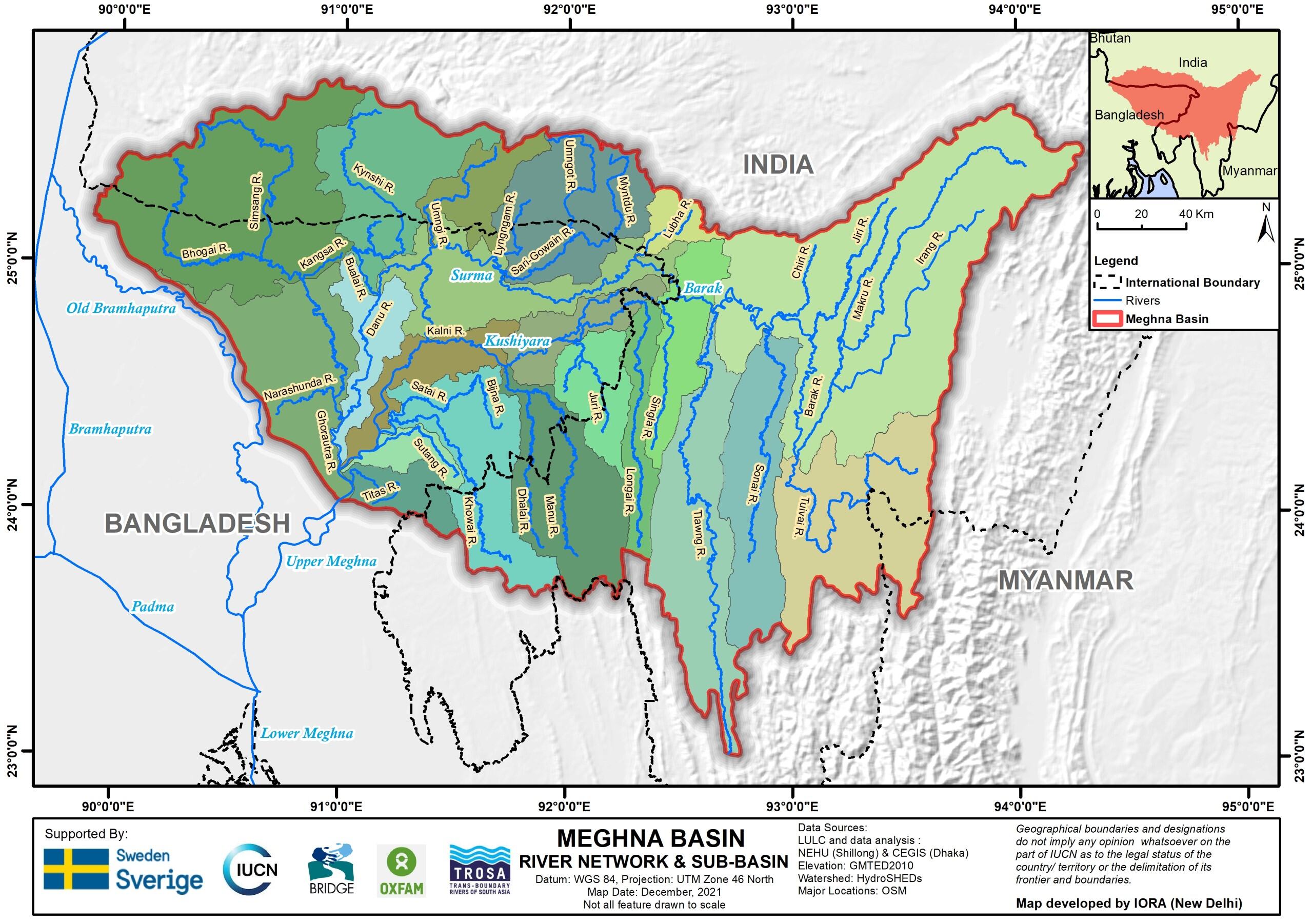
Shared by Bangladesh and India, the Meghna River basin is known for its rich aquatic biodiversity in Asia. It originates in the hills of Manipur (India), where it is referred to as the Barak River. As it flows southwest, the river splits into the Surma River and the Kushiyara River at the Bangladesh-India border, later join in Bhairab Bazar, in Bangladesh to form the Meghna River, which flows south into the ocean in the Bay of Bengal.
It is home to more than 50 million people, including a significant number of indigenous communities who are reliant on forestry, fisheries and agriculture sectors. However, the increasing impact of climate change is putting pressure on these vital sources of livelihoods. The impacts are exacerbated by the loss and degradation of forest and wetlands which reduced the ecological buffer provided that could mitigate some of the impacts of climate change-induced heavy rainfall.
About BRIDGE Ganges-Brahmaputra-Meghna (BRIDGE GBM)
The BRIDGE GBM project is a multi-donor initiative funded by the Swedish International Development Cooperation Agency (SIDA) and Swiss Agency for Development and Cooperation (SDC). Implemented by IUCN and local partners, BRIDGE GBM works at the interface of hydro diplomacy and local governance to promote new approaches for river basin management, by facilitating cooperation, strengthening inter‐governmental capacities, and creating spaces for dialogue and agreements.