Three generations of Maya-K'iche' have successfully produced export-quality avocados by embracing nature-based solutions
In 2023, the COINACHI cooperative received the GLOBALG.A.P. Certification for the sustainable agricultural practices they promote in the Chipacá microwatershed, located in Chichicastenango, El Quiché, Guatemala. The high fruit yield and quality of the Hass avocado result from implementing Ecosystem-based Adaptation (EbA) measures that focus on water and soil conservation.
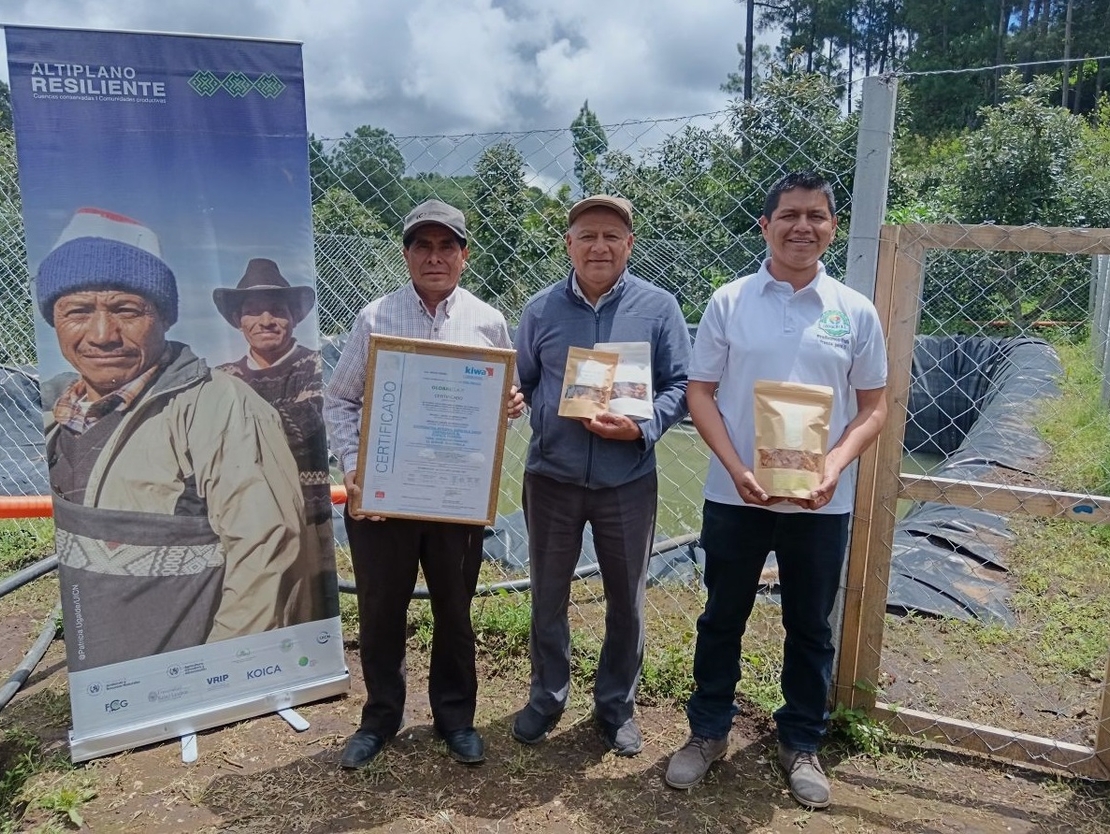
In one of the plots located in front of the water catchment system, under the Keyline technique, we find Tomás Cuterez Lares, a 55-year-old founding member of COINACHI and a current producer of peaches, apples, and avocados. Accompanying him are Miguel Morales Tecún, 63, the Commercial Development Manager of the cooperative, and Juan Morales Mateo, 39, the General Manager. They consider themselves part of the next generation in this initiative.
Guatemala City, Guatemala, 30 October 2024 (IUCN). When he was eleven years old, Tomás Cuterez lost his father, an apple grower, to the armed conflict in Guatemala in the 1980s. This tragedy forced him, as the elder brother, to drop out of school and dedicate himself to farming. This challenging experience fostered a unique sense of leadership and perseverance that led him to sow the seeds in 1992 of what is now the Cooperativa Integral Agrícola Unión Chipaquense (COINACHI).
The cooperative was created with the vision of managing crops within the Chipacá microwatershed to tackle the issue of water scarcity in this region of the Guatemalan highlands, which is considered highly vulnerable to climate change.
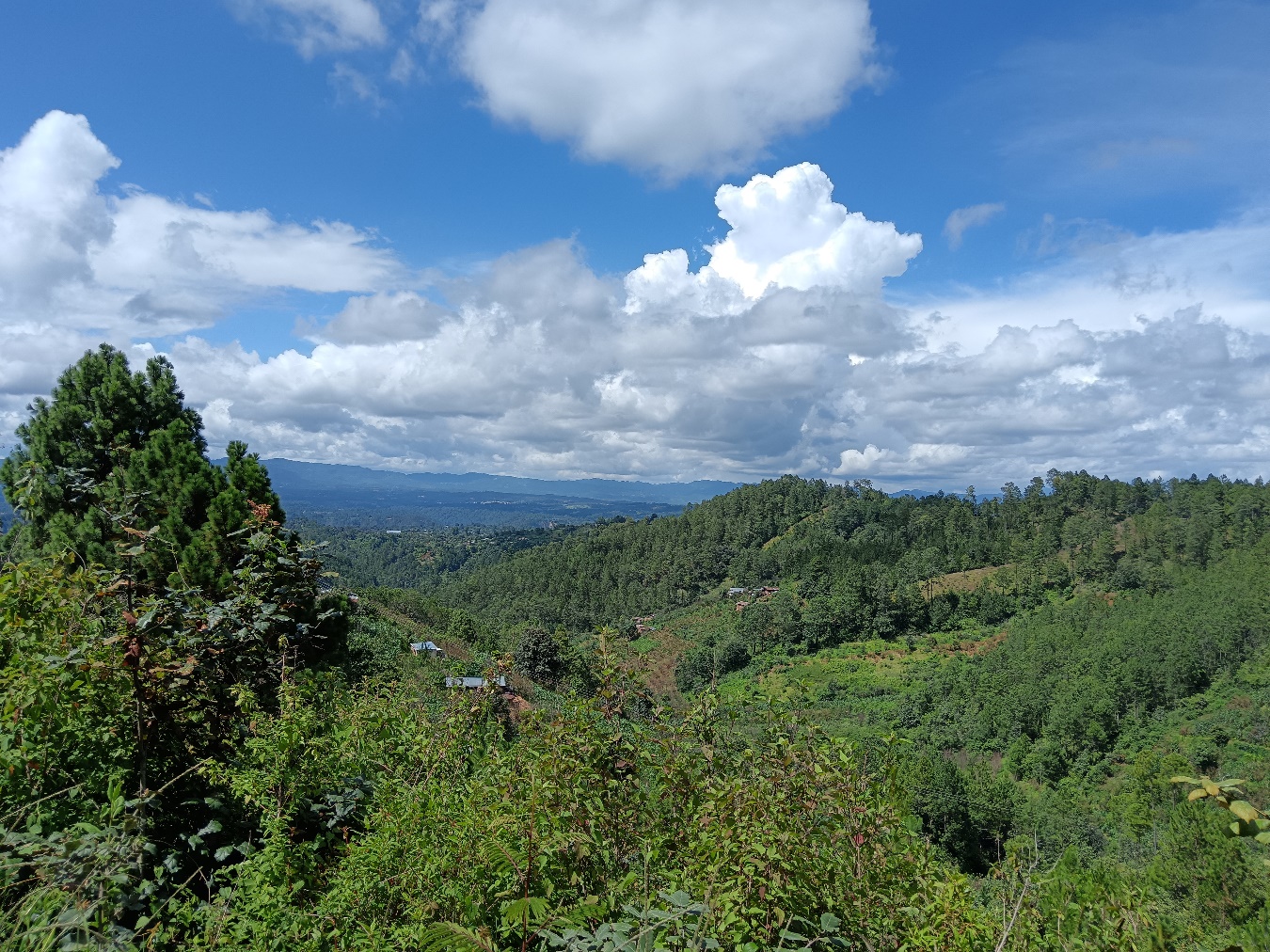
This story is set 140 kilometers from Guatemala City, at an altitude of 2,160 meters above sea level, in the upper part of the Motagua River watershed. The area is characterized as a cold zone with high relative humidity, where forested regions coexist with fruit crops. However, the area faces challenges due to extreme weather events, including drought, strong winds, and frost. @Evelyn Vargas/IUCN
They initially envisioned drilling a well to extract the water necessary for their crops. However, over time, they shifted their focus to implementing good agricultural practices, such as soil conservation, ultimately abandoning the plan to drill a well. It was at this point that they began to explore the possibility of harvesting rainwater.
With the support of IUCN, this process was achieved through the Resilient Highlands Project. They are currently working on implementing new technologies for rainwater harvesting, including reservoirs and micro-sprinkler irrigation systems, as well as soil conservation works, such as individual terraces and live fences. These initiatives are complemented by managing four specific crops: apple, plum, peach, and Hass avocado.
Since 2023, COINACHI has been GLOBALG.A.P. Certified. The Cuterez Tecún family is one of 33 families participating in this process, which has enabled them to access new markets under sustainable and safe quality standards. @Evelyn Vargas/IUCN
"We are already seeing the benefits of water harvesting on our crops. First, the ripening time is shortened; second, the size of the fruit can be controlled; and third, the production time is reduced, so the product reaches the market before the majority. This means that we have a competitive price for the producer achieving the profits we aim for," says Miguel Morales Tecún, COINACHI's Commercial Development Manager.
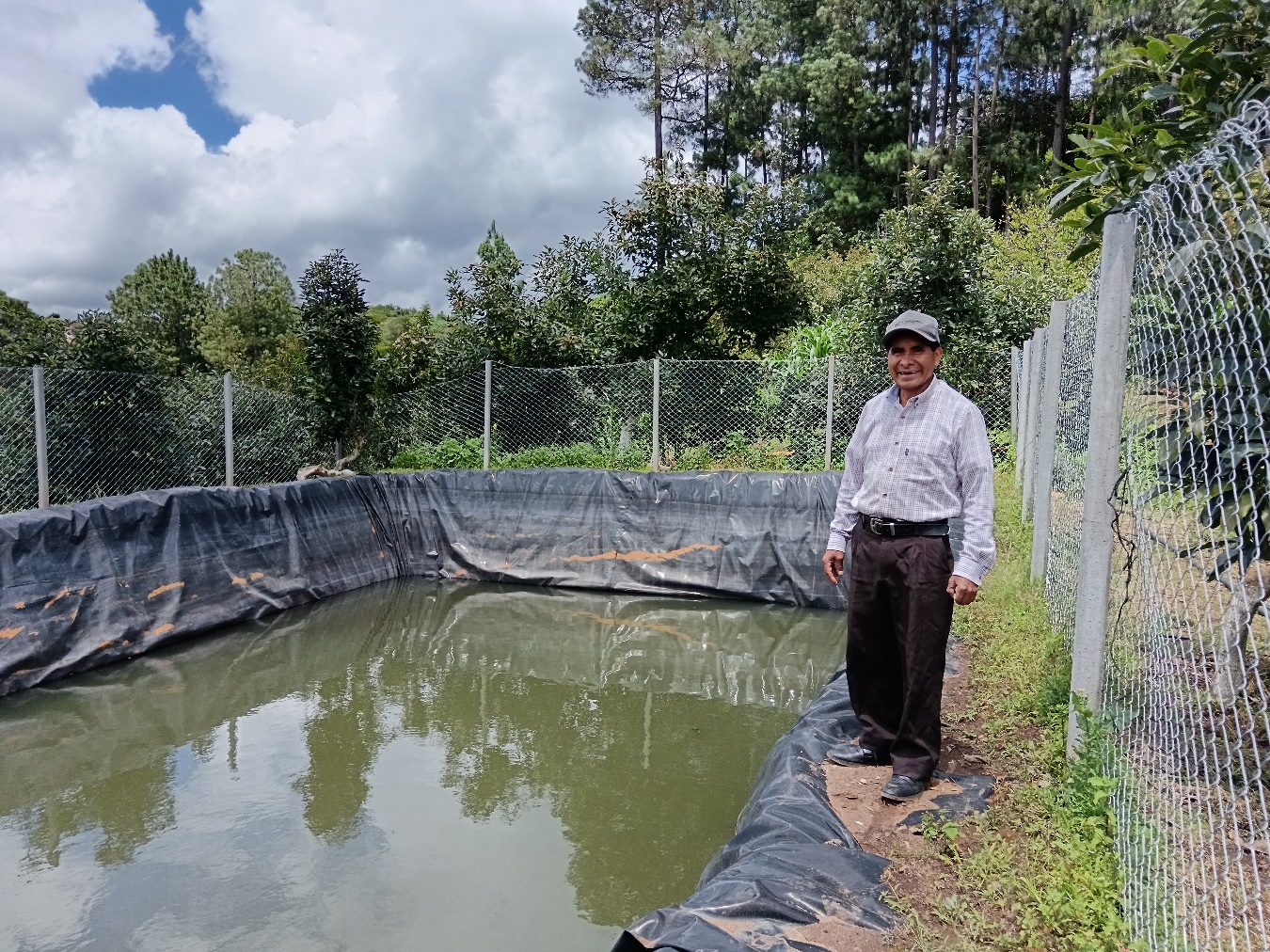
Since its founding, the cooperative has grown by 32.5%, increasing its membership from 27 to 40 members. According to Morales, the people have seen the benefits of having a rainwater reservoir. Before, during the dry season, they had to travel to rivers to collect water for their crops. Now, with the reservoir in place, they have reduced mobilisation and transportation costs. The water stored in the reservoir is available for 3 to 4 months, which covers the entire dry season in the area.
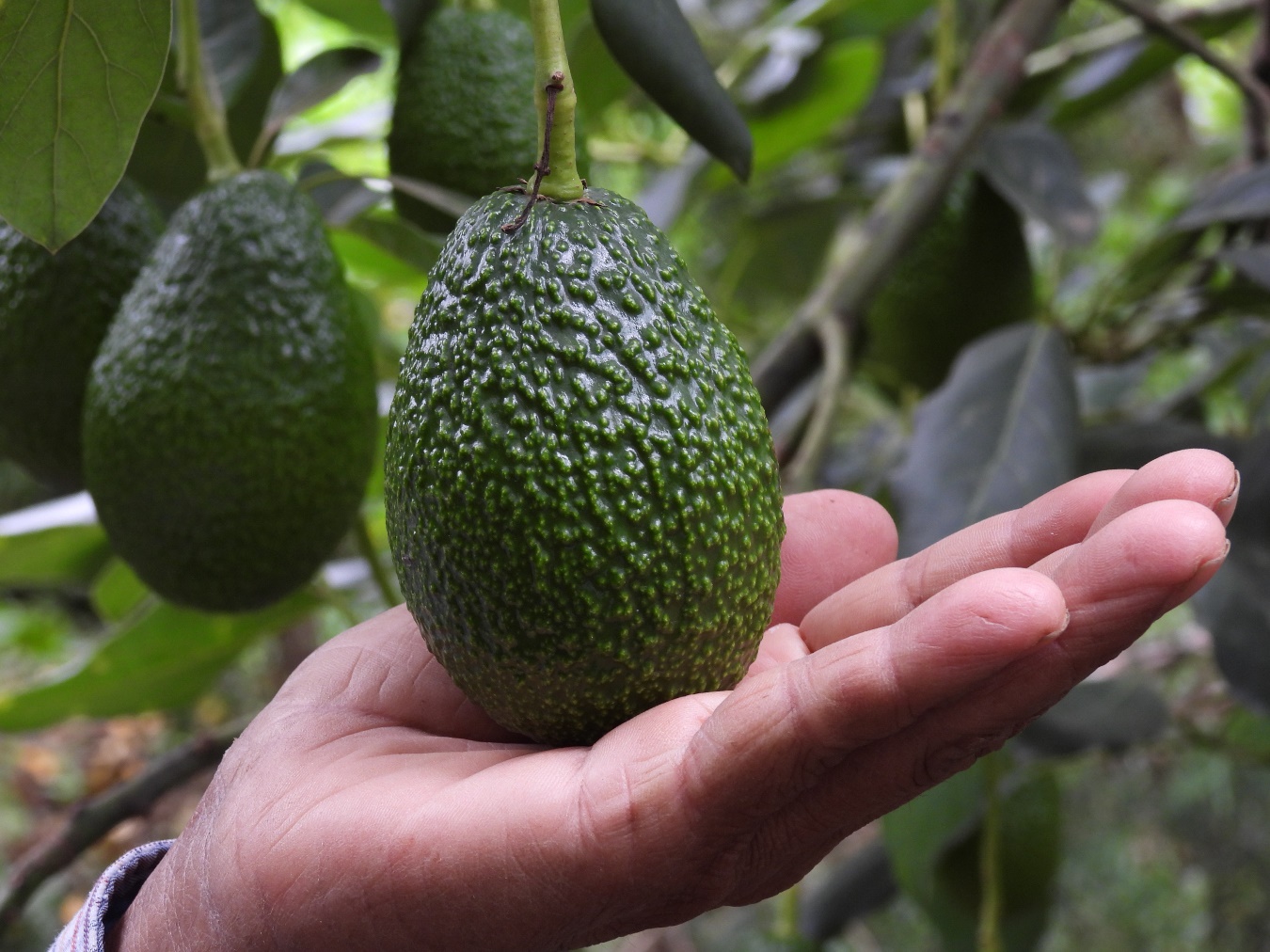
Incorporating the keyline system has allowed the Cuterez Tecún family to improve water management in their plot, coping with the effects of climate change, mainly drought, and achieving a high fruit load of excellent-quality Hass avocados. @Evelyn Vargas/IUCN
He notes that the early harvest and high quality of the fruit have enabled them direct access to national markets, placing their production in the most recognised supermarkets in Guatemala, avoiding price speculation, and eliminating the need for intermediaries.
Identifying a market that requires fruit of specific sizes enables better management of weight ranges, leading to a competitive price that is about 50% higher than average. Therefore, their product is weighed, classified, and packed using good manufacturing practices, ensuring that the final product retains its freshness longer on the shelf.
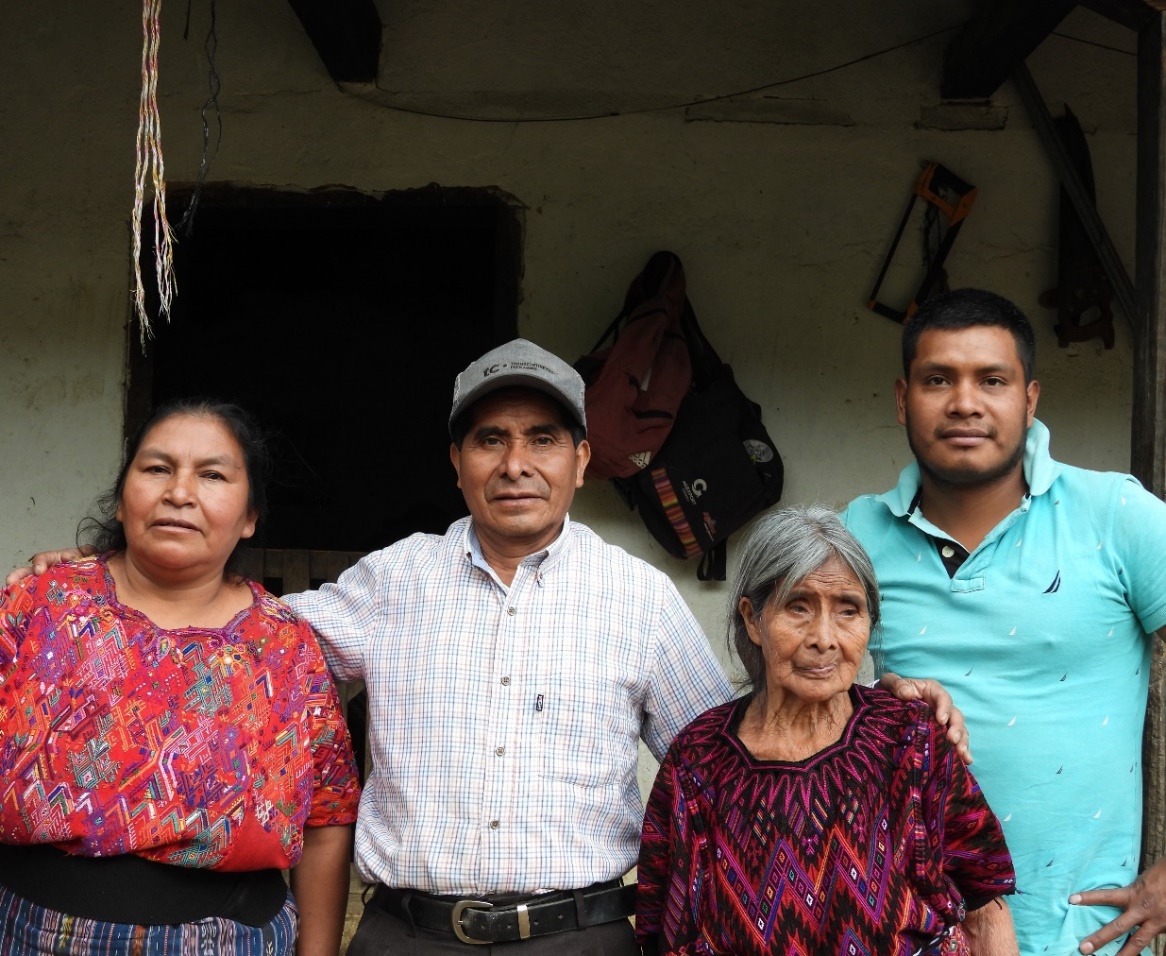
In the photo, Tomás Cuterez is pictured with his wife, Ana Tecún Mateo, on the left, his mother, Josefa Larios Mateo, on the right, and his son-in-law, Diego Coj Mateo. Don Tomás and Doña Ana have eight children—two sons and six daughters—and four grandchildren. Recently, with financial support from their older children, they purchased additional land to continue their agricultural production. @Evelyn Vargas/IUCN
In their words, with this shift towards good agricultural practices, including rainwater harvesting, they have achieved a 75% increase in profits. Their vision is to reach 100% 100% organic production within 3 to 5 years, with the capacity to produce their own inputs, adding value to their production.
The transition to good agricultural practices required a change in behavior on the part of the associates. This change was facilitated through continuous training on topics such as water and soil management, agroforestry systems, governance and leadership; educational tours to learn about other experiences; and market analyses to anticipate trends and requirements in the commercial environment.
The success of adopting good agricultural practices can be best illustrated through the examples of avocado, peach, and apple orchards, such as that of Tomás Cuterez Lares. He emphasizes the positive impact of these practices by stating, "The avocado helped me get back on my feet and provide an education for my children," and adds, "Many people have learned from my experience." To date, he has even created job opportunities on his farm. 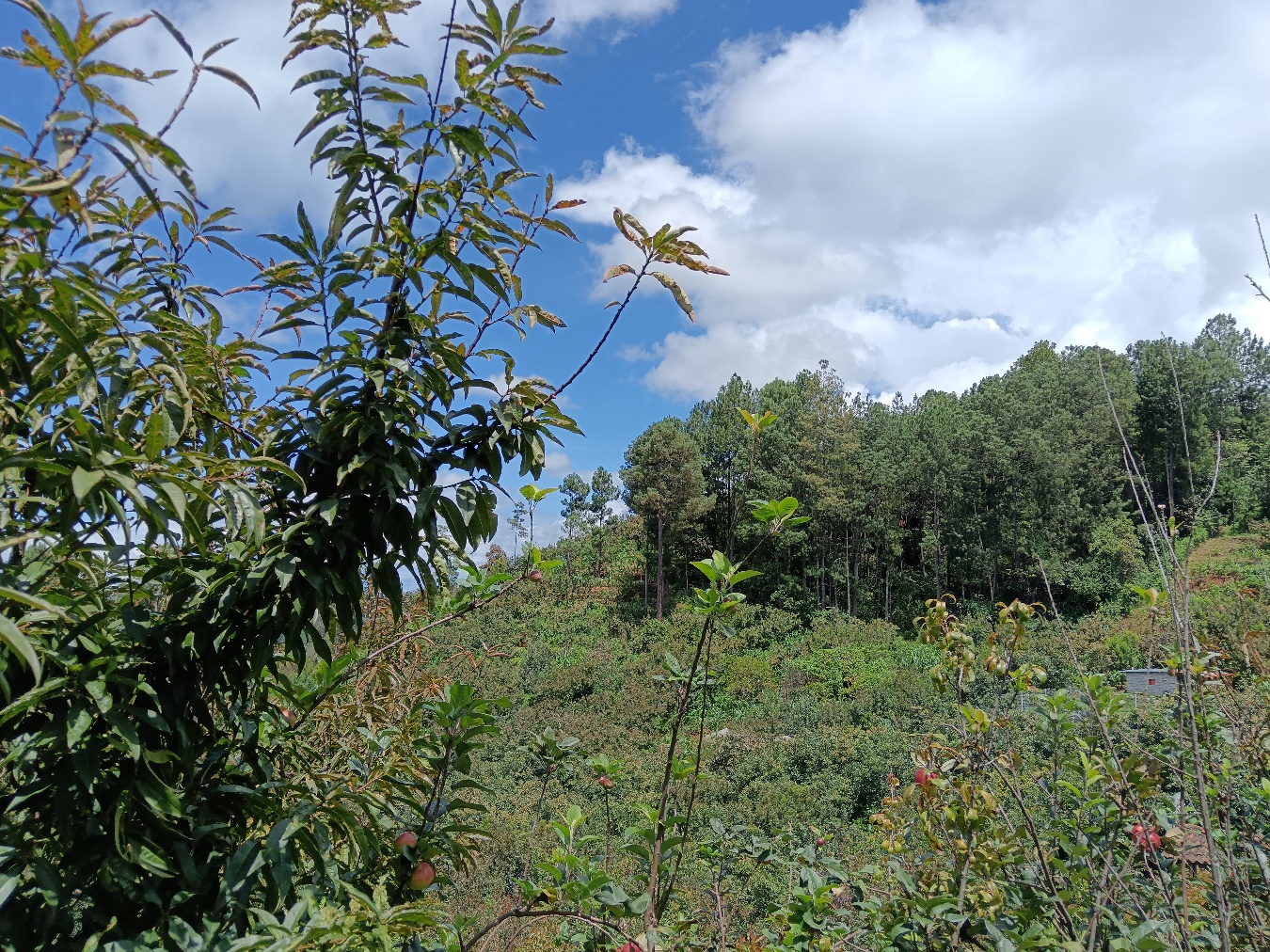
COINACHI utilizes Agroforestry Systems by incorporating forest trees around or within the plots to shield the crops from wind. They also operate their three cold rooms using solar energy. Currently, they are preparing to implement a biofactory that will produce bio-inputs, including fertilizers, fungicides, and insect repellents.@Evelyn Vargas/IUCN
Morales shares that when people see the results, they start to make changes themselves. He mentions that even neighbors who are not part of the cooperative have approached them, curious about what they have done differently. They are attracted to the plots of cooperative members, which have a higher fruit load and better quality. This way, the cooperative acts as an open laboratory, willing to share its knowledge through technical advice.
In Coinachi, as part of their Mayan-K'iche' culture, they combine new agricultural technologies with traditional knowledge by reviving the use of organic fertilizers and manual techniques and using lunar phases to guide the sowing, pruning, and harvesting seasons.
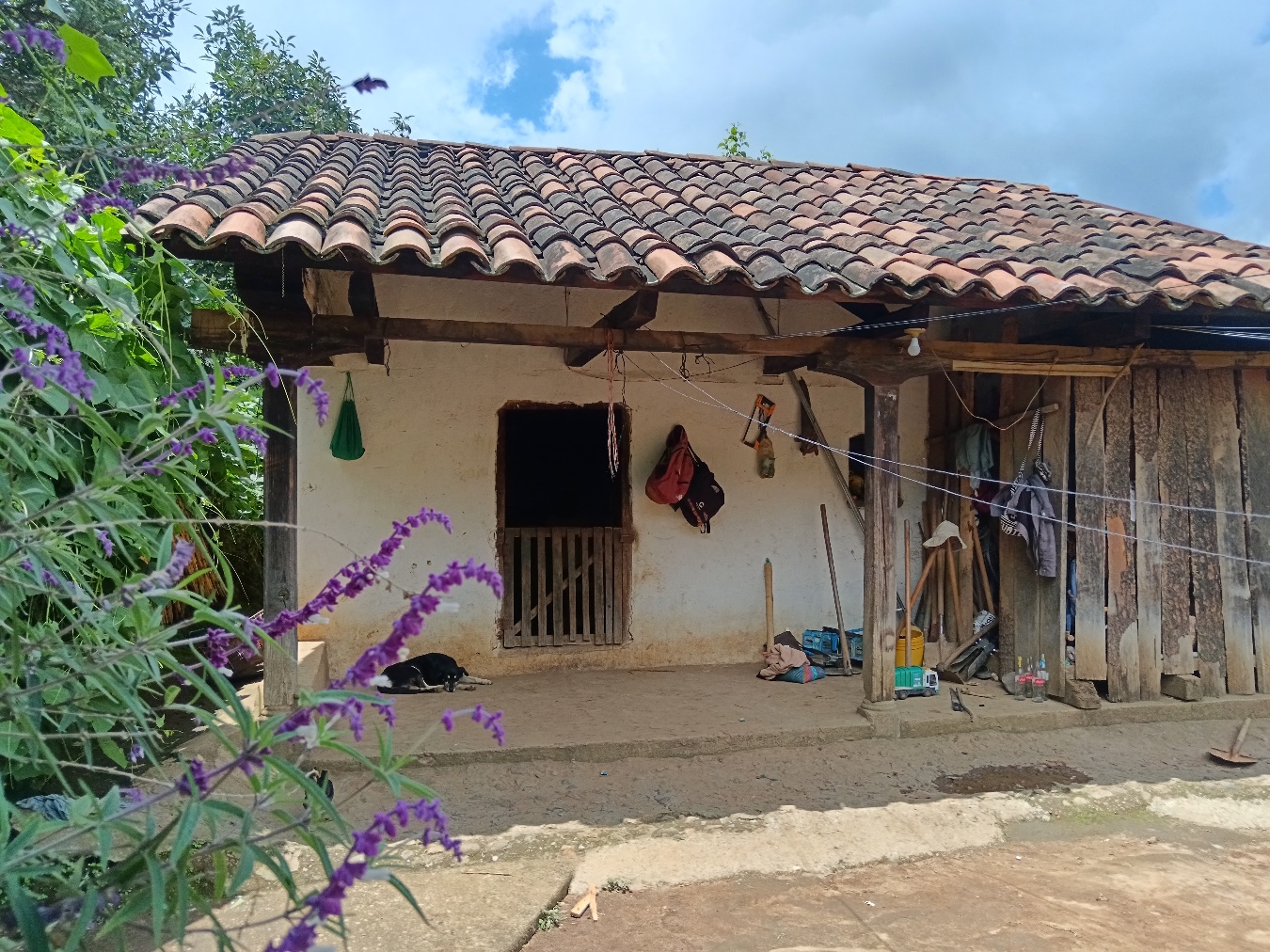
Tomás Cuterez Lares grew up in this typical house in the highlands of Guatemala and lives with his extended family. At the age of 16, he began his journey in community leadership which led him to co-found the organisation now known as COINACHI. In the initial stages of the organisation, he even donated land for its facilities. @Evelyn Vargas/IUCN
In an area where extreme weather events, such as droughts and frosts, are frequent, climate information is key. Morales emphasizes that it is vital to receive early warnings. "We are getting this through the Resilient Highlands Project, because INSIVUMEH and other participating institutions prepare a bulletin that is shared in advance. For example, I have already received the latest bulletin which alerts us about the El Niño phenomenon".
Maya-K'iche' women are also part of this cooperative. Some of them are producers with their own plots of land. Currently, a woman holds the position of vice chair in the organisation. Additionally, they hold other positions on the Board of Directors, such as members, for example.
Given the gender and social inclusion awareness processes promoted by the project, it is important for COINACHI to incorporate the participation of women and youth. This focus on future generations aims to create local opportunities that can help prevent migration to other regions or countries.
Water conservation practices, such as water harvesting, irrigation ditches, and agroforestry systems, help to capture moisture for use during the dry season. Soil conservation practices, such as bank terraces, contour furrows, and the reincorporation of organic matter, improve water infiltration and reduce erosion during periods of heavy rainfall. These practices, together with productive diversification, increase the resilience of the land and also contribute to the capture and fixation of carbon in the soil, increasing soil fertility and ultimately boosting agricultural yields.
At the end of the interview, Tomás Cuterez said: "I am grateful for this project, Resilient Highlands, because it is the best project I have seen in my life. Like I said, if it were not for the water, my harvest would not be like this. But now I have learned that there are ways to harvest water for my plants and thus bring benefits to the family.”
The 40 members of COINACHI, along with their families, including the Cuterez Tecún family, are part of the 132,000 beneficiaries of the Resilient Highlands project. Since 2020, this initiative has aimed to mitigate the impact of climate change on the hydrological cycle of the watersheds in the Guatemalan highlands and increase the resilience of ecosystems and local communities.
Resilient Highlands Project is implemented by the Ministry of Environment and Natural Resources (MARN), the Ministry of Agriculture, Livestock and Food (MAGA), the National Forest Institute (INAB), and the National Institute of Seismology, Volcanology, Meteorology and Hydrology (INSIVUMEH).
In addition to IUCN, the Resilient Highlands Project has the collaboration of the Foundation for the Conservation of Natural Resources and Environment in Guatemala (FCG) and the Rafael Landívar University (URL), thanks to funding from the GCF (Green Climate Fund) and the Korea International Cooperation Agency (KOICA).


The Bangladesh Forest Department (BFD) and IUCN Bangladesh, with support from Agence Française de…

Each year, International Women's Day is an opportunity to recognise the women advancing change in…

On 14 January 2026, in Dhaka, the Bangladesh Forest Department and IUCN Bangladesh formally signed…