Promoting water stewardship in Rukwa region's agriculture and livestock sectors
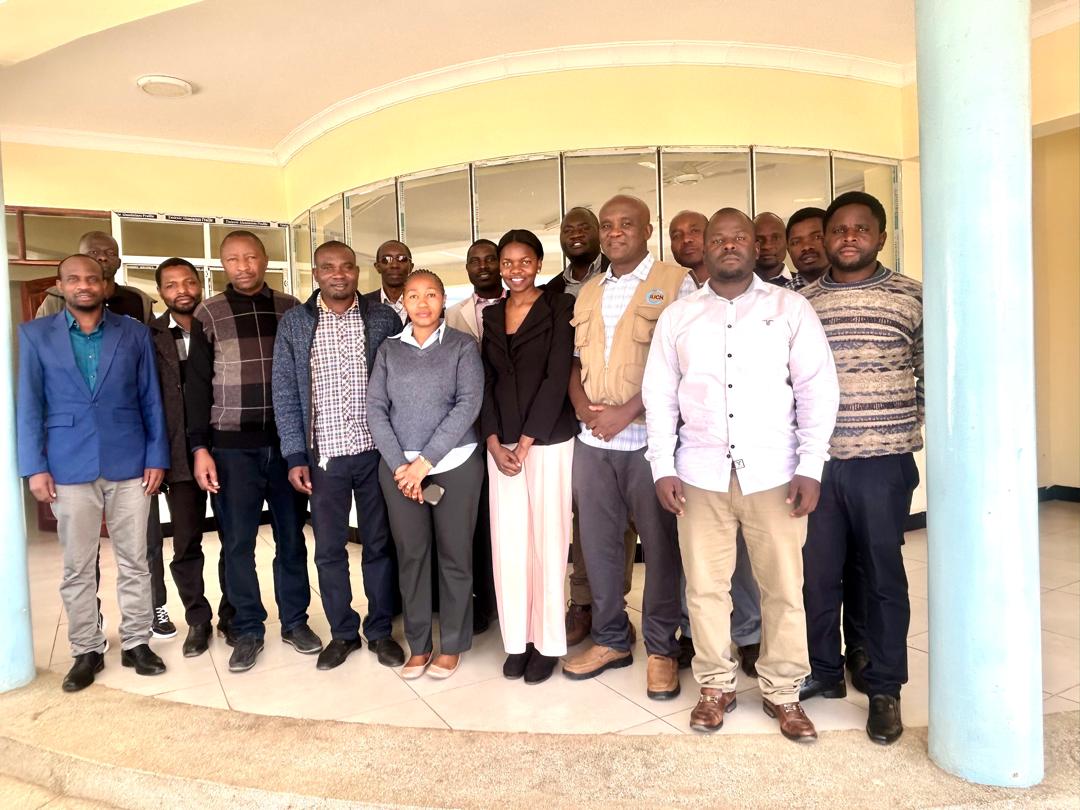
IUCN SUSTAIN Eco program, in partnership with the Lake Rukwa Basin Water Board (LRBWB), held an awareness workshop on Water Stewardship Principles (WSP). This initiative, focused on the livestock and agriculture sectors in the Rukwa region, builds on IUCN's long-standing commitment to conserving natural resources in the landscape and underscore our mission in the region.
Photo: Inyathi/Flickr

Photo: SUSTAIN Eco Project
The Challenge in Lake Rukwa Basin
The Lake Rukwa basin—a sprawling catchment area of approximately 5,760 km² across southwestern Tanzania—is facing urgent water resource challenges. Over the past decade, the lake’s depth has plummeted from about 9.5 meters to 3.4 m, a decline attributed largely to over-extraction, river sedimentation, and deforestation. This crisis is acutely felt by smallholder farmers and livestock herders. Rukwa's largely rain-fed agriculture, which supports over 68% of households on plots averaging 0.5–2 hectares, is hindered by unreliable rainfall (800–1,200 mm annually) and seasonal flooding leading to waterlogging and crop losses. Meanwhile, pastoralists—many migrating in with hundreds of cattle—rely on shrinking water sources to sustain livestock, with the lake supplying over 80% of local livestock water. Compounding the strain are informal irrigation schemes, unregulated cultivation near riverbanks resulting in high sediment loads, agricultural runoff, and pollution from pesticides and mercury used in local mining.
In this high-stakes landscape, IUCN's has been paramount to remedy the challenges. Since the initial SUSTAIN programme, IUCN working with partners such as the Shared Resources Joint Solutions initiative collaborating with local institutions—including the Lake Rukwa Basin Water Board, WWF, and civil society have been promoting Integrated Water Resources Management, Strategic Environmental Assessment, and Water Stewardship. In the Katuma sub-catchment, IUCN helped facilitate a public–private partnership that rebuilt irrigation infrastructure serving over 5,000 smallholders, reducing water losses and enhancing river flow across 21 villages, IUCN-supported water-user associations now protect riparian zones through tree planting (nearly 6,000 seedlings), beekeeping as an income alternative, and participatory water governance. These integrated, locally anchored efforts are directly addressing the basin’s water scarcity, degradation, and competition—laying the groundwork for resilient livelihoods and equitable water stewardship.
The Water Stewardship Workshop
Water Stewardship Principles emphasize the responsible planning, management, and use of water resources in a manner that is socially equitable, environmentally sustainable, and economically beneficial.
The workshop convened regional and district officers from the livestock, agriculture, and natural resources departments, alongside representatives from the Rural Water Supply and Sanitation Agency (RUWASA) and the Urban Water Supply and Sanitation Authority (SUWASA). Participants engaged in discussions about the challenges and opportunities for improving water governance, ensuring equitable water use, protecting vital water sources, and developing community-based solutions to water-related issues.

The collaborative effort led to the development of valuable ideas and actionable points aimed at strengthening local initiatives for responsible water resource management. As a tangible outcome, 1,000 Swahili-printed leaflets on Water Stewardship Principles were provided to the LRBWB for distribution to officers and subsequently to community members.

SUSTAIN Eco is being implemented by the International Union for Conservation of Nature (IUCN) in partnership with SNV and African Wildlife Foundation (AWF) working closely with Tanzanian ministries, local government authorities, and local associations and communities. The project is supported by the Embassy of Sweden in Tanzania.


The Bangladesh Forest Department (BFD) and IUCN Bangladesh, with support from Agence Française de…

Each year, International Women's Day is an opportunity to recognise the women advancing change in…

On 14 January 2026, in Dhaka, the Bangladesh Forest Department and IUCN Bangladesh formally signed…