Empowering Mediterranean societies and individuals to tackle water security
The BRIDGE initiative and the Mediterranean Alliance for Wetlands empower Mediterranean communities to shape fair water governance, fostering equity, cooperation, and sustainable river and wetland management.
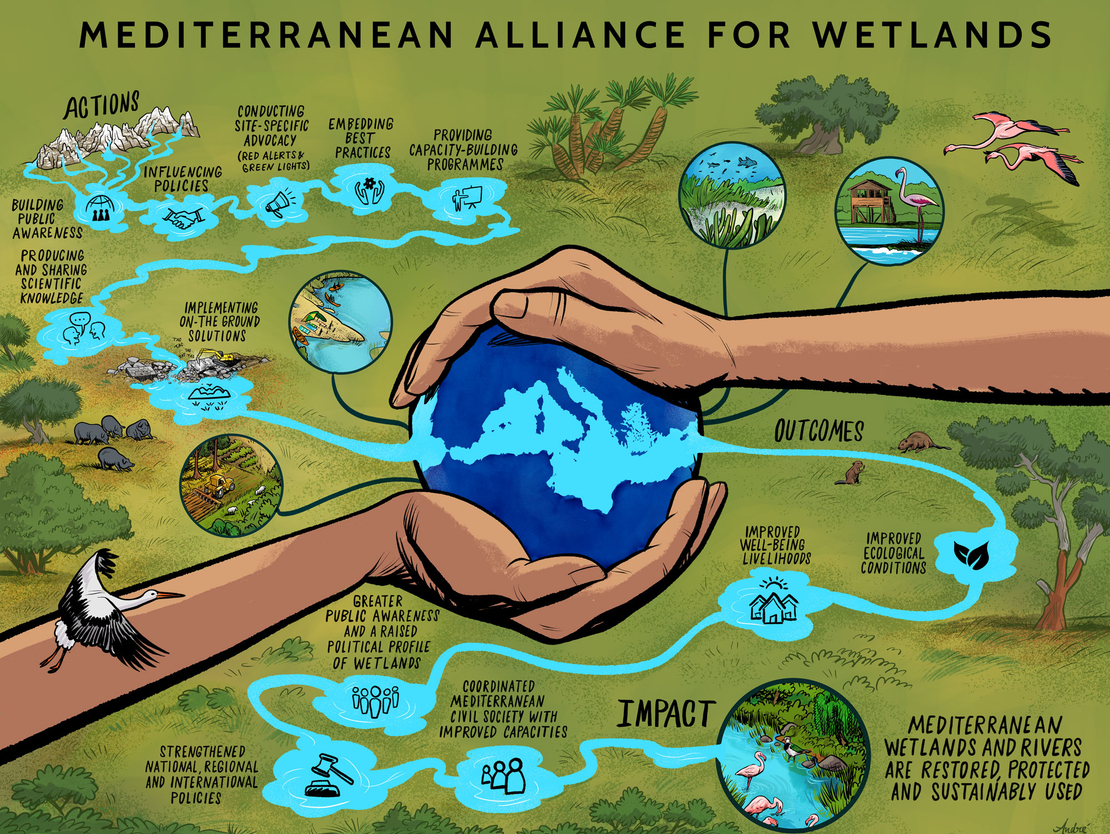
Launched in 2011, the Building River Dialogue and Governance (BRIDGE) initiative aims to build water governance capacities through learning, demonstration, leadership, and consensus-building, in transboundary river basins. Financed by the Water Diplomacy Programme of the Swiss Agency for Development Cooperation (SDC), IUCN, with partners, have over the past decade implemented transboundary river governance and dialogue through BRIDGE initiative in over twenty river and lake basins worldwide. The 5th phase of BRIDGE (2022 – 2026) is consolidating the knowledge and expertise generated to mobilise key ongoing negotiation processes where IUCN acts as a dialogue broker to foster multi-scale transboundary agreements and strengthen institutions.
In over a decade of implementation, BRIDGE has built on previous successes, challenges and lessons learned, working at multiple levels - local, basin, national, regional and global - to support all water users, through effective institutions, and enable sustainable management of water resources, contributing to long-term security and blue peace.
The networks and collaborations established, from River and Lake Basin Organizations, Water User Associations, local authorities and municipalities, national authorities, regional economic commissions and international actors have been crucial for its success.
The Medjerda River case: Equity through inclusive water governance
The Medjerda River flows through Algeria and Tunisia before emptying into the Mediterranean Sea. The river basin covers a large area, with 30% of it located in Algeria and 70% in Tunisia. The threats facing the basin put at risk not only the quality of the services it provides to society, but also the biological balance necessary for the survival of the ecosystems.
The Medjerda, Tunisia’s main freshwater river, joined the pilot basins of the programme in its 5th phase (2022–2026). As both the Northern Africa region and the river basin are relatively new to BRIDGE, the initial focus is on promoting the strengthening of governance capacities and establishing a framework for inter-sectoral cooperation with the support of the IUCN Centre for Mediterranean Cooperation.
In Tunisia, BRIDGE works towards enhancing the capacities of stakeholders, raising awareness on legal and diplomatic tools related to water, and promoting inter-institutional and transboundary dialogues. The three dialogues organised in the country in (June and November 2024, and February 2025) constituted a genuine learning journey, combining theoretical contributions, international case studies, experience exchanges, and simulation exercises.
Key recommendations from this 3rd dialogue asked to expand training to include other profiles beyond water diplomats (technicians, researchers, field actors), organize joint field missions between Tunisia and Algeria, together with the creation of bilateral working groups on specific issues (pollution, flood management, over-exploitation of aquifers), and the development of advocacy mechanisms to strengthen the integration of environmental concerns into bilateral political forums.
These transboundary dialogues provide a platform where to strengthen institutional exchanges and building local capacities of both government agencies and local CSOs and technical actors ensures that relevant groups have a voice in water resource decisions. This supports equity by enabling fair access, decision-making power, and resource control.
“The upcoming IUCN Congress 2025 offers a vital space to elevate conservation diplomacy – where rivers like the Medjerda are not just ecosystems, but starting points for dialogue, cooperation and transformative change”, highlighted by Arafet Ben Marzou, Co-Founder of Exploralis (IUCN Member organisation).
By facilitating cooperation between Algeria and Tunisia -where formal governance is not yet in place - BRIDGE uses water as key tool for diplomacy, peace, and trust-building, which are foundational to equity in conflict-sensitive regions.
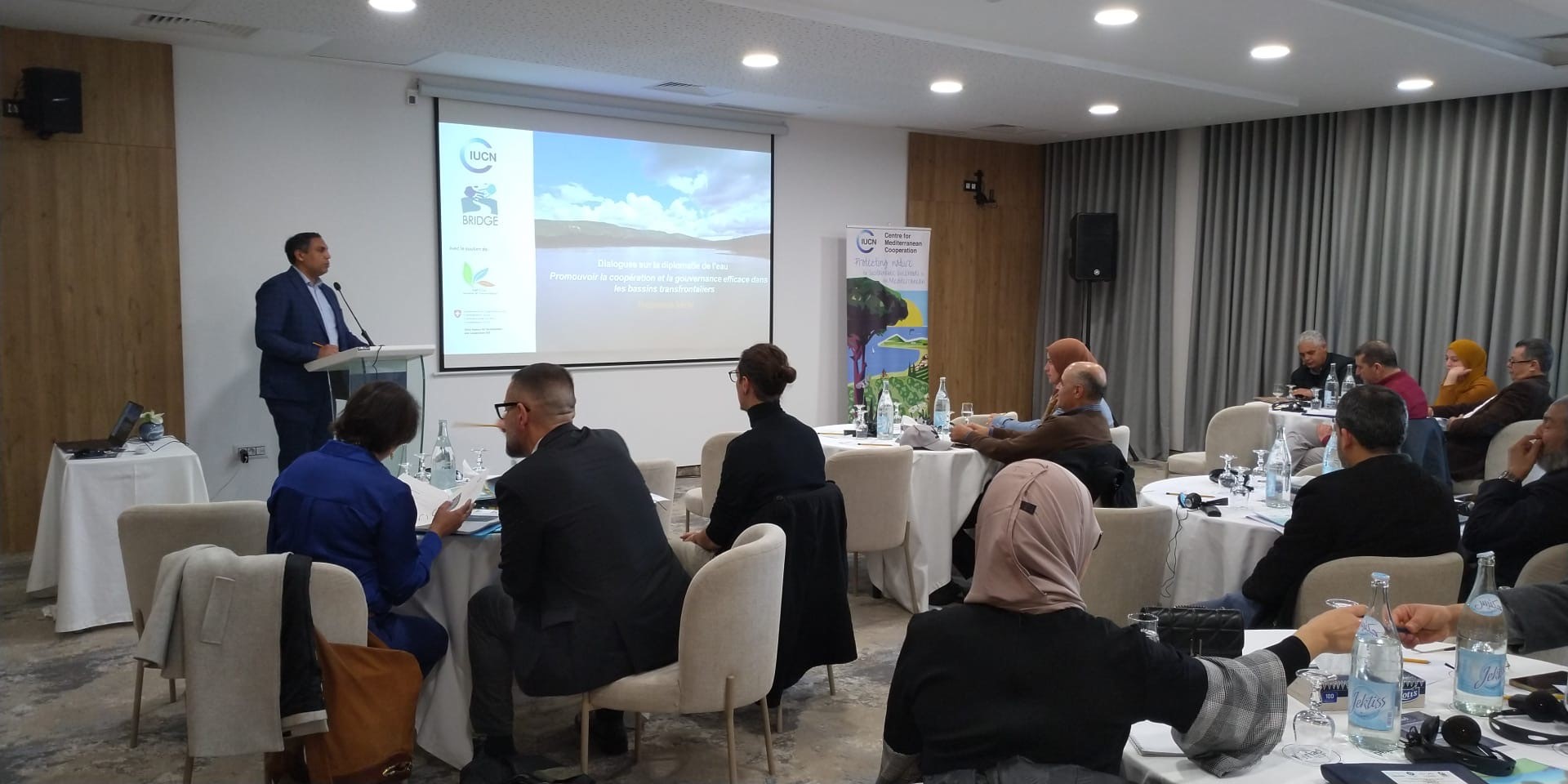
Supporting actions by local communities: the Mediterranean Alliance for Wetlands
Although formal governance frameworks between Tunisia and Algeria over the Medjerda Basin are still to be defined, the BRIDGE process is helping to build and strengthen the foundations for progressive, technical, and eventually political cooperation based on trust, transparency, and concrete action. Indeed, synergies and collaboration are being sought with the Mediterranean Alliance for Wetlands (MAW) launched in 2023, also active in North Africa and across the region.
A powerful voice for wetland and river conservation, the MAW network consists of more than 30 conservation organizations and research institutions from across 18 countries which provides a platform of support to civil society organizations (CSOs) working to protect, restore, and sustainably use Mediterranean wetlands and rivers through their Wetland Red Alert and Green Light mechanisms. MAW facilitates cooperation between CSOs and scientific institutions, supporting communication, offering capacity-building programs and advocating with authorities for implementing and enforcing policies.
It also offers a knowledge hub where scientific information, lessons learned and technical approaches amongst members and community organizations are shared. This alliance provides CSOs a platform for advocacy, learning, and engagement with decision-makers, a critical mechanism to deliver equity by ensuring civil society voices are heard in high-level water governance processes.
These cases serve as examples of how IUCN Med is working on turning technical water governance into a pathway for social equity and resilient cooperation in North Africa and the broader Mediterranean. IUCN Med is also moving forward with translating these lessons into field actions, promoting regional synergies, and positioning water diplomacy as a strategic lever for water security and environmental peace in the region.
More info on IUCN Med and Bridge: Northern Africa – The IUCN Water Knowledge Platform
More about the Mediterranean Alliance for Wetlands: About us - Mediterranean Alliance for Wetlands
Turning water diplomacy into a global conversation | IUCN World Conservation Congress
* This article has been prepared to showcase the actions led by IUCN Med and its partners in the Mediterranean, in the context of the IUCN World Conservation Congress, highlighting how the region’s experience can contribute to global conservation debates and solutions.


The Bangladesh Forest Department (BFD) and IUCN Bangladesh, with support from Agence Française de…

Each year, International Women's Day is an opportunity to recognise the women advancing change in…

On 14 January 2026, in Dhaka, the Bangladesh Forest Department and IUCN Bangladesh formally signed…