Training on sustainable aquaculture on climate resilience in Ca Mau Province
On 29-30 July 2025, in Vinh Hau Commune, Ca Mau Province, IUCN and the Management Board of Special-use and Protection Forests under the Ca Mau Provincial Department of Agriculture and Environment organised a series of training activities on mangrove planting, restoration monitoring, and sustainable aquaculture. The training aimed to introduce climate-adaptive aquaculture models, share experiences on integrated mangrove-shrimp, shrimp-crab, multi-species under-canopy, and eco-shrimp farming models, and update farmers on local policies.
Photo: Local farmers brough seedlings to one of project sites for planting © IUCN Viet Nam
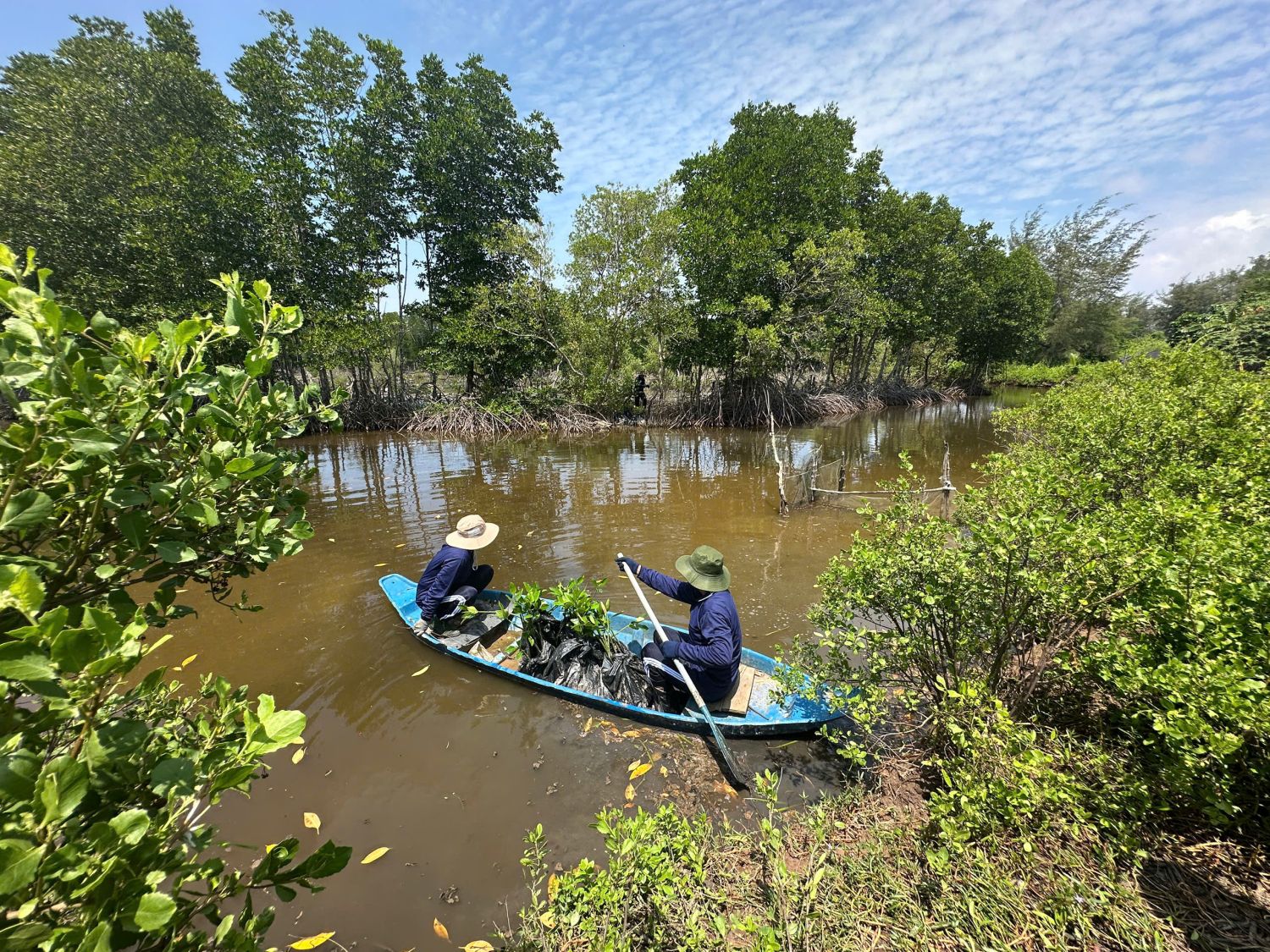
Photo: An expert from Fisheries Sub-Department, DAE Ca Mau introduced climate resilient a quaculture models © IUCN Viet Nam
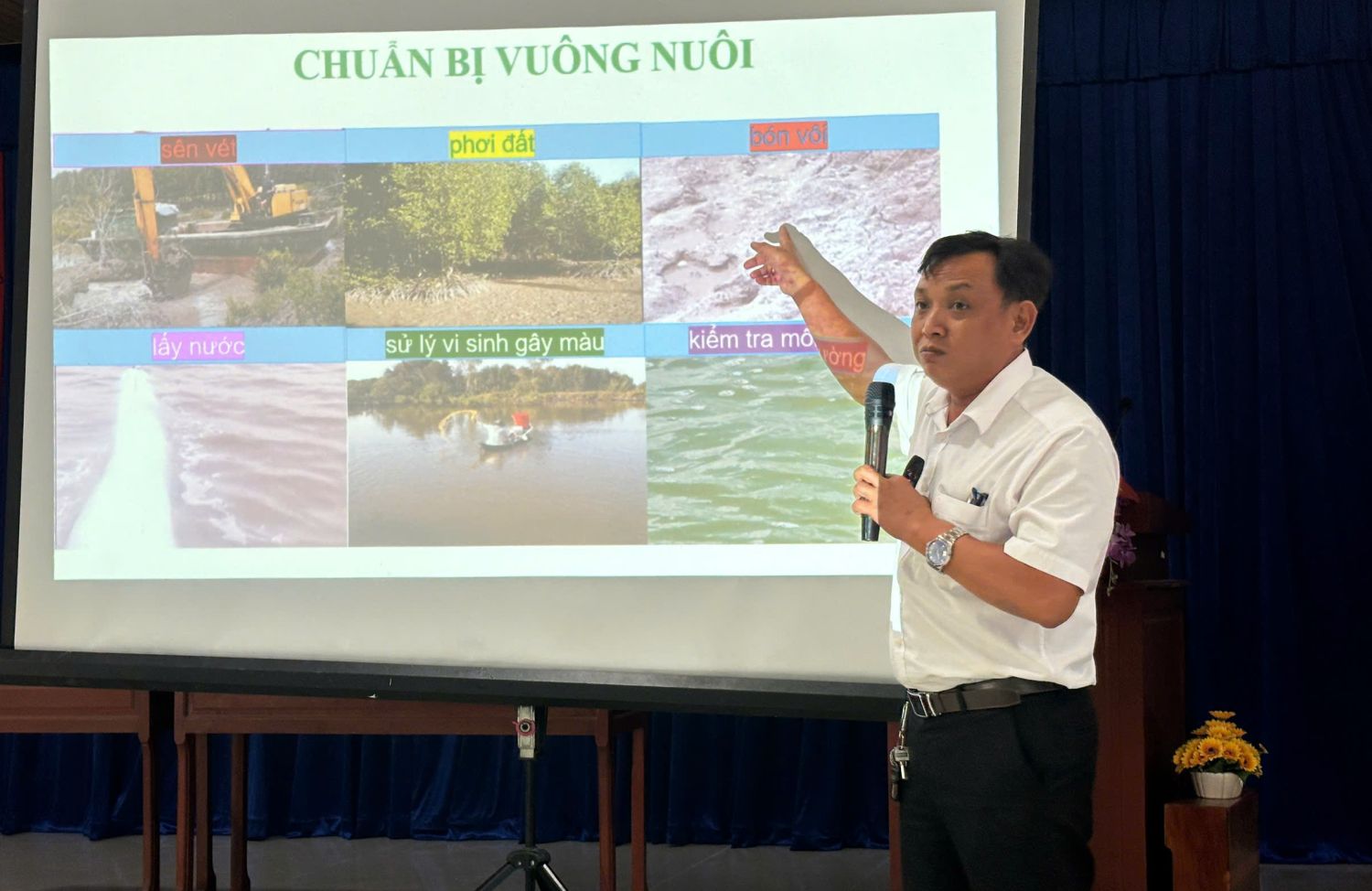
Photo: Local farmers were planting mangrove trees in Vinh Hau commune, Ca Mau Province © IUCN Viet Nam
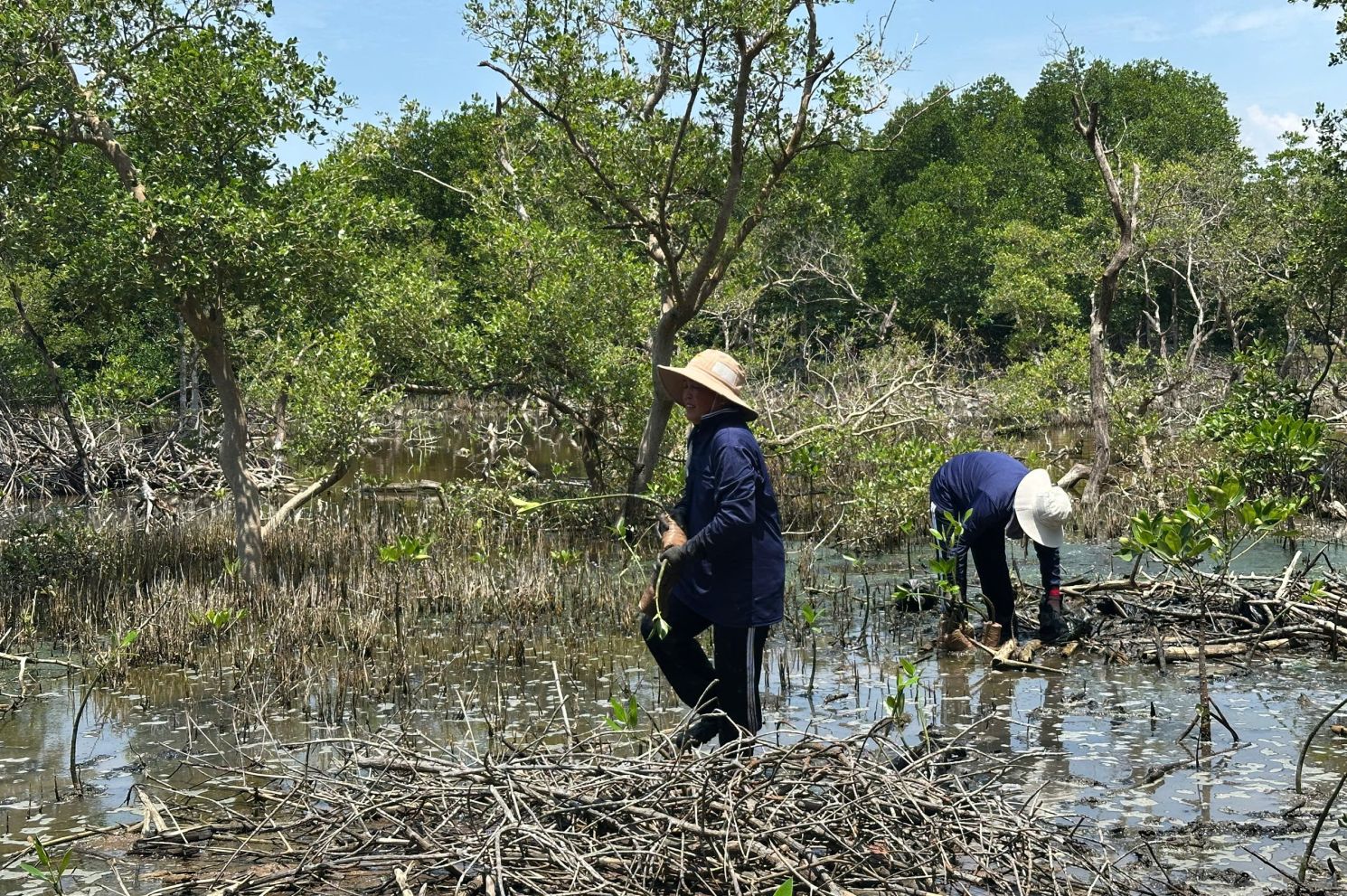
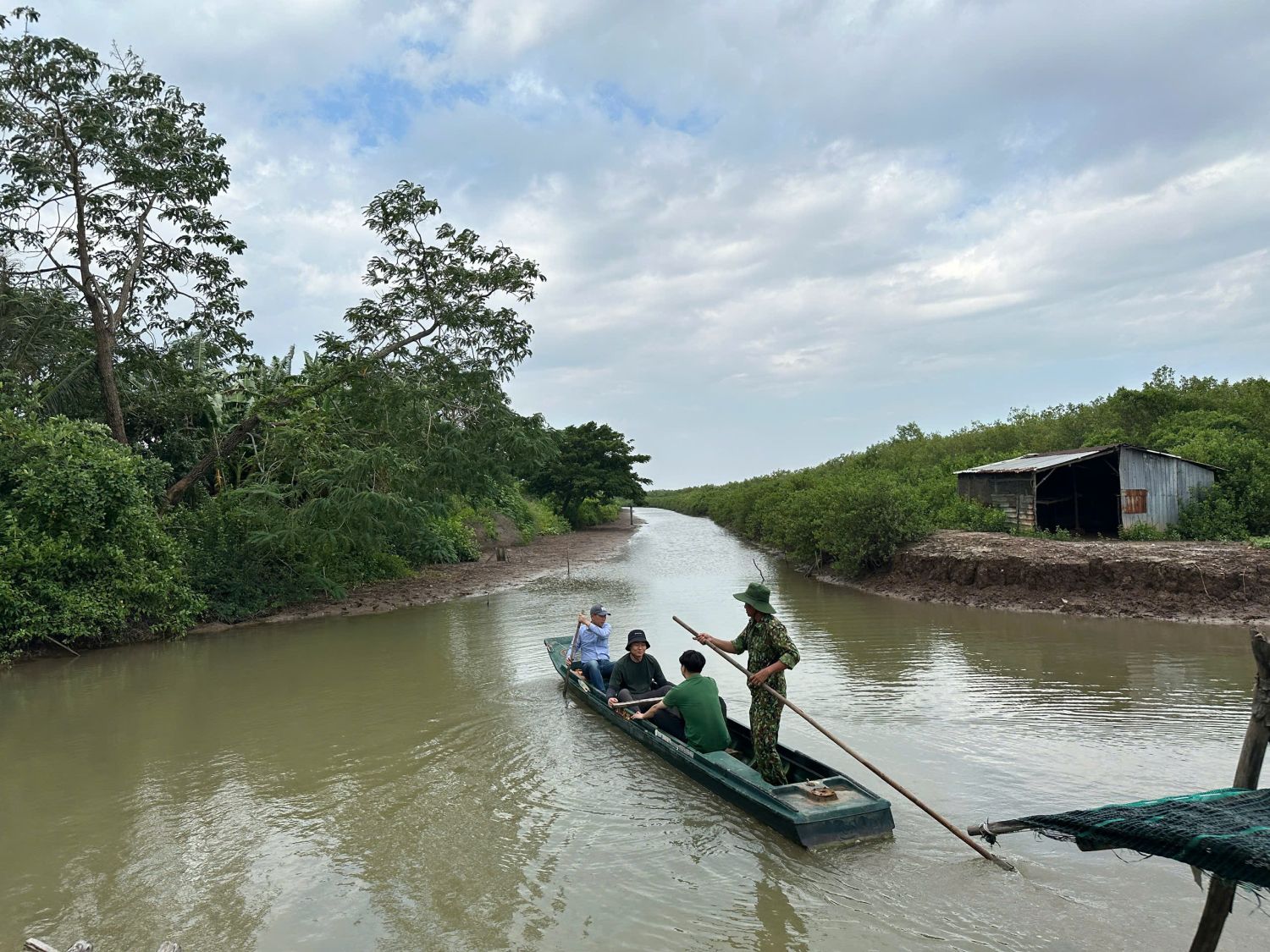
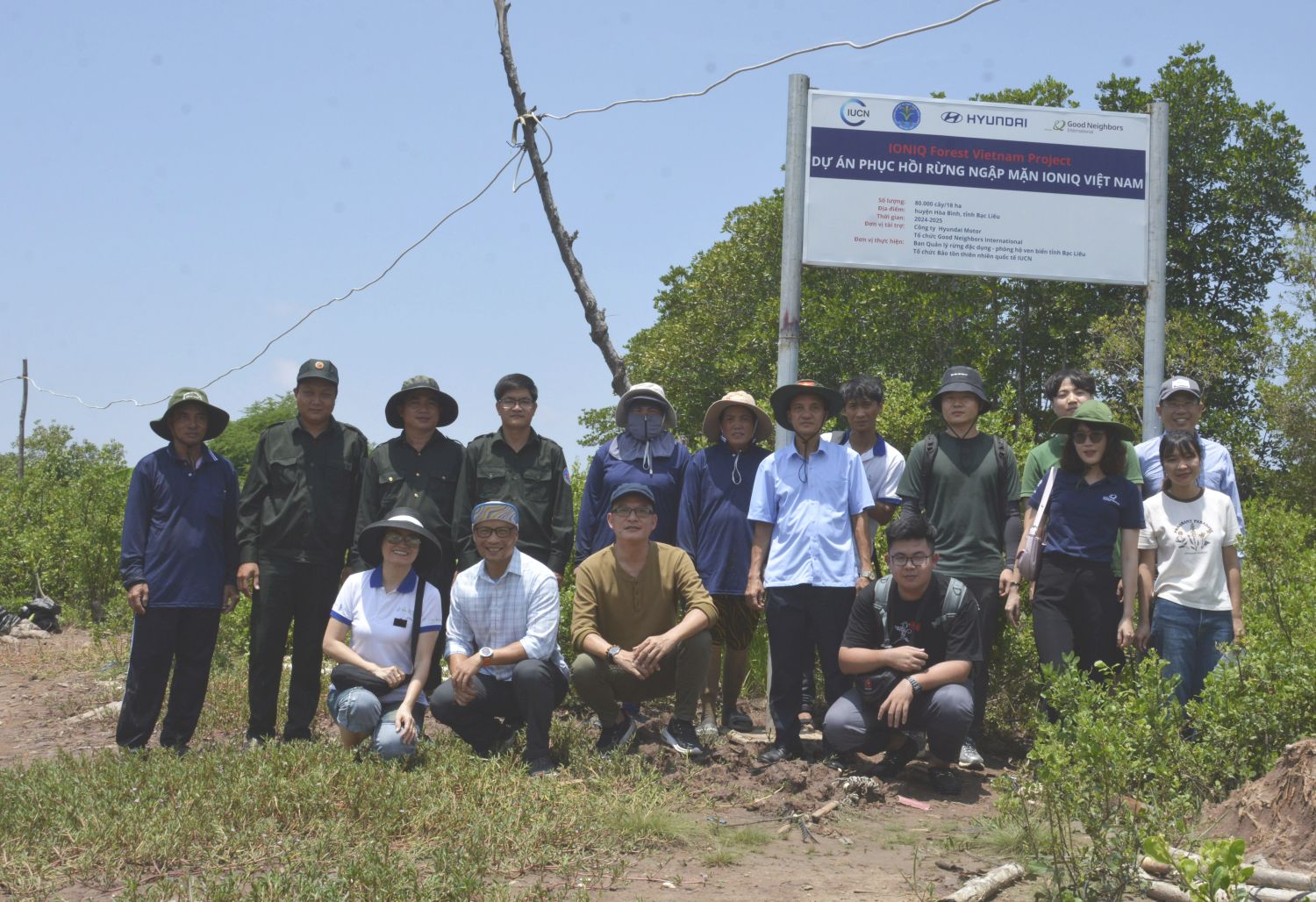
Photo: Representatives of HMC, IUCN visited project site for planting mangroves in 2026 © IUCN Viet Nam
These activities are part of the project “Scaling up NbS through Mangrove Restoration in Ca Mau Province” implemented by IUCN in 2025–2027 with funding from Hyundai Motor Company (HMC) and Good Neighbors International (GNI). The project will restore 160,000 mangrove trees, support the livelihoods of 23 contracted forest households, promote mangrove-friendly aquaculture practices, develop integrated mangrove–shrimp models, and pilot the application of Other Effective Area-based Conservation Measures (OECMs) to recognize biodiversity conservation outcomes in aquaculture landscapes.
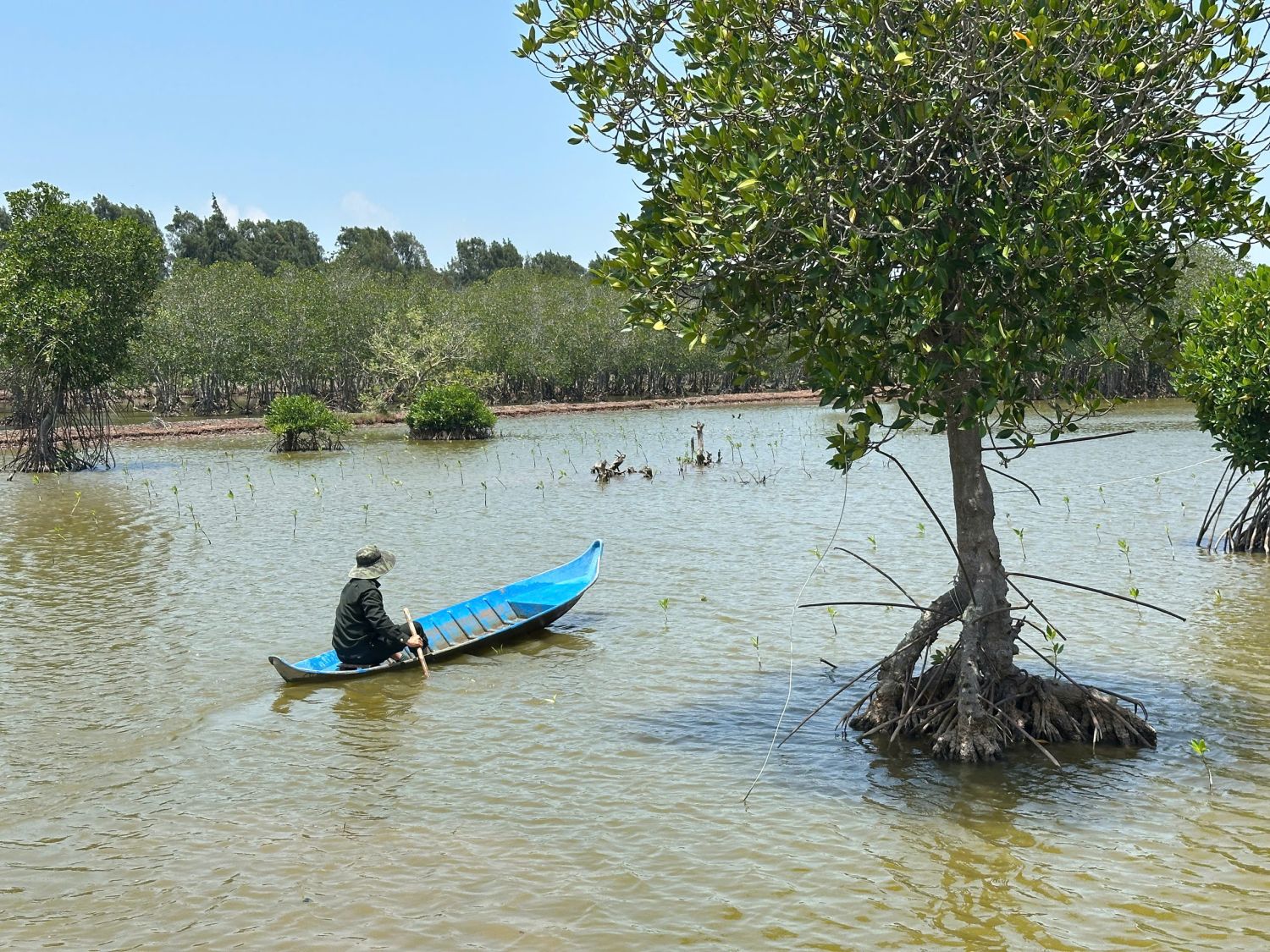
As of July 2025, over 80,000 mangroves have been planted on 18 hectares in Vinh Hau Commune; the remaining trees will be planted in 2026. Planting sites include shrimp ponds combined with mangroves and degraded coastal protection forests. The main species planted is Rhizophora mucronata (Đưng), well-adapted to brackish coastal conditions, with strong stilt roots that trap sediment and stabilize shorelines.
At a meeting on 29 July between IUCN, GNI, HMC, and the Management Board, board representatives noted that using native species and suitable nursery methods had helped to achieve a survival rate of over 90%. However, some contracted households were reluctant to plant dense mangroves because their primary income comes from aquaculture. Excess leaf litter from dense planting can cause black sludge, pollute ponds and lower pond productivity, while sludge removal is costly. They proposed reducing planting density from 4,400 to 2,000-3,000 trees/hectare to avoid later thinning. Farmers also suggested testing pond water quality and trial-releasing stock before full stocking to ensure adaptation.
On 30 July, the training was attended by 80 participants, including local farmers, representatives from the Ca Mau Department of Fisheries, Minh Phu Social Enterprise, experts, and media. The training enhanced farmers’ understanding of sustainable aquaculture models and provided opportunities to exchange knowledge and technical expertise on shrimp, crab, and multi-species under-canopy farming.
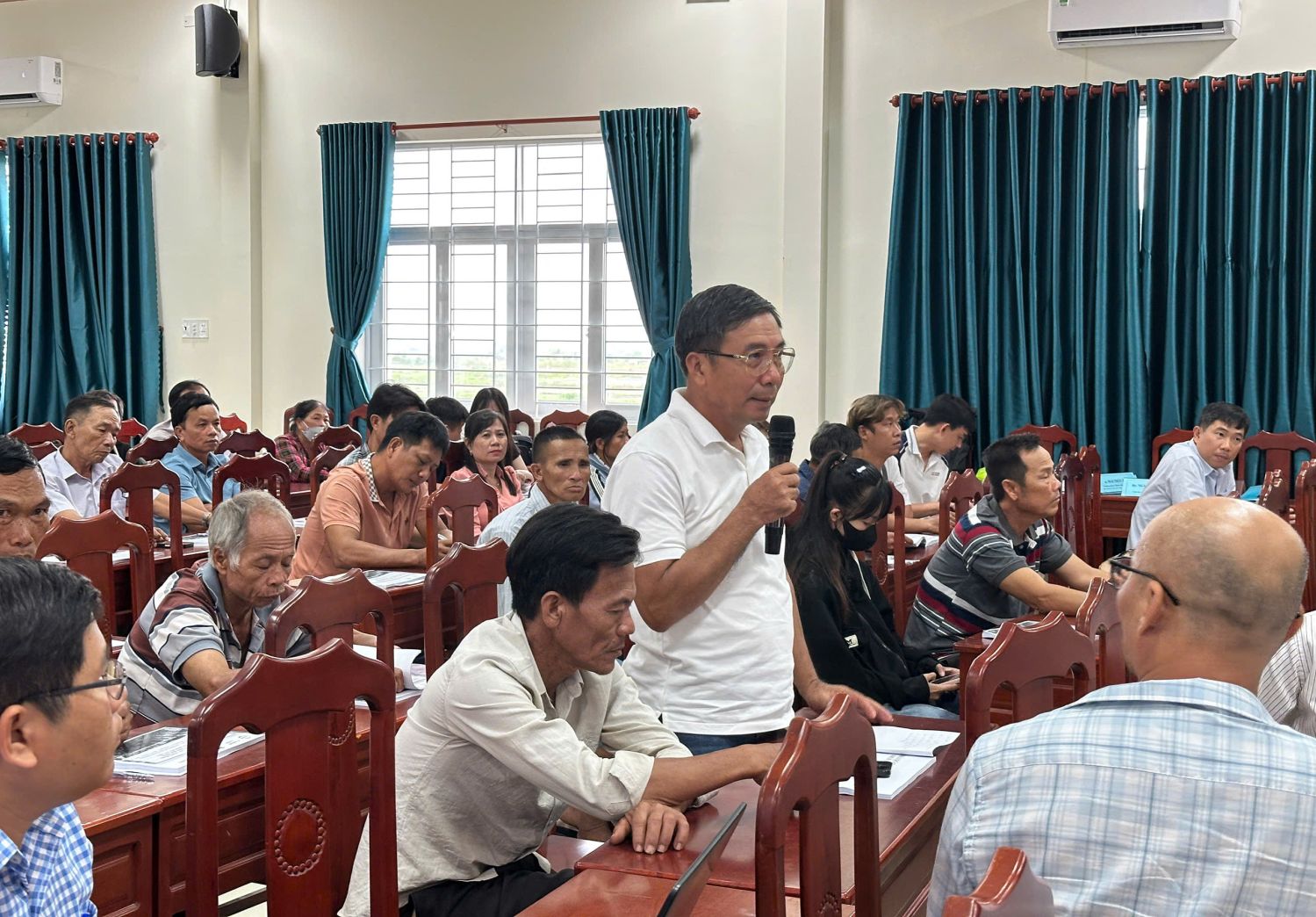
Key recommendations from participants included:
- To accelerate this transition, national development banks such as the Vietnam Bank for Agriculture and Rural Development should provide preferential loans to farmers at the early stage of the production cycle to maximize output and income.
- Offer in-depth training on specific models and techniques, such as black tiger shrimp and white leg shrimp farming, with a focus on modern techniques and biosecurity to boost productivity and income; also expand training on polyculture (shrimp-crab-fish), not just mangrove-shrimp farming.
- Add legal and administrative guidance to the training curriculum: advice on suitable economic models, administrative procedures, and legal rights.
- Organise farmer visits to successful aquaculture models in Ca Mau or other coastal provinces to provide practical, hands-on learning.
- Raise awareness among intensive aquaculture farmers to treat wastewater properly, reducing pollution and risks to integrated mangrove-shrimp areas.
- Keep training content simple, practical, and interactive to maximize farmer engagement.
Evaluation results showed that 100% of trainees found the training highly practical and directly applicable. Many expressed a desire for continued technical support and future training, especially study visits to successful real-life models. This reflects the community’s strong readiness to adopt sustainable, climate-resilient practices.
Through this training and direct livelihood support for participating households, the project has built trust and technical capacity to scale up integrated mangrove-aquaculture models. Moving forward, IUCN will continue to work with the Management Board to support the livelihoods of 23 contracted households and plant the remaining 80,000 mangrove trees on 19 hectares in Long Dien Commune, Ca Mau Province.
Bottom of Form