Diversity of the global protected and conserved area community shines through on second day of IUCN Congress 2025
The diversity of area-based conservation – and the actors that are the driving force behind it – emerged as a clear theme from a packed second day of the IUCN World Conservation Congress 2025 in Abu Dhabi.
Photo: Jorge Pezantes / IUCN
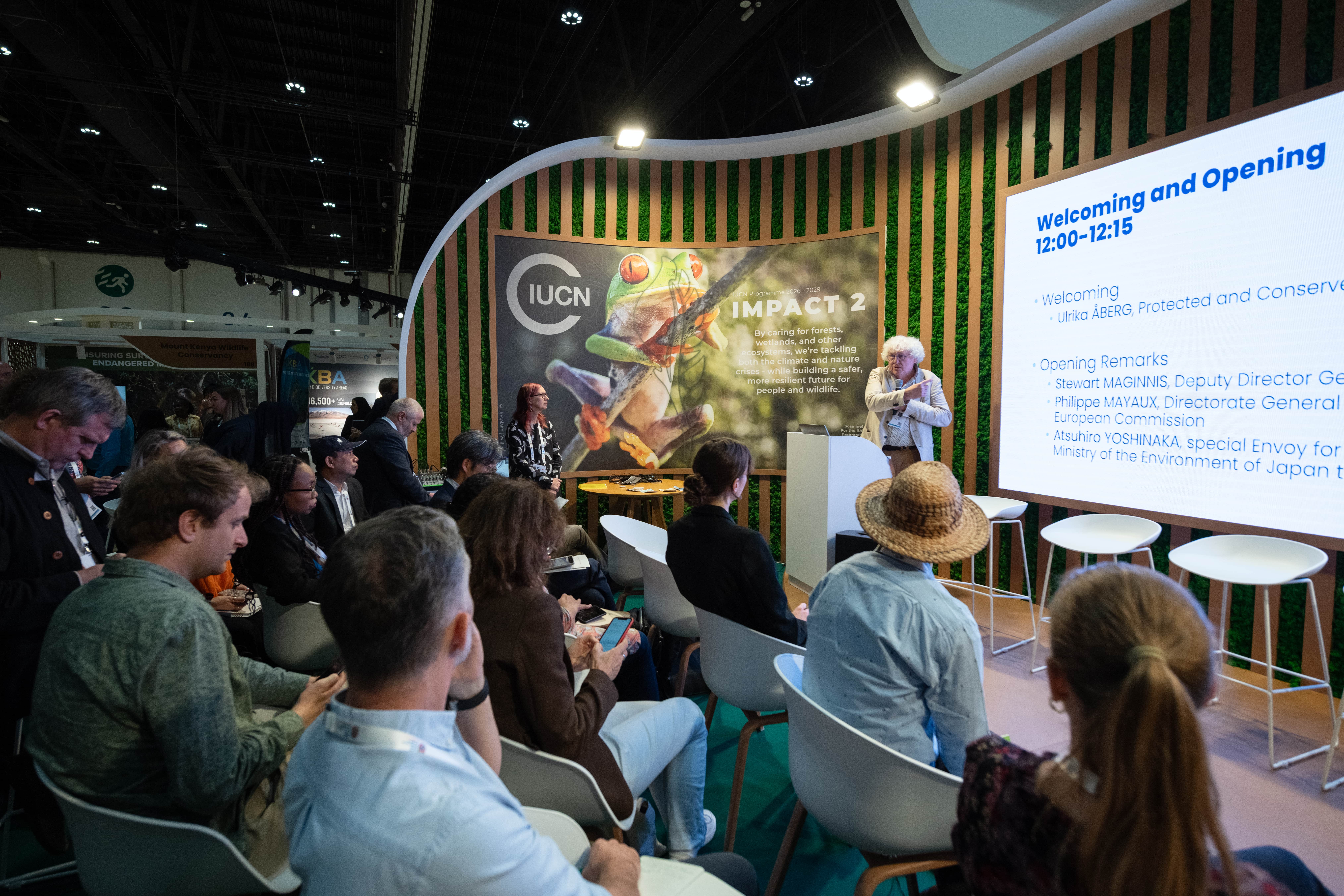
Photo: Jorge Pezantes / IUCN
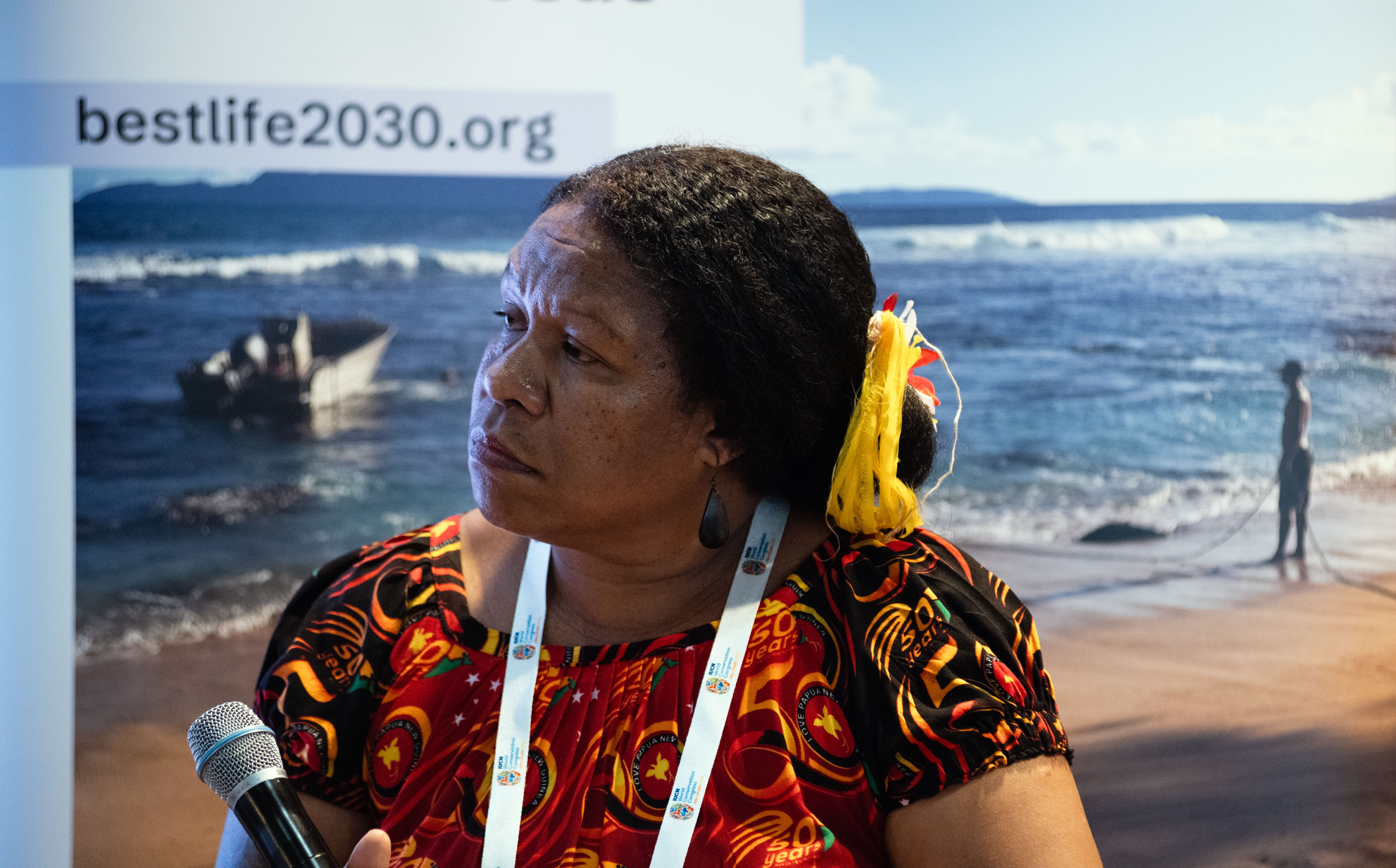
Photo: Jorge Pezantes / IUCN
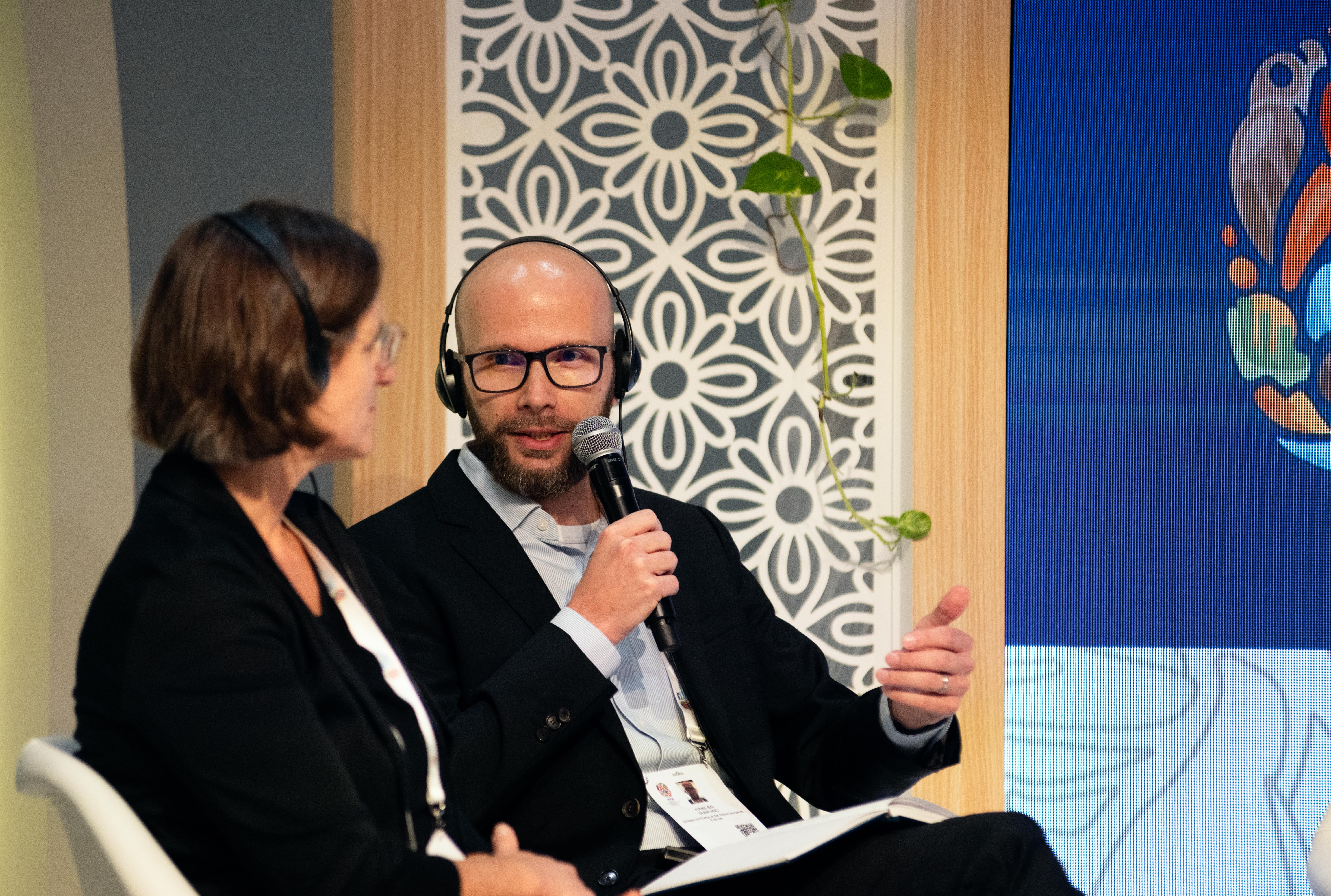
Photo: Jorge Pezantes / IUCN

Photo: Jorge Pezantes / IUCN
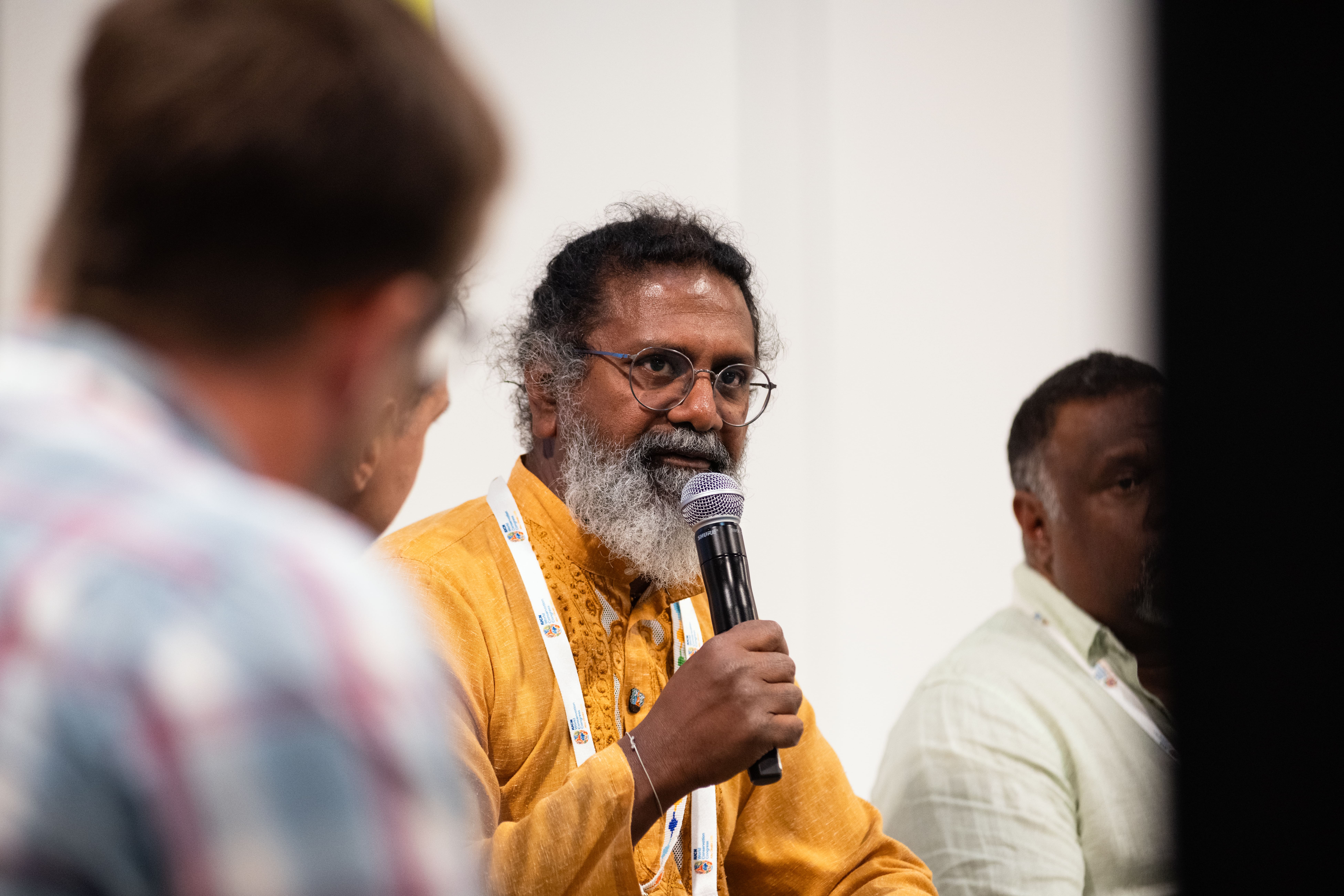
Photo: Jorge Pezantes / IUCN
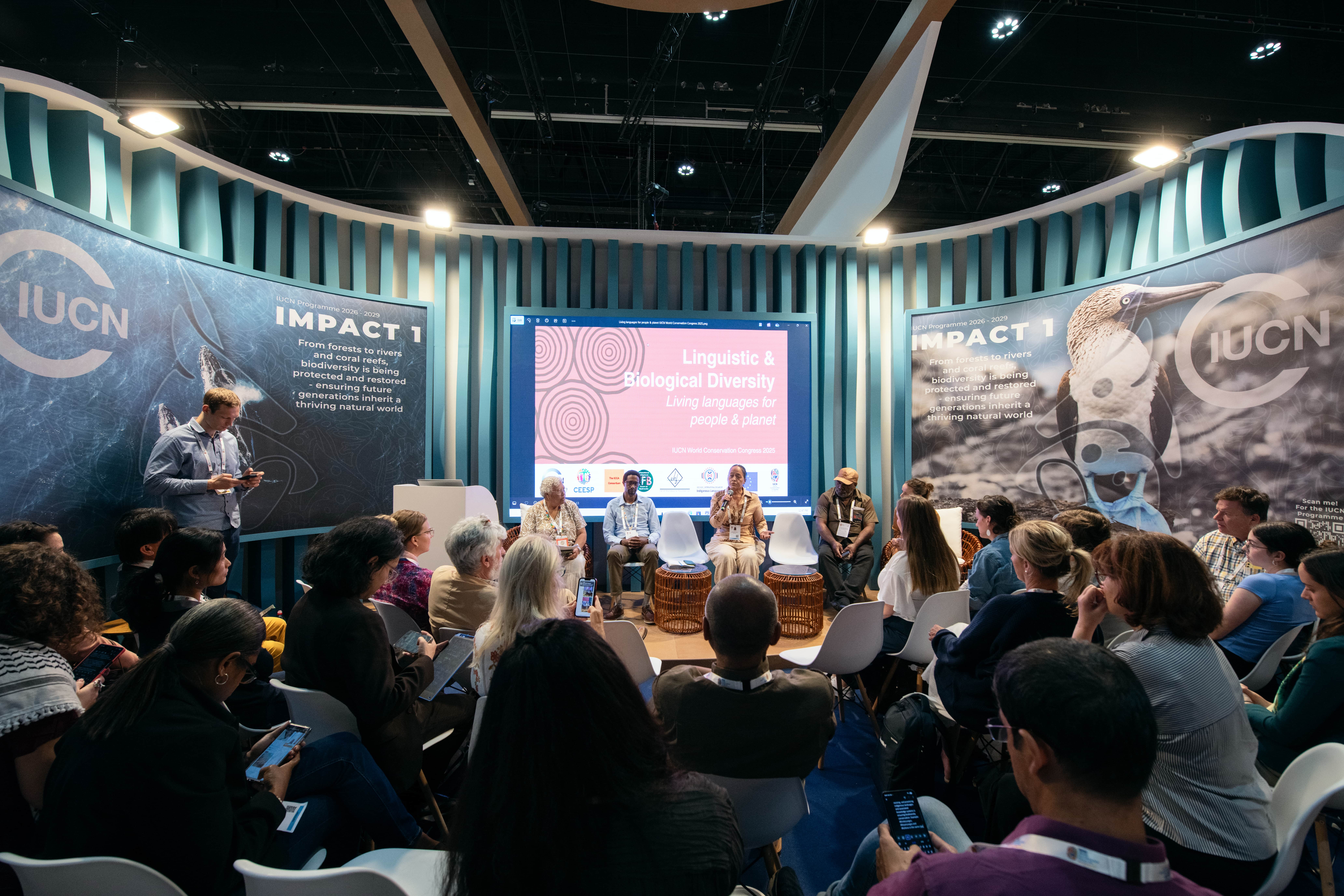
Photo: Jorge Pezantes / IUCN
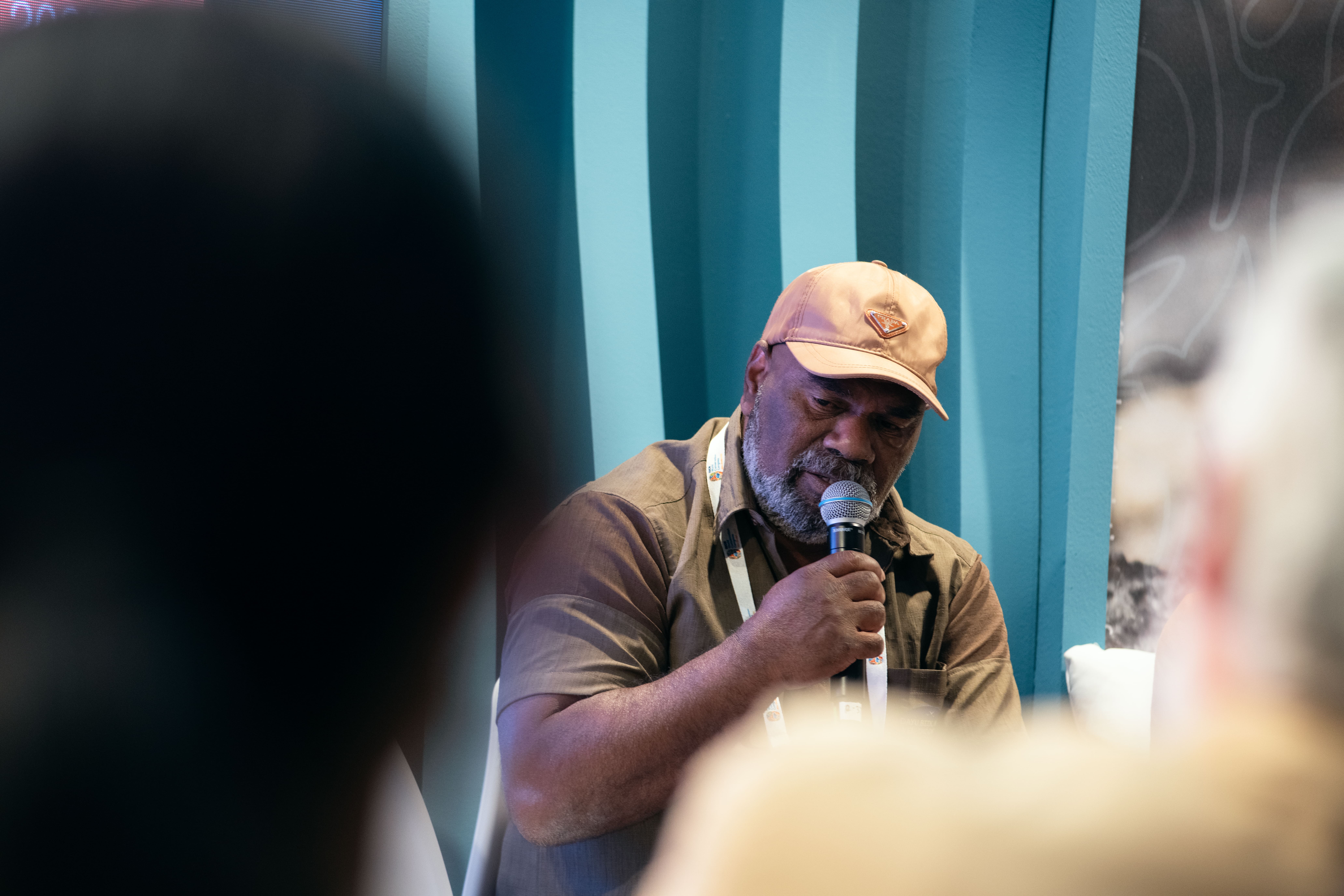
Photo: Jorge Pezantes / IUCN
Through participation in 21 panels, dialogues, speaker pitches and other interactive formats, the IUCN Protected and Conserved Areas team showcased the role of the Union in championing just and effective pathways for area-based conservation.
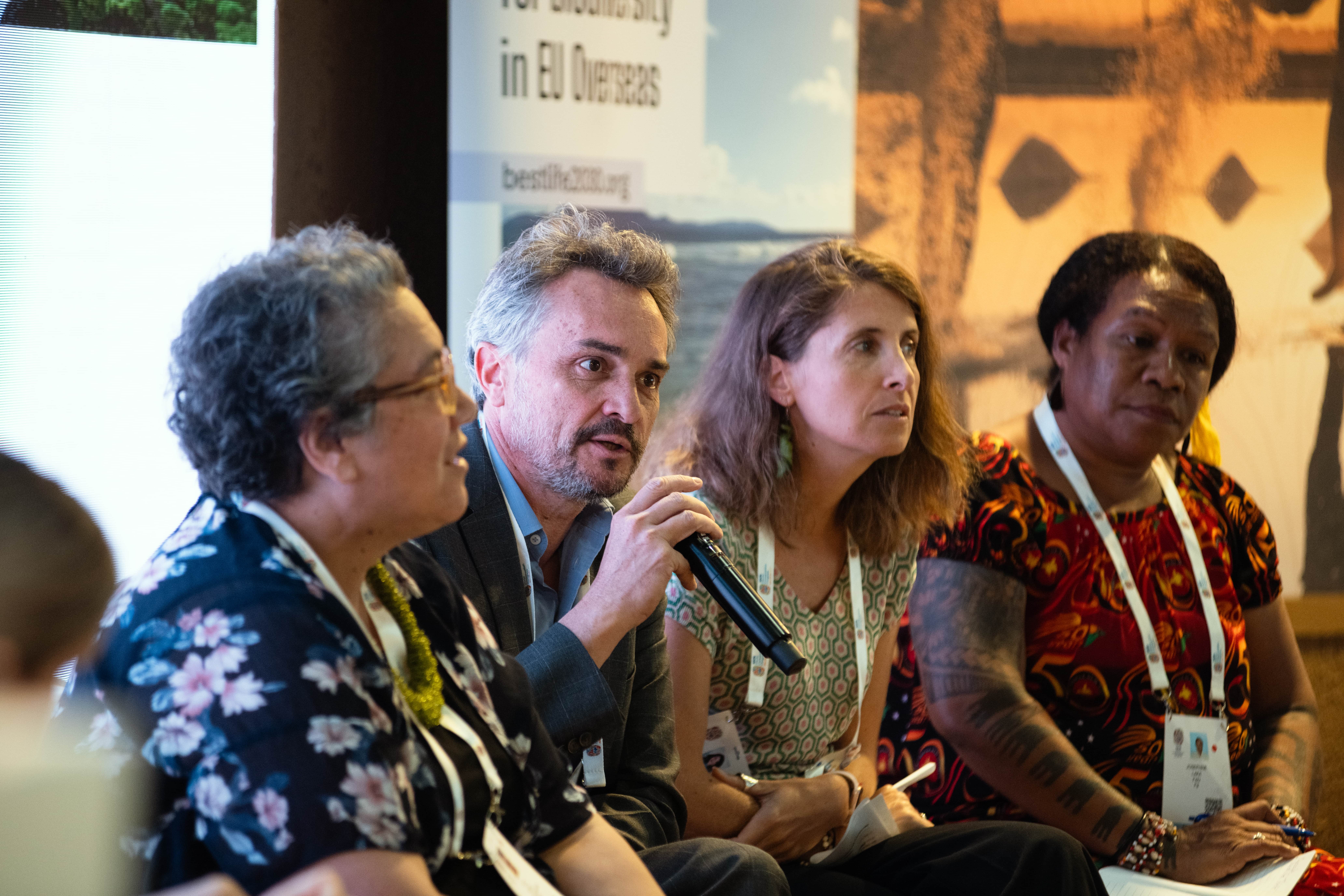
The day kicked off with a series of events in the prominent IUCN Programme 2026-2029 Pavilion – adorned with artwork featuring, among others, tech-based monitoring of mangroves in Brazil through the Tech4Nature initiative. The distinct geographies and communities touched by IUCN's work was exemplified by the BESTLIFE2030 initiative, aimed at supporting conservation in the EU Overseas Countries and Territories.
Scaling up conservation
The discussion highlighted the urgent need to strengthen biodiversity action on islands through inclusive, locally led, and adaptable approaches. Participants emphasised that biodiversity in island territories is declining rapidly, while financial and technical resources remain limited, underscoring the importance of programmes like BESTLIFE2030 as integrated initiatives that help mainstream biodiversity across all policies and funding mechanisms in EU Overseas Territories.
Collaboration across islands, and among local, regional, and international actors, was recognised as essential to amplify diverse voices and foster shared ownership of conservation outcomes.
Session participants, including the European Commission (the main programme donor) and the French Biodiversity Agency (both donor and implementing partner), stressed that funding mechanisms must be responsive to local needs, empowering community-based organisations to tailor their actions and achieve meaningful impact. The value of bottom-up approaches was repeatedly emphasised, along with the need for patience in nurturing small initiatives and allowing them to grow sustainably.
Finally, participants agreed that long-term success relies on linking conservation with livelihoods and community well-being, ensuring that local stewardship and care for natural resources endure even after external funding ends.
OECMs draw crowds and curiosity
Elsewhere, Other effective area-based conservation measures (OECMs) took over the IUCN Green stage on Friday morning. First up, the PCA Team co-hosted an event with the Food and Agriculture team and IUCN WCPA that will pave the way for new IUCN Guidance on Agricultural lands as OECMs. A new set of partners discussed the technical issues and emerging considerations, with plans to convene research workshops and field visits to develop the new guidance in the coming months.
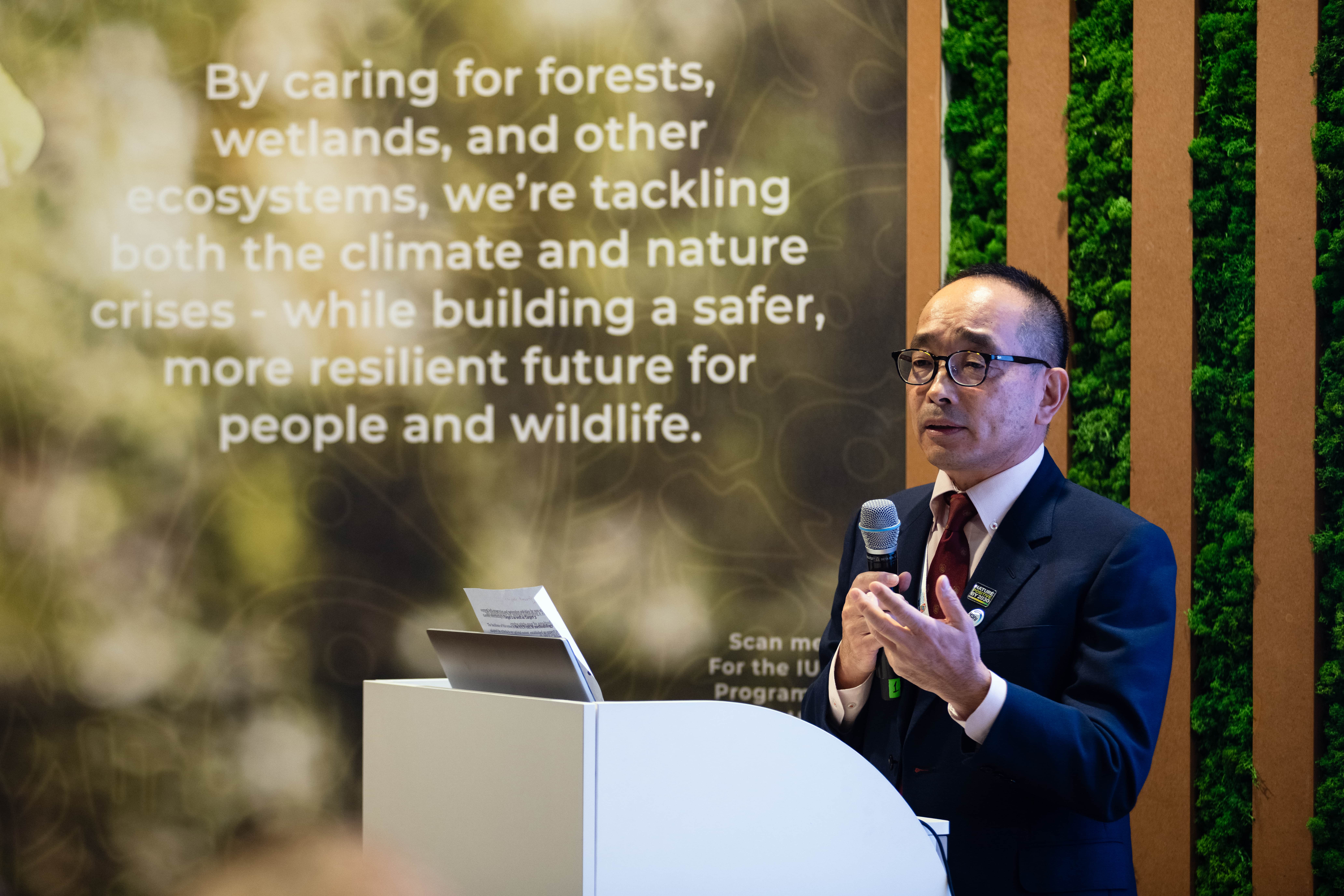
The event was followed by a two-part side event that discussed the role of non-state actors in biodiversity conservation. The high-level panel featured keynotes from IUCN Deputy Director General, the European Commission and the Japanese Ministry of the Environment all of whom indicated institutional support for nonstate actors and their recognition as OECMs. A technical panel followed led by WCPA OECMs Chair, with representatives from Indigenous peoples, the private sector and academia. The event discussed the recommendations to advance and support non-state actors and celebrated the new project partnerships with United Nations University, European Commission and the PCA Team.
Reframing the language of conservation
In a unique event at IUCN Congress 2025, the specific role of linguistic diversity in strengthening biodiversity conservation was the topic of an impassioned, horizontal panel session. After short introductory speeches that contextualised the work of IUCN in the Nature-Culture Joint Programme and in supporting the systematisation of Traditional Ecological Knowledge (TEK) through the Article 8J of the Convention on Biological Diversity, a panel consisting of indigenous leaders from Hawai'i, Tanzania and Australia – and guests in the ‘hotseat’ of the panel from New Caledonia and Finland – explored the injustices of seeing conservation through the lens of dominant languages.
‘Language is not merely to be translated, it is to be shared, experienced, and interpreted. People engage most meaningfully with their environment when they can do so in their local language.’ Panelist
Whose area-based conservation?
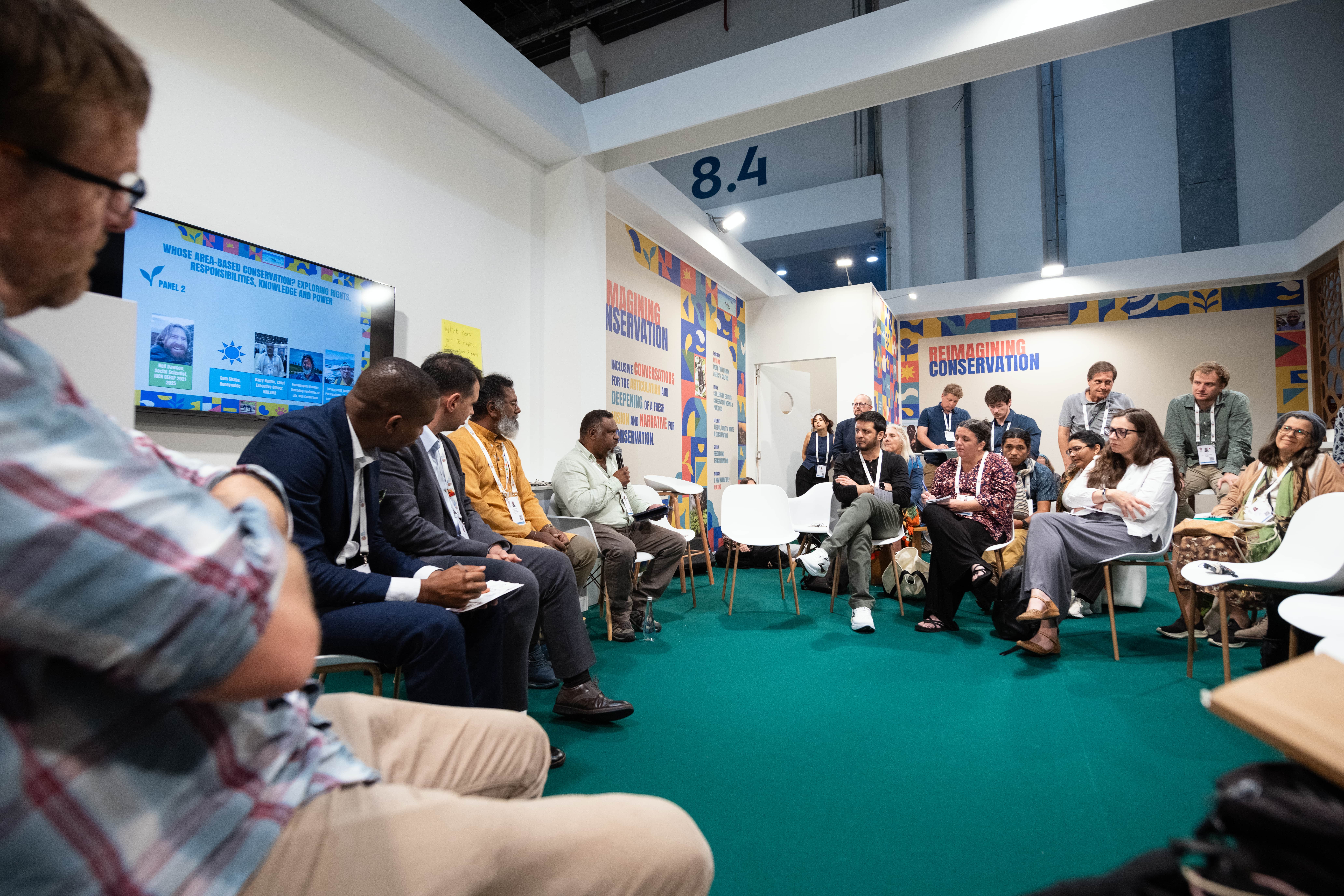
On Friday, the Reimagining Pavilion hosted a thematic day “Challenging existing conservation norms and practices”. The PCA Team with the ICCA Consortium hosted an event entitled “Whose area-based conservation?". The session comprised a series of dialogues amongst representatives of Indigenous peoples, local communities, conservation NGOs and other actors, to collectively reimagine the meanings, values and worldviews that underpin diverse conservation. The participants heard and learned about practices and approaches for asserting rights and moving from reflection and assessment to transformative change. The session sought to question and challenge the power dynamics that persist across contemporary area-based conservation policy and practice.
“Conservation for Indigenous peoples and local communities is life in its entirety” said Paul Saing’eu, ICCA Consortium Regional Coordinator for East Africa, “it is the connection between people and territory and rooted in customary law and local governance”.
To truly reimagine conservation, conventional conservationists must change their mindsets to embrace diverse forms of stewardship and see them as a part of a holistic approach.” A key outcome of the event was the commitment of the PCA Team and the ICCA Consortium to work together under a new joint partnership to create a space for shared learning, dialogue, direct financial action and law and policy advocacy.
The reach of the IUCN Green List
The global significance of the IUCN Green List was evident throughout Day Two of IUCN Congress at the Green List Pavilion, on Central Stages and throughout the Exhibition Halls. At the Ministry of Korea Pavilion, an informative session showcased how four countries — Korea, China, France, and Japan — have advanced the IUCN Green List initiative and contributed to achieving Target 3 of the Global Biodiversity Framework (30×30).
On the Central Stage for Conservation Action, a prominent session brought together Green List regional coordinators and other key stakeholders to reflect on the contribution of the IUCN Green List to the achievement of Target 3 of the Kunming-Montreal Global Biodiversity Framework. From Asia, China shared how quality (through the Green List) and quantity (30x30 coverage) can go hand in hand. In West and Central Africa, the self-assessment tool was presented as a way to identify and address implementation challenges. Experiences from four national jurisdictions were shared in Europe, with a particular focus on the importance of dedicated funding to enhance implementation, and on the creation of a regional EAGLs groups to strengthen regional capacity. From the Middle East and West Asia, innovations like 3D mapping exercises and self-assessment pilots were showcased. The session also highlighted growing cross-regional collaboration, including exchanges between EAGLs from China and MEWA. As one participant said, “The Green List demonstrates that 30x30 can be achieved.”
Conservation networks connect
As the evening closed in on Day Two at IUCN Congress 2025, BIOPAMA delegates gathered in the Americas Pavilion in the evening to network after a long day of discussions, learning and networking. The event also provided a space for attendees to watch a short video on the impact of the BIOPAMA initiative in the Caribbean.
Join us on day three of IUCN Congress: check out our programme


The Bangladesh Forest Department (BFD) and IUCN Bangladesh, with support from Agence Française de…

Each year, International Women's Day is an opportunity to recognise the women advancing change in…

On 14 January 2026, in Dhaka, the Bangladesh Forest Department and IUCN Bangladesh formally signed…