From the IUCN Green List to Reimagining Conservation on the first day of IUCN World Conservation Congress
On Day 1 of the IUCN World Conservation Congress, the diversity and resoluteness of those working to improve area-based conservation was on full display.
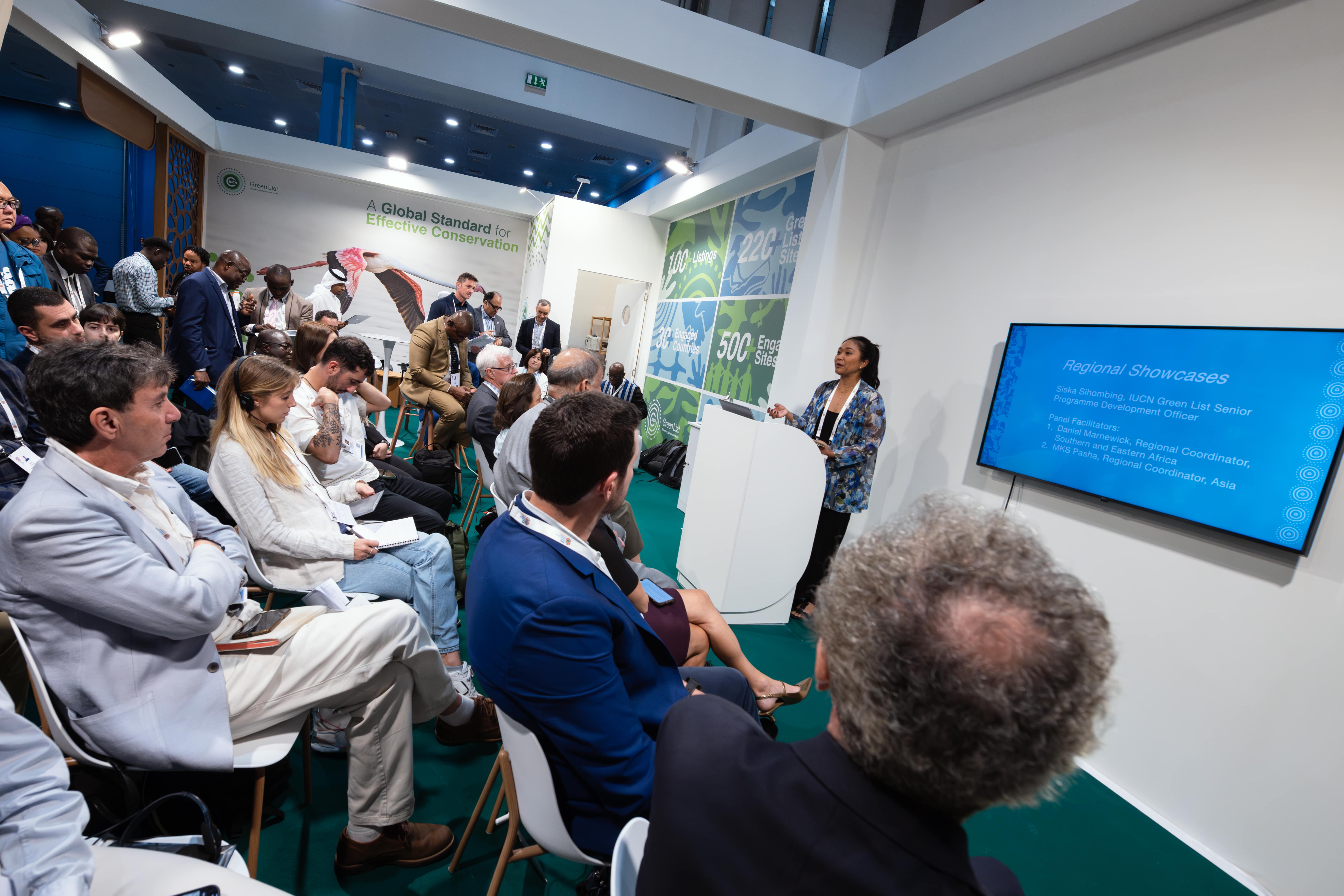
Parallel opening sessions in the IUCN Green List and the Reimaging Conservation Pavilion – neighbours in the immensity of the ADNEC Exhibition Hall – embodied the pillars of modern conservation.
The Green List Pavilion opened today with great energy and strong participation, launching its journey with four dynamic sessions that set an inspiring tone for the days ahead.
The day began with “Green List Impact: Pathways for Protected and Conserved Areas to 2030”, which highlighted how sites on the IUCN Green List have delivered measurable conservation impact and advanced global biodiversity, climate, and equity goals under the Kunming-Montreal Global Biodiversity Framework. Through stories from the United States, France, Côte d’Ivoire, China, Armenia, and Saudi Arabia, speakers illustrated how strong governance, community engagement, and resilience have driven progress toward 2030 targets.
This was followed by “Voices from the Green List Community”, where a new publication on the Green List value proposition was launched, highlighting 12 key benefits from around the world and offering a preview of the forthcoming Impact Report developed by IUCN World Commission on Protected Areas. Another session showcased successful examples of connectivity and transboundary partnerships, emphasizing the power of networks to scale up the use of the Green List Standard and accelerate global conservation ambitions.
The last session shone a light on “how the Green List Standard can help strengthen the protection and management of World Heritage Sites”, with examples from Ivory Coast and France. With the Pavilion packed and buzzing, this opening day made it clear: the Green List community is vibrant, expanding, and ready to deliver transformative action on the road to 2030.
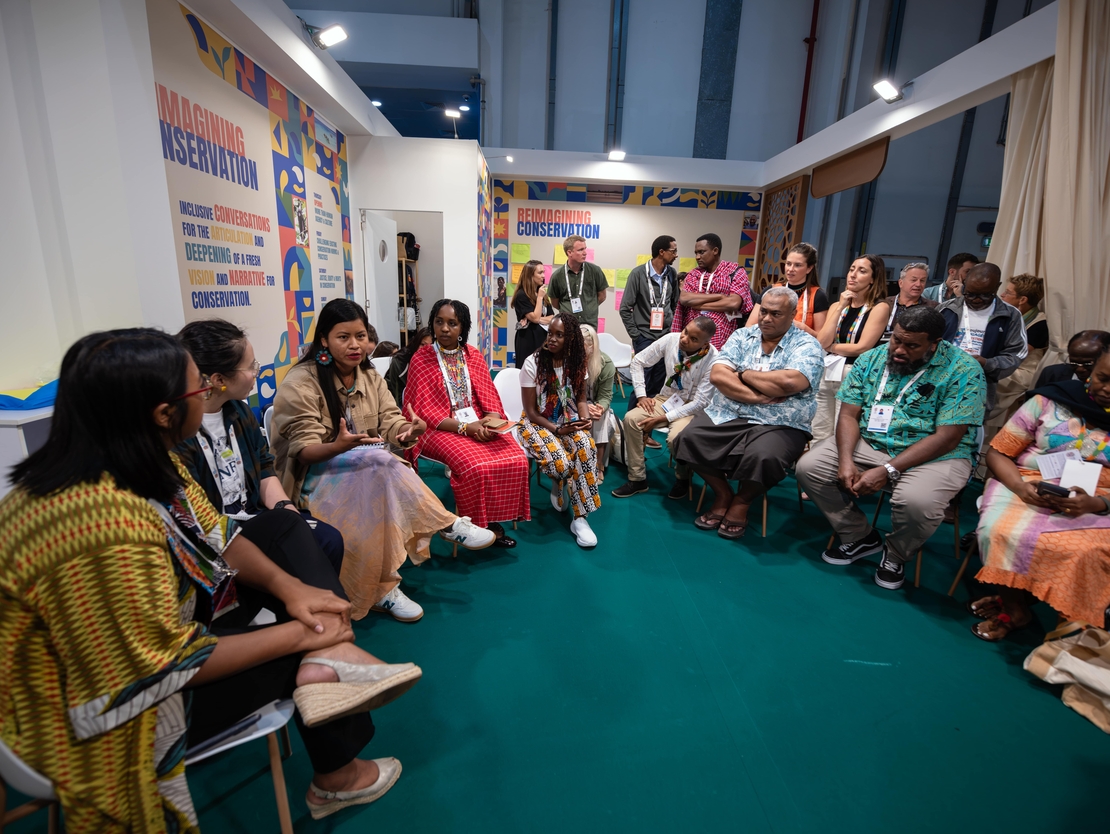
The Reimagining Pavilion brought colour to the hall, from its patterned walls to diversity of traditional garments, to the intensity of conversations aimed at disruptive and productive dialogue. The session opened with a lively discussion on the meaning of conservation, and how the concept can move beyond conventional academic understandings of nature conservation towards embracing the long standing cultural, spiritual and local understandings of nature. The Reimagining Pavilion promises to be an inclusive and participatory space that will challenge old paradigms and sparks new possibilities for people and nature. The PCA Team will host a range of events over the coming days.
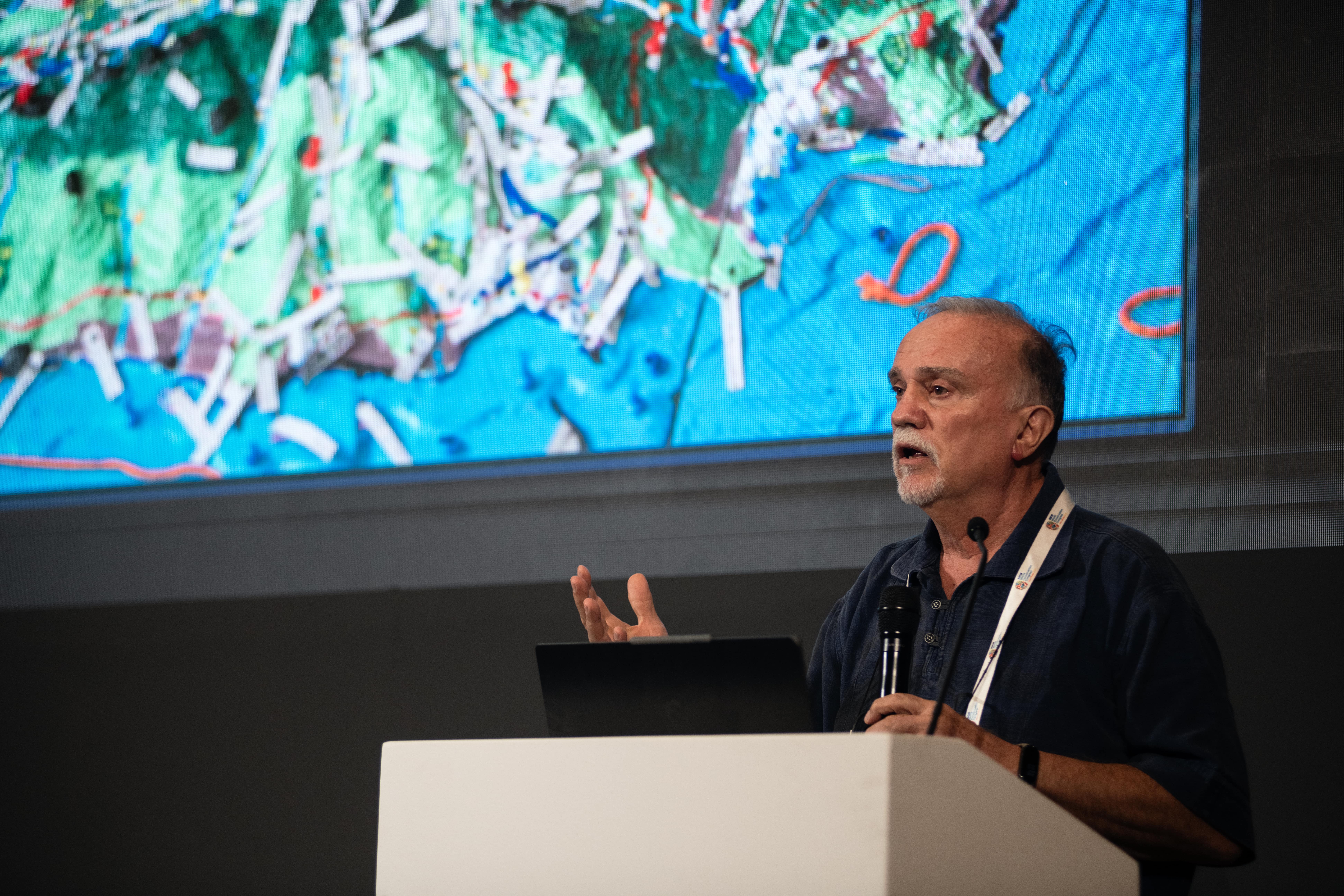
In the Forum, a dynamic two-hour session on Participatory 3D mapping guided participants through the rationale and approach to apply this methodology to map territories. Presentations, hands-on exercises and case studies provided the context for one of Day 1's most engaging events which hosted a 3D map of community lands in southern Tanzania, which will form the basis of mapping work with IUCN later this year.
Participants learned about the methodology of conducting participatory mapping using 3D models, but more importantly why these maps offer unique and positive outcomes: They instil collaborative processes that bring together elders, women and youth; they make traditional knowledge, cultural and spiritual values visible and tangible; they assert rights over territories; they strengthen solidarity and community cohesion, and strengthen customary law and governance, providing valuable locally generated evidence for local communities.
"Community maps are not just tools but are acts of resistance and recognition. They tell the world: whose land, whose rights". Jillie Karl Basan, ICCA Consortium Philippines
The newly published IUCN handbook and Introductory Guide offer new guidance on how to conduct 3D participatory mapping to achieve equitably governed and effectively managed protected and conserved areas.
In the Oceania Pavilion, an event focused on grant-making emphasised that grantees must become storytellers of their actions and learn to communicate their impact effectively. Building local partnerships and fostering peer-to-peer cooperation were highlighted as key aspects to successful replication. The impact of BIOPAMA, in particular, in granting women ownership and voice was highlighted by participants.


The Bangladesh Forest Department (BFD) and IUCN Bangladesh, with support from Agence Française de…

Each year, International Women's Day is an opportunity to recognise the women advancing change in…

On 14 January 2026, in Dhaka, the Bangladesh Forest Department and IUCN Bangladesh formally signed…