One Health emerges as an essential framework at the IUCN World Conservation Congress 2025
At the IUCN World Conservation Congress 2025, the IUCN Forest and Grasslands Team participated in two events centred around One Health, advancing dialogue within the Union around One Health as an increasingly important and emerging conservation framework. The events underscored how the wellbeing of people and nature are inextricably connected, a linkage which is becoming ever more apparent as the triple planetary crisis intensifies.
Photo: Robin Canfield/Unsplash
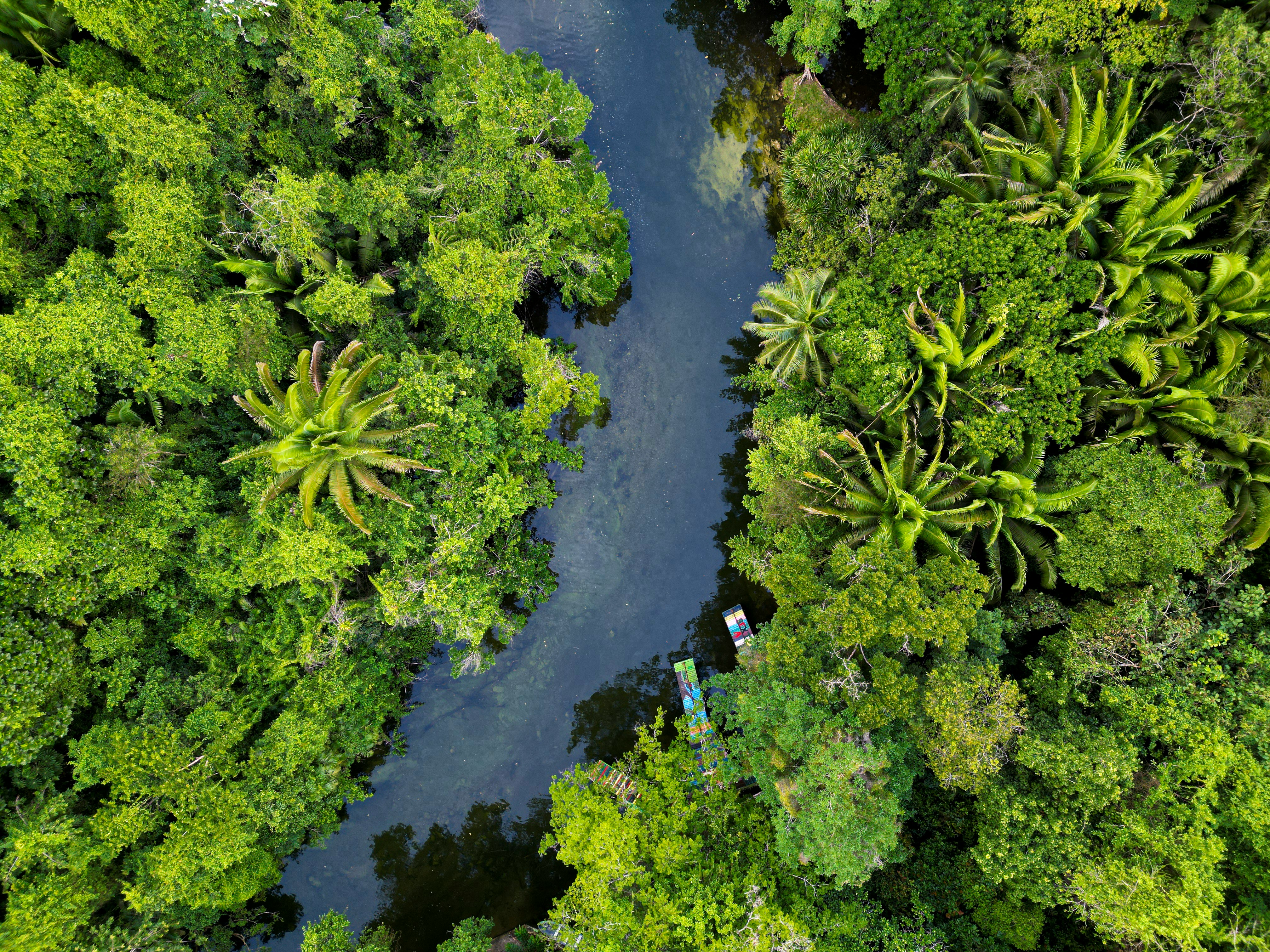
Photo: ©IUCN/Andrew McConnell/Workers Photos

“Embracing the One Health approach strengthens our resilience against planetary crises by uniting human, animal, and environmental well-being,” said Paula Prist, Senior Programme Coordinator, IUCN Forest and Grasslands Team. “One Health isn’t just a concept—it’s our best defence against the interconnected crises threatening our planet.”
One Health is an integrated, transdisciplinary approach to health that recognizes the interdependence of human health, animal health, and environmental health. The IUCN Forest and Grasslands Team participated in two events focused on One Health during the IUCN World Conservation Congress 2025, which took place last week in Abu Dhabi, United Arab Emirates. These events highlighted the many ways in which One Health provides a powerful framework for connecting conservation with human well-being, climate resilience, and sustainable development.
Central to the One Health approach is the idea that people cannot sustainably protect any one domain—humans, animals, or nature—in isolation. Each of these domains influence one another in multiple, often complex ways. Without a healthy environment, ecosystems cannot deliver benefits for animal and human health. For example, for every one square kilometre of land deforested in the Amazon, 27 cases of malaria in humans are generated. For every 1000 forest fire events in the amazon, there are an average of 22 hospital admissions for respiratory diseases. The harm we cause to our environment and the animals within it often has cascading effects on human health — costs that can surpass millions of dollars in health care.
One Health has become integral to modern conservation practice and governance, and the approach is deeply aligned with the mission and strategic direction of IUCN. One Health is one of the eight global transformations outlined in the newly adopted IUCN Programme 2026 – 2029, titled “Nature 2030: One Nature, One Future.” By embedding health considerations into ecosystem management, species protection, and biodiversity policy, IUCN is better equipped to address the root causes of global challenges, such as emerging diseases, pollution, food insecurity, and habitat loss, rather than only combatting their symptoms.
At the high-level dialogue “One Health: The Only Healthy Future for People, Animals and Ecosystems,” discussion centred not only on the importance of conservation for human health, but also on how society can shift towards a more sustainable future. Panellists included: H.E. Hambardzum Matevosyan, the Minister of Environment of Armenia and representative for the Presidency of the 17th meeting of the Conference of the Parties (COP17) to the Convention on Biological Diversity (CBD); Dr. Grethel Aguilar, Director General of IUCN; Astrid Schomaker, Executive Secretary of the Convention on Biological Diversity (CBD); Joenia Wapichana, President of the National Foundation of Indigenous People of Brazil; and Dr. Pam McElwee and Dr. Paula Harrison, co-chairs of the IPBES Nexus Assessment. Together, these panellists emphasised the importance of simple conservation solutions that can be beneficial to the health of both the environment and humans—such as the conservation of Indigenous lands or the restoration of mangroves and other natural areas.
At the session, “ALL IN for One Health: Uniting Efforts to Protect People, Animals, and the Environment,” speakers further reinforced the importance of One Health. The panel, which included IUCN Forest and Grasslands Team Senior Programme Coordinator Paula Prist, displayed the tools IUCN has developed to encourage the incorporation of One Health into spatial planning processes. The event affirmed that One Health is a framework which can be integrated and embedded into existing conservation priorities, plans, and processes while bridging the conservation and health sectors.
Together, these events highlighted the vital role that IUCN is playing in advancing the global One Health agenda. As a convening body that bridges science, policy, and practice across governments, NGOs, Indigenous Peoples Organisations, and civil society, IUCN provides a unique platform for mainstreaming One Health into biodiversity frameworks, climate strategies, and sustainable use policies. Through its networks and motions process, IUCN helps transform One Health from a public health concept into an operational reality—supporting wildlife health monitoring, cross-sectoral partnerships, and ecosystem-based approaches that support prevention of disease spread. By promoting collaboration among veterinarians, ecologists, public health experts, and local communities, IUCN is ensuring that One Health evolves as both a scientific paradigm and a practical conservation tool.


The Bangladesh Forest Department (BFD) and IUCN Bangladesh, with support from Agence Française de…

Each year, International Women's Day is an opportunity to recognise the women advancing change in…

On 14 January 2026, in Dhaka, the Bangladesh Forest Department and IUCN Bangladesh formally signed…