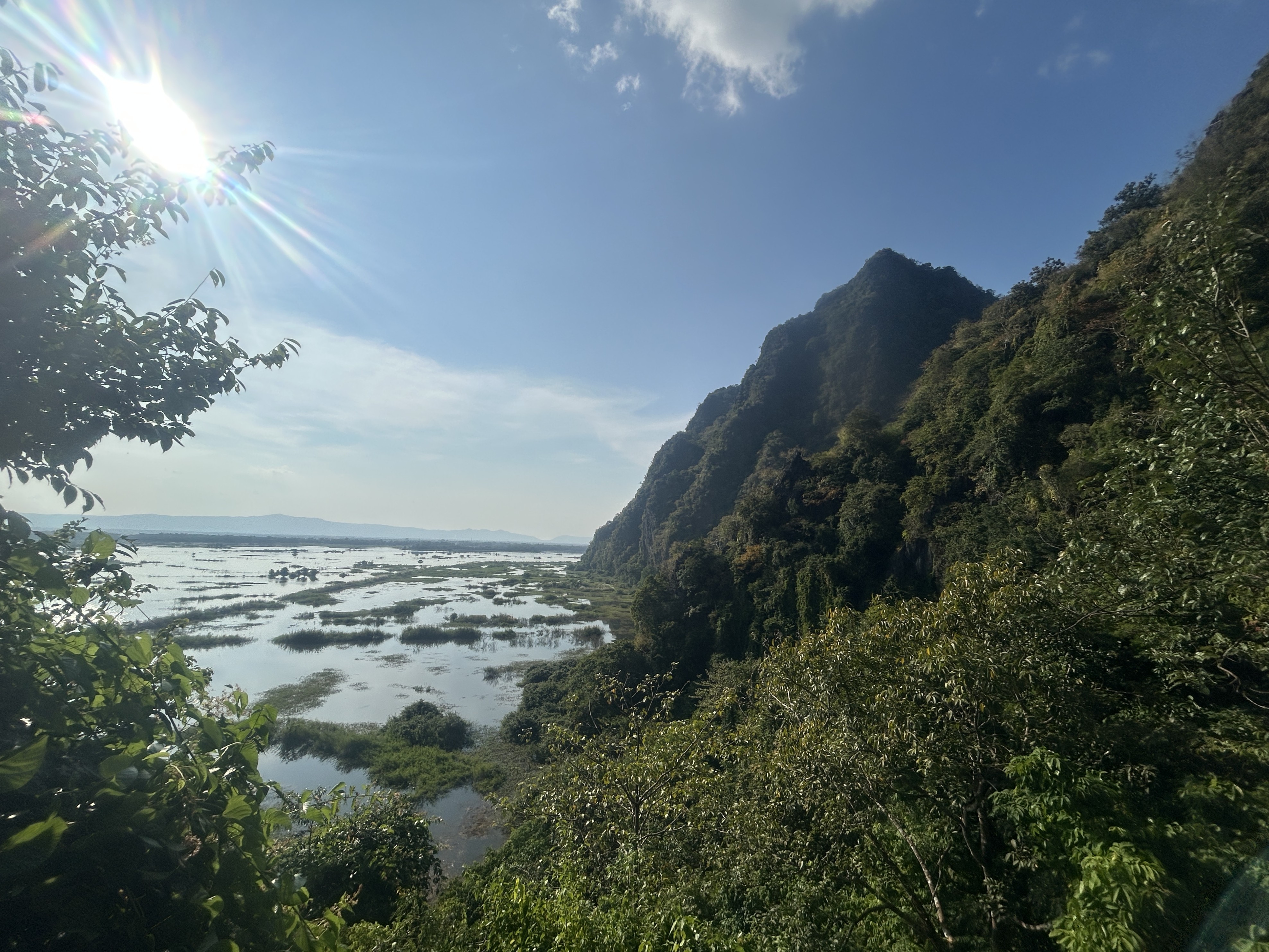
Myanmar has the second largest karst area in Southeast Asia, with over 80,000 square kilometres of these distinctive limestone landscapes. Karsts – characterised by the presence of streams that flow into and continue underground, as well as caves and sinkholes – provide critical habitats for species that can only be found in Myanmar as well as vital ecosystem services, such as freshwater regulation.
However, as mining, logging and deforestation escalates, while communities increasingly expand religious construction and places of worship in these caves without proper planning, these vital ecosystems face growing threats. Despite their ecological and cultural significance, little is known about these landscapes among local communities across Myanmar.
The Biodiversity and Nature Conservation Association (BANCA), a local environmental organisation in Myanmar, set out to raise community awareness through educational materials, training on environmental stewardship and co-development of a conservation action plan through participatory and meaningful engagement of community members.
Through the Supporting Community Conservation of Phayartan Limestone Karst in Tanintharyi, Myanmar project, with funding from the Critical Ecosystem Partnership Fund (CEPF) and the International Union for Conservation of Nature (IUCN), around 1,000 educational materials have been distributed across the Phayartan Karst area in the last two years.
Developed in close consultation with communities, particularly women and youth, these materials provide locals with insights into the ecological value and threats facing karsts in Myanmar. They also highlight the crucial role of karsts in human and wildlife wellbeing, to encourage further engagement in conservation efforts. These materials have resulted in a new working committee, which includes religious leaders and monks, who are now collaborating to ensure a new stupa being built in the Phayartan Karst area doesn't disrupt the ecosystem.
In addition, the Phyartan Limestone Cave Conservation Committee was established to inform the recently adopted conservation action plan for the Phayartan Karst area to sustain efforts in the long run. Made up of 23 members, the committee regularly convenes to share learnings.
Six members of the committee also went on an exchange visit in October 2025 to gain insights from another CEPF-funded project by Fauna & Flora International (FFI). The exchange with FFI allowed participants to see the effectiveness of community-based management and awareness raising efforts across Kayin and Mon states in-person – an important milestone to understanding the challenges and lessons learned in conserving fragile karst ecosystems across Myanmar.
On a visit to Yathe Pyan Cave in Kayin state, known for its religious significance, committee members learned about the zoning system, proper lighting and flooring to conserve the ecosystem of the karst and cave, and gained insights into the co-management plan developed in collaboration with the local religious institution.
"Seeing how monks and local committees work hand in hand in Karen State inspired us," said Myint Aye, one of the committee members from Pyigyi Madaing village. "We can also collaborate with our local monk for conservation."
Participants on the exchange visit reflected on the importance of having clear guidelines for cave use and visitor management strategies in place to preserve the ecological integrity of these spaces while allowing for religious and cultural activities. "We realised that good management does not stop people from visiting, it helps everyone respect the cave," said Yarzar Win Khant.
Equipped with a deeper understanding of how they can work across the community and engage more relevant stakeholders to strengthen their conservation efforts, members of the committee returned to Phayartan and shared the next steps of their community efforts.
"Visiting the caves in Karen and Mon States helped us see how communities and Buddhist monks can protect nature and cultural heritage together," said Myo Oo, one of the exchange participants. "We want to do the same for our Phayartan cave."