Building a Global Mutirão for the Ocean: Why community leadership must anchor global ocean action
Global ocean governance is entering a critical moment. New frameworks are expanding, global commitments are growing, and the urgency is undeniable. Yet one truth continues to rise above all others. Ocean action will not succeed unless community leadership becomes the organizing principle of global governance rather than a footnote.
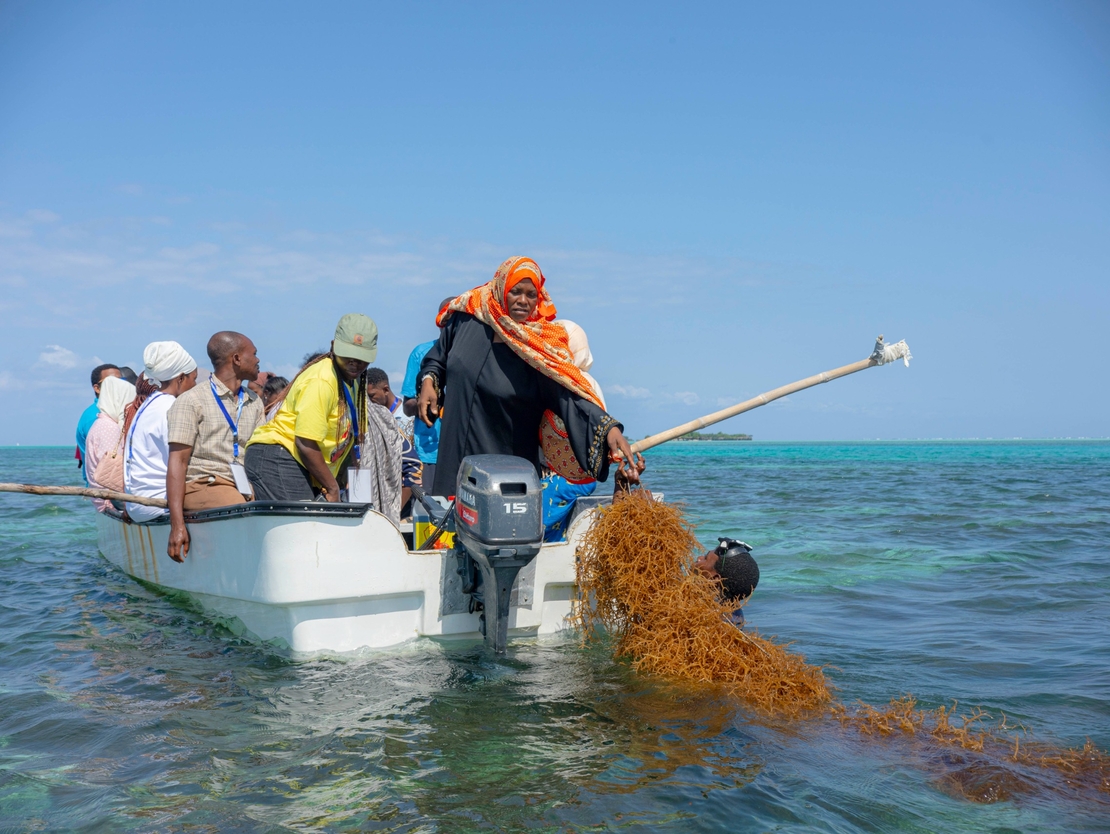
This was the defining message during Building a Global Mutirão for the Ocean, where leaders from Africa, South America, North America, Asia and Oceania confronted a long-standing gap. While communities hold deep knowledge, cultural authority, and proven stewardship models, global policy consistently fails to centre their voices. The imperative now is to move beyond acknowledging their value and address why the international system lags in implementing a framework where community leadership directly informs the decisions impacting them.
Reflections from the Western Indian Ocean illustrated this clearly. Locally Managed Marine Areas (LMMA) are proving that community governance restores ecosystems, strengthens local institutions, and creates accountability where national systems often struggle. Yet the region still lacks the coordination, legal frameworks, and shared learning platforms required to scale these successes. This is the context in which the proposal for the Western Indian Ocean LMMA Alliance emerges which is a structural response to the reality that communities cannot influence regional or global policy without collective power.
Voices from the Pacific reinforced the same tension. The Our Islands Our Home campaign demonstrated how traditional knowledge and cultural identity guide climate advocacy in the Torres Straitbut their influence does not match the scale of the threats they face. Their story is not only inspirational. It exposes a global imbalance where those most affected remain least heard.
Brazil brought another layer. CONFREM showed how marine extractivist reserves protect traditional territories and secure livelihoods, even under shifting political conditions. Their decades of experience prove that when communities have tenure, institutions strengthen and conservation becomes durable. Yet these models are still treated as exceptions rather than essential components of national policy.
Africa added the dimension of inclusive governance. The LMMA Gender Strategy highlights that ocean governance can only be legitimate when women, youth, and persons with disabilities hold meaningful roles in decision making, stressing that inclusion is not an add-on but a governance strength.
The Pawanka Fund then named what many hesitate to say. Community leadership cannot flourish under rigid short-term funding controlled far from the coastlines it is meant to support. Stewardship thrives when communities have direct access to flexible, long term, trust-based financing that respects their agency and institutions.
A pattern emerged across regions. Communities face shared barriers that prevent them from shaping high level ocean policy. Limited legal recognition. Limited representation in global processes. Limited access to sustainable financing. But these barriers hide an even more important truth. Communities also hold shared strengths that global governance systems urgently need. Diverse knowledge systems. Proven stewardship traditions. Governance models rooted in identity, culture, and intergenerational responsibility. Together, they form a global reserve of solutions that the ocean crisis cannot afford to overlook.
This is the deeper meaning of a global mutirão. A mutirão is unity in action. It is shared responsibility. It is collective power. The future of the ocean depends on this spirit more than ever. It is not a project or a platform. It is a movement where communities organize, share power, and influence systems that have historically moved without them. It is a shift from consultation to leadership. From participation to authority.
The session ended with a renewed commitment to advance the People of the Ocean breakthrough, a global effort to strengthen the visibility, influence, and leadership of ocean communities. The proposed WIO LMMA Alliance stands as an early step. A practical way to connect practitioners, align priorities, and ensure community experience shapes regional and global decisions.
If the world is serious about safeguarding the ocean, then community leadership must no longer be treated as an additional value. It must be the core of governance. When communities learn from one another, advocate together, and build solutions across borders, they create a collective force strong enough to shift global systems.


