Flowing forwards: advancing transboundary cooperation as a sustainable solution for a resilient planet
Water was at the heart of the first day of the seventh session of the United Nations Environment Assembly (UNEA-7). IUCN organised an official side-event titled “Flow Forward: Transboundary water cooperation to restore and sustain water ecosystems from source to sea”. The event was held together with the European Union, UNECE, Slovenia and Finland.
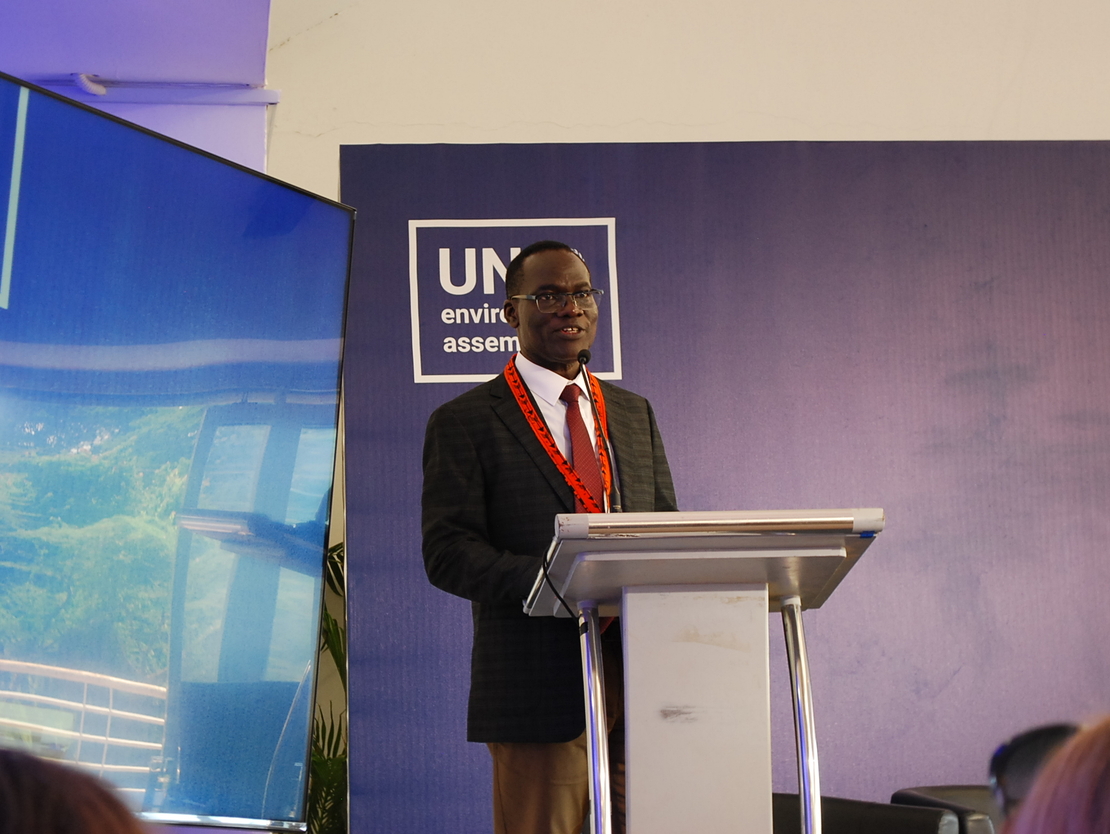
In the opening remarks, both Dr. Luther Anukur Director of IUCN Eastern and Southern Africa, and Ambassador Ms. Riina-Riikka Heikka, Permanent Representative of Finland to UNEP stressed the importance of water diplomacy and the potential that Nature-based Solutions hold in this context. Ambassador Heikka reiterated the need for a strategic approach to water resilience and commended IUCN for its unique ability to combine science, policy and practice in a way that is inclusive, science-based and globally connected. She also stressed the importance of the UN Water Convention as a legal and institutional framework driving long-term, equitable and sustainable transboundary water cooperation.

H.E. Ms. Riina-Riikka Heikka, Francesca Bernardini, Lionel Fabre
The keynote speech was given by Ms. Francesca Bernadini (Chief, Transboundary Cooperation Section, UNECE). In her presentation, she presented five key messages for effective transboundary water cooperation that protects and sustains ecosystems from source to sea, namely:
Leverage international legal instruments
Integrate ecosystems into river basin management planning and transboundary cooperation mechanisms
Promote intersectoral cooperation through the Nexus approach
Root ecosystem action in data and knowledge
Secure sustained financing to enable long term actions
Discussions then saw an insightful discussion on possible way, moderated by Dr Sofie Sandstrom Jaffe IUCN Permanent Observer to the UN.

Opening the segment, Ms Christina de Avila, European Commission, urged for an action-oriented outcome at the UN Water Conference 2026 and the establishment of a clear intergovernmental process on water under the UN framework for the post-2030 period, ensuring water resilience remains a permanent feature in the global agenda. This should be supported by a dedicated UN Special Envoy. She also spoke on the shift required for such a strategy from short-term project-based investments to a long-term basin-scale funding model. Dr. Farhina Ahmed, Bangladesh, explained the several water-related challenges the country is facing, but focused also on positive local success stories. She pointed out on how Bangladesh integrated water management practices in their Nationally Determined Contribution under the UNFCCC and called for better inclusion of green water in all relevant multilateral environmental agreements.
Ms Monica Gitau, Director, Water for Life Alliance Kenya (WAFLAK) brought the local perspective to the session. She provided evidence on how local communities and traditional knowledge can be key in shaping effective policies for water management, especially in transboundary contexts. The last panel intervention was given by Ms. Tina Hočevar, Slovenia, who outlined key messages from the recent Guidance Note for the Implementation of Source-to-Sea Management in Transboundary Basins, developed under the UN Water Convention which Slovenia is currently chairing.
The event was closed by Mr. Lionel Fabre from France. He stated that water is the cornerstone of sustainable development and that to address the water crisis we need constructive dialogue and political commitments, building on the momentum offered by the UN Water Conference 2026.
You can watch the recording here: https://www.youtube.com/live/m0Lvclr9KYM
IUCN has promoted water cooperation for 15 years through its Building River Dialogue and Governance (BRIDGE) Programme. BRIDGE has facilitated dialogue, consensus, and agreements in more than 30 transboundary river basins in Latin America, Africa and Southeast Asia. For further reference visit: https://waterandnature.org/all-initiatives/bridge/